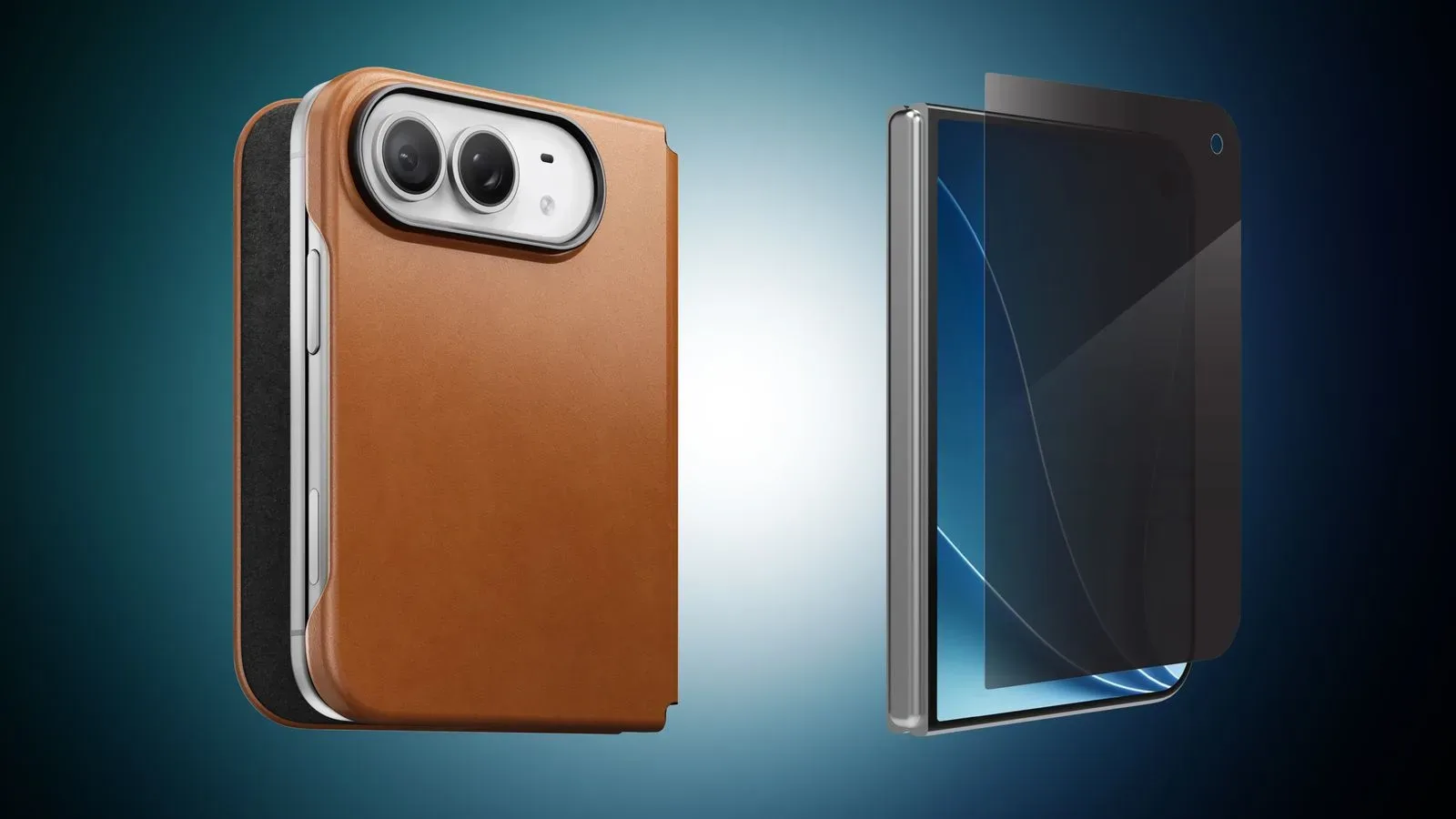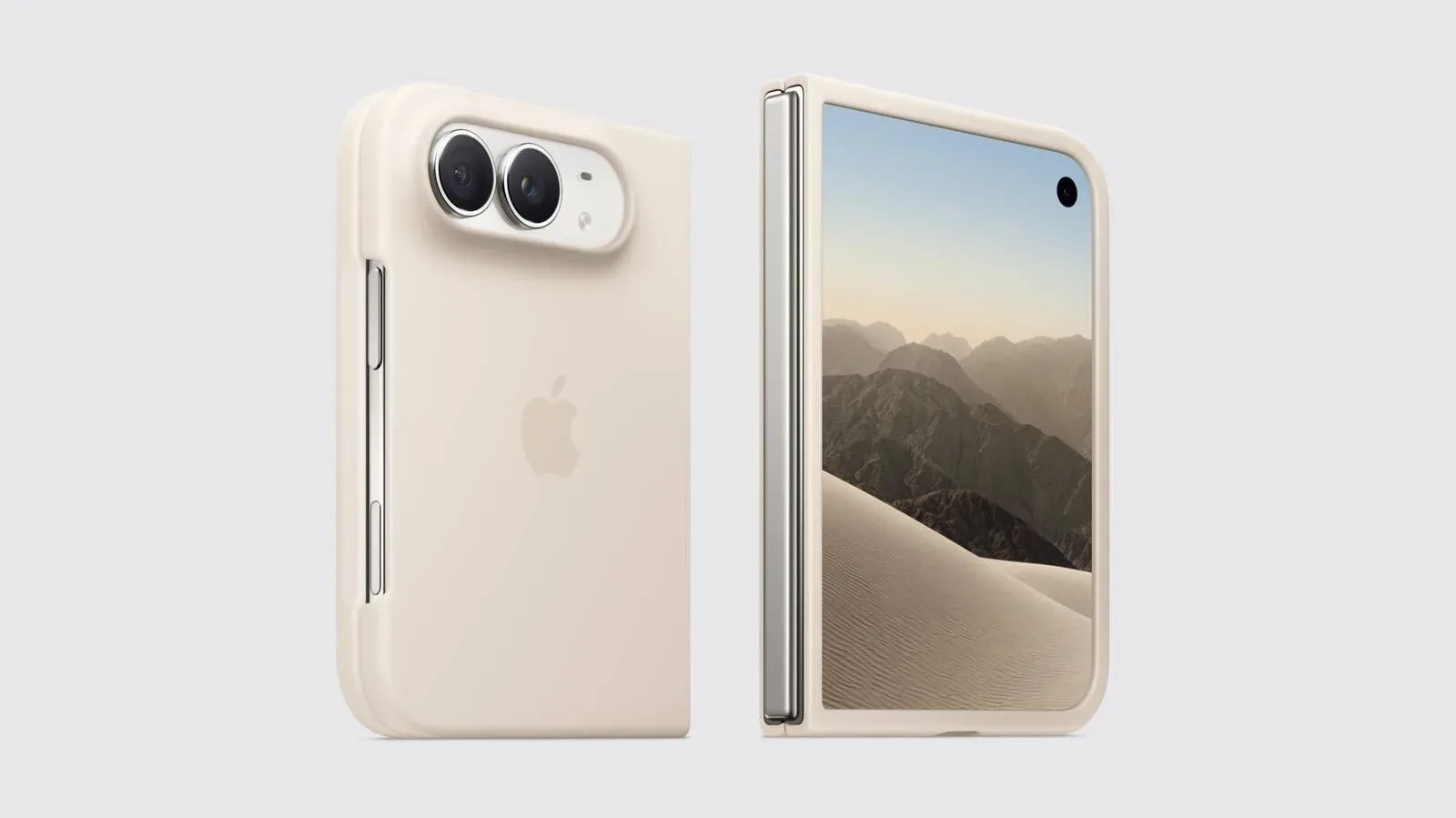
Apple’s $79 iPhone Duo Case has one particularly important design detail hiding on its inside edges: adhesive. The two-piece polycarbonate accessory reportedly attaches to the iPhone Duo with adhesive strips, asking owners to peel away protective film, position each half, and press the pieces down so they bond to the device.
That is a notably different relationship with a phone case than the usual snap-on shell. A conventional case is generally designed to grip a device’s perimeter and come off again when someone wants to clean it, swap colours, or change accessories. Here, the fitting instructions indicate that the Duo Case is intended to be deliberately adhered in place. It is still a case, but it sounds less like a removable jacket and more like a carefully placed protective layer.
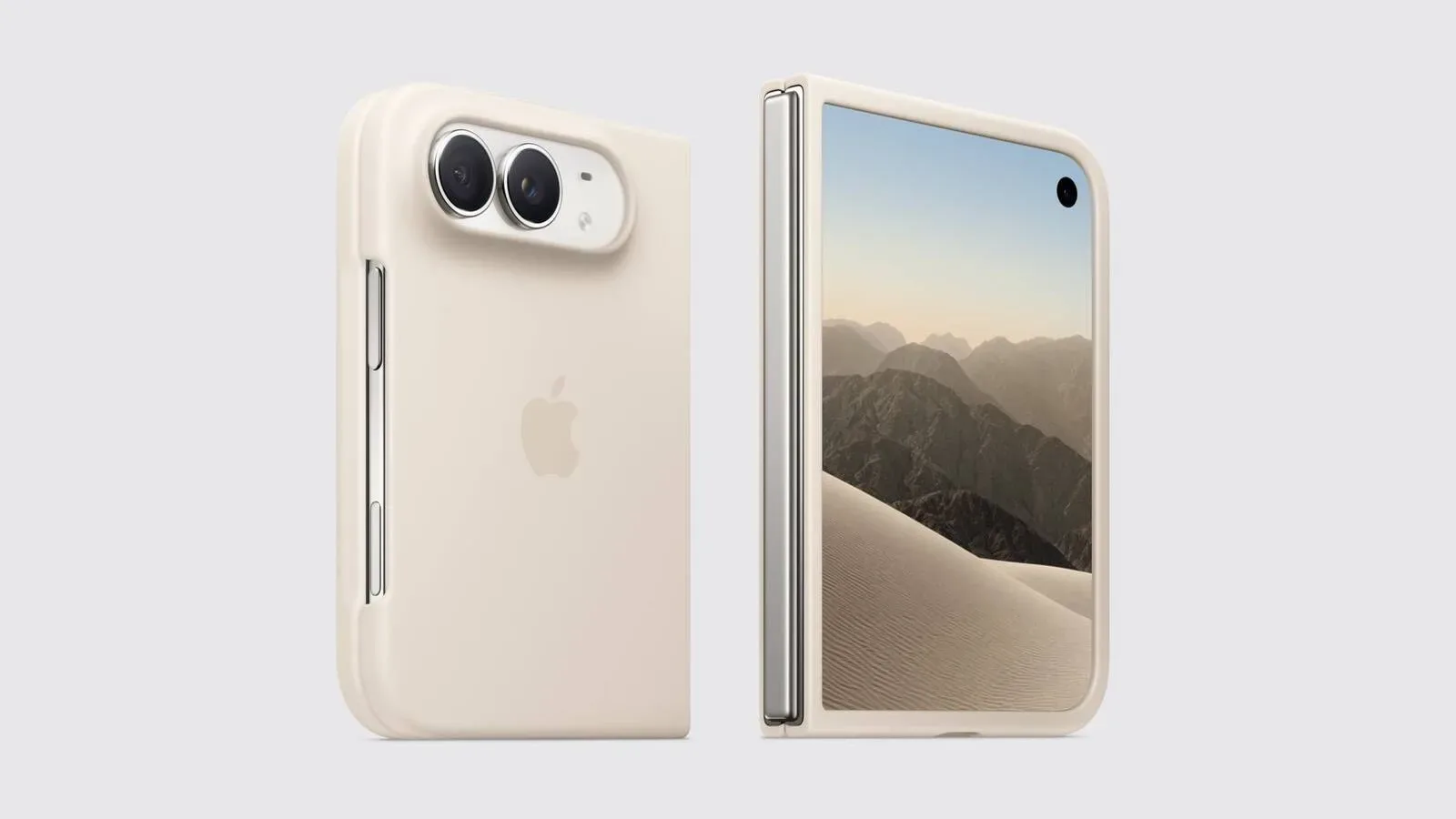
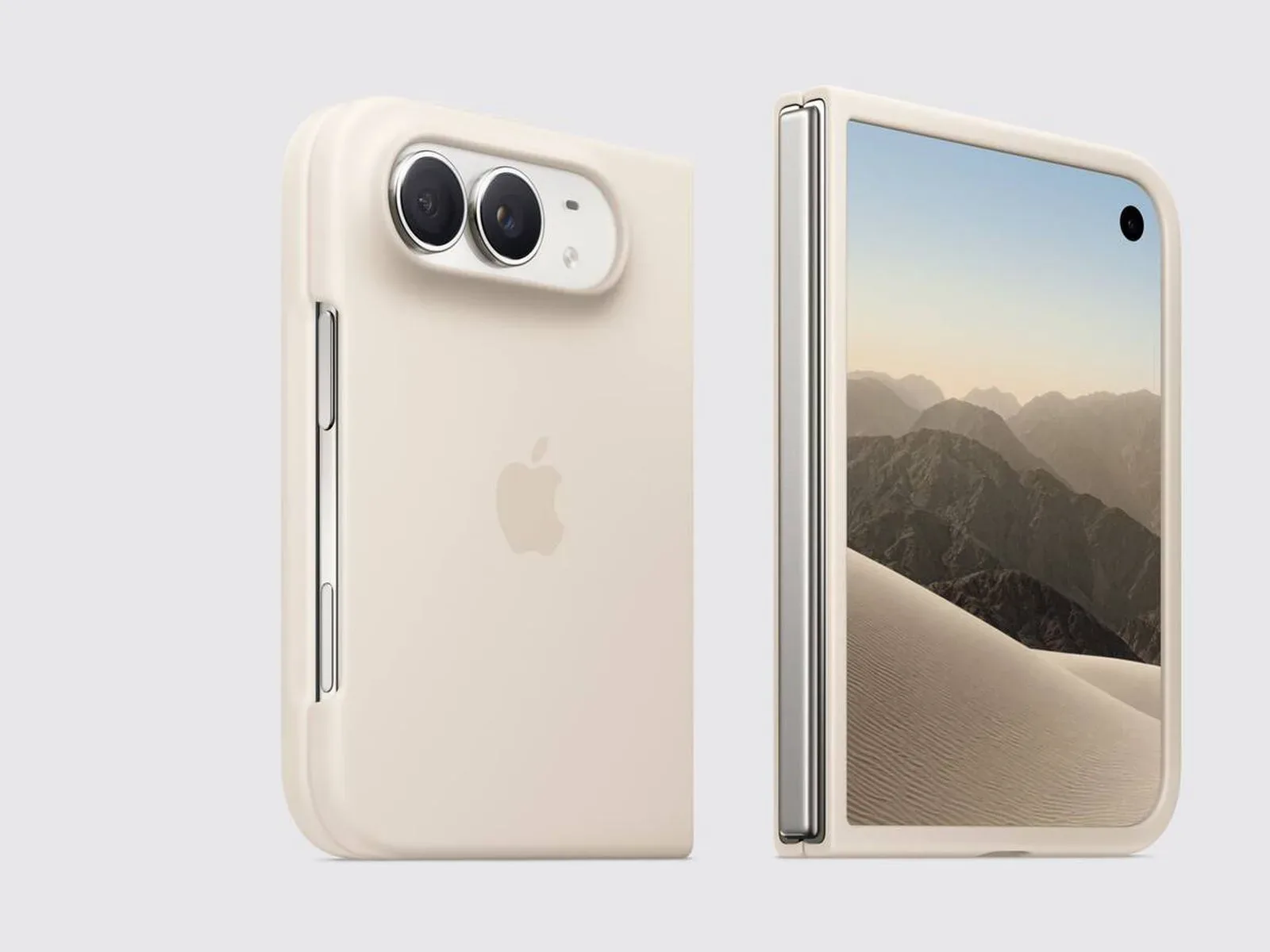
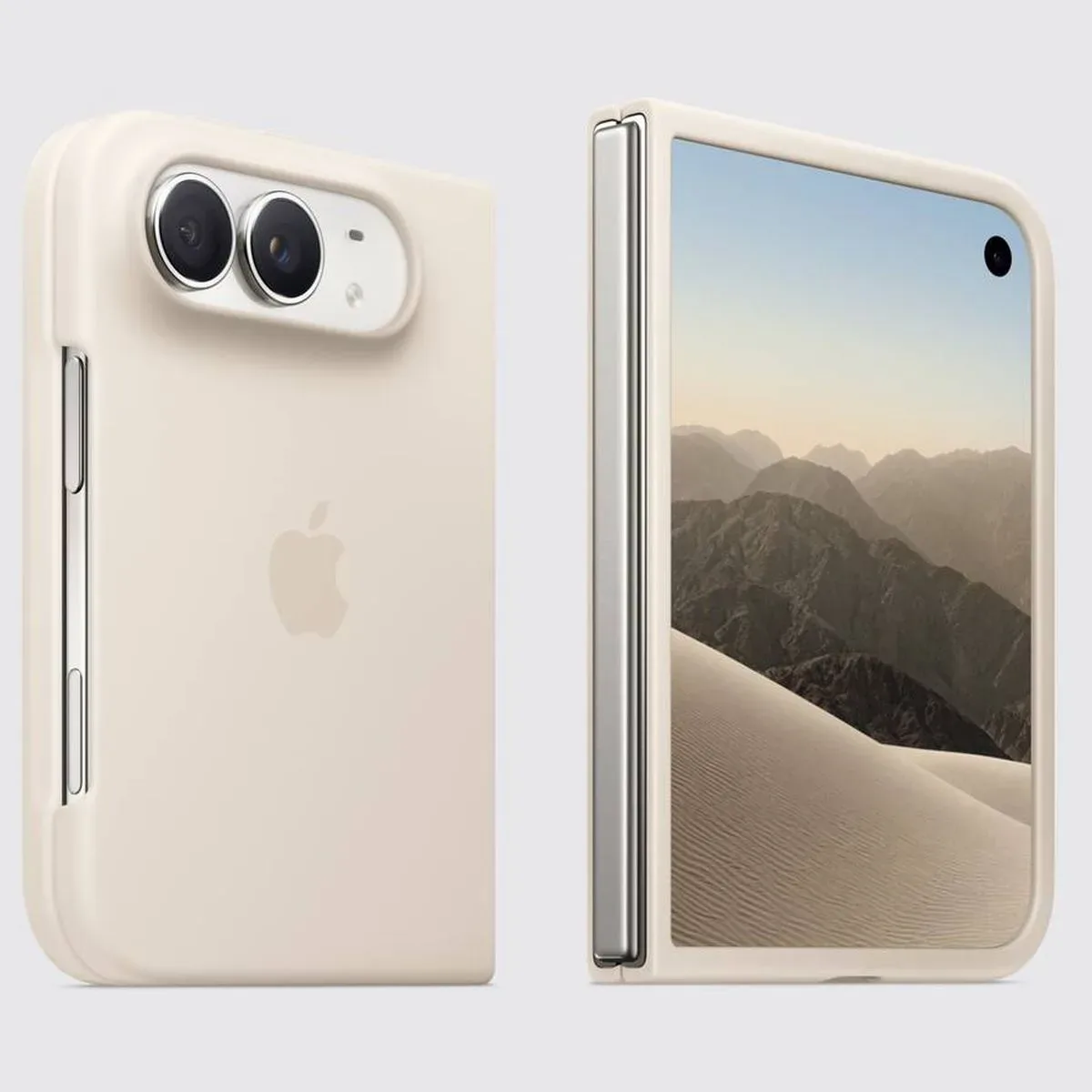
The choice makes sense in the narrow context of what the case is trying to cover. The iPhone Duo Case consists of two pieces: one protects the back around the camera bump, while the other surrounds the outer display on the front. It has a cutout for that front display. Crucially, it does not protect the interior of the device when the iPhone Duo is unfolded.
A two-piece case for a device with two very different sides
The reported layout is easy to describe but worth unpacking. The iPhone Duo appears to present owners with distinct exterior areas that need protection: the rear camera section and the front-facing outer-display section. Rather than enclosing the device in one continuous rigid shell, Apple’s accessory separates those jobs into two components.
Polycarbonate is the material named for the Duo Case. In plain terms, it is a hard plastic often used where a thin, rigid form is useful. Based on the supplied details, its significance here is aesthetic and structural rather than a promise of any particular drop performance. There is no stated impact rating, no stated water resistance claim, and no stated account of how the adhesive behaves over time. Buyers should avoid reading those assurances into the material name alone.
The adhesive is likely the detail that will matter most during installation. The included insert reportedly gives users a clear sequence: remove the film protecting the adhesive, put each case half on the phone, then press it down to ensure it is properly attached. That implies placement is not a trivial afterthought. Before peeling anything, owners will probably want to identify the orientation of both pieces and take a moment to line up the display cutout, camera area, and edges visually.
That is practical caution, not a claim that the process is unusually difficult. The available information does not say whether the strips can be repositioned, whether replacement strips are offered, or what removal looks like. Those unknowns are especially relevant because adhesive-backed accessories tend to make precision more valuable than it is with a case that can simply be unclipped and reseated.
What it protects—and what it does not
The most useful way to assess the $79 Duo Case is by its stated coverage rather than by assuming it is full-device armour. It covers the back where the camera bump sits and the front around the external screen. The front component’s display opening means the screen itself remains exposed through that cutout, as expected for a case intended to leave the display usable.
The other major limit is more consequential: there is no protection for the inside portion of the phone while it is unfolded. For anyone thinking of this as complete coverage for a foldable-style design, that distinction should be front and centre. The accessory focuses on exterior surfaces when the device is closed, not on wrapping every surface encountered during use.
That may be a design compromise rather than an oversight. Covering the inside of an unfolding device could interfere with its central function, add bulk, or otherwise complicate the form factor. But the supplied information does not explain Apple’s reasoning, so it is best understood simply as the accessory’s defined scope. The Duo Case is built around the outer display and rear camera region; it is not described as a protective solution for the unfolded inner area.
Adhesive changes the ownership routine
For prospective buyers, the adhesive arrangement creates a few common-sense questions that have not yet been answered publicly in the supplied details. Can the case be removed and reapplied? Are replacement adhesive strips available? Does a residue remain after removal? How does the fit hold up after long use? None of those points should be treated as settled just because the case is already appearing in stores.
Those uncertainties do not automatically make the approach bad. Adhesive may help thin pieces remain flush where a traditional rim or clip would be awkward, especially on an unusual phone shape. The trade-off is that installation becomes more permanent in spirit, even if later removal turns out to be possible. Someone who frequently rotates cases for style may care about that differently than someone who intends to fit one case and leave it there.
It also makes the packaging insert unusually important. With many accessories, instructions are a formality. Here, the instruction to peel, position, and press is part of the product’s basic function. Keeping the phone surface clean and dry before application may sound sensible, but it is not a step specifically stated in the available material, so owners should follow the included directions rather than rely on assumptions or improvised advice.
There is a broader consumer lesson in the attachment method, too: compatibility is not just about whether an accessory fits a particular phone name. It is also about how it fits, what it covers, and how easily an owner can reverse the decision. That same attention to practical terms matters in digital purchases and hardware ecosystems, an issue explored in this look at why digital game ownership needs more than a storefront promise. Physical accessories and digital libraries are very different things, but in both cases the fine print of control can matter as much as the headline product name.
Colours, pricing, and the timing of the accessory
The iPhone Duo Case is available in Sand and Navy Blue. It is priced at $79, while the iPhone Duo Folio costs $129. The $50 gap establishes the standard case as the less expensive of the two listed first-party protection options, although the provided information does not describe the Folio’s materials, coverage, or attachment method. It would be a mistake to infer those details from its price alone.
iPhone Duo pre-orders began the same day this information emerged. The first phones are not expected to reach customers until the following Friday, but the cases are already in stores. That unusual sequencing means people can examine or buy a case before the device itself arrives. It also explains how the adhesive setup became visible through the packaging instructions rather than through widespread owner use.
Initial iPhone Duo inventory has sold out, and shipping estimates have moved to January 25 across all colours and capacities. That gives the accessory timing an extra wrinkle: a person may be able to obtain the case well before receiving the hardware it is made for. For those buyers, resisting the urge to peel the adhesive film early seems like the obvious move. The case’s two halves can be looked at, but the reported attachment process is meant to happen on the actual phone.
What buyers can responsibly take from the current details
The case’s reported adhesive construction is a concrete feature, not a rumour about performance. The packaging instructions describe adhesive strips on the interior edges and tell users how to apply them. Its material, colours, focused coverage, and $79 price are also defined. The absent information is just as important: there is no supplied evidence about removal, adhesive longevity, repairability, replacement parts, or protection beyond the described exterior regions.
So the sensible expectation is modest and specific. The iPhone Duo Case is a slim-looking, two-part polycarbonate accessory designed to protect the phone’s camera-side rear and the area around its outer display. It adheres rather than merely snaps on, comes in Sand or Navy Blue, and leaves the unfolded interior without coverage. People who value that targeted exterior protection may find its approach appealing; people seeking all-around coverage or frequent case swaps should recognize that the design raises unanswered practical questions.
For a product built around an unconventional device shape, a conventional case might not have been the cleanest answer. Apple’s answer appears to be tape—not the roll lurking in a kitchen drawer, but integrated adhesive strips with a prescribed fitting process. It is a small detail, yet it turns a familiar accessory into something that deserves a little more thought before the protective film comes off.