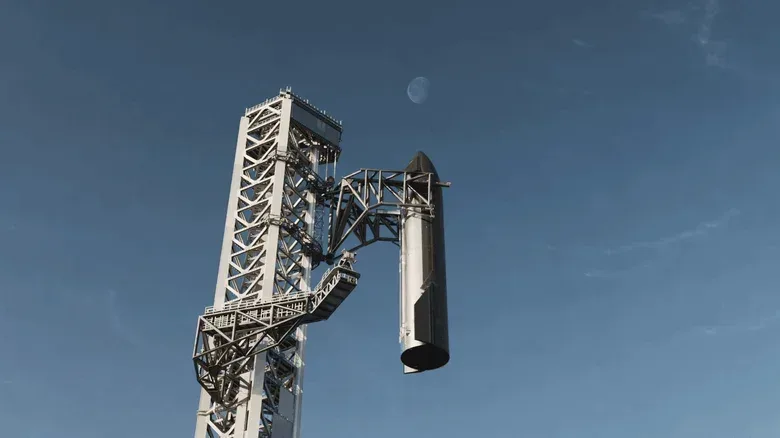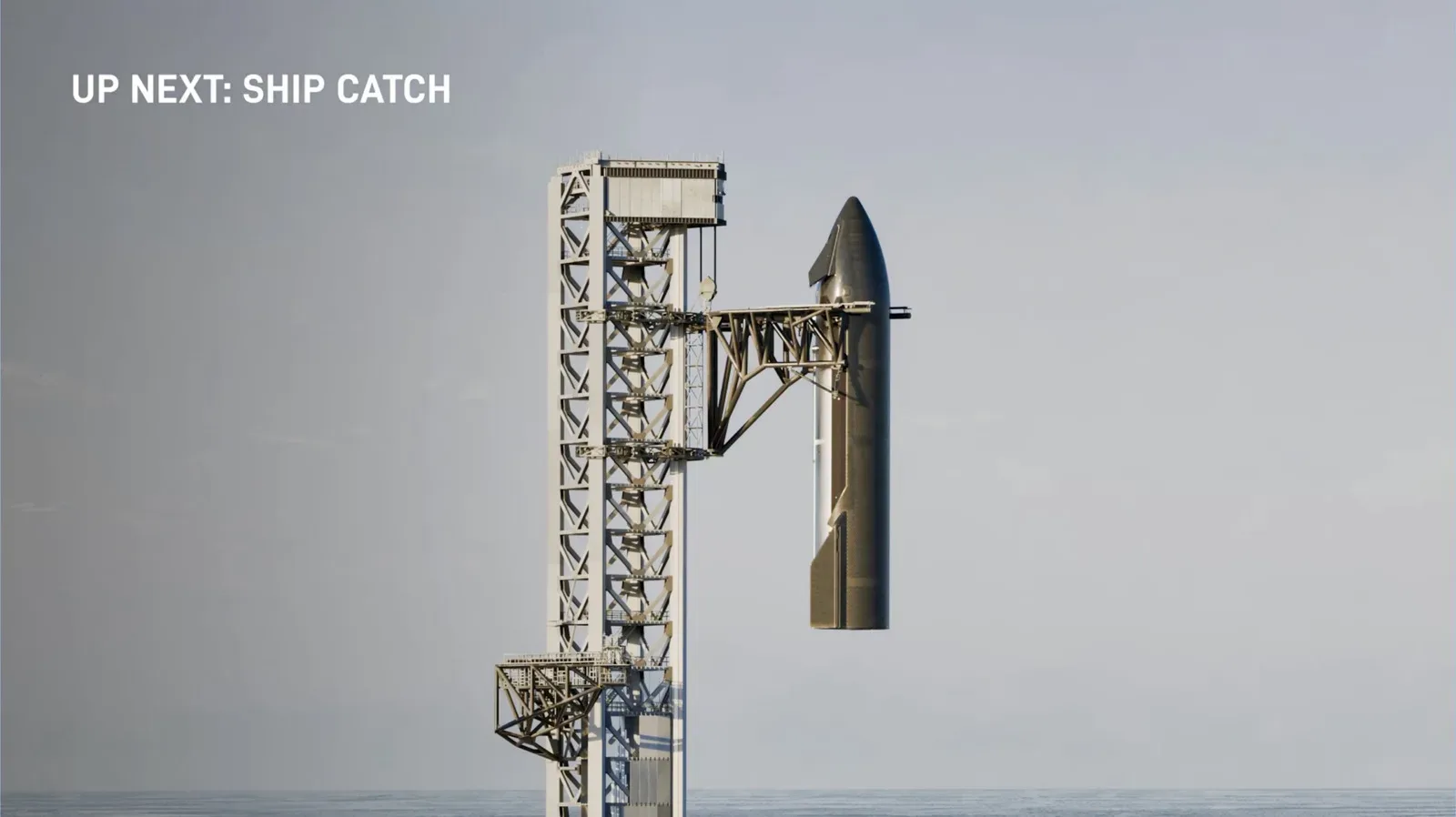
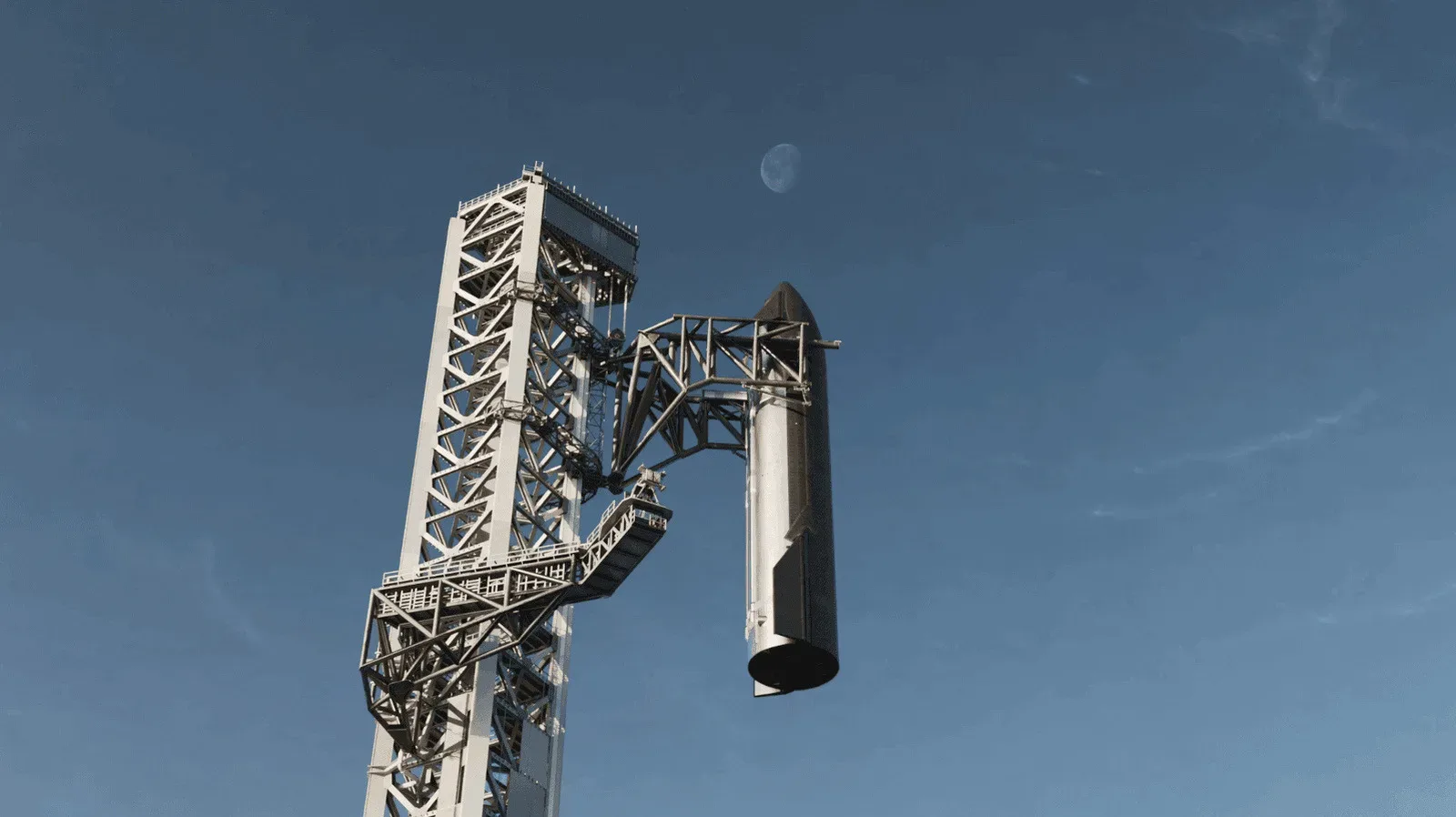
SpaceX is targeting November 13 for Starship Flight 15, a mission that could turn the company’s launch tower into the scene of a very expensive, very tall game of catch. The planned test is still subject to regulatory approval and acceptable weather. If those pieces align, the 75-minute launch window is scheduled to open at 5:45 p.m. Eastern time.
What makes Flight 15 different is not simply that Starship is expected to go to orbit. The mission is designed around an attempt to recover both major stages of the full orbital launch system: the Super Heavy booster shortly after liftoff, and the Ship upper stage roughly a day later after its orbital flight. SpaceX has caught Super Heavy three times before. It has never tried to catch Ship at the tower.
That distinction matters. The booster and upper stage have radically different jobs in the flight profile. Super Heavy is the first stage: it supplies the initial push away from the launch site, separates after launch, then returns on a much shorter path. Ship is the upper stage, meaning it continues toward orbit and is expected to face a much longer, faster and more demanding trip before attempting to return. The company’s plan calls for the same tower-mounted “chopstick arms” to receive each vehicle, but the two attempts are far from equivalent.
The Flight 15 plan, step by conditional step
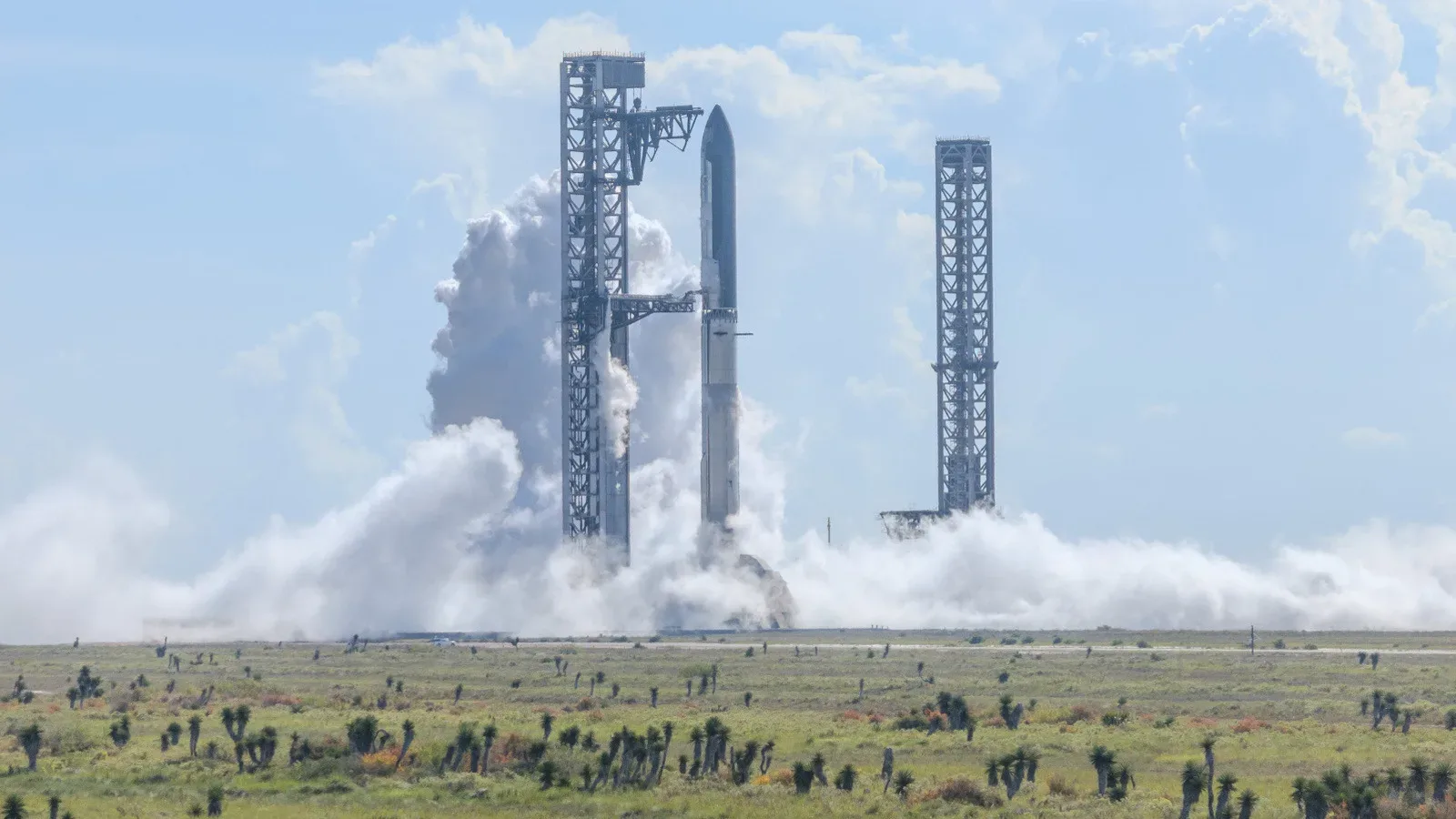
If the launch proceeds, Super Heavy is slated to return first. SpaceX intends to use the launch tower’s mechanical arms to catch it only minutes after liftoff, repeating a maneuver the company has already completed on prior flights. That first recovery is an important part of the mission, but it is also the established half of Flight 15’s ambitious objective.
For more context, explore Anker Nano 45W ‘Floating’ Icon Explained: It Means Temperature Monitoring Is Active.
The much less familiar portion comes later. Ship is expected to spend more than 22 hours on its mission, making roughly 14 trips around Earth before deorbiting. During that time, one of its primary objectives is the deployment of 26 Starlink V3 satellites.
The current plan is not an unconditional promise that Ship will be caught. SpaceX will only pursue the tower capture if Ship can deorbit at one of several predetermined areas and if conditions are optimal. In practical terms, that means a successful launch does not automatically lead to a Ship catch, and an orbital mission with satellite deployment could still end without the headline-grabbing tower sequence. The conditions are part of the mission logic, not an asterisk to ignore.
Should the attempt proceed, the tower arms would be used again about a day after the booster capture. It is an unusually stark visual proposition: the same launch infrastructure would first receive the departing rocket’s lower stage and then, after the upper stage has completed an orbital mission, attempt to receive that as well.
Why catching Ship is the hard-mode objective
The upper-stage attempt is new territory because Ship goes much higher and travels much faster than Super Heavy. That is the core challenge stated for the mission, and it is enough to explain why a prior booster catch does not make a Ship catch routine.
A tower catch is not simply a landing in the broad sense. It requires the returning vehicle and ground system to meet at a very specific place and time. For Ship, that precision comes after orbit, an extended mission duration, a deorbit sequence and a return from a flight regime Super Heavy does not experience on its rapid post-launch return. The planned capture therefore depends on the entire chain working well enough for conditions to be judged suitable.
It is helpful to separate three terms that can otherwise blur together:
- Orbit is the phase in which Ship is planned to travel around Earth, rather than simply rise and return on a shorter trajectory.
- Deorbit is the step that brings Ship out of that orbital path for its return.
- Catch is the tower-based recovery maneuver using the launch tower’s arms, rather than a conventional touchdown described here as a landing.
Those distinctions explain the scale of Flight 15’s proposed progression. The mission is planned to demonstrate orbital operations, satellite deployment and the potential recovery of the stage that carried out those orbital tasks. Each is consequential in its own right; combining them makes the planned operation particularly demanding.
Flight 14 set the immediate backdrop
Starship reached its first orbital flight on the vehicle’s 14th test mission. That flight did not run for its originally intended duration. Ship spent around two hours in orbit after the journey was cut short, rather than the 10 hours that had been planned.
Flight 15 is therefore a significant expansion in intended orbital duration. The plan calls for more than 22 hours of flight and about 14 orbits, a substantial change from the approximately two hours achieved on the preceding orbital test. That planned increase is meaningful even before the recovery objective enters the picture: the mission is attempting to keep Ship operating in orbit for far longer while also carrying 26 Starlink V3 satellites for deployment.
There is an important limit to what can be inferred before launch, however. The 22-plus-hour duration and 14-orbit figure are mission goals, not completed results. Likewise, the satellite deployment is a primary objective, but its inclusion does not guarantee execution. Flight 14’s shorter-than-planned orbital stay is a timely reminder that test missions can change course.
What “full reusability” means in this context
SpaceX has pursued full reusability for Starship from the beginning. In the specific context of Flight 15, the phrase means trying to retrieve the major parts of the orbital launch system rather than treating either stage as something that must be discarded after one mission.
Super Heavy’s three previous catches are evidence that the company has already demonstrated a recovery approach for the lower stage. A Ship capture would extend that approach to the upper stage, which is why retrieving both vehicles in one overall mission would be a major step toward the stated objective. It would not erase the difficulty of future flights or turn every planned recovery into a certainty, but it would demonstrate an integrated reuse-oriented concept across the two principal stages.
There is also a practical sequencing point worth noting. The booster catch is expected minutes after launch, while the Ship attempt would come a day later. The latter is contingent on where Ship can deorbit and on favorable conditions. That makes the mission less like one single binary stunt and more like a series of gates: launch approval and weather, ascent, booster recovery, orbital operations, satellite deployment, deorbit suitability and, only then, a possible upper-stage catch.
What to watch, and what not to assume
For viewers, the first major moment would be the Super Heavy return shortly after liftoff. It is familiar relative to the rest of the flight, but it remains a key operational step because it is the first half of the planned two-stage retrieval. The longer wait then shifts attention to Ship’s orbital mission, including its planned Starlink V3 deployment and its eventual deorbit decision.
The key phrase for the upper-stage segment is if conditions are optimal. SpaceX has explicitly left room not to attempt the catch. That is a sensible way to read the event: a Ship catch is a mission objective that may be pursued, not an outcome viewers should presume from the moment Starship launches.
Likewise, Flight 15 should not be reduced to a single piece of tower footage. A successful booster recovery, a long orbital stay, the planned deployment of 26 satellites and a controlled decision around Ship’s return are all material parts of the test. The catch would be the historic first attempt and the most dramatic visual, but it sits at the end of a long chain of planned work.
SpaceX says the event can be followed through its official X account, including the Ship catch if the criteria for attempting it are met. Until the regulatory and weather questions are resolved, November 13 remains a target date rather than a locked launch appointment.
Why this test stands out
Flight 15 is notable because it places a previously demonstrated capability alongside a new and more difficult one. Catching Super Heavy again would build on three prior catches. Catching Ship would be a first attempt involving an upper stage that has traveled to orbit, stayed there for a planned period exceeding 22 hours, made roughly 14 circuits of Earth and carried out a planned deployment of 26 satellites.
That is why the phrase “both stages” carries so much weight here. It does not mean two identical recovery exercises. It means trying to recover two parts of the same orbital system after profoundly different journeys: one after minutes, and one after more than a day. If Ship reaches the point where a tower catch is viable and the attempt succeeds, SpaceX would have taken a consequential step toward its aim of making the complete Starship system reusable.