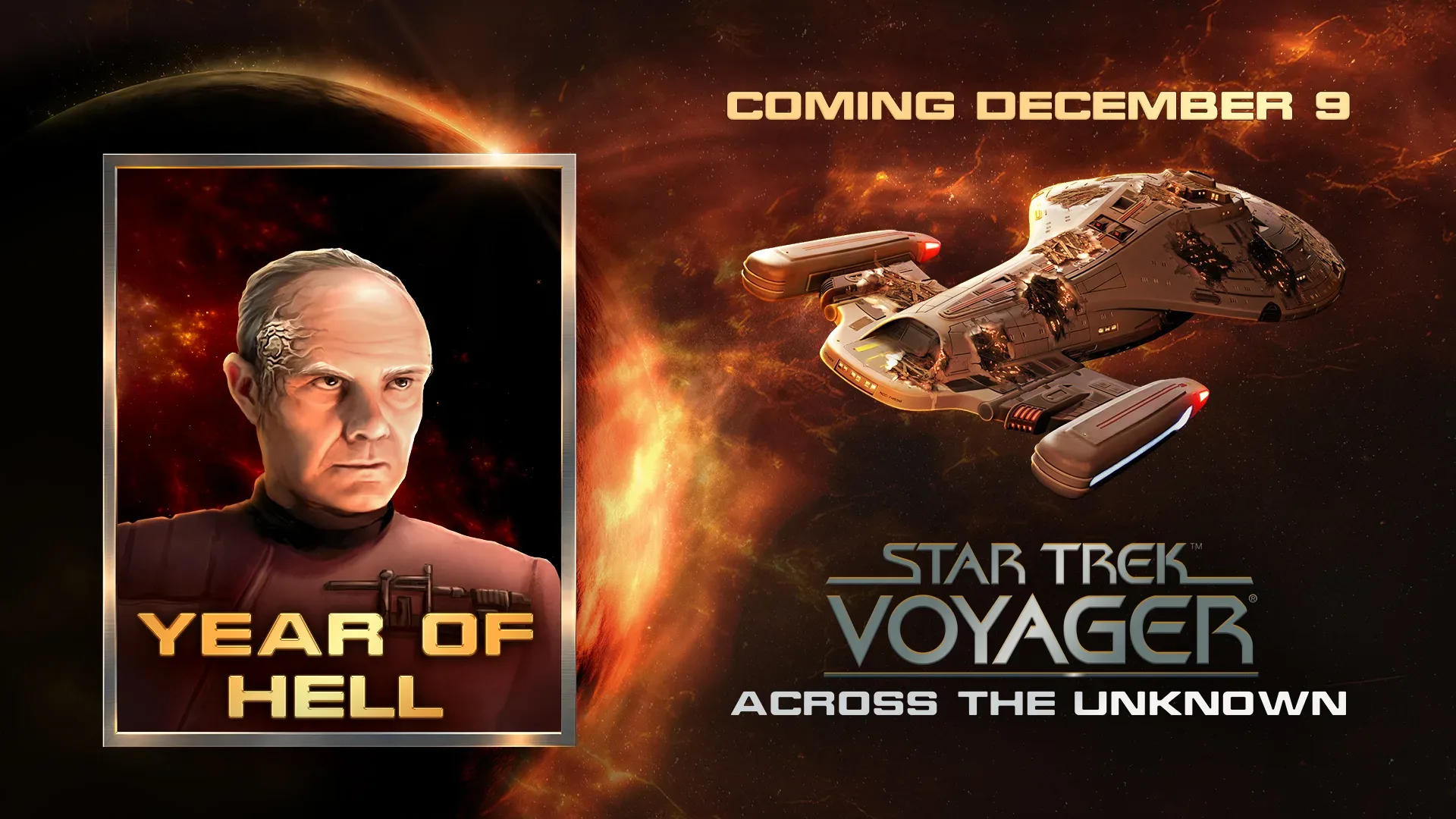
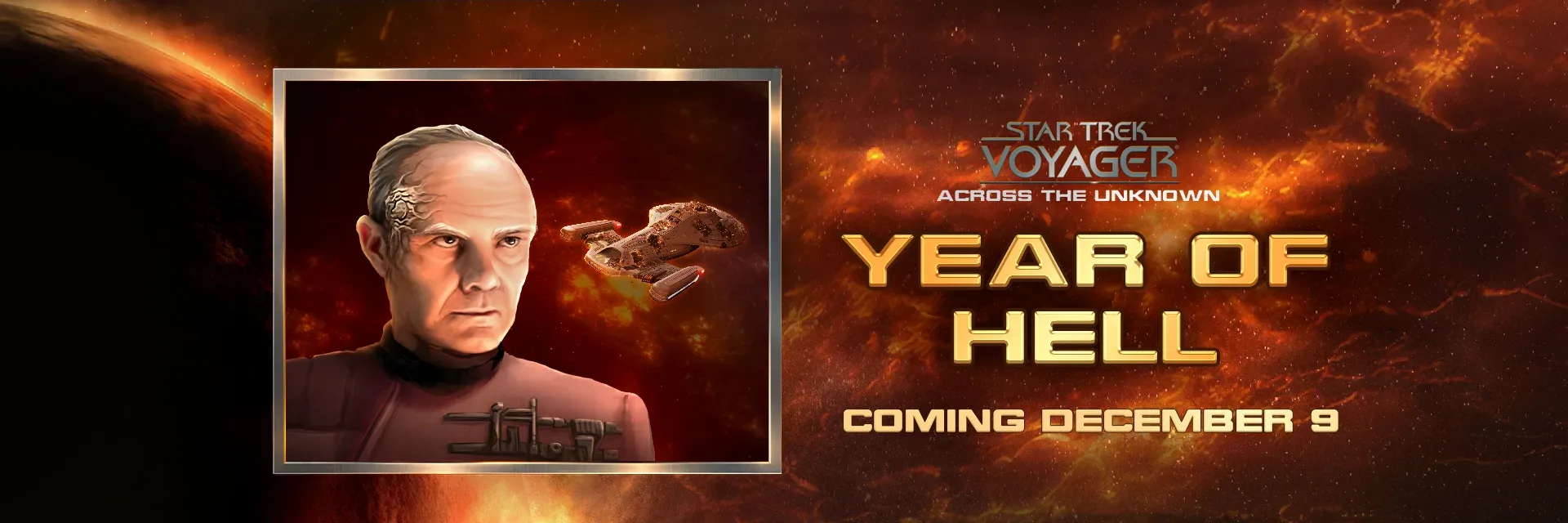
Year of Hell, the fourth and final Expansion Pass add-on for Star Trek: Voyager – Across the Unknown, is scheduled to arrive on December 9 for PC, PlayStation 5 and Xbox Series X|S. A Nintendo Switch 2 version is set to follow on December 28.
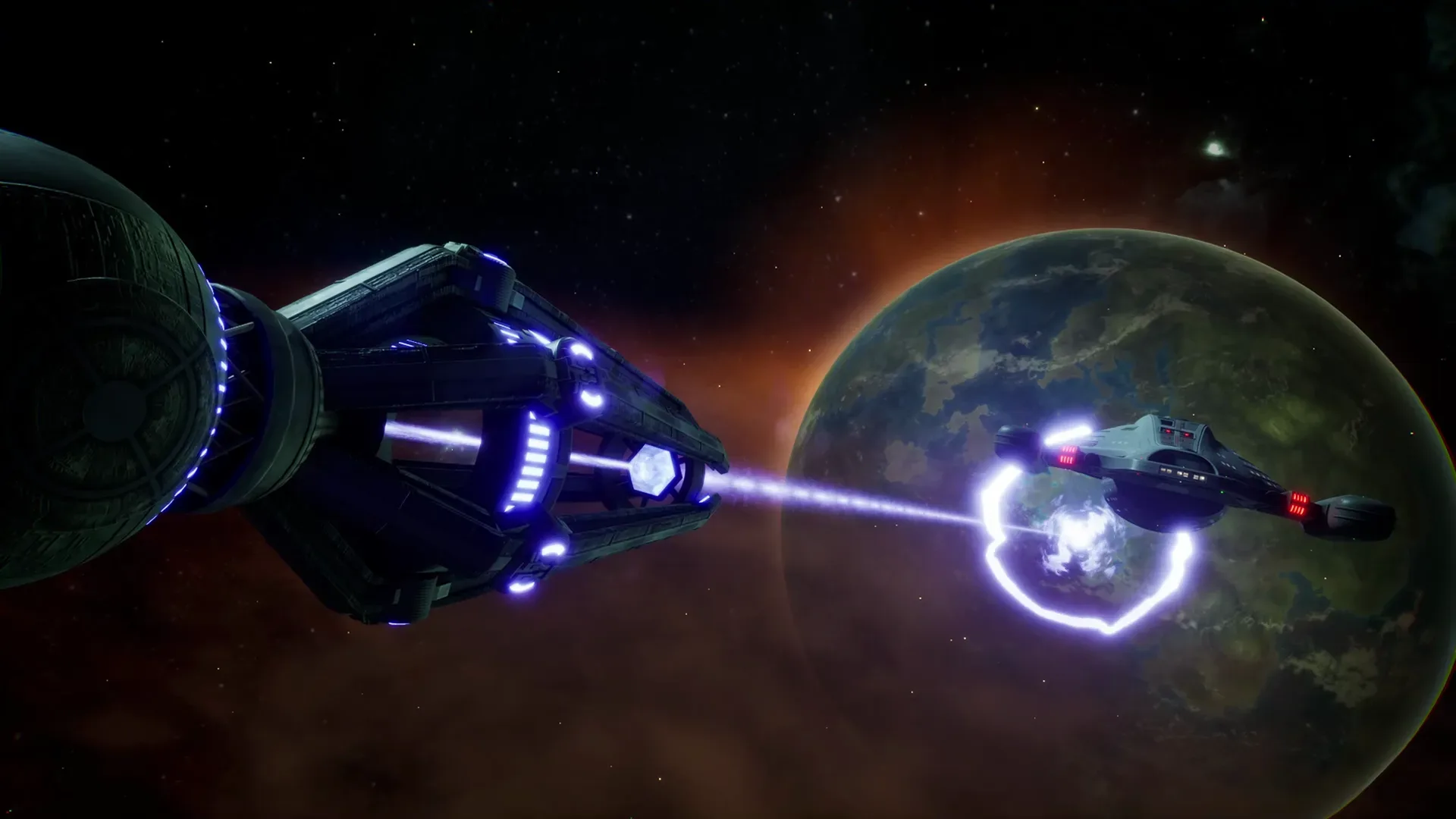
The expansion takes its premise from the two-part Star Trek: Voyager story of the same name, but frames it as a self-contained mini-campaign. Its central threat is Krenim captain Annorax, whose timeship can rewrite history by erasing entire civilizations. The campaign spans twelve months of mounting losses, placing players in a battle not simply to win encounters, but to preserve a ship and crew being steadily diminished by shifts in the timeline.
That setup gives the DLC a markedly different structure from a conventional game expansion. Instead of extending a save with a sequence of extra missions, Year of Hell is designed as a separate scenario with its own story. It will not alter the main-game save, and it does not introduce new side missions, recruitable heroes or research technologies. The base game is required, while Expansion Pass owners will receive the DLC automatically when it launches.
A survival campaign built around losing ground
The key gameplay idea is a reversal of normal progression. In many strategy and management games, players begin with limited capabilities and gradually add systems, upgrades and options. Year of Hell begins from the opposite position: Voyager starts with advanced systems and upgrades already available, then players must try to keep those advantages as the Krenim strip them away.
That is more than a thematic flourish. It changes the practical question behind each decision. A typical progression structure asks what new capability should be pursued next. Here, the pressure is on identifying what cannot be allowed to fail, which damage can be tolerated, and how to operate after the ship loses room, equipment and people.
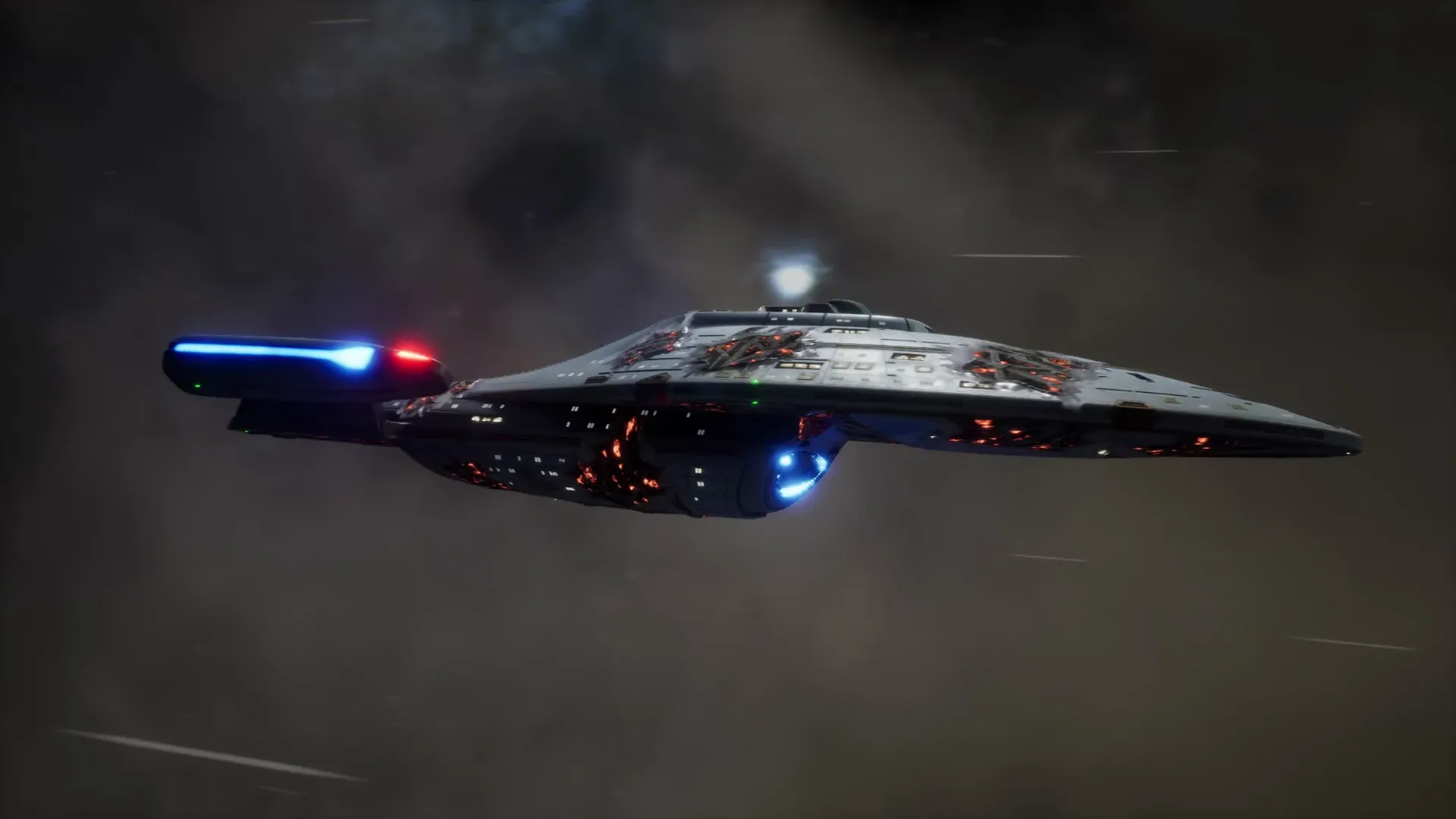
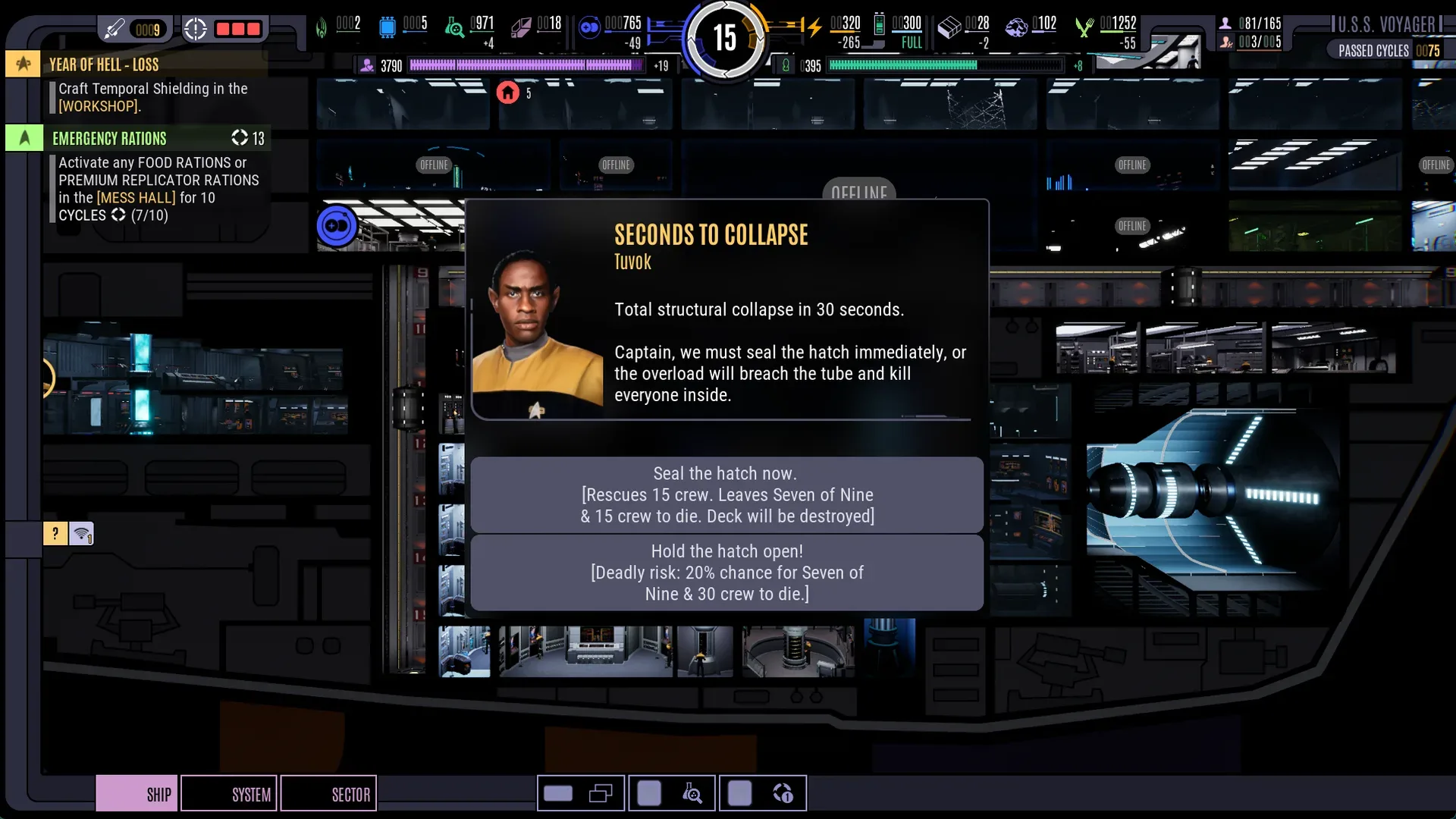
Attrition is the useful term for this kind of design. It means a player’s available strength is worn down over time rather than restored or expanded. In Year of Hell, the announced consequences are unusually tangible: attacks can destroy rooms, remove whole decks from the ship and kill crew members. With the ship’s physical space and resources shrinking, survival is not an abstract meter. The campaign’s stated measure of success is how many crew members make it through the twelve-month ordeal.
That makes every surviving system potentially more important. A lost room is not merely visual damage if it reduces the space available to operate. A dead crew member is not simply a story beat if the campaign is asking players to preserve personnel under escalating pressure. The expansion’s premise suggests that players will have to think in terms of continuity: maintaining enough of Voyager’s essential function to reach the end of the scenario despite cumulative damage.
Annorax and a timeline that can change around the player
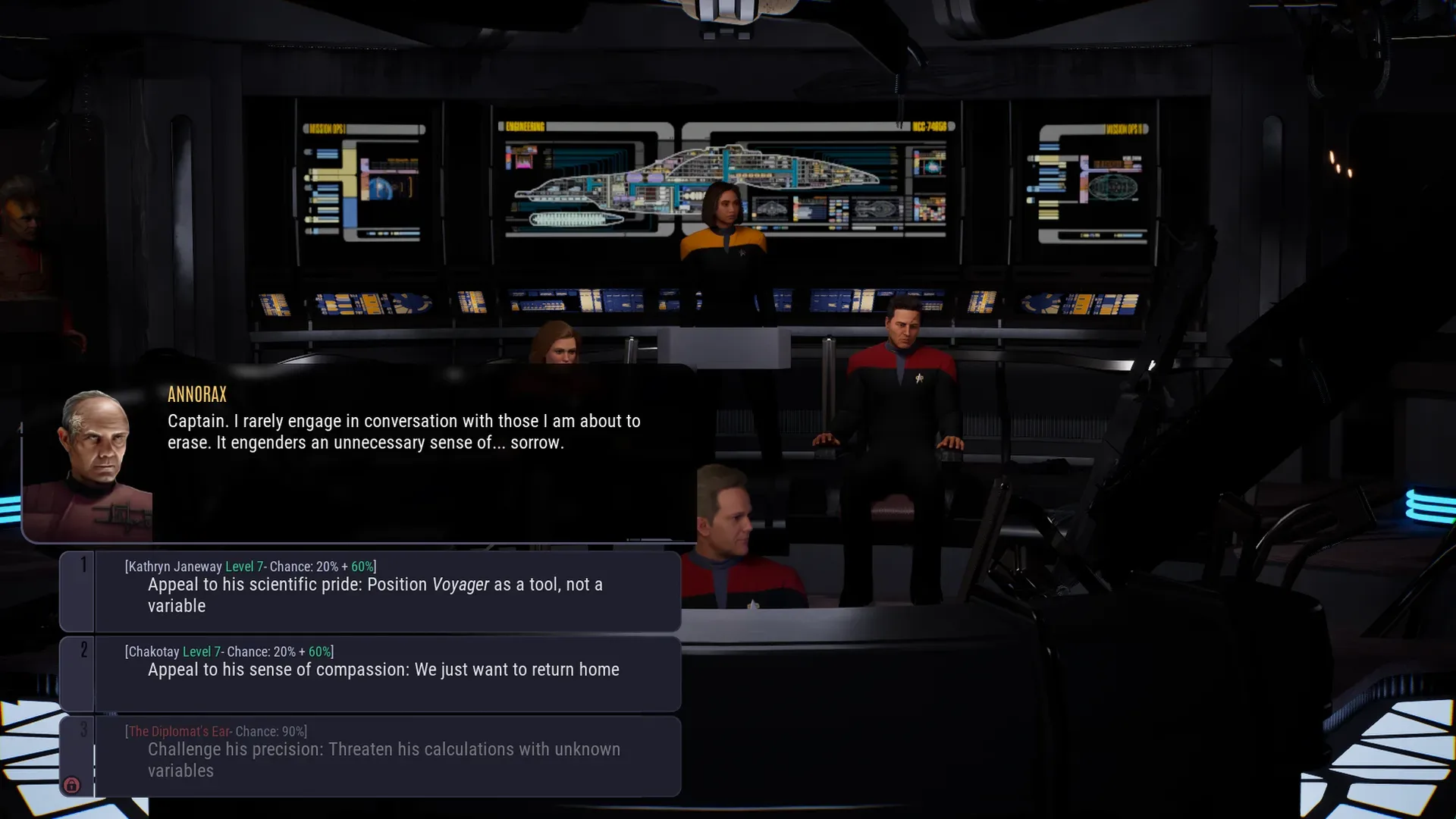
Annorax’s timeship is the engine behind the campaign’s instability. Its ability to erase civilizations means the conflict is tied to changes in history rather than a fixed sequence of battles. Players can attempt to stop Annorax, or they can pursue an alliance that Captain Janeway did not make in the television story. Those decisions influence both the way senior officers respond and how the timeline develops.
Related coverage includes Star Trek: Voyager – Across the Unknown Year of Hell DLC Arrives December 9.
In game-design terms, that is a branching narrative: choices can lead the story along different paths instead of producing one identical outcome for every player. The supplied details do not define every possible route, but they do establish that the consequences extend beyond dialogue. The timeline itself can unfold differently, which fits a scenario centered on temporal intervention.
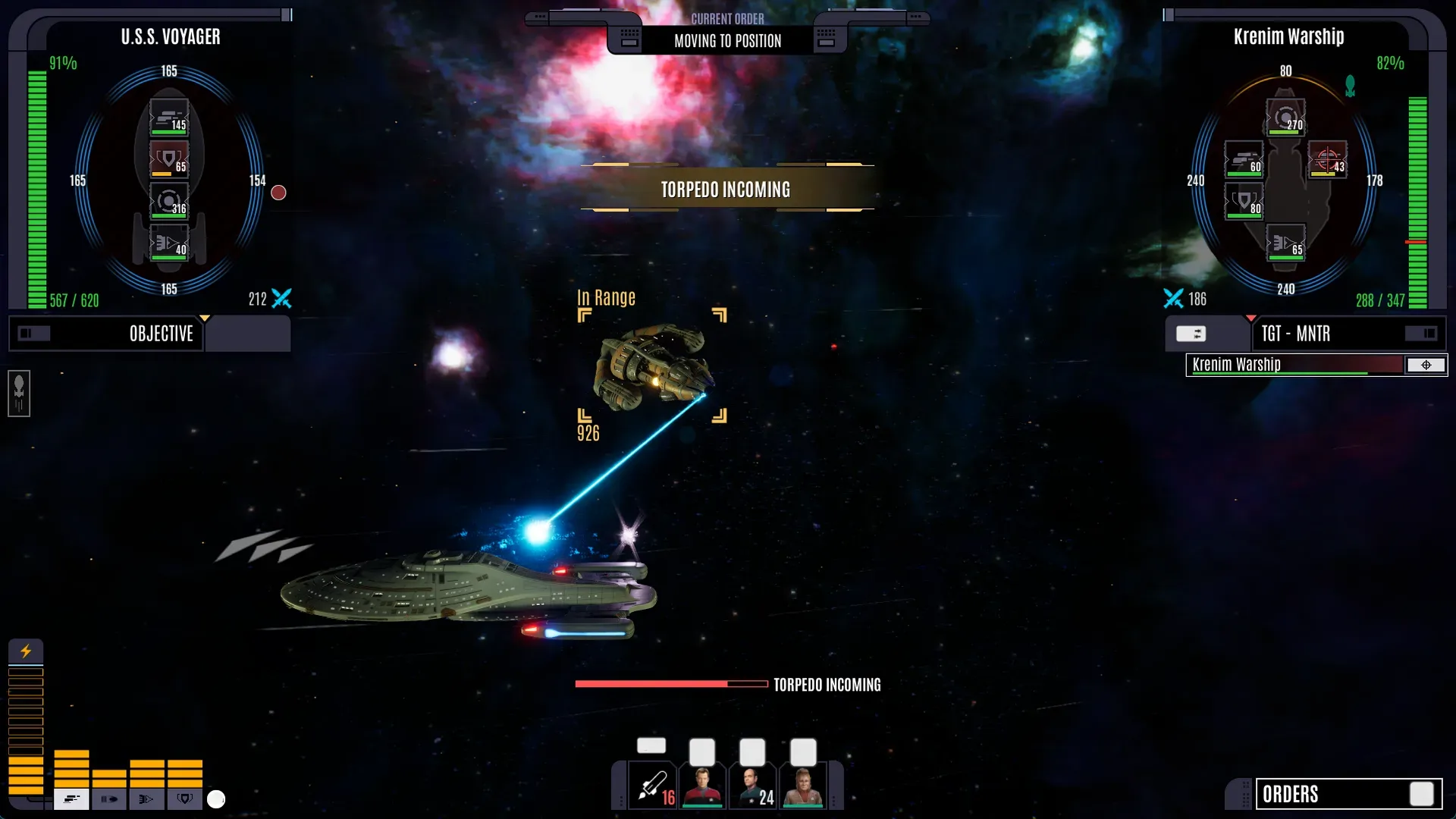
The announced ships reinforce that uncertainty. Year of Hell includes six ships overall and four Krenim vessels, including Annorax’s timeship. The Mawasi Cruiser and Nihydron Warship may become part of the player’s force in some timeline branches, but in others they can turn hostile. Their allegiance is therefore conditional rather than guaranteed.
For players, that distinction matters. An ally is a resource, an enemy is a threat, and a faction that can become either means a choice may affect the shape of later problems. The DLC is not presented as a straightforward mission pack where every encounter has a permanently assigned side. Instead, it uses the timeline premise to make relationships contingent on the route taken.
Why the separate-campaign format matters
Year of Hell’s separation from the main save is an important piece of its design. Because the mini-campaign follows its own story and leaves the central game progress untouched, it can impose losses that might feel unusually severe in a standard ongoing campaign. Destroyed rooms, missing decks and crew deaths are fundamental to the scenario’s survival focus, rather than changes that permanently redefine a player’s primary save.
This also establishes clear expectations for what the expansion is and is not. It is not being positioned as a broad systems update with additional research technologies, a new roster of permanently recruitable characters, or a supply of side activities. Its scope is a concentrated, standalone survival story: begin with a strong Voyager, endure a year of temporal damage and scarcity, and see how many people remain at the end.
That focus should help players decide whether the DLC matches what they want from an add-on. Those looking for a discrete narrative challenge with major stakes for ship integrity and crew survival have a clear premise. Those expecting long-term expansion of the main game’s research, hero roster or side-mission pool should note that those elements are explicitly outside Year of Hell’s remit.
Release timing and platforms
PC, PlayStation 5 and Xbox Series X|S players are due to receive Year of Hell on December 9. The Nintendo Switch 2 edition arrives later, on December 28. Expansion Pass owners will receive it automatically at launch, though ownership of Star Trek: Voyager – Across the Unknown remains necessary.
As the fourth and final Expansion Pass release, Year of Hell closes the announced run of DLC tied to that pass. Its choice-driven timeline, conditional ship alliances and deliberately inverted progression create a more punishing setup than an expansion built around accumulating improvements. The objective is not simply to become more capable by campaign’s end. It is to retain enough of what Voyager began with to survive history being rewritten around it.
Players following other recent add-on plans can also see how varied DLC scopes can be: Hotel Architect’s Poolside Paradise expansion, for example, is centered on new spaces and scenarios, while Year of Hell is explicitly structured around a self-contained survival campaign and controlled loss.