Star Trek: Voyager – Across the Unknown has added Q Trials, a free roguelite mode that turns the Delta Quadrant voyage into a repeatable series of escalating runs. Released alongside the paid Equinox DLC, the update is now available for owners of the base game on PC, Nintendo Switch 2, PlayStation 5 and Xbox Series X|S.
The new mode is framed around Q, the omnipotent being who has rarely been known for making anyone’s life easier. Q Trials asks players to guide a crew through a succession of sectors whose events and objectives are procedurally generated. In practical terms, that means the circumstances, sector goals and decisions encountered in one run are not intended to be a fixed template for the next.
For a game built around starship management and the difficult logistics of getting home, that structure shifts the emphasis toward adapting to changing conditions. The permanent rewards offered between sectors should also give unsuccessful attempts a degree of forward momentum, rather than making every lost run a complete reset. The Equinox expansion, meanwhile, offers a deliberately harsher version of that premise through a smaller, more constrained ship.
What Q Trials adds to the base game
Q Trials is included at no extra charge for everyone who owns Star Trek: Voyager – Across the Unknown. It is separate from the paid Equinox content, though the DLC is designed specifically to expand the mode with an additional playable vessel, characters and questline.
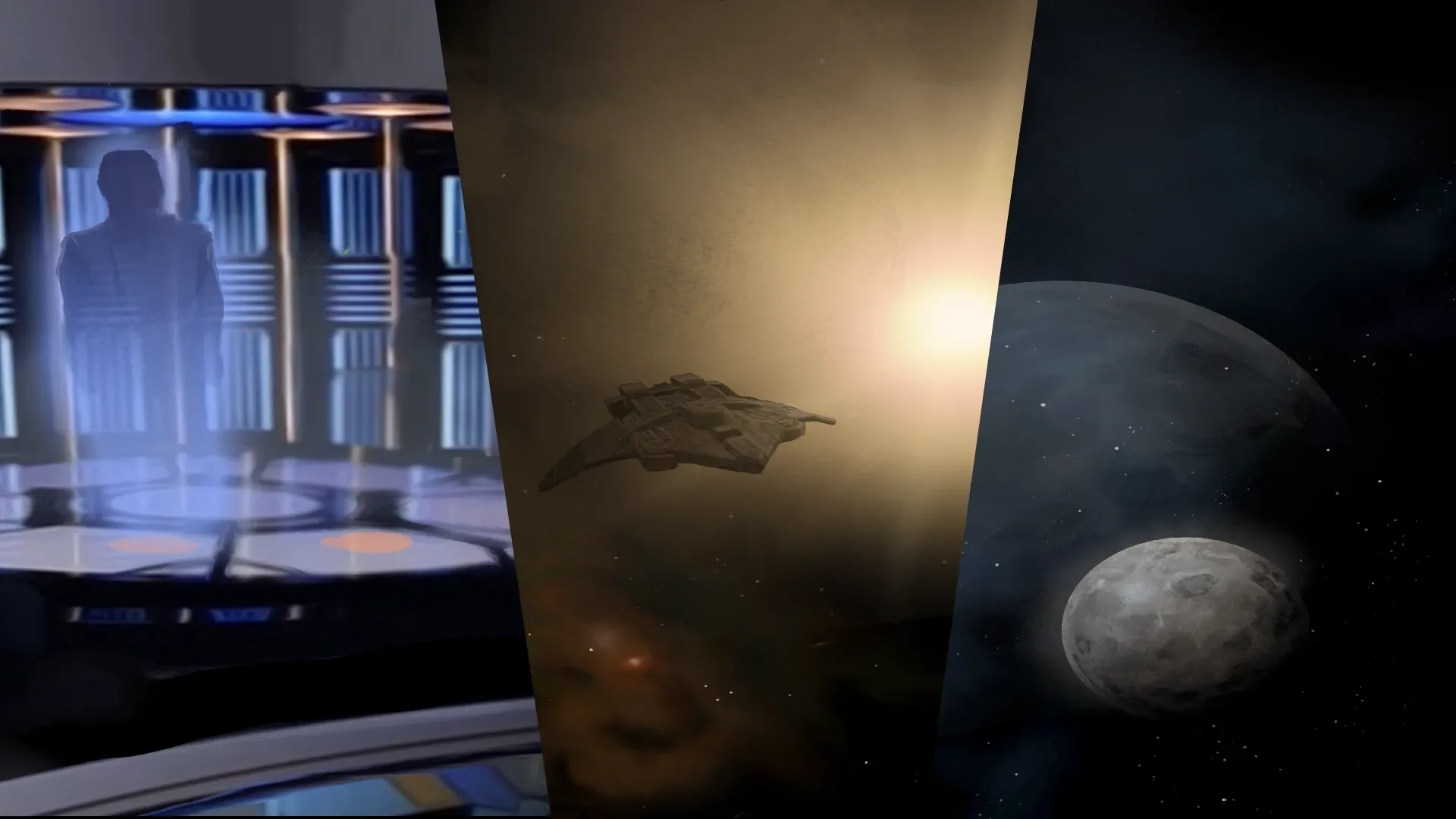
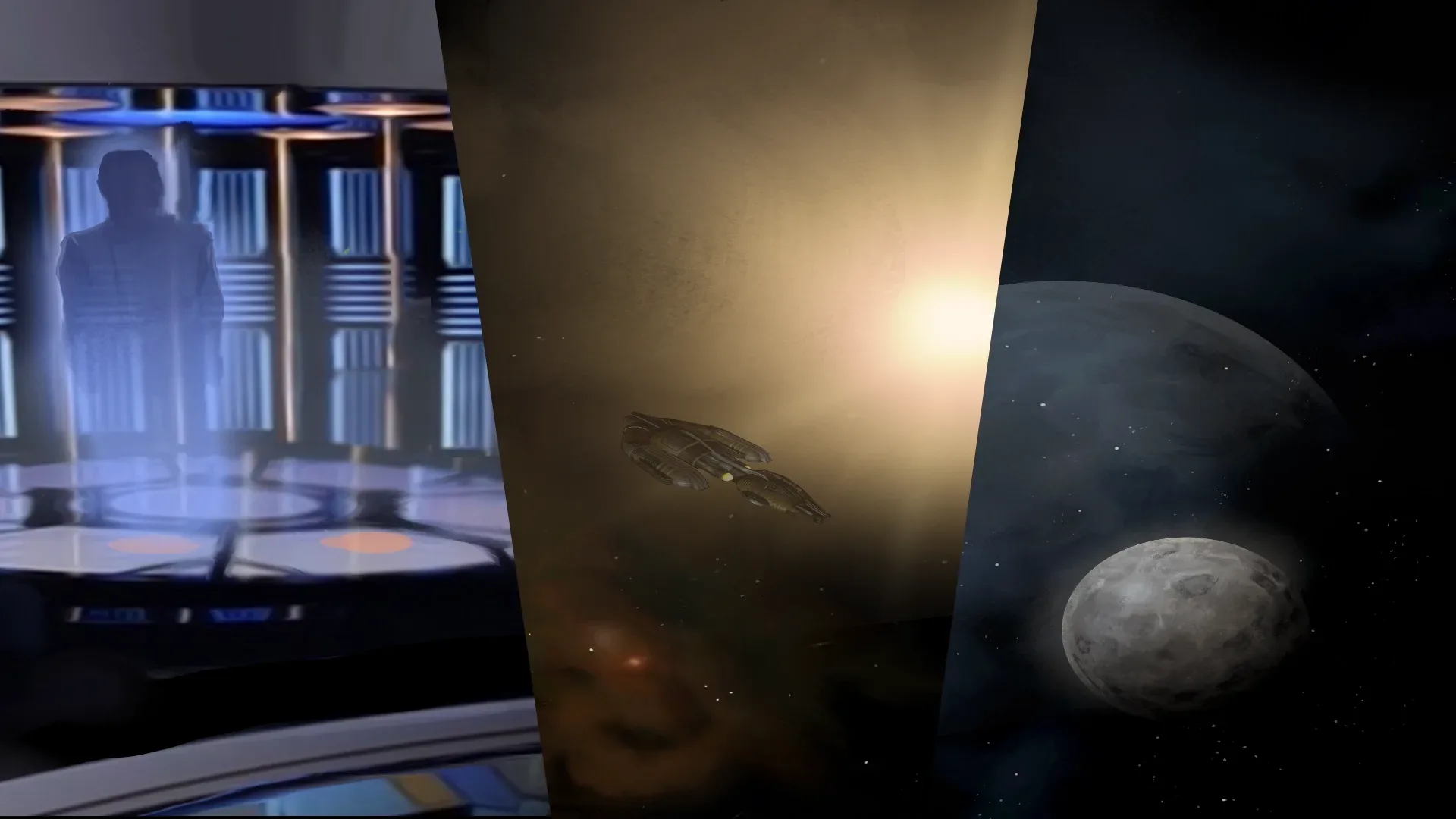
The core loop has players undertake a run through the Delta Quadrant, completing random sector goals and dealing with procedural events. A roguelite is generally a run-based structure in which changing encounters and loss are part of the design, but some progress can persist between attempts. Here, that persistent layer comes from the choices Q presents at the end of every sector.
Players select one of three rewards:
- Resources
- New heroes
- New technologies
Those rewards feed into permanent meta progression. Meta progression refers to advancement that carries beyond a single run: unlike a temporary supply cache or a short-lived tactical benefit, these are choices meant to broaden future possibilities. The announcement does not detail every available reward or the exact systems they affect, so it remains unclear how quickly options accumulate or whether particular rewards are tied to particular routes. What is clear is that the mode gives players a reason to think beyond the immediate sector.
That makes each end-of-sector selection a decision about both survival and future flexibility. Resources may help stabilize a difficult present. A hero may open up a crew combination unavailable before. Technology could support a longer-term strategy. Since only one of three offered rewards can be taken, Q Trials is built around opportunity cost as much as simple accumulation.
Q modifiers make beneficial changes come with consequences
The other major wrinkle is the introduction of Q modifiers. These are rule-altering effects that create explicit trade-offs, rather than straightforward upgrades. The cited examples show how sharply the mode can redirect a run’s priorities.
- Doubling crew-quarters capacity can also increase sickness.
- Additional morale can come at the cost of slower building speed.
- The likelihood of extreme positive and extreme negative outcomes can both rise.
Those effects fit the mode’s Q-centered premise: an intervention may look helpful at first, yet create a problem somewhere else in the ship’s ecosystem. More quarters capacity could relieve pressure from a growing crew but ask players to account for a greater health burden. Extra morale may help one part of crew management while construction becomes less responsive. Raising the odds of extremes introduces volatility, which can be useful when a run needs a big swing but dangerous when stability is the priority.
This is important because modifiers are not merely difficulty sliders. They appear to alter the relationships among ship-management systems. The player is therefore not just choosing “better” or “worse” conditions, but choosing which complication the crew is most prepared to absorb. The supplied details do not establish whether all modifiers are optional, how often they appear, or whether individual effects can be removed later, so players should not assume every run offers the same degree of control.
Crew experimentation includes Captain Harry Kim
Q Trials also places a substantial focus on customization and alternative crew assignments. The stated example is one that should immediately catch the attention of Voyager fans: Harry Kim can be promoted to Captain.
That does not necessarily mean the mode abandons all narrative logic; rather, it signals a space where unconventional crew arrangements are part of the attraction. In a campaign, roles and story context can naturally impose firmer limits. A replay-driven mode is more suited to asking what happens when players break from familiar command structures and pursue combinations that would not be the obvious canonical choice.
It is a meaningful distinction for replayability. Randomized events can change what happens to a player, but assignment customization changes how a player responds. Together, those two layers can make repeated voyages feel mechanically different even when the broad objective remains reaching the next sector. Players interested in games that build variety through shifting systems rather than a linear set of missions may find Q Trials’ design familiar in intent; its specific hook is applying that structure to the pressure cooker of Voyager’s stranded crew.
Equinox is a tougher Q Trials-only option
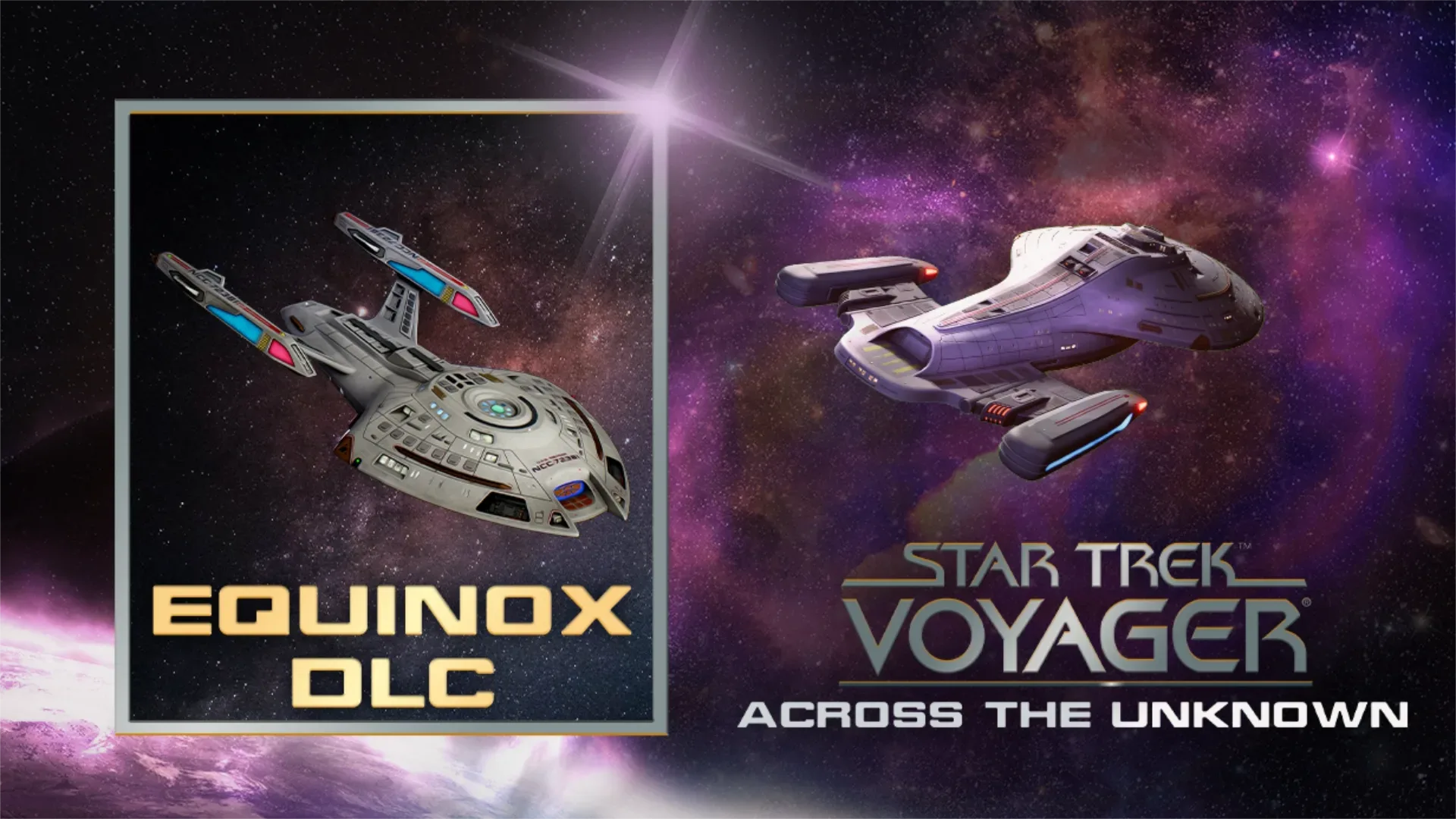
The Equinox DLC is available either through the Expansion Pass or as a standalone purchase. Expansion Pass owners already have access. It requires the base game and does not add a new ship to the main campaign; the U.S.S. Equinox is playable exclusively in Q Trials.
Its limitations are central to the expansion rather than incidental flavor. The U.S.S. Equinox is significantly smaller than Voyager, and has less building space, a lower crew capacity and reduced warp power. Each restriction narrows the margin for error:
- Less building space means tighter choices over which ship functions can be accommodated.
- Lower crew capacity makes each crew slot more consequential and leaves less room to solve problems through sheer numbers.
- Reduced warp power places another constraint on moving through the Delta Quadrant.
That package is positioned as a tougher challenge, not simply an alternate cosmetic route. The ship asks players to make difficult resource-management calls with fewer structural advantages than Voyager provides. The available information does not quantify these disadvantages, so there is no basis yet for declaring Equinox a particular percentage harder or recommending an optimal approach. But its intended identity is straightforward: it is the compact, pressured choice for players who want Q Trials to make every allocation hurt a little more.
For broader context on games receiving substantial new modes after launch, see our coverage of The Elder Scrolls Online’s evolving seasonal plan.
Three Equinox crew members join the mode
Equinox adds three recruitable heroes, all of whom are exclusive to Q Trials and cannot be used in the main campaign:
- Captain Rudolph Ransom, captain of the U.S.S. Equinox and an accomplished xenobiologist.
- First Officer Maxwell Burke, a pragmatic Starfleet officer with technical expertise.
- Crewman Noah Lessing, a committed crewman whose loyalty and resolve are tested.
Their Q Trials-only status reinforces the distinction between this mode and the game’s campaign. These are not described as campaign-story additions or universally selectable personnel. Instead, they expand the pool of possible choices inside the repeatable mode, where heroes are one of the rewards players can select at sector breaks.
The announcement does not provide specific gameplay abilities for Ransom, Burke or Lessing, so their tactical roles cannot be assessed from the available details. Their descriptions, however, point to the themes around Equinox: command, technical pragmatism, science and pressure on personal loyalty. That is apt for a ship defined here by restricted capacity and difficult choices.
“Spirits of Good Fortune” puts an Equinox moral choice under Q’s eye
The DLC’s narrative component is an Equinox-exclusive questline called Spirits of Good Fortune. It follows the ship’s tragic situation after it is stranded and driven close to its limits by the Krowtonan Guard. The crew encounters the Ankari and faces a decision that could offer a quicker route home, but only by leaving Starfleet principles behind.
Q monitors choices made throughout the mode, making the framing more than a simple challenge-run premise. The supplied details do not say how those choices change individual endings, rewards or later events, and they do not define the full range of possible outcomes. Still, the central conflict is plainly stated: expedience is set against the standards the crew is supposed to uphold.
That is especially resonant in a mode where mechanical choices already have costs. Q modifiers ask what drawback a player will accept to improve the ship’s situation. The Equinox questline asks a narrative version of the same question: when the path home becomes available, what principle is the crew willing to compromise? The game’s systems and story are therefore pointed in a similar direction, even if the exact consequences remain undisclosed.
Platforms, access and what players need
Q Trials and the Equinox DLC are available now on PC, Nintendo Switch 2, PlayStation 5 and Xbox Series X|S. The base game is required in every case. Q Trials costs nothing beyond ownership of the base game, while Equinox is paid DLC that can be obtained standalone or through the Expansion Pass.
For existing owners, the practical split is simple. Q Trials is the free entry point for procedural Delta Quadrant runs, flexible crew experimentation, Q modifiers and persistent rewards. Equinox is the optional escalation: a more restricted ship, three additional Q Trials heroes and the Spirits of Good Fortune questline. Players who prefer Voyager’s larger operational footprint can explore the new mode without buying the DLC; those looking for a tighter set of constraints have an additional route through the U.S.S. Equinox.