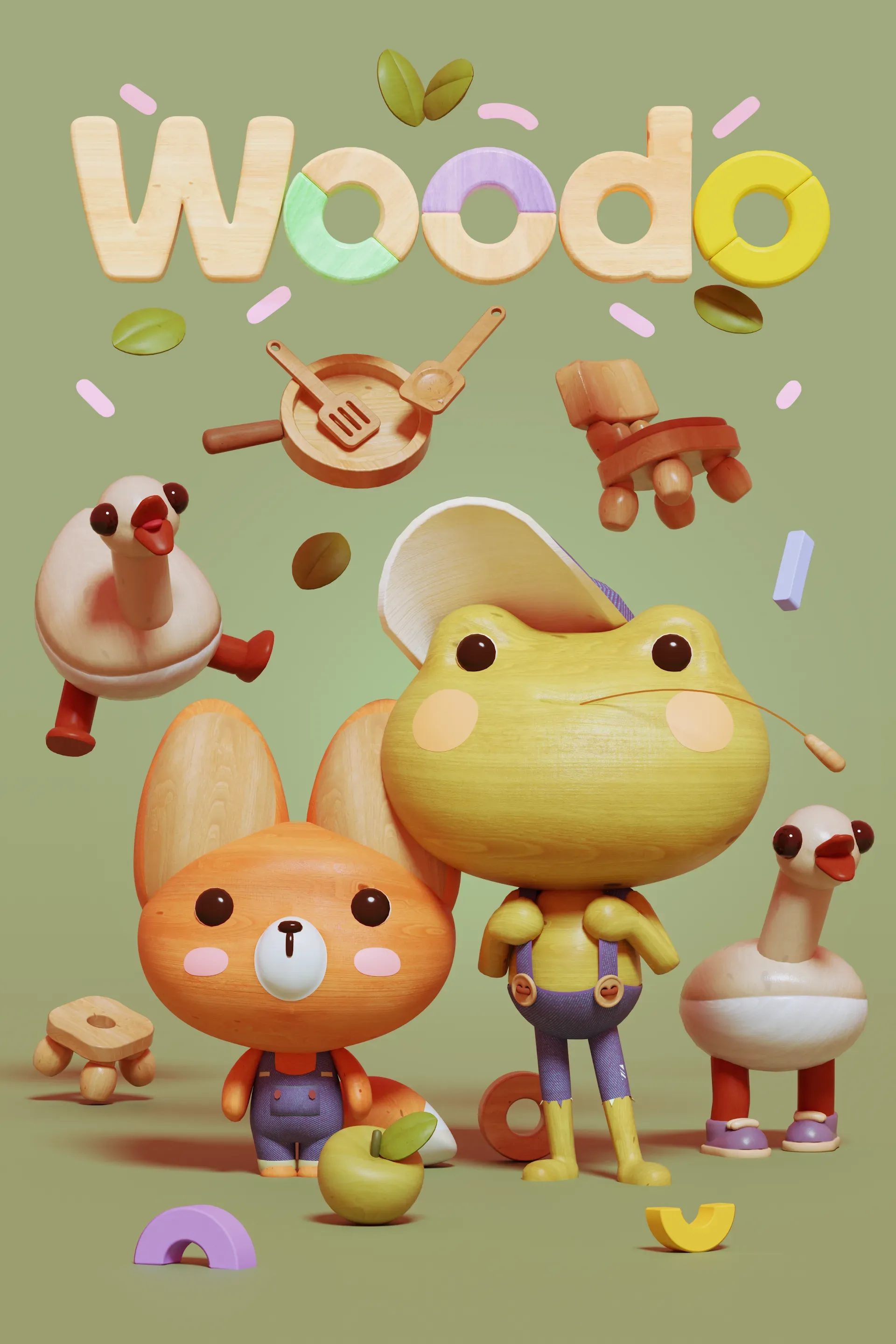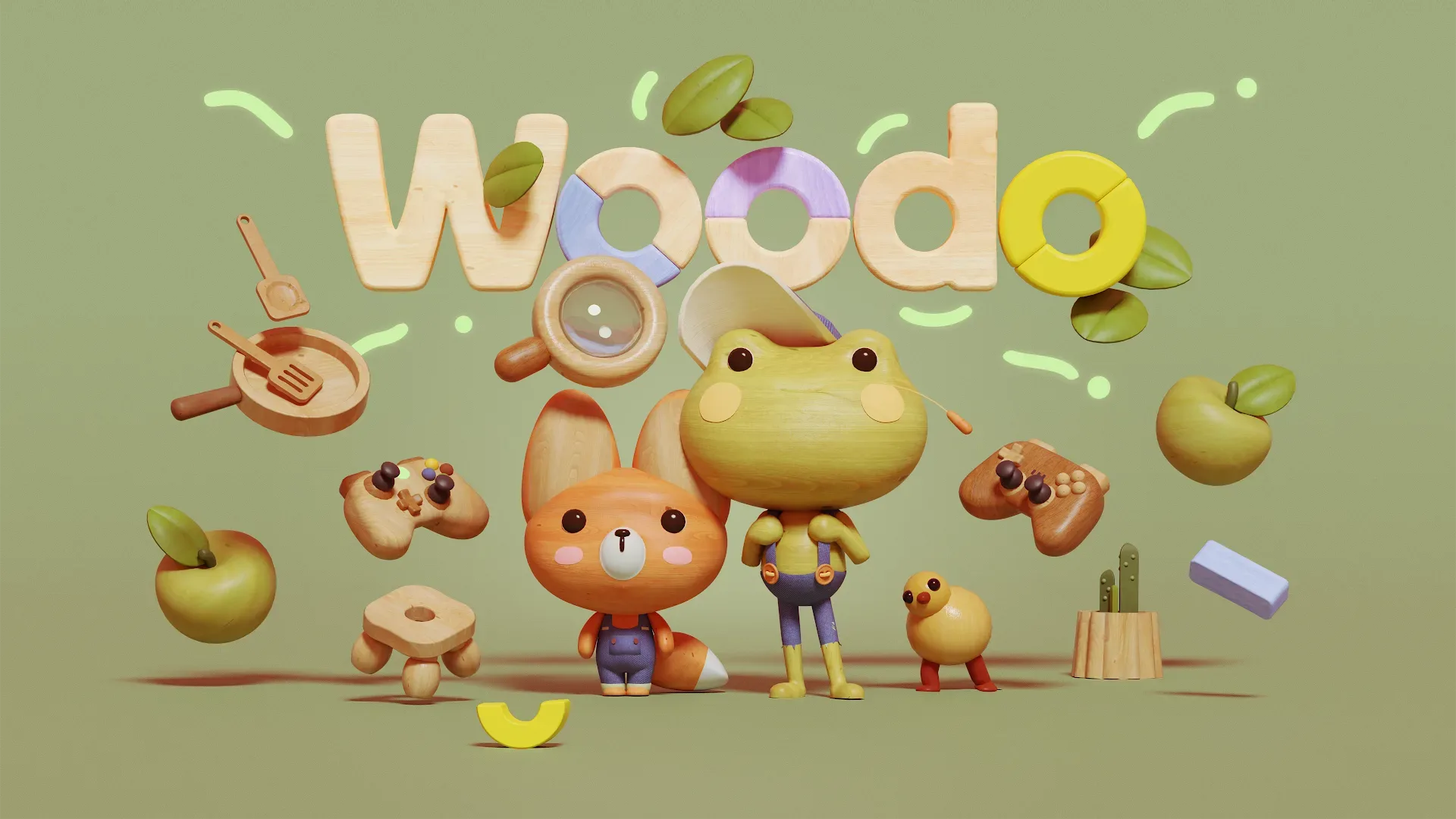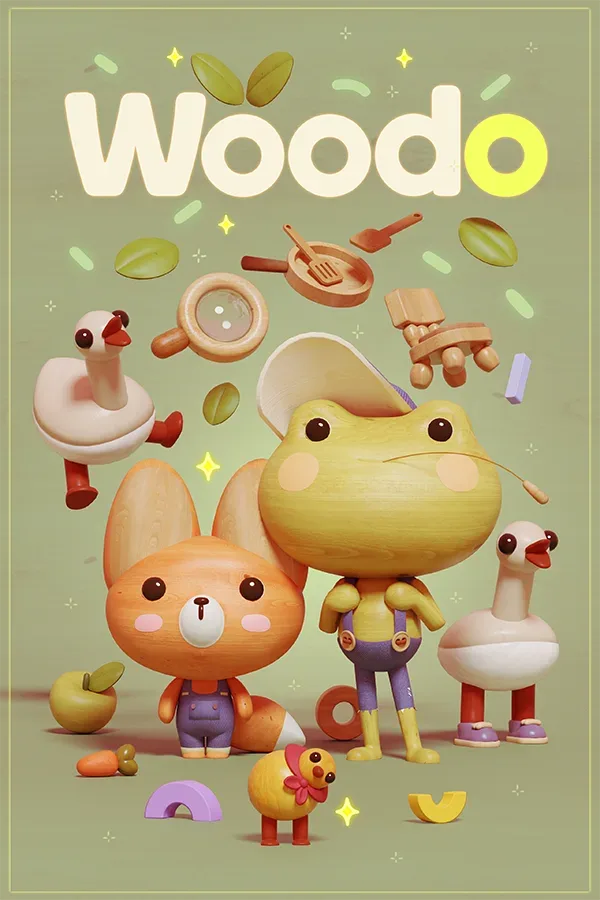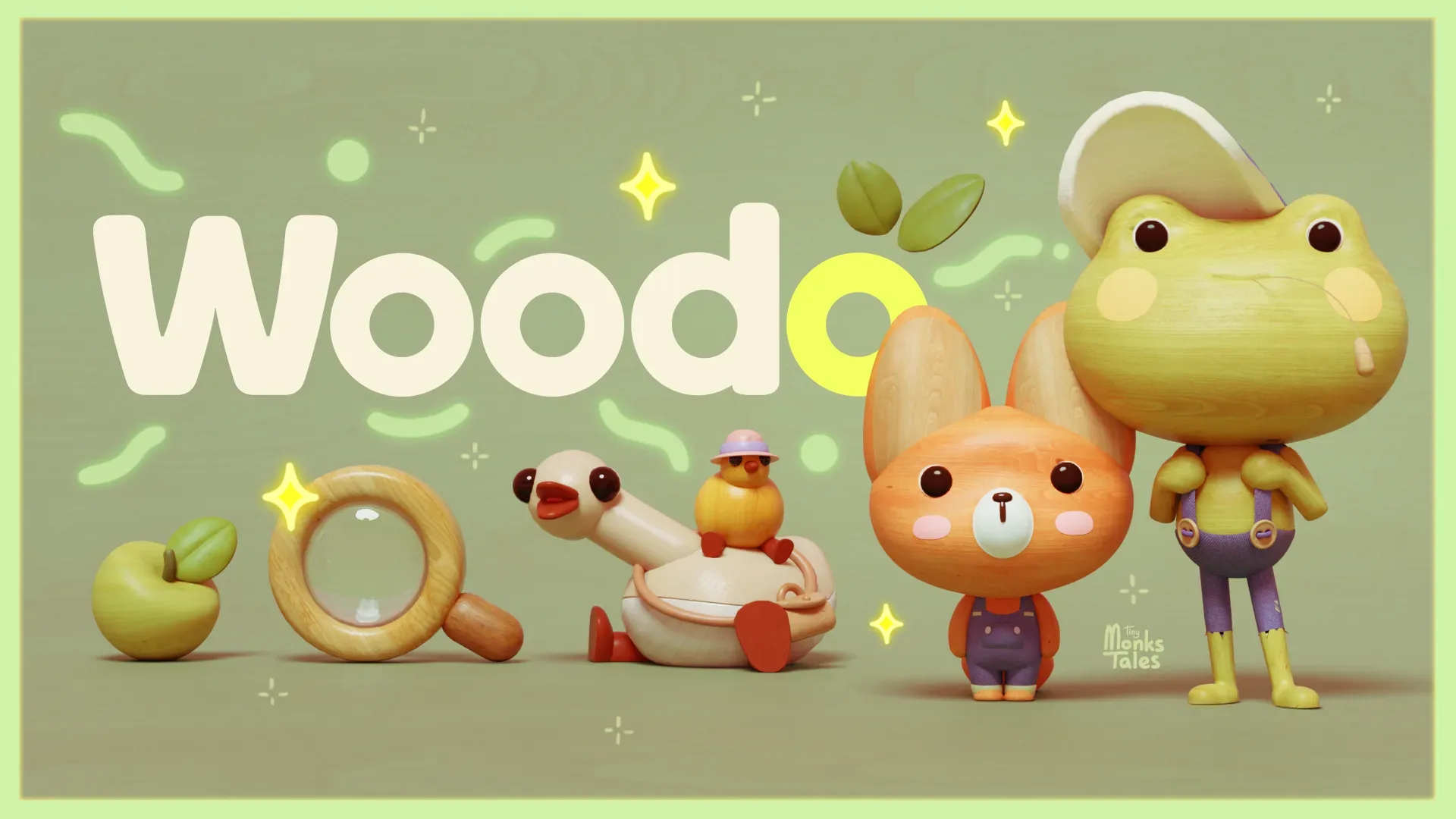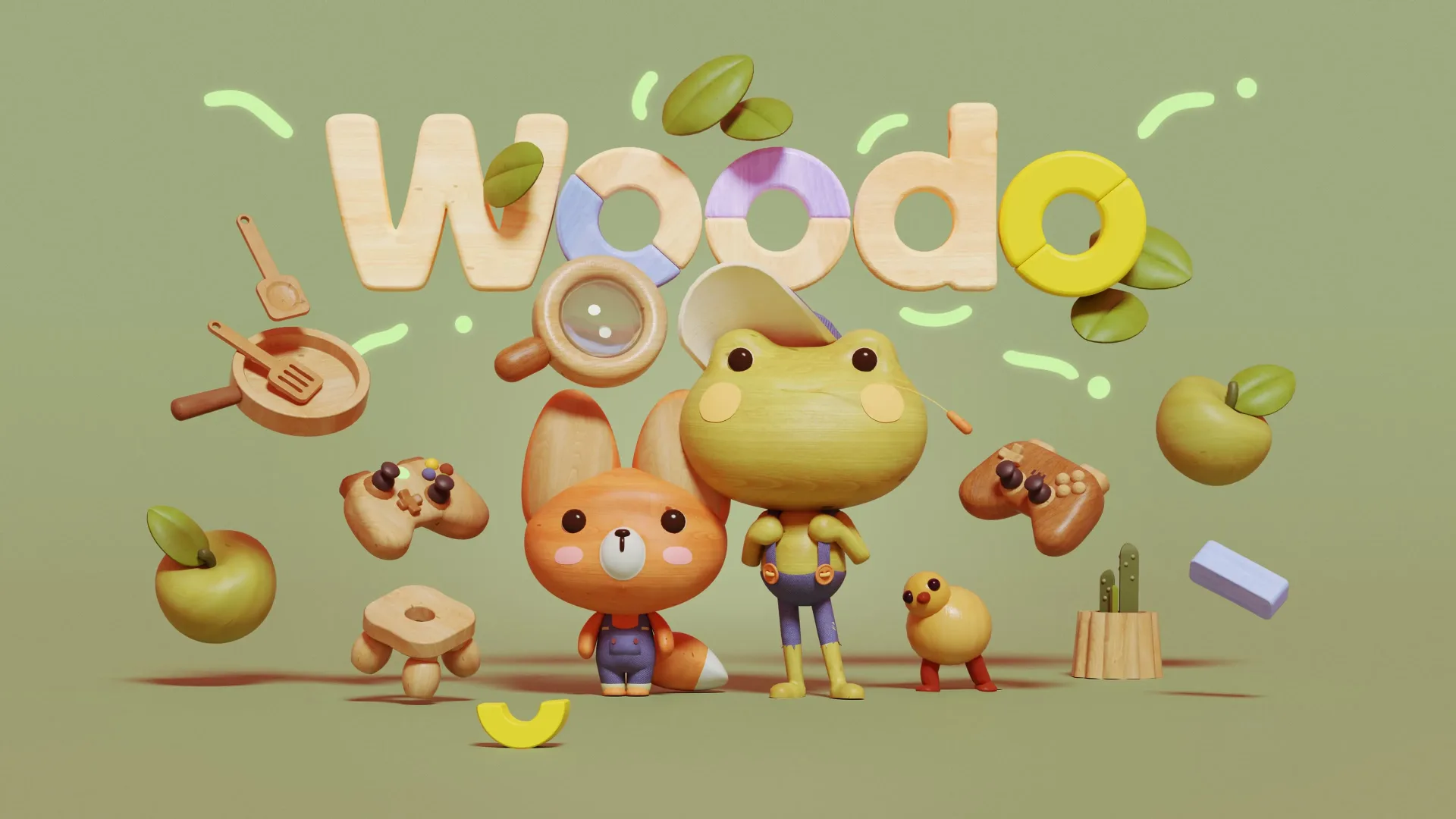
Woodo is now available on Steam, PlayStation 5, Xbox Series X|S and Nintendo Switch. Developed by Tiny Monks Tales and published by Daedalic Entertainment, the puzzle-based story follows Foxy and Ben the Frog through a summer of small outdoor adventures, using the assembly of bright 3D dioramas as both its central interaction and its storytelling device.
The release arrives with a notably broad platform spread for a game built around a quiet, tactile premise. Woodo’s core idea is not competition, combat, or high-speed precision. Players piece together scenes, and as correctly placed parts click into position, the dioramas fill out with color, animation, and narrative detail. The stated aim is to make a digital puzzle feel more like handling a physical toy: something picked up, fitted together, and gradually made whole.
A puzzle game built around assembling scenes
A diorama is a miniature, three-dimensional scene designed to present a setting or moment in a compact physical space. In Woodo, that idea is translated into interactive 3D puzzle spaces. Rather than treating a completed image as the sole reward, the game frames each assembled piece as part of a living scene. The environment becomes more expressive as it is completed, with vibrant color and playful animation helping reveal what Foxy and Ben are doing.
That distinction matters for understanding Woodo’s pitch. It is not simply a story with puzzles inserted between its scenes, nor is it presented as a traditional abstract puzzle collection. The act of putting objects and details in place is meant to be the means by which players encounter the story. The game’s visual spaces are consequently doing several jobs at once: they are puzzles to solve, miniature places to inspect, and a format for unfolding character moments.
The available details describe the experience as wholesome and companion-driven. A friendly narrator guides the player through the summer setting, while Foxy, Ben the Frog, and a wider cast of humorous characters establish the tone. The emphasis is on simple surprises, outdoor adventures, and a carefree atmosphere rather than danger or escalating stakes.
What “tactile” means in a digital game
Woodo repeatedly foregrounds tactile satisfaction, a term that can be easy to misunderstand when the game is played with a controller, mouse, or handheld system rather than actual wooden pieces. Here, tactile does not mean the game supplies a physical object. It describes the feedback loop surrounding placement: a piece is selected, moved into its intended position, and confirmed with the sensation of a satisfying click.
That feedback is important because it gives an otherwise digital action a clear sense of completion. In a physical construction toy or jigsaw, a player can feel when parts settle into place. Woodo seeks to recreate the emotional equivalent through its piece-fitting behavior and audiovisual presentation. Its colorful scenes and playful animations are therefore not merely decorative; they reinforce the idea that every successful placement has changed the miniature world in a noticeable way.
For players, the practical implication is that Woodo appears aimed at a slower, more observational rhythm. The satisfaction comes from seeing a small environment take shape and from noticing the details that are enabled as it does. Anyone looking for a puzzle game defined by time pressure, score chasing, or complex systems should recognize that the announced focus lies elsewhere: on clarity of interaction, presentation, and warmth.
Storytelling through construction
Woodo’s approach also gives its narrative a physical metaphor. As pieces are placed, the world comes alive; as the diorama becomes complete, the moment it depicts becomes easier to understand. This is a natural fit for a story about nostalgia and childhood-style summer exploration, because the player is not just watching a remembered scene. They are actively rebuilding it detail by detail.
The game’s two named companions are Foxy and Ben the Frog. Beyond their role in the summer story, their presence signals that the game is interested in character-led comfort rather than a lone-player puzzle format. The narrator provides another layer of guidance, helping move players through the experience while the characters and animated scenes carry its personality.
The announcement does not specify the game’s total number of dioramas, its length, puzzle difficulty range, accessibility options, or control differences between platforms. Those are meaningful details for prospective players, particularly for a game centered on placement and visual inspection, but they have not been outlined here. What is clear is the intended mood: a gentle, narrative-led puzzle experience in which the process of assembling each scene is central to the appeal.
Platforms and the Switch 2 upgrade offer
Woodo is available on PC via Steam, as well as PlayStation 5, Xbox Series X|S, and Nintendo Switch. The multi-platform launch gives players a choice between a desktop storefront and several console ecosystems without changing the basic premise of the game.
There is one platform-specific offer detailed for Nintendo players: purchasers of the Nintendo Switch version receive a free upgrade to the Switch 2 version. An upgrade offer of this type is especially relevant for players deciding whether to buy on the existing Switch hardware now rather than wait to play on the newer system. It means the Switch purchase is positioned to carry forward to the Switch 2 edition without requiring another purchase for that version.
No comparable upgrade offers, cross-platform progression details, or platform-exclusive features have been identified for Steam, PlayStation 5, or Xbox Series X|S. Buyers who care about those particulars should avoid assuming they are included merely because the game has launched on multiple systems.
Woodo joins a busy cross-platform release landscape in 2026, where smaller games with a strong central idea are competing for attention alongside much larger productions. For another upcoming example on the release calendar, Ratatan is scheduled to reach version 1.0 on October 15. Woodo occupies a distinctly different space: its appeal is the deliberate reconstruction of cozy scenes rather than action-oriented spectacle.
Endless Summer Edition includes soundtrack and DLC
Alongside the standard game, Woodo has an Endless Summer Edition. This bundle includes the full game, a digital soundtrack containing 39 tracks, and the Supporter Pack DLC.
A digital soundtrack is a separate music release intended for listening outside the game, and the 39-track count indicates that music is being treated as a substantial component of the package. For a title that relies on a nostalgic seasonal setting and carefully staged dioramas, a soundtrack bundle is a natural complement, allowing players who connect with the atmosphere to revisit its music independently.
The Supporter Pack DLC adds extra content, although the specific contents have not been detailed. DLC, or downloadable content, is additional material associated with a game after or alongside its release. The label alone does not establish whether those extras affect story progression, puzzle content, cosmetics, or another part of the package, so prospective buyers should not infer a specific kind of addition from the name.
The Endless Summer Edition is therefore best understood as a bundle for players who want the base game, its music, and the stated additional content together. The announcement identifies its ingredients but does not provide pricing, a breakdown of the DLC extras, or separate availability information for each element.
Who Woodo is positioned for
Woodo’s most distinctive promise is not simply that it has puzzles, but that it wants every correct placement to feel pleasant. Its diorama format, toy-like click feedback, narrator, and summertime framing all point toward players who value mood and gentle progression alongside interaction.
That makes the release potentially relevant to several overlapping audiences: people who enjoy visually driven puzzle games, players looking for a lower-intensity narrative companion, and those who enjoy games that make a small environment feel increasingly alive as they interact with it. The colorful presentation and humorous characters further suggest an experience designed to be inviting rather than austere.
At the same time, the available information sets sensible boundaries on expectations. There is no stated promise of open-world exploration, branching narrative choices, competitive modes, procedural challenge systems, or elaborate simulation mechanics. Woodo is being presented with a more focused identity: assemble miniature 3D scenes, watch them animate into story moments, and spend time with Foxy, Ben the Frog, and their summer world.
With the game now out on Steam, PS5, Xbox Series X|S, and Switch—and with a free Switch-to-Switch-2 upgrade attached to the Nintendo version—players can choose the platform that best fits how they want to settle into its toy-box puzzle format.