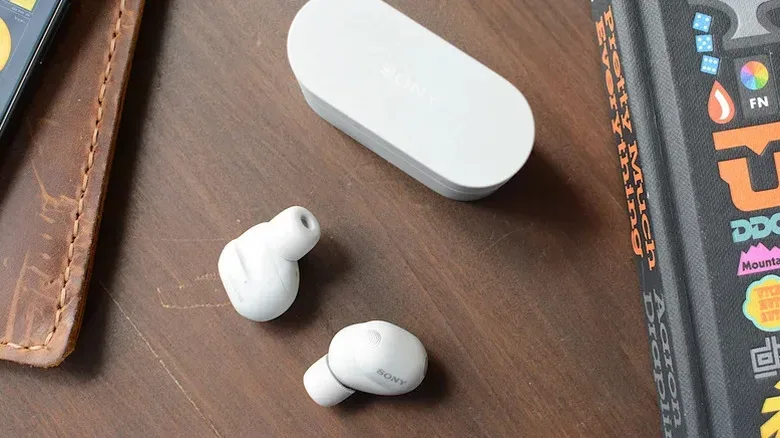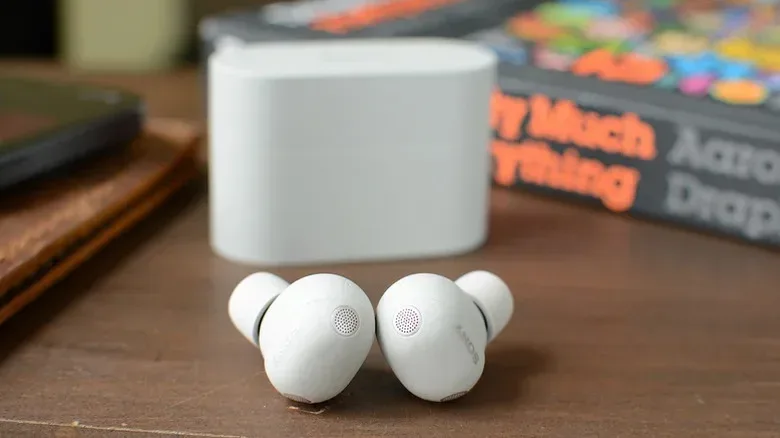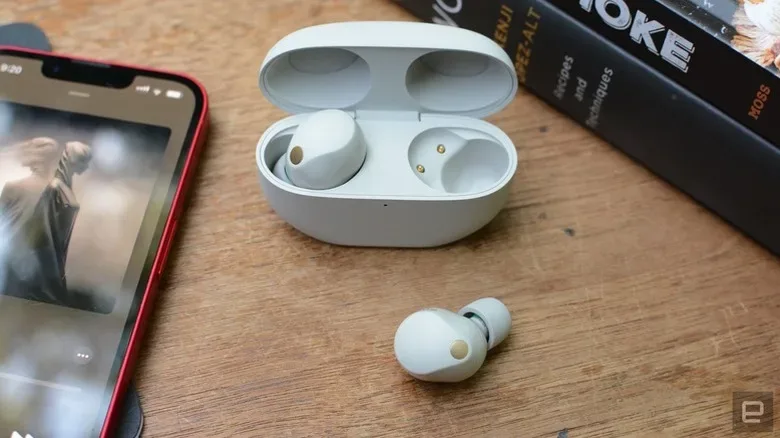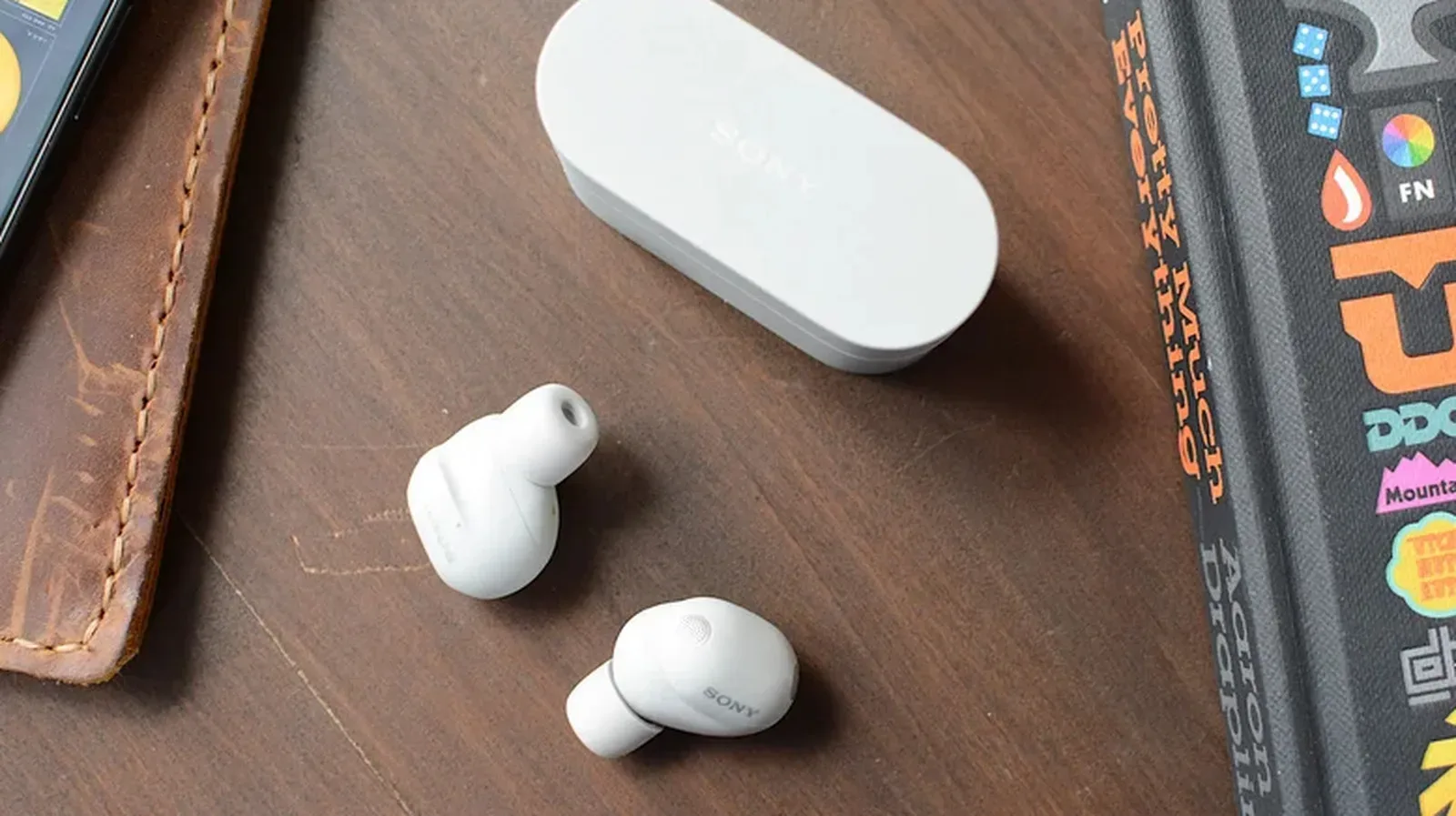
Sony’s WF-1000X series has long been part of the conversation whenever players want a premium true-wireless companion for a handheld, phone, PC, or everyday listening between sessions. The February 2026 arrival of the WF-1000XM6 puts Sony’s newest flagship earbuds beside the WF-1000XM5, a model that is approaching its third birthday but has not suddenly become obsolete.
That creates a far more interesting decision than the usual “new one good, old one bad” upgrade cycle. Both sets list for $330, both offer the same headline battery figures with active noise cancellation enabled, and both carry many of Sony’s signature quality-of-life tools. Yet the newer WF-1000XM6 has a revised shape, a newer audio chip, expanded sound controls and more current Bluetooth support. The older WF-1000XM5, meanwhile, may be the more economical pick at current pricing and could prove preferable for people whose ears get along better with its tips and fit.
For gaming audiences, the choice is especially personal. Earbuds are rarely just for music anymore: they handle voice chats, portable-game audio, podcasts during a grind, and the daily commute that happens before anyone gets to boot up a favorite RPG. Anyone excited about the continuing appeal of turn-based games, for example, may want an audio setup ready for a long soundtrack-heavy session such as those discussed in the ongoing conversation around a turn-based RPG revival. Sony’s two flagships share plenty of fundamentals, but their distinctions matter in use.
Release timing and the state of Sony’s earbud lineup
Sony introduced the WF-1000XM6 in February 2026, a little under three years after the WF-1000XM5. The launch came after CES rather than during the show itself, and it preceded Samsung’s Galaxy Buds 4 Pro reveal later that month.
The WF-1000XM6 is Sony’s latest earbud release as described here. Before it arrived, Sony introduced the LinkBuds Clip in January, but there has not been a recent wave of new Sony midrange or budget earbud replacements alongside the flagship. That makes the M6 the company’s current top-end direction, rather than one option in a freshly overhauled family.
For a shopper deciding between these two models, the age gap matters primarily because it explains the newer model’s technology additions. It does not mean the WF-1000XM5 is missing essentials. In several categories, the two devices are functionally close enough that a lower sale price or a better in-ear seal can outweigh the appeal of the newer badge.
Price: the M5 starts with a meaningful advantage
The full retail price for both products is $330. Current listed prices create a $50 separation: the WF-1000XM6 is at $298 on Amazon, while the WF-1000XM5 is at $248. Pricing can change, of course, but that difference is substantial enough to frame the decision.
At $50 less, the WF-1000XM5 is not being positioned as a bargain-bin compromise. It retains active noise cancellation, multipoint Bluetooth, wireless charging, an IPX4 water-resistance rating and Sony’s adaptive convenience features. A buyer who values those core pieces and does not need the M6’s exclusive additions may find the prior model to be the more sensible way into the range.
The WF-1000XM6 has to justify its premium through refinements rather than a radically different battery promise or an entirely separate feature class. For some people, better audio hardware and newer connection standards will do exactly that. For others, the M5’s discount could be the deciding stat.
Design and fit may be more important than the spec sheet
Physically, Sony took a more decisive turn with the WF-1000XM6. The newer earbuds use a smaller overall silhouette and pill-shaped housings rather than closely following the look of the prior model. Smaller earbuds can be welcome for extended listening, whether that means a long flight, a workday, or an evening disappearing into a game’s side quests.
But a smaller housing alone cannot settle the comfort question. Fit is not a minor preference for noise-cancelling earbuds; it has a direct impact on isolation and therefore on how effectively active noise cancellation performs. The M6’s ear tips may be a potential weak point for some wearers. Sony’s foam-tip approach has had a complicated history in this line: the WF-1000XM4’s tips were troublesome for some users, the WF-1000XM5 improved the situation, and the M6 may not represent a universal step forward.
One evaluation found that the WF-1000XM6 could not pass the companion app’s fit test in the left ear, reducing the practical effectiveness of ANC. That does not prove everyone will encounter the same issue—ear shape is individual—but it is a meaningful caution. If shutting out environmental noise is the central goal, the WF-1000XM5 may have an edge for buyers who achieve a more dependable seal with it.
There is no substitute for trying earbuds, yet that is often impossible before purchase. Return policies therefore matter. Many retailers permit returns on used earbuds within a defined window; Amazon, for example, was cited as allowing returns within 30 days of purchase. Shoppers should still check the exact policy and product listing before ordering, especially if fit is their biggest concern.
Sound quality favors Sony’s newer flagship
The clearest technical case for the WF-1000XM6 is audio. It uses Sony’s newer QN3e audio chip, and the M6 has been described as delivering a cleaner, fuller presentation than its predecessor. That should appeal to listeners who want greater detail from game scores, music libraries and cinematic dialogue.
Both earbuds support Sony’s DSEE Extreme upscaling, so the M5 is not excluded from that enhancement. Still, the newer model’s chip gives the WF-1000XM6 the advantage for outright sound quality. For players who use earbuds as much for albums and movies as for games, or who prize the texture of an orchestral soundtrack and environmental effects, that improvement can be a compelling reason to pay more.
It is worth keeping expectations grounded around platform use. These are Bluetooth earbuds, and the source information does not establish specific latency performance, codec behavior with individual consoles, or compatibility details for every gaming device. Buyers planning around a particular handheld, console, PC adapter or phone should verify their own device’s Bluetooth support before treating either pair as a dedicated competitive-gaming solution.
Calls and microphones: the M5 may be the safer bet
The sound-quality result does not automatically carry over to voice pickup. Both the WF-1000XM6 and WF-1000XM5 use beamforming microphones and bone-conduction technology intended to improve voice capture. However, the WF-1000XM5 performed better in suppressing surrounding noise during calls without making the speaker sound excessively processed.
That distinction could matter for anyone using earbuds for Discord chats, party calls on supported devices, team meetings, or frequent phone calls from noisy places. It does not establish that the M6 is poor at calls; instead, it identifies an area where the older product can be preferable. Audio upgrades are not always universal upgrades, and Sony’s prior flagship still has a strong argument in a practical, day-to-day category.
Battery life is effectively a tie
Battery numbers do not separate these models. With ANC enabled, each is rated for up to eight hours of listening on a charge and up to 24 hours total when the charging case is included. That parity is useful information for anyone hoping the M6 would substantially extend playtime between charges: it does not appear to do so on the stated figures.
Both also support wireless charging, removing another potential advantage for the new model. Either set should fit a routine of dropping the case onto a charging pad after a session, though actual battery longevity will naturally depend on volume, features and usage patterns.
What the WF-1000XM6 adds
The WF-1000XM5 covers most of the Sony feature checklist, but the WF-1000XM6 holds several exclusives. They are not necessarily must-haves, though they make the M6 the more flexible option for people who enjoy tuning and automating their audio experience.
- QN3e audio chip: The newer processing hardware underpins the M6’s sound-quality advantage.
- Auto Power Save: A power-management feature not listed for the M5.
- Battery Care: Another M6-only battery-management tool.
- 10-band EQ: More granular equalizer control for listeners who like adjusting a sound profile.
- Automatic ambient sound: An additional automation option for balancing outside sound and playback.
- Background Music mode: A newer listening feature available on the M6.
- Bluetooth 5.4 and LE Audio: Newer connectivity support that the M5 does not offer.
Those are thoughtful expansions, particularly the EQ and connectivity updates, but they will not all carry equal weight for every owner. Someone who simply wants strong ANC, solid music playback and easy device switching may not need them. Someone who loves tweaking equalizer bands or wants the newest Bluetooth feature set may see them as exactly the reason to buy the latest model.
The shared Sony toolkit remains extensive
Neither purchase means giving up the fundamentals that make Sony’s premium earbuds convenient. Both include hands-free voice commands, head gestures for accepting or rejecting calls, Adaptive Sound Control that changes settings based on activity and location, and Speak-to-Chat, which pauses audio when the wearer speaks. Both also offer quick access to streaming services.
Multipoint Bluetooth is supported on both products, which is valuable for a player alternating between a PC or tablet and a phone. Wireless charging is shared, as is IPX4 water resistance. The latter indicates resistance to splashes, but it should not be mistaken for permission to submerge the earbuds.
Which Sony earbuds should you choose?
Choose the WF-1000XM6 if the priority is Sony’s best current sound quality, a smaller and newly redesigned form, a 10-band EQ, power-management additions, automatic ambient sound, Background Music mode, Bluetooth 5.4 and LE Audio. The $50 premium at the stated current prices buys a tangible collection of updates, not merely a new model number.
Choose the WF-1000XM5 if saving $50 matters, if calls in noisy environments are a key use case, or if its ear tips give a more reliable seal. Its eight-hour ANC-on battery estimate and 24-hour total estimate match the M6, and its feature set remains deep. It is a previous flagship with meaningful strengths, not an afterthought.
Most importantly, treat fit as a deciding factor rather than an afterthought. The M6 may be the stronger audio product, but earbuds that cannot make a proper seal cannot deliver their best noise cancellation. The M5 may be older, but a secure and comfortable fit can make it the better real-world choice.