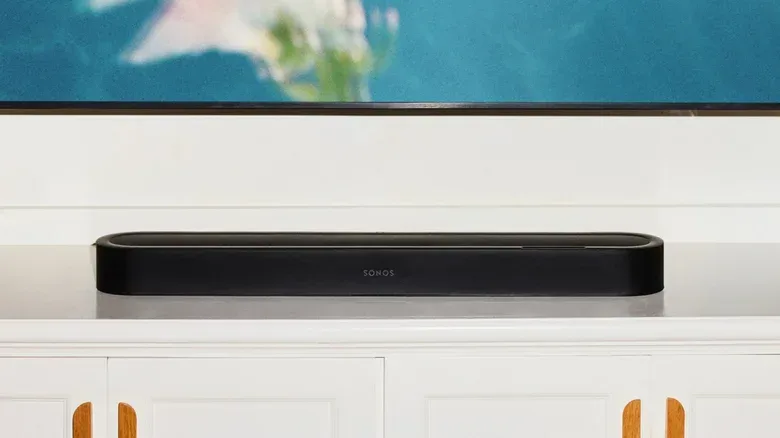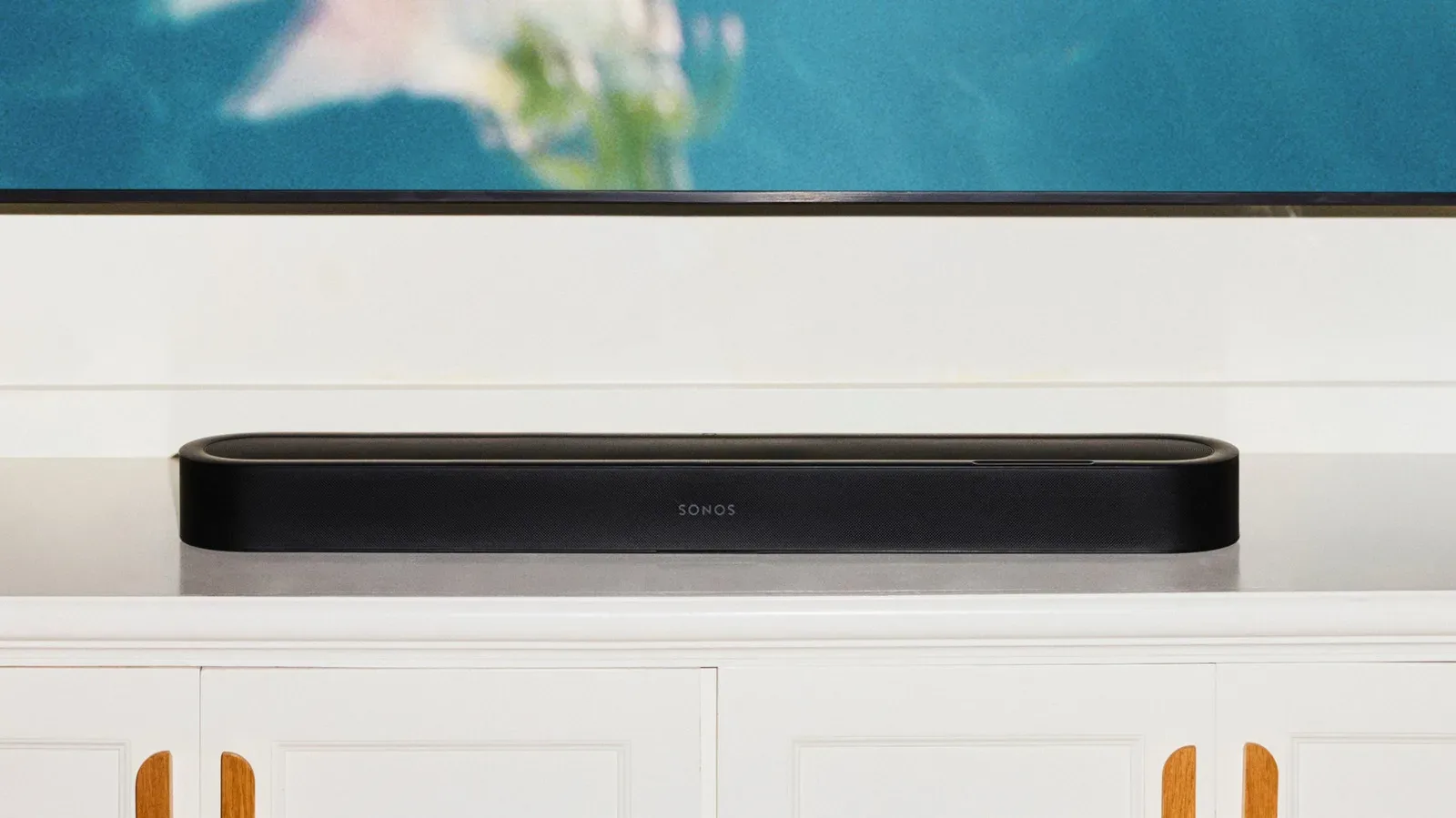
Sonos is preparing to put its next voice assistant in front of a limited group of customers. Sonos 27voice enters early access on November 6 through an update rolling out this week, with the company planning a broader release in 2027 after collecting feedback from the smaller test group.
The feature is part of Sonos 27, the company’s underlying software update. Its central promise is a more conversational way to control a multi-room speaker system: users should be able to make imperfect, descriptive requests for music, ask general-knowledge questions, select where music plays in a home, and use a handful of familiar assistant functions such as timers, weather and supported smart-home controls.
That is a meaningful change in ambition from a voice feature that primarily handles direct playback commands. It is also a cautious rollout. Access is limited to the United States and English during the early-access period, and Sonos 27 itself is only available on hardware running the company’s S2 platform. Interested users will need to request access in the Sonos app and be approved.
What Sonos 27voice is meant to do
Like the existing Sonos Voice Control experience, Sonos 27voice can manage playback on Sonos devices within a system. The difference is the stated ability to interpret natural-language requests.
Natural language, in this context, means speaking in an everyday, descriptive way rather than using a rigid command structure. A listener may not remember an album title, may name a mood rather than an artist, or may combine the music choice with a room instruction. Sonos’ example is a request to play a David Bowie album described as being about an adventure in space. The intended result is that the assistant identifies the appropriate record without requiring its title.
That distinction matters because voice control tends to feel most useful when it reduces the amount of information a person has to retrieve before speaking. “Play artist, album, room” is clear but presumes the user knows each of those details. A system that can resolve a partial description has more work to do behind the scenes, but it could make a speaker feel less like a remote-control alternative and more like a conversational music tool.
Sonos also says 27voice can answer a wider range of general-knowledge questions, including questions where the answer needs to be current, such as who won that year’s Super Bowl. The assistant retains basic utility features: setting timers, reporting the weather and interacting with supported smart-home accessories.
None of that necessarily means every answer or music match will be flawless. The early-access program is specifically a test, not a declaration that every interaction has been proven across the many ways people phrase a request. The practical value will depend on how reliably the assistant recognizes intent, chooses the right music, understands room names and delivers timely information.
Music, mood and rooms are the key combination
The most Sonos-specific part of the pitch is not simply asking a question out loud. It is applying more flexible requests to a system built around multiple speakers and listening spaces.
Sonos says users will be able to request music by mood or genre and direct it to a particular speaker or area of the home in a single request. That could mean treating the assistant as a shortcut for the recurring decision that comes before listening: what should play, and where should it play?
In a multi-room setup, those are two separate choices. Music selection involves an artist, album, playlist, genre or atmosphere. Playback destination involves the room or speaker. Being able to state both at once is potentially more convenient than moving through separate controls in an app, especially when the desired result is broad rather than precise.
Sonos originally described the new assistant in September in terms of music and mood curation, while also emphasizing the Sonos platform’s support for third-party AI assistants such as ChatGPT and custom agents. Sonos 27voice appears to be the company’s own effort to put some of the same conversational expectations into the core speaker experience.
It also puts the service closer to the kind of broad assistant behavior customers may associate with prior Google Assistant and Alexa integrations on Sonos speakers. The important caveat is that 27voice should be assessed on its stated feature set, not assumed to reproduce every capability of those services. The announced functions cover playback, more flexible music discovery, general questions, timers, weather and supported smart-home accessories.
Early access is an opt-in test, not a full launch
People who want to try Sonos 27voice cannot simply assume that installing the update will enable it. They must request early access in the Sonos app, and Sonos will approve participants. The smaller cohort is intended to give the company feedback before the planned full release in 2027.
That staged approach is especially notable given the company’s difficult 2024 app redesign. A voice assistant touches the same broad ecosystem as the app—speaker discovery, playback controls, account-linked services, room settings and smart-home connections—but it introduces an additional challenge: spoken requests are inherently variable. A limited early-access audience can reveal confusing phrasing, missed music associations or setup problems that scripted demonstrations may not catch.
For prospective testers, the useful mindset is to treat the feature as unfinished software. Early access can be appealing to people who want the new functionality sooner and are prepared to provide feedback. It is less suitable for anyone who expects a fully settled interface or who relies on a voice assistant for routine household tasks without tolerance for occasional changes.
Eligibility also has clear boundaries. The initial program is US-only and English-only. The source material does not establish a timetable for other countries or languages, so those users should not read the November 6 opening as a general international rollout. Likewise, owners of older Sonos products should confirm whether their hardware runs the S2 platform before expecting access to Sonos 27 features.
Presets offer a simpler shortcut for repeat listening
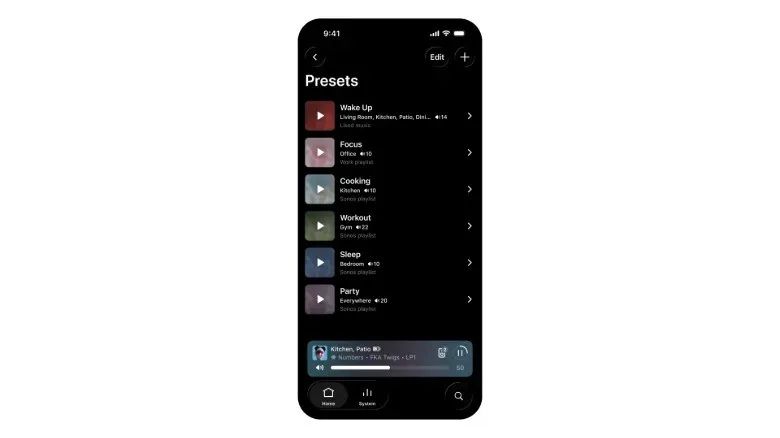
Voice is not the only addition arriving with Sonos 27. Sonos is also introducing Presets, saved groups of music and playback settings that can be started quickly from a Sonos device.
A preset is essentially a reusable listening configuration. Rather than rebuilding a favorite session from scratch—finding an album or other music, choosing volume and selecting where it plays—a person can store that combination and launch it with one tap in the app. Sonos’ example is saving a full-volume play of The Black Parade in a garage.
The feature has a different appeal from natural-language voice requests. Voice is useful when a person wants to express an idea in the moment: a genre, mood or vaguely remembered album. Presets are for the opposite situation, when the desired outcome is already known and repeated. They can make sense for recurring routines and familiar settings because they cut out both browsing and speaking.
In that way, Presets and 27voice are complementary rather than competing features. One is meant to understand a flexible request. The other preserves a fixed result. Users who do not want a voice assistant can still find a practical addition in saved playback combinations.
System Health targets a familiar speaker-system headache
The other Sonos 27 feature, System Health, is limited to the iOS version of the Sonos app. It provides an at-a-glance view of system information, including the connection status of an individual speaker and the Wi-Fi network to which it is connected.
For users troubleshooting a setup that seems off, the benefit is diagnostic visibility. Instead of treating an unavailable or poorly behaving speaker as a vague system problem, System Health can flag an issue and point the owner toward the affected part of the setup. The feature does not eliminate the need to resolve the underlying networking or device problem, but it is designed to make the first step—identifying what is wrong—more straightforward.
The iOS-only limitation is worth keeping in mind. It is an app feature, not a claim that all Sonos customers will see identical system-status tools across every mobile platform. Readers tracking other changes to Apple software can also see how app-level controls continue to evolve in the latest iOS 27.3 beta coverage.
What to watch as testing starts
The early-access rollout makes the next questions fairly clear. First is language understanding: can Sonos 27voice consistently turn loose descriptions, mood requests and room directions into the intended playback? Second is information quality: can it provide current answers appropriately when asked broader questions? Third is practical reliability across speaker systems, where a request may involve multiple devices and network conditions.
There is also a product question beyond pure technical performance. Sonos is offering several ways to arrive at music: direct app controls, saved Presets, standard voice commands and now a more conversational assistant. The best outcome is not necessarily that every customer uses voice for everything. It is that each method suits a different kind of task—precision in the app, speed with Presets and flexible discovery through speech.
For now, Sonos customers on S2-compatible hardware who are in the US and use English can request early access from November 6. Everyone else can look to the planned 2027 full release, while recognizing that the early test is intended to shape how that broader version ultimately works.