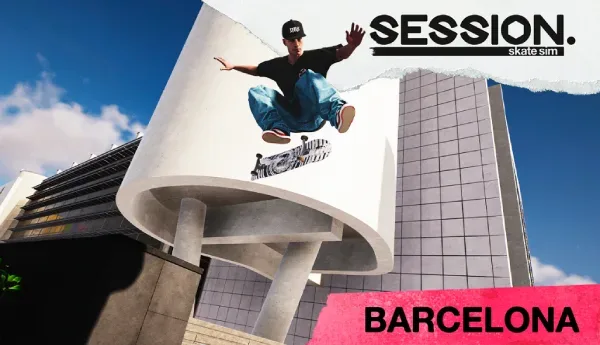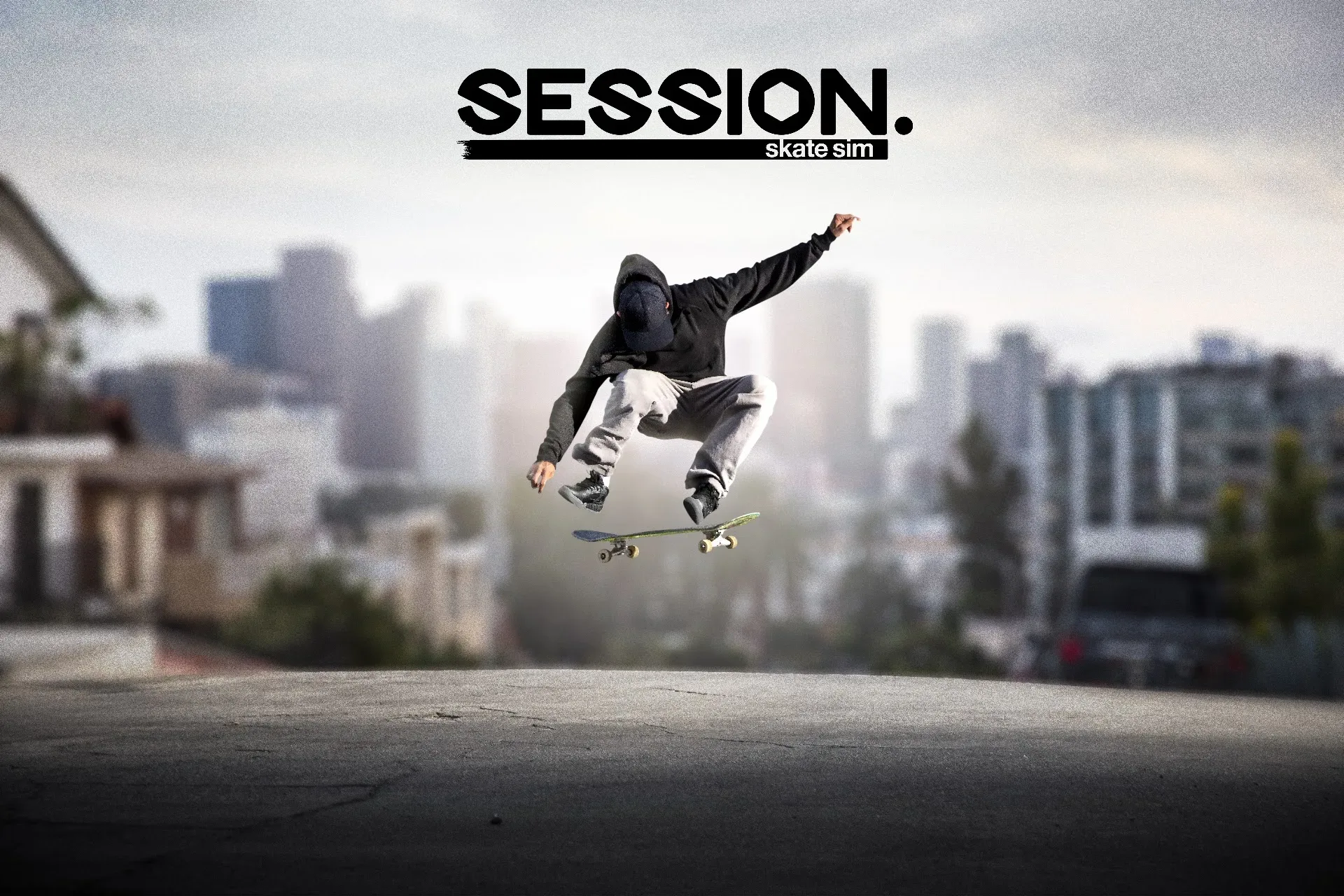
Session: Skate Sim has arrived in Barcelona. NACON and creā-ture Studios released the game’s Barcelona DLC on October 28, 2026, opening up a new setting built around marble plazas, extended ledges and the sunlit urban terrain closely associated with the city’s skate-video reputation.
The downloadable pack is available now for $7.99 / £6.69 / €7.99. Alongside the new Barcelona environment, it includes seven new items for Session: Skate Sim’s object dropper, giving players additional tools to arrange spots for their own lines and filmed clips.
A new city for a simulation-minded skate game
Barcelona is presented as a playground of broad plazas and long, slide-friendly ledges, rather than simply a cosmetic backdrop. That distinction matters in a game whose appeal rests heavily on the relationship between a skateboarder, a chosen obstacle and a player’s ability to repeat a trick cleanly. A longer ledge can sustain a grind or slide; an open marble plaza can create room for approach, setup and a line that combines more than one obstacle.
In skateboarding games, a line generally means a connected sequence of tricks and movements performed through a space. It may be as direct as approaching a ledge, landing a grind and rolling away, or it may involve linking several obstacles without losing control. The stated emphasis on Barcelona’s plazas and ledges suggests a setting made for that kind of self-directed routing, particularly for players who want to create short edited skate-video sequences rather than chase a prescribed course.
The setting is also a natural fit for Session: Skate Sim’s existing clip-making focus. The game includes an integrated editing tool, so a new area is not just more ground to cover: it is potentially fresh scenery, new routes and different obstacle combinations for player-made footage.
What the object dropper adds
The Barcelona DLC’s other confirmed addition is seven new object-dropper items. The object dropper is a placement feature: rather than relying only on the fixed architecture of a map, it lets players introduce items into a space and shape an obstacle arrangement to suit a particular trick or idea.
That can be especially meaningful in a skating simulation. Players working on a trick often need a very particular setup: enough approach distance, a suitable angle, a landing area and an obstacle positioned to make the intended movement possible. Extra placeable items increase the number of setups players can build, even when the supplied information does not specify the precise type or appearance of the seven additions.
It is worth keeping the scope clear. The announcement confirms seven new items, but does not identify them individually or describe every possible placement option. Likewise, it establishes Barcelona as the DLC’s setting and highlights its plazas and ledges, without offering a full list of districts, landmarks or gameplay objectives. The dependable takeaway is a new skate location plus added tools for player-configured spots.
Related coverage includes Session: Skate Sim Barcelona DLC Is Available Now.
True Stance Stick: why Session controls differently
Session: Skate Sim is designed around a notably demanding control philosophy. Its “True Stance Stick” system assigns the player’s two feet independently to the controller’s two sticks. In practical terms, tricks are not framed as a single all-purpose button press. The system asks players to work with separate foot inputs, reflecting the idea that skateboarding technique involves coordinated but distinct actions.
This is part of the game’s larger emphasis on ultra-realistic physics. Physics in this context refers to the simulated motion and interaction of the skateboarder, board and environment: how an attempt behaves on approach, during a trick and on landing. A physics-led approach places particular importance on position, timing and control, which can make a successful trick feel deliberate but can also mean that learning the basics takes patience.
The game openly embraces that trade-off with what is described as a steep, practice-oriented learning curve. For newcomers, that means Barcelona may be less about immediately pulling off elaborate sequences and more about learning one section at a time: finding a comfortable approach, practicing a ledge or plaza feature, then gradually connecting attempts into a fuller line. For established players, a new map can become a place to apply learned control skills against different architecture and sightlines.
That approach separates Session: Skate Sim from a game built chiefly around instant access or rapid completion. The core loop is closer to attempting, adjusting and trying again until the movement works. Its integrated editing tool extends that loop beyond landing a trick, allowing players to capture and assemble the result once a line comes together.
Why Barcelona suits clip creation
Barcelona is described as a staple of skate videos, and that connection complements Session: Skate Sim’s video-editing feature. The combination of open plazas, long ledges and player-placeable objects offers several layers of creative control. The map provides the base architecture; the object dropper can alter a setup; the editing tool is there to capture the finished run.
For players interested mainly in skating rather than editing, the DLC’s value is straightforward: a new environment in which to practice Session’s distinctive controls. For players who approach the game as a virtual filming space, the appeal is broader. Every new layout potentially changes where a line begins, where it ends and what can be placed between two fixed pieces of scenery.
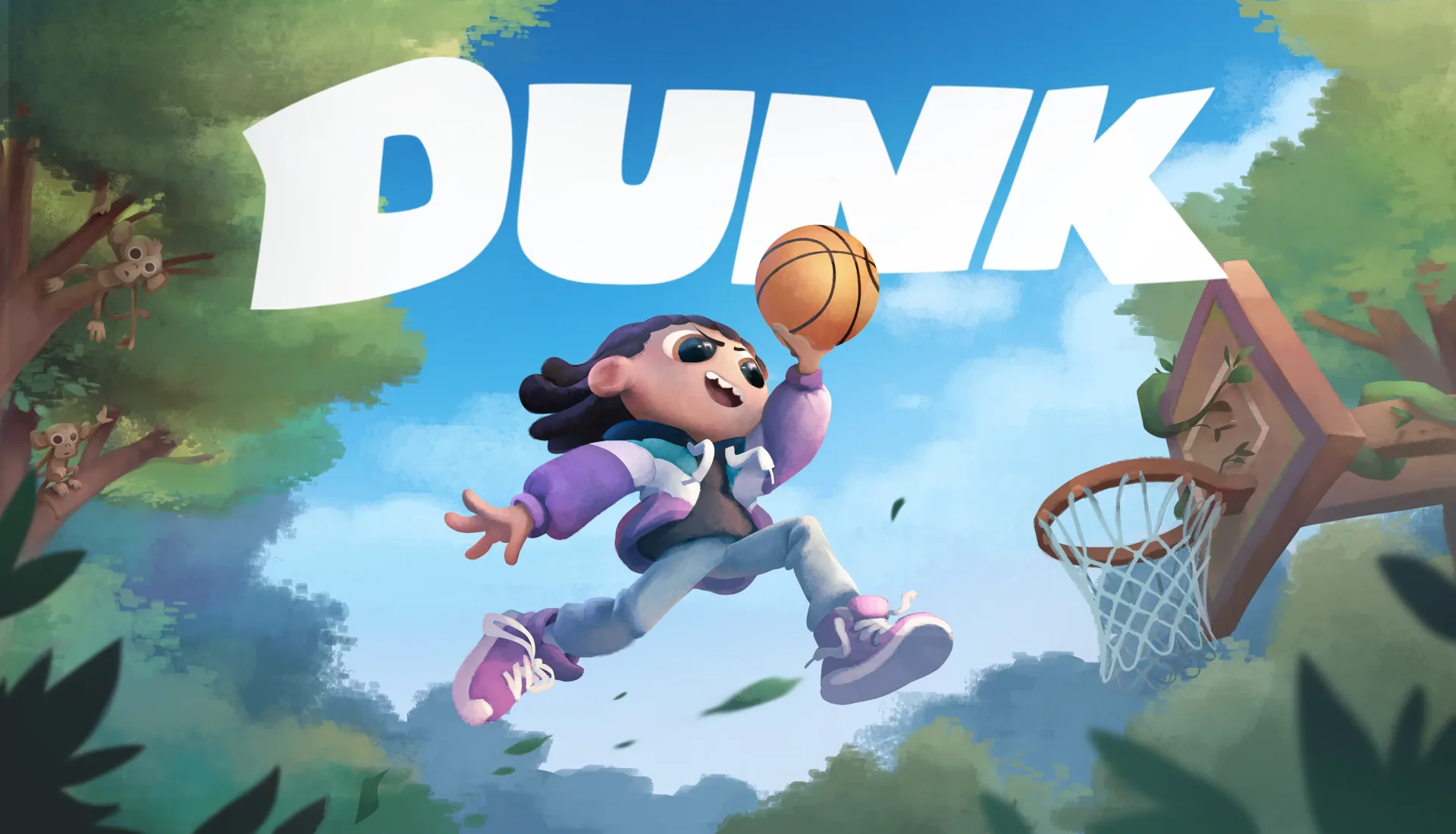
There is a useful wider context in the current games slate, too: physics-focused sports and arcade concepts remain an active area, as seen in DUNK’s planned first-person physics-driven basketball approach. Session: Skate Sim, however, is already built around skating-specific independent-foot controls and a creator-oriented editing system, making its Barcelona expansion primarily a new canvas for an established simulation framework.
Four years of support and more than four million players
The Barcelona release arrives during Session: Skate Sim’s fourth year. The game has surpassed four million players worldwide, and this is part of a continuing post-launch run that has included at least eight additional content packs as well as numerous updates.
That history gives the new DLC some useful context. It is not a standalone reinvention of Session: Skate Sim’s formula. It extends a game that has continued to receive material after launch, while retaining the central priorities of realistic-feeling physics, technical inputs, player practice and captured skating footage. Players considering the pack should therefore expect more of the established Session experience in a new location, not a change to the game’s fundamental control model.
Platforms and price
Session: Skate Sim is available on Xbox Series X|S, Xbox One, PlayStation 5, PlayStation 4, Nintendo Switch and PC through Steam and the Epic Games Store, as well as nacongaming.com. The Barcelona DLC is available to download now at $7.99 / £6.69 / €7.99.
A trailer has also been released alongside the expansion. The new pack’s clearest proposition is compact: take Session’s technical, practice-heavy skating model to Barcelona-inspired marble plazas and long ledges, then give players seven more object-dropper items with which to make a spot their own.