A tracker can feel like a tiny piece of sci-fi until the moment it is needed, at which point the important question becomes less “Where did I put my keys?” and more “What, exactly, can this thing tell me?” Samsung’s third-generation Galaxy SmartTag is designed for both kinds of panic, but they rely on very different systems.
At close range, the SmartTag3 communicates directly with a Galaxy phone over Bluetooth. At longer distances, it does not suddenly become a satellite-connected GPS beacon. Instead, it depends on other participating Galaxy devices encountering the tag and securely relaying a location through Samsung’s Galaxy Find Network. That distinction is the key to setting sensible expectations for luggage, backpacks, keys and other everyday gear.
Samsung says the SmartTag3 can be detected at roughly three times the distance of prior models. The practical answer to “how far?” still has two parts: the direct Bluetooth range when an owner is physically searching nearby, and the potentially much broader crowdsourced-network reach once an item is outside the owner’s phone range.
Nearby searching: what the SmartTag3 can do within Bluetooth range
The headline close-range feature is Compass View, which can provide distance and direction guidance from about 200 feet away using Bluetooth 6.0 Channel Sounding. Channel Sounding is a Bluetooth capability intended to improve the way devices estimate proximity. In this use, it helps turn a vague “the tag is somewhere around here” signal into guidance about where to head and how far away the tag may be.
That 200-foot figure matters most as a best-case benchmark, not a promise that every misplaced item will be neatly pinpointed from that distance. It assumes a direct line of sight. Walls, furniture and other electronics can weaken or disrupt Bluetooth communication, cutting the workable distance. Searching for a tag in an open area is therefore very different from trying to locate keys beneath clutter in a house, or a bag somewhere beyond several walls.
The SmartTag3 can also maintain a Bluetooth Low Energy connection for checking signal strength and changing settings from up to 400 feet away. Bluetooth LE, or Bluetooth Low Energy, is a power-conscious wireless connection designed for small devices that must run for long periods on a compact battery. The range is useful context, but it should not be confused with the directional capabilities of Compass View. Signal strength can indicate that a searcher is getting closer or farther away; directional guidance is a more specific function with its own compatibility limits.
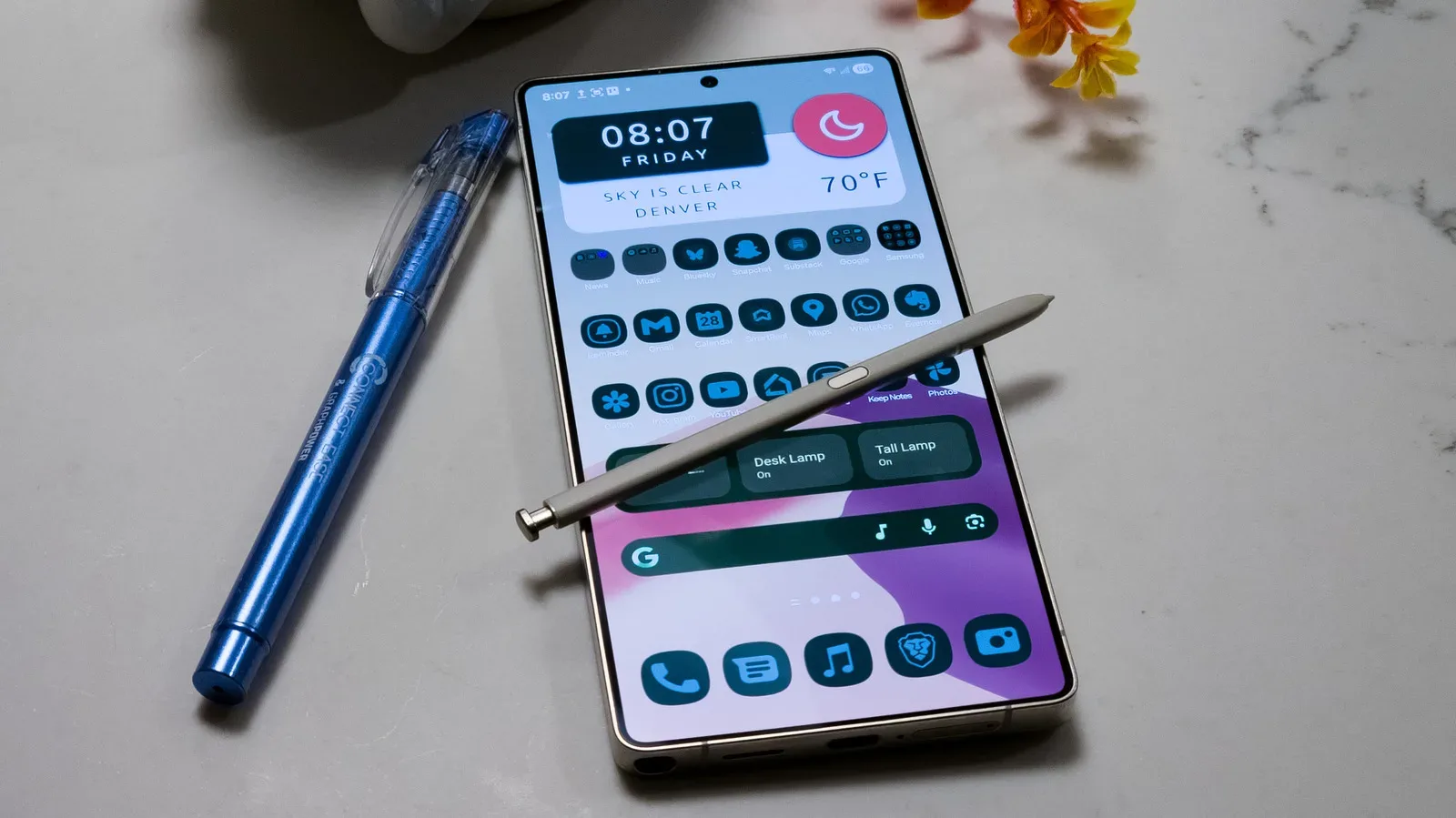
Those limits are especially important for anyone buying a tracker around the upgraded locating experience. Channel Sounding currently needs a compatible Galaxy handset. The supported phones named so far are the Galaxy Z Fold8 Ultra, Galaxy Z Fold8, Galaxy S26 Ultra and Galaxy S26 Plus. Owners of other phones may still be able to use the tracker, but they should not assume they will receive the extended Compass View range. More compatible devices are expected over time, but prospective buyers should base a decision on the support that exists now rather than a future possibility.
Why indoor range is never a clean number
Wireless range claims usually describe favorable conditions, while everyday losses happen in less cooperative places. A key ring can be in a drawer, a backpack can be surrounded by other objects, and a suitcase can be behind barriers that reduce the signal. The SmartTag3’s stated distances are valuable for understanding its maximum direct-search envelope, but they are not a map of every home, airport or transit route.
Related coverage includes Samsung Galaxy SmartTag3 range: How far can it track?.
The useful practical takeaway is to treat Bluetooth guidance as the final stage of a search. Once a person is close enough to an item, signal information and, on supported devices, Compass View can make the hunt faster. It is not a guarantee of uninterrupted communication through any building or any obstacle.
Farther away: the Galaxy Find Network does the searching
Once a SmartTag3 leaves direct Bluetooth range, its role changes. The owner’s phone is no longer talking to the tag itself. Instead, the tag needs to be detected by a nearby participating Galaxy device. Samsung says the Galaxy Find Network has more than 900 million participating Galaxy devices worldwide, creating a broad potential detection network without putting a GPS radio inside the tracker.
In the basic flow, a SmartTag on a lost bag is encountered by a Galaxy device that has Bluetooth, GPS and an internet connection enabled. That device can relay the tag’s location to the cloud, allowing the owner to view the result in the SmartThings Find app. The owner does not need to be standing nearby at the moment of detection. That is what makes a tag useful for an item left on a bus, rather than only for something misplaced in the next room.
The crucial word is encountered. The tag does not generate an always-on location report on its own. It must be near a participating Galaxy device. In a place with plenty of Galaxy phones moving through it, updates can arrive faster and with greater reliability. In a sparsely populated area, or an area with fewer Samsung devices, the wait for a fresh location can be longer. A missing item could remain unreported until another eligible device comes within Bluetooth reach.
This is not a flaw unique to one tracker; it is the trade-off behind this type of Bluetooth-finding product. The network supplies the long-distance assist, while the tag itself preserves battery by avoiding the hardware and power demands of continuous GPS tracking. But it means a SmartTag should be viewed as a way to recover the last detected location or receive an updated location after a network encounter, not as a live route display for every mile an item travels.
A SmartTag3 has a local search range and a network-assisted recovery range. They are related, but they are not the same thing.
SmartTag3 is not a GPS tracker
Neither the SmartTag3 nor earlier Galaxy SmartTags are GPS trackers. They use Bluetooth and the surrounding network of participating devices. GPS trackers, by contrast, can provide continuous location coverage and report a position without depending on another nearby phone. That independence is a major advantage for tracking something moving through remote territory, where no Galaxy device may pass close to a Bluetooth tag.
The other side of that comparison is battery life. GPS hardware uses more power than a Bluetooth tracker approach, and a compact tracker battery benefits enormously from avoiding continuous GPS operation. Samsung lists the SmartTag3 at up to 550 days on a single coin-cell battery. That longevity is a direct practical benefit for items people may attach and forget about until the day they need help finding them.
Bluetooth-network trackers from several brands follow this broad model: a small tag broadcasts over Bluetooth and relies on compatible nearby devices to help report where it was seen. The difference for a SmartTag owner is the ecosystem. A Galaxy Find Network detection depends on participating Galaxy devices being around the lost item. For a household already using compatible Samsung hardware, that connection is central to the appeal. For someone expecting independent, uninterrupted location reporting, a GPS product is the category to investigate instead.
What the range means for keys, bags and travel
For keys misplaced at home, direct Bluetooth functions are likely to matter most. The item is generally nearby, and the task is to narrow the search rather than obtain a location from miles away. The advertised 200-foot Compass View guidance, where supported, and the up-to-400-foot Bluetooth LE interaction range are useful reference points, subject to the usual obstruction problems.
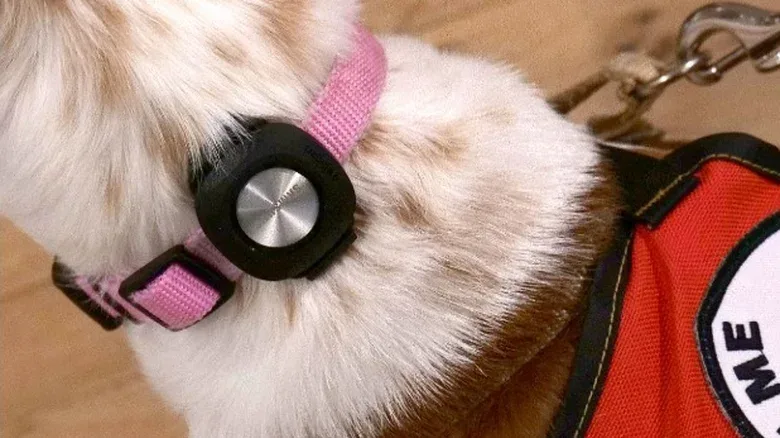
For a backpack accidentally left behind, the network becomes more relevant. A SmartTag can be useful when another qualifying Galaxy device later passes near the bag. That could give the owner a location in SmartThings Find, but the timing depends on local device density and whether the detecting device has the necessary Bluetooth, GPS and internet settings active. It is assistance with recovering a misplaced possession, not a guarantee of immediate updates.
For luggage, the same rule applies. A tag can offer reassurance when there are many participating devices around, but it cannot promise a continuous location feed across remote stretches or any interval without a nearby Galaxy device. Anyone choosing a tracker specifically for an item that may spend time beyond populated areas should recognize this limitation before treating a Bluetooth tag as a GPS substitute.
Check the whole ownership cost, not only the tag
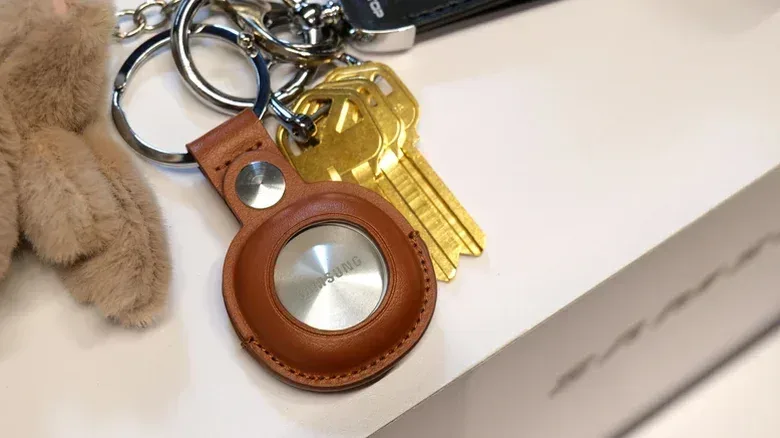
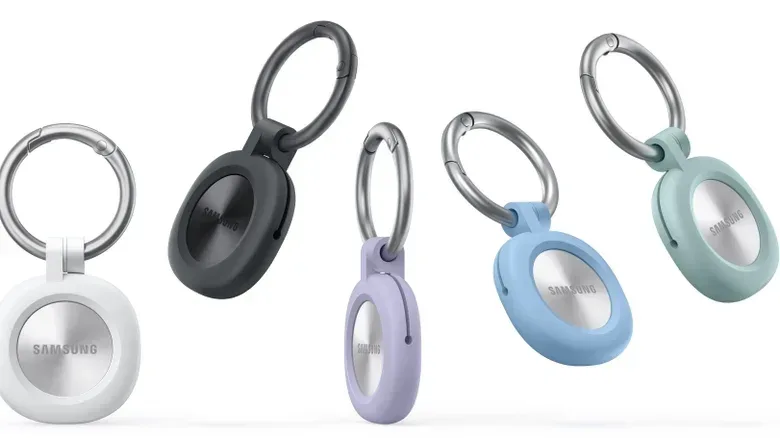
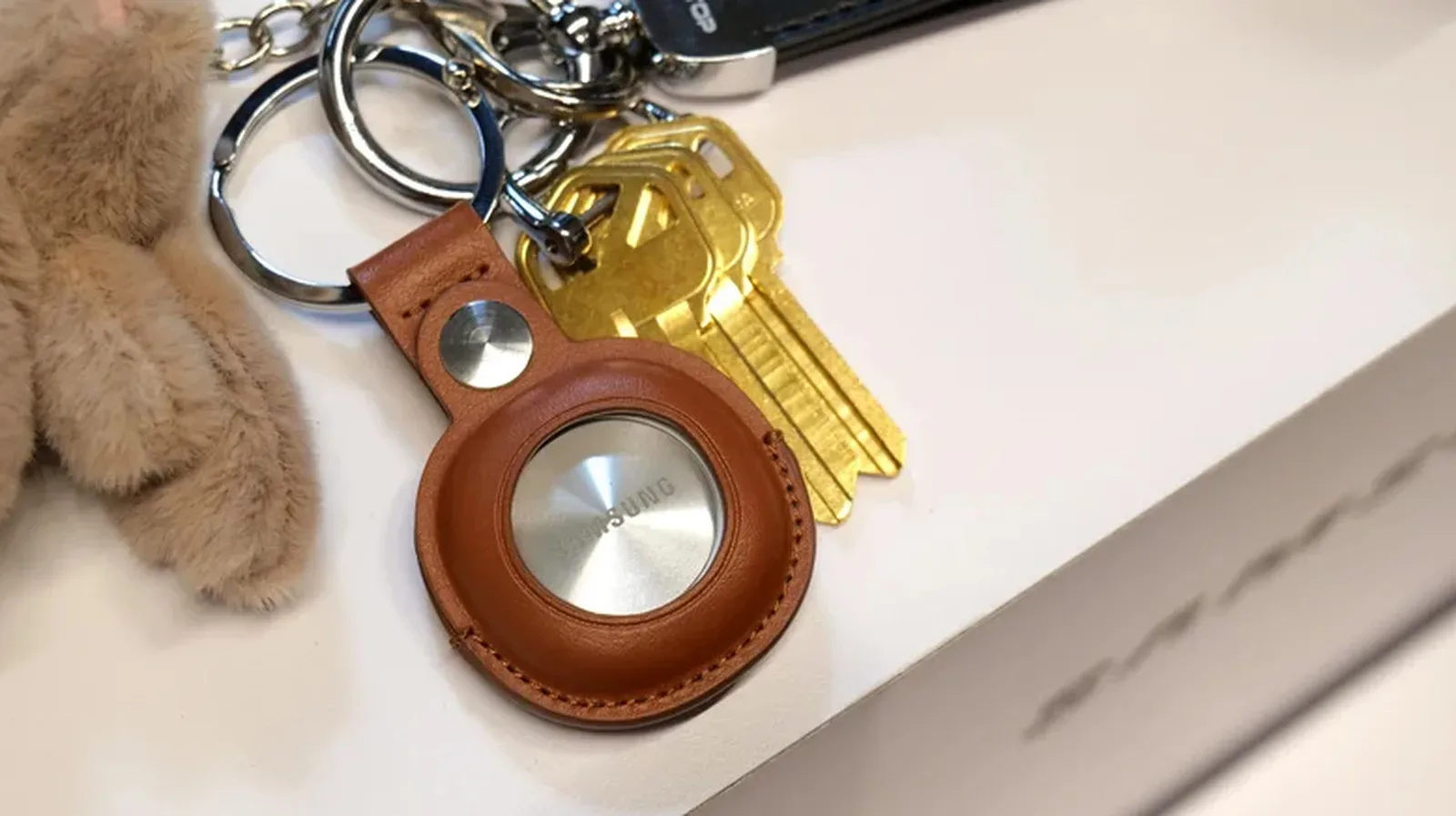
Samsung’s tracker does not require a subscription, which separates it from many GPS trackers that carry ongoing service costs. The SmartTag3 is a one-time purchase, then runs on its coin-cell battery for its stated lifespan. However, the physical design change creates another consideration: unlike earlier generations, the new tag has no built-in keychain loop.
That means a case is needed for keyring use or other attachment needs. The cited example is a $30 tracker plus a $20 case, with potentially higher accessory cost for a four-pack arrangement. The no-subscription model may still be attractive, but a prospective owner should include the attachment solution in the budget rather than discovering after purchase that the tag itself is not ready to hang from keys.
It is also worth checking phone compatibility before treating the most advanced range claims as a buying reason. The Compass View extension is not universal across Galaxy phones. Samsung users considering a SmartTag3 may also want to review broader handset setup choices that affect daily use in this guide to Samsung Galaxy display settings for smoother gaming, battery control and more comfortable viewing.
A realistic way to judge SmartTag3 range
The SmartTag3’s reach is best understood as a layered system. Direct Bluetooth is for the close-in search, where obstacles can dramatically affect distance. Compass View can add direction and distance information at around 200 feet, but only with specific supported Galaxy phones. Bluetooth LE connectivity can extend to up to 400 feet under clear conditions for signal checks and settings.
Beyond that, the tracker’s apparent range depends on the Galaxy Find Network, not on an unlimited radio link between the tag and its owner. With more than 900 million participating Galaxy devices worldwide, the network can provide valuable recovery help in busy places. Yet detection is conditional: a participating device must come near the tag, and areas with fewer Samsung devices can produce slower or less dependable updates.
That is still a compelling fit for the ordinary disasters of modern life: keys that slipped into the wrong room, a backpack left in transit or luggage that needs a last-known location. Just do not mistake a long-lived Bluetooth tracker for a continuous GPS device. Its real strength is low-power, network-assisted finding—an elegant solution when the network is nearby, and a system whose limits are just as important as its maximum stated range.
Shop the products
Check current price, model and availability at the retailer.