Amazon is listing Apple’s second-generation AirTag for $18, a reduction of $11 from a stated regular price of $29. That is a 38% cut for a single tracker, aimed at the very ordinary but surprisingly costly problem of misplaced keys, bags and luggage.
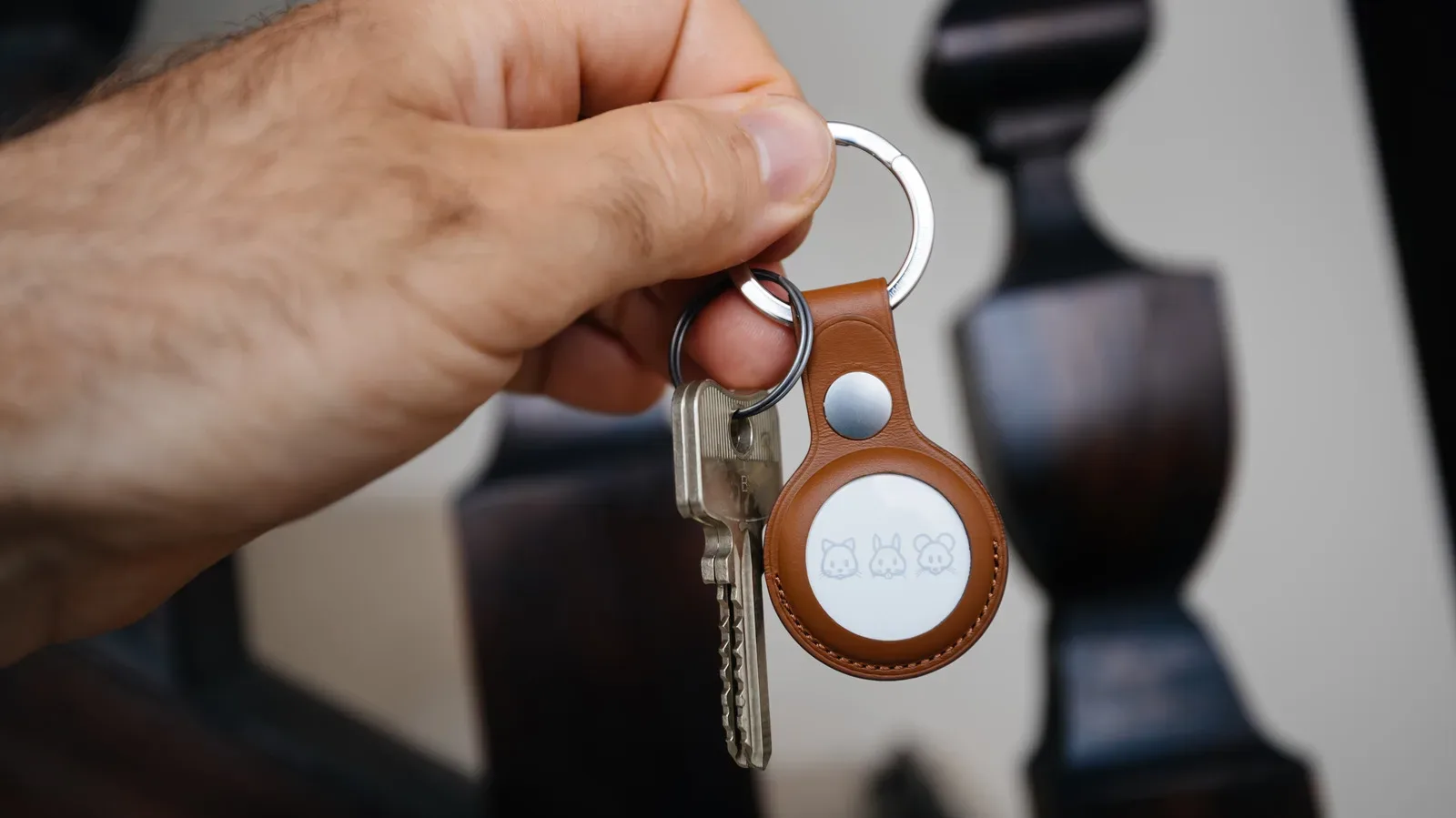
The headline price is only one part of the decision. Apple’s revised tracker retains the small, rounded AirTag form factor, meaning existing rings, holders and other compatible accessories can still be used. Its meaningful hardware changes are more practical than flashy: a louder built-in speaker and a claimed Precision Finding range that reaches up to 50% farther than the original model.
For anyone already embedded in Apple’s device ecosystem, the AirTag remains a focused accessory rather than a general-purpose GPS gadget. It is designed to work through the Find My app on an iPhone, requires an iPhone running iOS 26.2.1 or later for setup, and gains additional nearby-finding support on Apple Watch Series 9, Apple Watch Ultra 2 and later watches.
That Apple-device requirement should be the first consideration before treating the $18 listing as an automatic bargain. Buyers who meet it get a compact tracker with a replaceable battery and location tools designed for locating belongings. Buyers who do not use a compatible iPhone cannot set it up.
What the second-generation AirTag changes
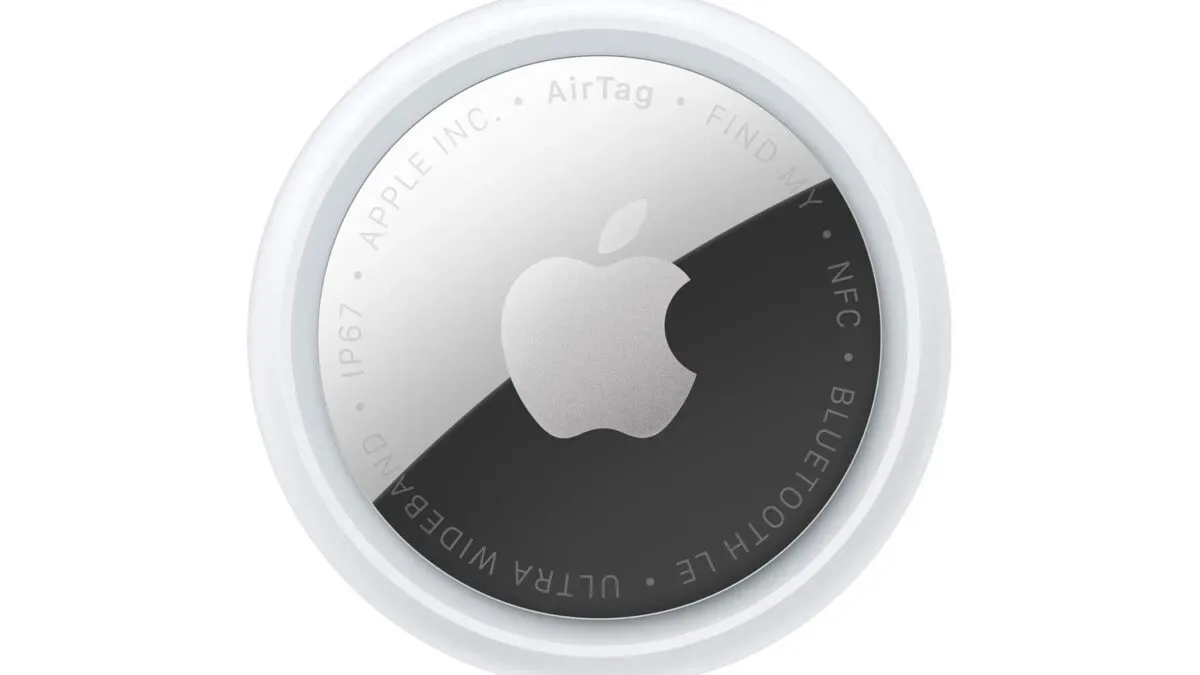
The second-generation AirTag includes Apple’s second-generation Ultra Wideband chip, an updated Bluetooth chip, a speaker, an accelerometer and NFC. The feature list is technical, but each component serves a fairly direct purpose in the lost-item workflow.
Bluetooth is the short-range wireless connection used by the tracker and nearby devices. Ultra Wideband, often shortened to UWB, is used here for more exact close-range guidance through Precision Finding. Rather than merely presenting a broad map location, Precision Finding can provide a direction and distance indication as a user approaches the tracker.
The guidance is presented through haptic, visual and audio feedback. In plain language, that can mean a vibration, on-screen direction and sound cues helping to close in on an AirTag under a sofa, in a bag, or somewhere nearby in a larger indoor or outdoor space. The stated 50% increase in Precision Finding distance is therefore most relevant once someone is in the vicinity of the item but needs help narrowing down its exact location.
The louder speaker serves a related purpose. Map positioning can get a person to the right room, building area or bag; an audible alert may be more useful for identifying the precise pocket, drawer or piece of luggage holding the tag. The improvement does not change the core premise of the product, but it targets the frustrating final step of a search.
Related coverage includes Amazon drops the second-generation AirTag to $18.
The tracker measures 1.26 inches wide. It can fit in a wallet pocket or attach to a keychain with an appropriate holder, and its unchanged shape is significant for current AirTag owners with accessories already in use. Apple also sells a four-pack for people who want to cover multiple belongings, such as keys, a wallet, backpack and suitcase, though no four-pack price is specified here.
Precision Finding and the wider Find My network are different tools
It is useful to separate two AirTag functions that can sound similar but solve different stages of the same problem.
- Precision Finding helps locate an AirTag at close range using Ultra Wideband-guided distance and directional feedback.
- The Find My network can show a tracker’s last known position on a map when it is away from its owner, using nearby Apple devices.
The Find My network is described as involving more than one billion Apple devices, including iPhone, iPad and Mac. If an AirTag is separated from its owner, nearby participating devices can help update its location in the Find My app. This is the feature that makes the product relevant to a misplaced bag at an airport, beach or coffee shop rather than just keys somewhere at home.
Apple says this location process is anonymous and encrypted, with the company unable to see the AirTag’s exact location. That is an important distinction in a product category built around the location of personal belongings: the network is intended to help surface a position to the owner without creating a visible map of the tracker for Apple.
Once the map has led someone close enough, Precision Finding takes over as the more immediate navigation layer. The combination is the point: one system helps establish where an item might be, while the other can make the short-distance search less dependent on opening every compartment or retracing every step.
Travel use, Lost Mode and NFC contact details
Luggage is one of the clearer applications for a tracker of this type. For checked baggage that goes missing during travel, users can opt in to temporarily share the luggage’s last known location with more than 50 airlines, including Delta and United. That does not make an AirTag a replacement for an airline’s baggage process, nor does it guarantee recovery, but it can give the owner location information to share while a bag is being traced.
AirTag also has a Lost Mode. When it is enabled, a person who finds the item can tap the tag with an NFC-capable mobile device to see the owner’s contact information. NFC, or near-field communication, is a very short-range wireless method used for simple interactions when devices are brought close together. In this case, it gives a finder a way to access contact details without needing to pair with the tracker or install a particular app.
The practical implication is modest but useful: an AirTag can support both an owner-led search through Find My and a return path when a good-faith finder has the item in hand. The feature relies on the owner enabling Lost Mode and on the finder choosing to scan the tag, so it should be understood as an aid to recovery rather than an assurance.
Compatibility, power and physical durability
Setup requires an iPhone running iOS 26.2.1 or newer because the AirTag depends on the Find My app. Android users are not presented as setup users for this product. Android phones are, however, part of the anti-unwanted-tracking notification system: if somebody else’s AirTag is travelling with a person, an iPhone or Android phone can issue an alert.
That anti-tracking behavior is an important safety element. A tracker attached to a person’s belongings without consent can create obvious privacy risks, so alerts are intended to make an unfamiliar AirTag moving with someone harder to conceal. This does not turn a location tracker into a worry-free device in every situation, but it is a key safeguard to understand before giving one away, lending an item, or placing tags on shared belongings.
Power comes from an included CR2032 coin-cell battery. Apple says it lasts more than a year, and the battery can be replaced by the owner after the iPhone provides a low-battery notification. The replaceable design matters because it avoids treating the tracker as disposable once its initial cell is exhausted. A CR2032 is a coin-shaped battery rather than a built-in rechargeable unit, so continued operation depends on swapping it when prompted.
The AirTag carries an IP67 rating for water and dust resistance. This rating is useful protection for the knocks and exposure associated with bags, keys and travel, but it should not be confused with a promise that every loss scenario is harmless. The source-supported point is that the tracker is rated against dust and water at IP67, not that it is invulnerable in any condition.
Apple says the housing uses 85% recycled plastic. That is a materials detail rather than a performance change, but it adds context to the revised model’s construction.
Who the $18 listing makes the most sense for
At the listed price, the second-generation AirTag is most straightforward for an iPhone owner who has a specific high-misplacement item in mind. Keys are the simplest example, because the tracker can be attached through a key ring or holder. A backpack, wallet pocket or suitcase are also plausible uses, provided the owner has a suitable accessory and understands the tracker’s Apple-centric setup requirement.
Existing AirTag owners have another reason to consider the updated model: the physical design remains compatible with previously purchased rings and holders. That reduces the cost and waste of moving to the newer tracker, since a new accessory is not inherently required.
For travel, the additional Precision Finding range, louder speaker, Find My location view, Lost Mode and optional temporary airline location sharing form a coherent set of tools. Each addresses a different point in the recovery process: learning that luggage is elsewhere, getting closer to it, hearing it nearby, and providing contact information to someone who finds it.
Still, buyers should evaluate the limitations as seriously as the discount. AirTag is not presented as a standalone tracker with its own display or as a device that can be configured without a compatible iPhone. Its away-from-home utility is tied to the Find My network, while its most precise nearby guidance relies on Apple hardware with the relevant capability. Its location data can be helpful, but it does not itself solve a delayed-baggage claim or force a lost item to be returned.
Those constraints are not unusual for an ecosystem accessory; they are simply the terms of the product. For the right owner, $18 lowers the entry cost to Apple’s finding network and the second-generation hardware improvements. For an Android-first household or anyone looking for independent cellular tracking, the sale price alone does not remove the compatibility mismatch.
Anyone shopping Apple-related gear may also want to keep an eye on the company’s retail activity, including Apple Kukatpally’s planned Hyderabad opening. For the AirTag itself, the essentials are clear: an Amazon-listed $18 single-unit price, a stated $11 reduction, stronger nearby-finding features than the original model, and the same small accessory-friendly shape.
Shop the products
Check current price, model and availability at the retailer.