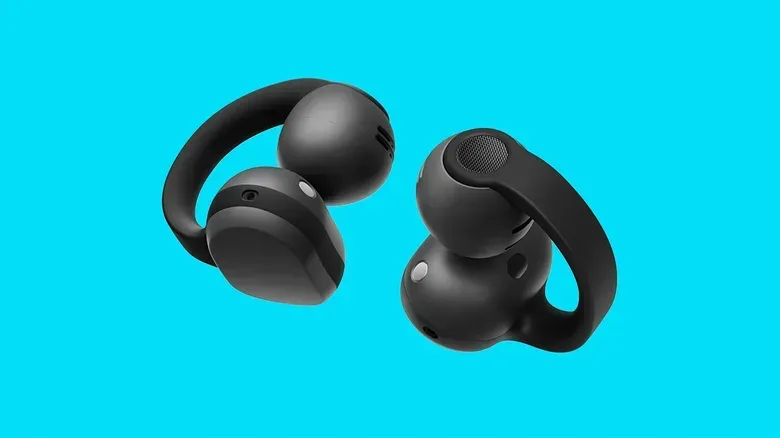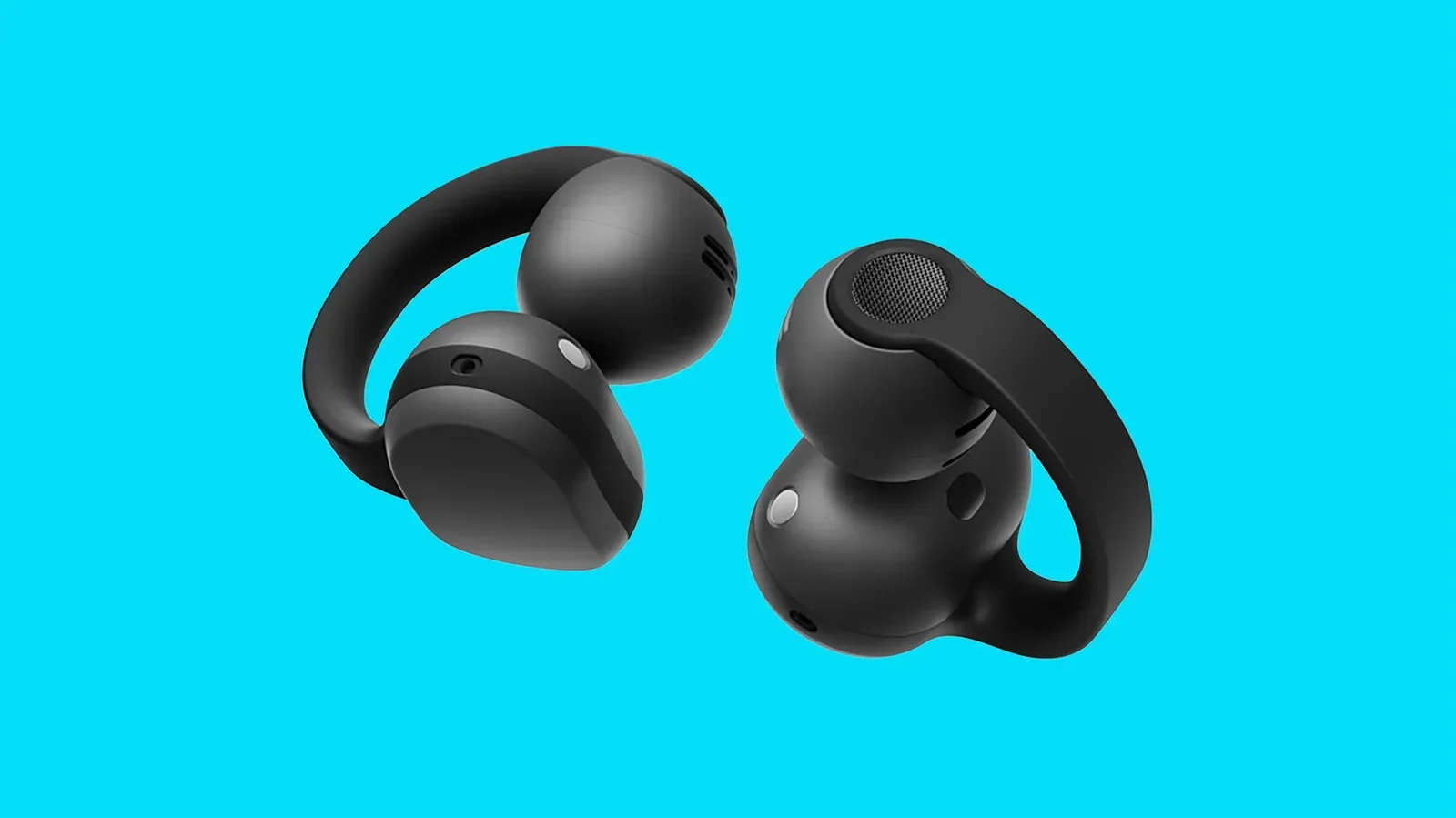
Samsung is adding an unfamiliar shape to its audio lineup: the Galaxy Buds On, its first clip-on earbuds. Rather than sit inside the ear canal, each bud is designed to latch to the side of the ear, leaving the canal open. It is a form factor already associated with brands including Bose, Huawei and Shokz, but this is Samsung’s entry into the category—and it brings the design into the Galaxy device ecosystem.
The Galaxy Buds On will launch in South Korea on October 27 in a single black color. Samsung has set the local price at 299,000 won, cited as roughly $220. A global release is planned, although Samsung has not identified the countries involved, release timing outside Korea or regional pricing.
An earbud for people who do not want an earbud in their ear
Most wireless earbuds use an in-ear approach: a speaker tip rests in, or seals around, the ear canal. The clip-on format takes a different route. Its band sits around the outer portion of the ear, positioning audio near the canal without filling it. In plain terms, it is an open-ear listening design.
That distinction could be the product’s whole appeal. Some listeners simply dislike the sensation of conventional earbuds pressing into their ears. Others may prefer hearing parts of their surroundings while listening to music, taking calls or using a phone’s voice features. An open ear canal can make that awareness more natural than an earbud that physically blocks it.
There is, however, a basic compromise. The same openness that can improve comfort and awareness may also lead to sound leakage: audio that escapes into the space around the listener. That can be inconvenient in quiet public settings, and it also means the listening experience may differ from sealed in-ear buds that direct more sound inward.
Samsung says it is addressing that challenge with a TwinBoost speaker system, which the company says increases bass. Bass can be difficult to convey convincingly through an open-ear design because the earbud does not create the enclosed acoustic space associated with a sealed ear tip. The company’s claim should therefore be understood as a description of its intended solution, rather than a guarantee of how every listener will perceive the sound.
The Galaxy Buds On also feature automatic volume adjustment that responds to the user’s environment. The supplied details do not explain exactly how the system determines those conditions or how aggressively it changes levels. Still, the objective is easy to understand: where an open design can compete with changing ambient noise, automatic adjustment is meant to keep playback audible without requiring constant manual changes.
Comfort is central to the clip-on pitch
Samsung says it built the buds with a wide contact area to distribute pressure across the band more evenly. This is a meaningful design consideration for clip-on earbuds. Instead of relying on a silicone tip seated in the ear, the device’s fit depends on how its external structure rests against the ear. Spreading pressure over a larger area is intended to make extended wear more comfortable.
Related coverage includes Samsung Galaxy Buds On Bring Clip-On Earbuds to Korea Oct. 27.
Of course, comfort remains individual. Ear shape, sensitivity and how a person uses their earbuds can all affect whether a clip-on design feels less intrusive than a traditional model. What Samsung has confirmed is the design intention: the Galaxy Buds On are aimed at reducing pressure concentration while avoiding an in-canal fit.
Controls are placed on the rear of each bud. That positioning separates the touch area from the part of the device facing the ear canal and gives users a defined place to interact with playback or calls. Samsung also includes a voice-isolating feature intended to improve call clarity. The available information does not detail the microphones or processing involved, so it is best viewed as a stated calling feature rather than a performance claim that can be quantified from the announcement alone.
The charging case will look familiar to owners of Samsung’s newer earbuds. Externally, it has been noted as looking very similar to the case included with the Galaxy Buds 4. That resemblance does not establish that the cases share internal hardware, charging behavior or compatibility; it only indicates a closely aligned exterior design.
Extra Galaxy-device tools are part of the package
The Buds On are not only a hardware experiment. Samsung is also tying several functions to compatible Galaxy devices. Those owners will receive hands-free features including head gestures for call control, support for Gemini Live and a Quick Voice Memo action activated by pressing and holding the buds’ touch area.
Head gestures are exactly what they sound like: a method of controlling calls with motions of the head rather than reaching for a phone or tapping the earbuds. Samsung has confirmed their use for call control, but has not provided the particular gesture set in the information available so far. The practical benefit is potential convenience when hands are occupied, though users will need compatible Galaxy hardware to access it.
Gemini Live support places the earbuds within Samsung’s wider device-and-assistant experience. It also reinforces an important purchasing point: buyers should distinguish between the core earbud hardware and the ecosystem extras. The open-ear fit, TwinBoost system, adaptive-volume feature, touch controls and call-focused voice isolation define the Buds On themselves. Gesture controls, Gemini Live and Quick Voice Memo depend on having a compatible Galaxy device.
That is a familiar strategy for connected accessories. A pair of earbuds can still perform its basic listening and calling duties, while companion-device integration makes the experience more tailored for people already using the same manufacturer’s phones or tablets. For shoppers considering the Buds On after the international rollout, checking device compatibility will be as important as deciding whether the clip-on shape suits them.
What the launch details do—and do not—tell buyers
The confirmed South Korean release provides a clear starting point but leaves major questions for everyone else. There is no announced timetable for the global rollout, no confirmed list of markets beyond South Korea, and no overseas price. The Korean price should not be treated as a promise of what the product will cost in other regions, even with the rough $220 conversion provided.
Samsung has also only confirmed black for the initial Korean release. It has not said whether further colors will join the lineup, whether colors will vary by territory or whether the worldwide release will mirror Korea’s configuration.
For gamers in particular, the appeal is less about a new platform feature than it is about listening style and convenience. Open ears can be useful for someone who wants to remain aware of a room while chatting with friends or navigating a busy home, while the call-control gestures and voice-memo shortcut speak to the broader phone-and-voice-chat routine around play. But anyone seeking maximum isolation should recognize the inherent trade-off: the Buds On are deliberately not designed around sealing the ear canal.
That makes Samsung’s choice noteworthy. Rather than simply offering another conventional wireless bud, the company is testing a different comfort and awareness proposition inside the Galaxy family. The product’s success will hinge on whether its pressure-distributing clip, claimed bass support and automatic environmental volume handling make the open design feel like an advantage rather than an audio compromise.
Until international details arrive, prospective buyers outside South Korea can only watch the rollout and weigh what matters most: less in-ear intrusion, access to Galaxy-specific controls, or the isolation and privacy that an open-ear product may not prioritize. And for anyone assembling a broader PC gaming setup, our guide to the Steam Autumn Sale 2026’s notable PC game deals under $15 offers another way to spend a hardware-budget decision wisely.