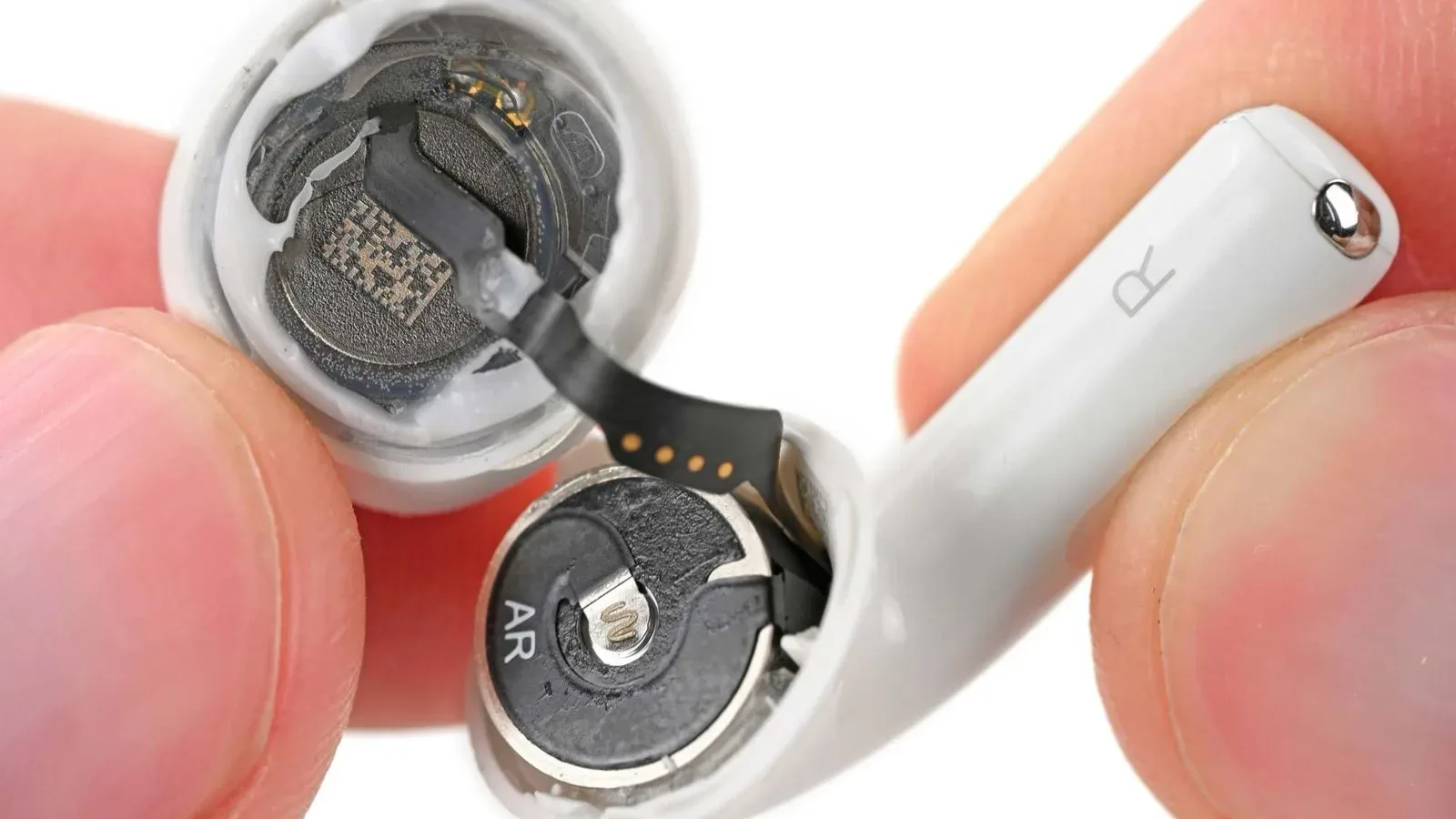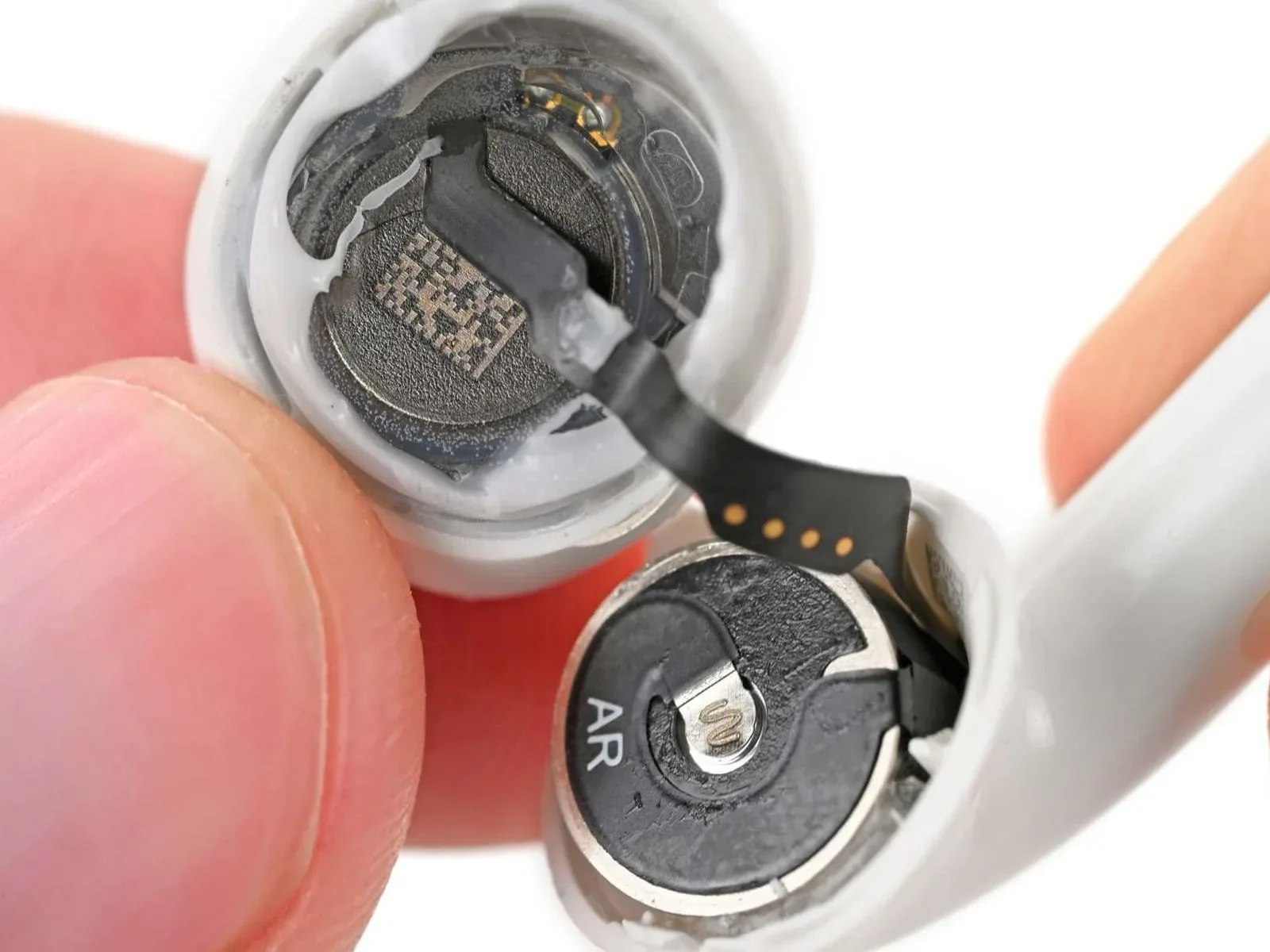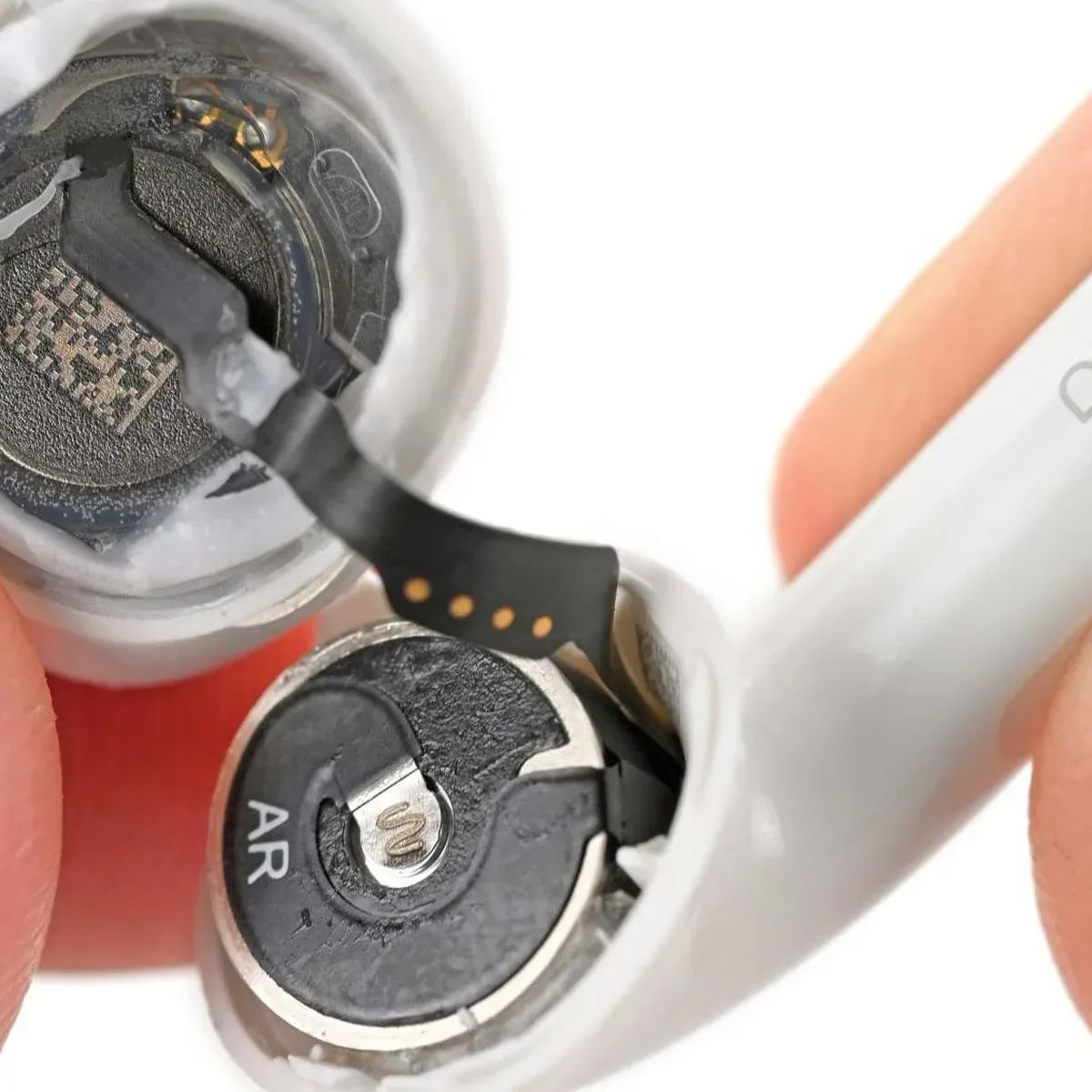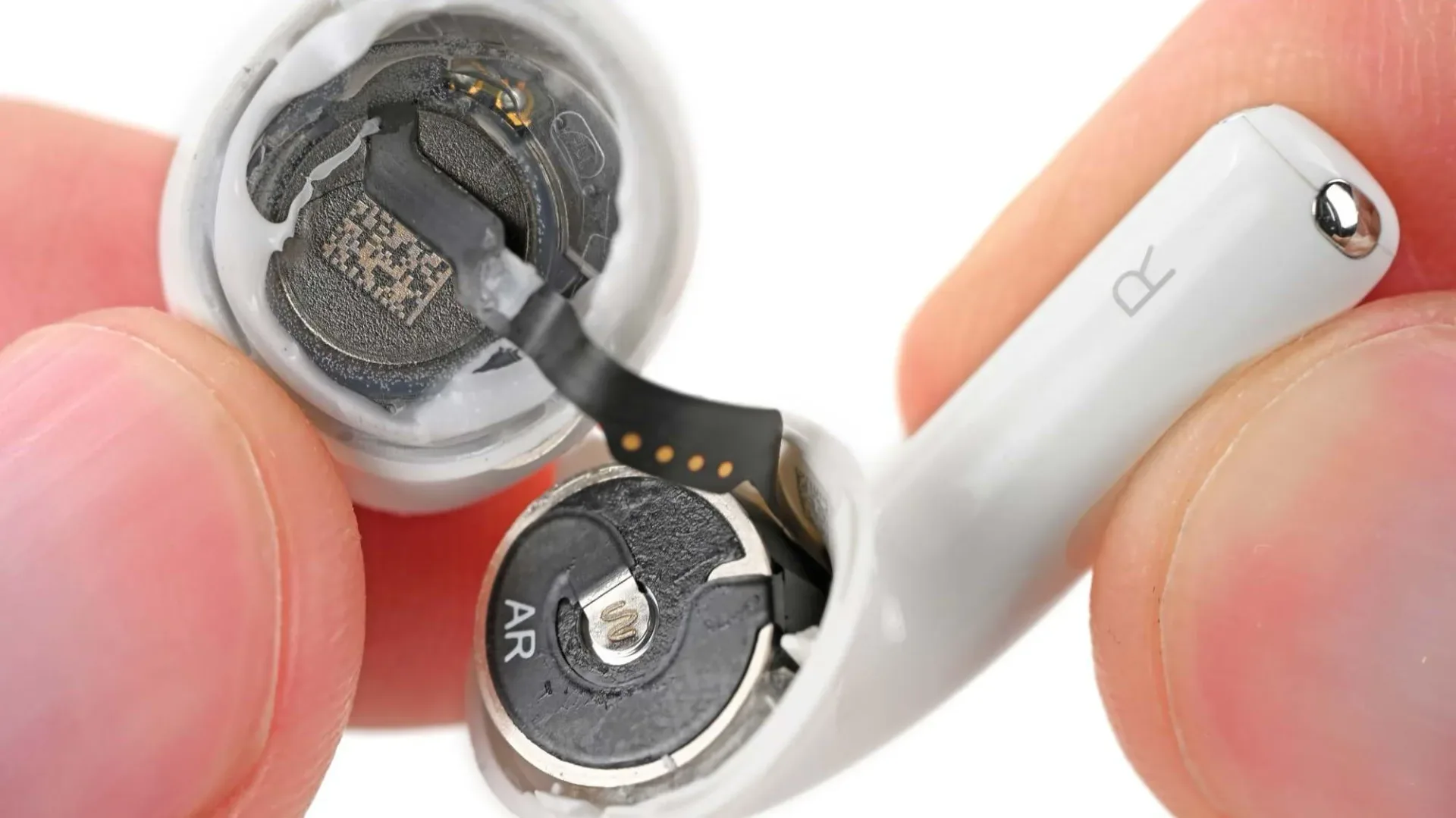
Apple’s AirPods 5 have achieved a small but meaningful repairability breakthrough: the earbuds’ batteries can apparently be replaced without turning every attempt into an expensive anatomy lesson. That is not the same as calling them easy to fix. A new teardown gives the earbuds a 2 out of 10 repairability score, a limited improvement over the 0 out of 10 awarded to every previous AirPods generation.
In practical terms, that score means the bar has moved from “effectively sealed” to “possible for a capable person with patience, suitable tools, and a tolerance for tiny adhesive-bound electronics.” The charging case, meanwhile, remains the part of the package most likely to turn a repair plan into a pile of regret.
A low score, but a genuine shift for AirPods
Wireless earbuds are unusually hard to repair. Their compact shells have to contain a battery, speakers, microphones, electronics, antennas and charging components while remaining comfortable enough to sit in an ear. That dense construction also leaves little room for ordinary screws, removable panels or the generous internal clearances that make larger devices less intimidating to service.
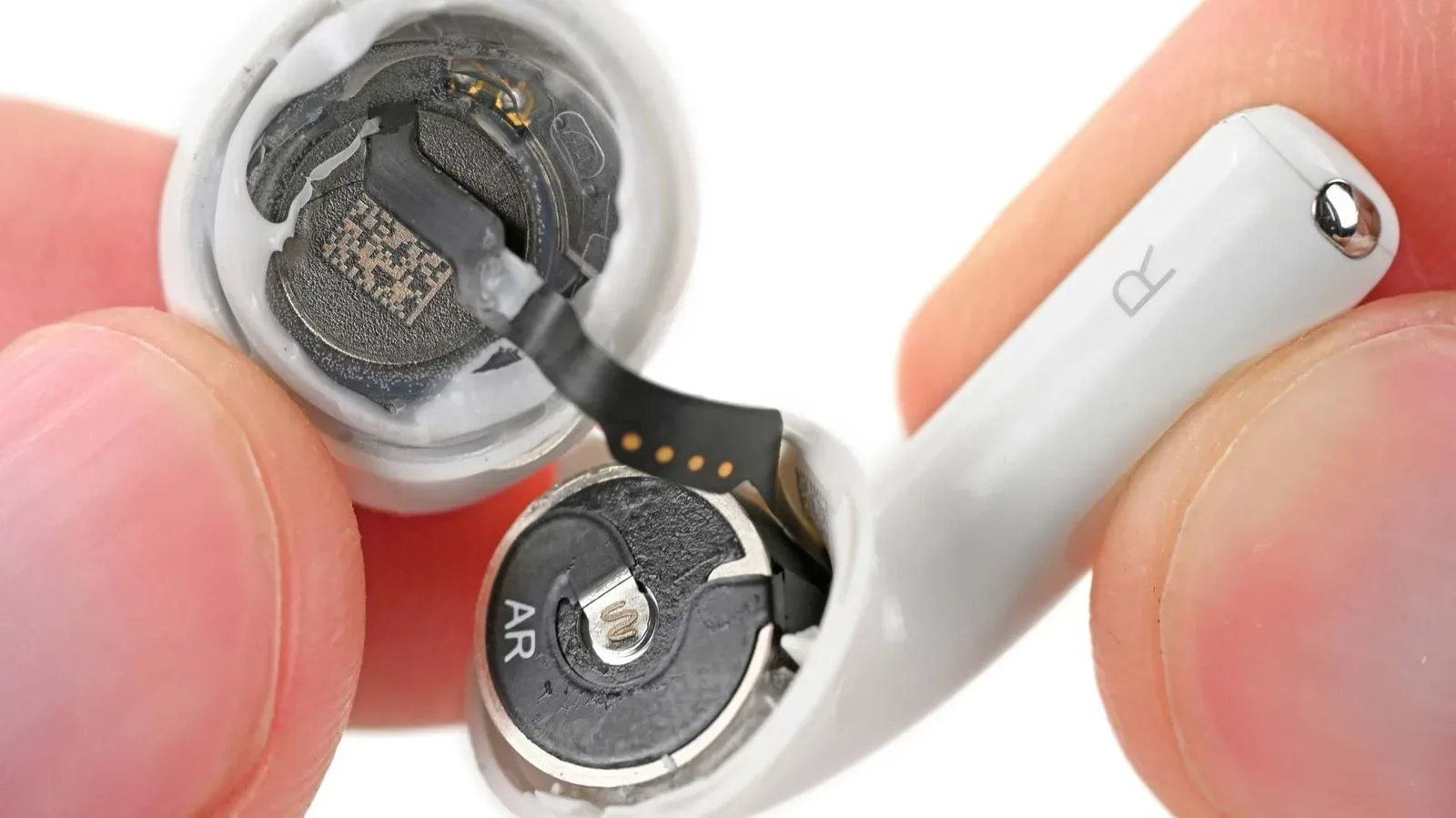
AirPods 5 are still very much built around that compact, closed design. Yet the teardown indicates that a battery swap in the earbuds is now achievable with a decent likelihood of success for skilled technicians and determined DIY repairers. That is a notable change from earlier AirPods, which received zero repairability points.
The improvement should be understood precisely. It does not mean an AirPod battery is a casual, tool-free replacement job. It means the battery is accessible enough that a careful repair has become viable rather than essentially impractical.
Getting inside requires heat and a firm hand
The route into an AirPods 5 earbud involves heating its adhesive with a hair dryer and holding the unit securely with a clamp. Adhesive is the glue-like bonding material used to keep tightly packed electronics closed. Heating it can soften that bond, making the enclosure easier to open, but it also introduces obvious risks: the device is tiny, its components are tightly arranged, and careless force can damage a shell or something inside it.
The clamp matters for the same reason. A small rounded earbud is difficult to hold securely while applying controlled pressure. Properly securing it helps reduce slips and uncontrolled twisting. Still, “possible to open” is a long way from “sensible to open at the kitchen table.” The teardown’s assessment points toward a repair that demands technique, not just enthusiasm.
For owners, the useful news is less about a new weekend hobby and more about battery longevity. Rechargeable batteries gradually lose capacity over repeated use. When an earbud begins spending less time away from a charger, a replaceable battery offers a potential route to continued use instead of complete replacement. The caveat is that the repair’s difficulty will likely keep professional service relevant for many people.
Left and right batteries are not interchangeable
One detail from the teardown is particularly important for anybody sourcing a replacement part: the left and right AirPods use different batteries with reversed polarity. Polarity describes the positive and negative orientation of an electrical connection. Reversed polarity means the battery intended for one side is not a substitute for the battery in the other.
Put simply, a battery removed from the left AirPod cannot be installed in the right AirPod, and vice versa. That makes side-specific identification essential. A replacement must match the particular earbud being repaired, not merely the AirPods 5 model line.
It is an easy detail to overlook because left and right earbuds look like a paired set from the outside. Inside, however, their battery arrangements differ. Anyone considering a repair should verify which side needs work before choosing a part or starting disassembly. The usual “I have a spare, so this should be fine” logic has been defeated by the tiny electronics goblin.
The charging case is still the weak link
The earbuds have improved, but the charging case has not joined them on the road to repair-friendly design. The teardown characterizes the case as extremely difficult to enter without destroying it. That distinction matters because the case is not merely a holder: it is the component that recharges and carries the earbuds between uses.
A user with a tired earbud battery may now have a plausible repair option. A user with a case that needs internal service faces a much harsher situation. The product’s real-world repairability is therefore limited by its least serviceable essential part, and the case remains that part.
This split result also explains the modest 2/10 score. Repairability is about more than whether one component can technically be replaced. It includes whether a device can be opened without major destruction, whether its parts can be handled and reassembled, and whether repairs are practical enough to be repeated. AirPods 5 make progress on the earbud battery problem, but the inaccessible case prevents that progress from becoming a broader design victory.
What this means for owners
AirPods 5 owners should treat the teardown as encouragement for repair options, not as a universal instruction manual. If an individual earbud’s battery life has worsened, a competent repair technician or especially experienced DIYer may have a credible path to replacing it. But the procedure requires heat, clamping and work around miniature components, and it is not presented as a simple home fix.
- Check which component is failing. A weak earbud and a damaged charging case have very different repair prospects.
- Identify the side before seeking a battery. Left and right batteries cannot be swapped because their polarity is reversed.
- Do not confuse a higher score with easy access. Two points out of 10 is progress, but it remains a very low repairability rating.
- Be particularly cautious about the case. The teardown indicates opening it without destruction is exceptionally difficult.
The wider lesson is that repairability is not binary. A device can be frustratingly sealed while still improving in one area that matters over its lifespan. AirPods 5 have not suddenly become screw-open, modular earbuds built for painless maintenance. They have, however, moved the battery replacement question from “almost certainly no” to “perhaps, in careful hands.”
That distinction is worth watching across the broader earbud market, especially as battery wear becomes a central ownership issue for small wireless audio devices. For more on the technologies and practical trade-offs inside modern earbud features, see our guide to translation earbuds and their AI pipeline.
For now, AirPods 5 earn a restrained golf clap. The earbuds have become more serviceable than their predecessors, even if their charging case is still guarding its innards like the final boss of a very small dungeon.