Translation earbuds are built around an appealingly simple idea: someone speaks one language, you hear another. In practice, the little earbuds are the last link in a chain that has to hear speech clearly, identify the words, determine what those words mean in context, translate them, create a new spoken response and deliver it back to the listener. That is a lot of work to hide inside what may feel like a short pause in conversation.
The encouraging news is that these products have improved substantially from their earlier forms. The necessary AI systems are increasingly capable, and the basic workflow is becoming familiar on mainstream devices as well as dedicated translation products. But prospective buyers should view the most ambitious accuracy claims cautiously. Translation is not a one-button replacement for knowing a language or using a human interpreter in every setting. It is a useful communication aid whose results depend heavily on the speaker, setting, language pair and the particular product's processing model.
Understanding the three major stages—speech recognition, machine translation and text-to-speech—makes the trade-offs much easier to spot. It also explains why a pair can seem remarkably effective during a quiet, straightforward exchange, then stumble over a noisy conversation, an idiom or a regional dialect.
The three jobs behind an apparently instant translation
A translation earbud system must complete three distinct tasks. The first is speech recognition, sometimes called speech-to-text. The second is machine translation, where the recognized text is converted into the requested language. The final stage is text-to-speech synthesis, which generates the synthetic voice the listener hears.
These steps happen in sequence, even where the product makes the handoff feel seamless. A result can only be as dependable as each part of the chain. If the system mishears a word at the microphone stage, even an excellent translation model begins with the wrong text. If it recognizes the words correctly but misunderstands their intended sense, the generated voice may deliver a fluent-sounding answer that does not match what the speaker meant.
1. Hearing the speaker: speech recognition
Everything starts with microphones. The earbuds capture the other person’s voice and attempt to distinguish it from competing sound. This is a crucial but difficult job: human conversation commonly happens amid other voices, traffic, music, echoes and inconsistent speaking volume.
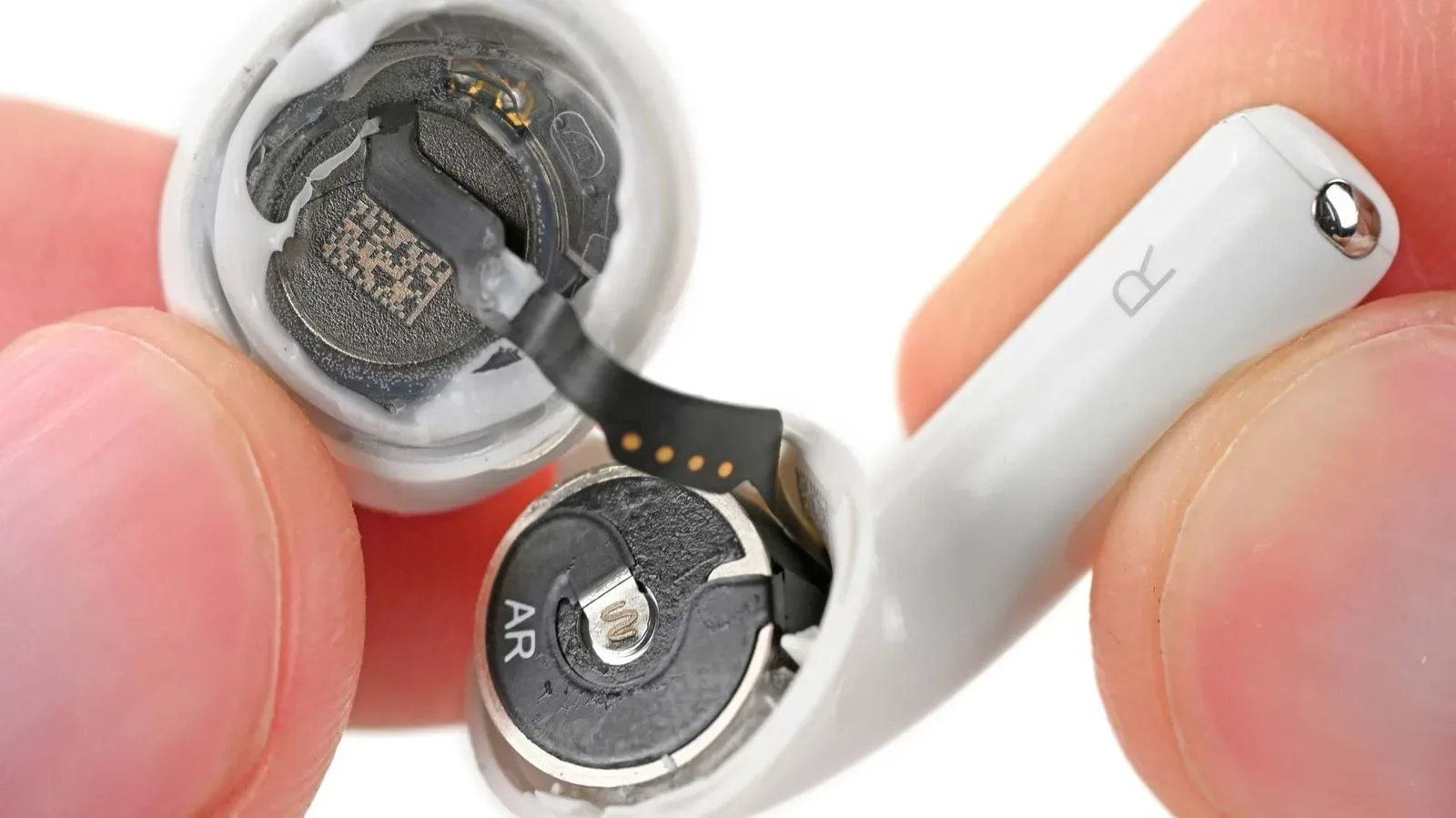
Higher-end designs may combine several methods to isolate speech. Soundcore’s Liberty 5 Pro, for example, uses eight microphones, two bone-conduction sensors and a specialized AI model to separate voices. Bone-conduction sensors detect vibrations associated with speech, providing another signal alongside conventional microphones. Other products use dual microphones or beamforming microphones. Beamforming is a technique that focuses microphone pickup toward a desired direction, helping the system prioritize a nearby voice over surrounding sound.
None of these approaches turns a chaotic environment into a studio. Rather, they give the recognition system a cleaner starting point. Clear speech, manageable background noise and a speaker who does not rush or trail off will generally put the technology in a stronger position before translation has even begun.
2. Turning words into meaning: recognition and machine translation
After capture, the speech must be processed. The audio is transcribed into text, and that text is translated into the chosen target language. Depending on the product, the computing takes place on the paired phone, in the cloud, or through a combination of the two.
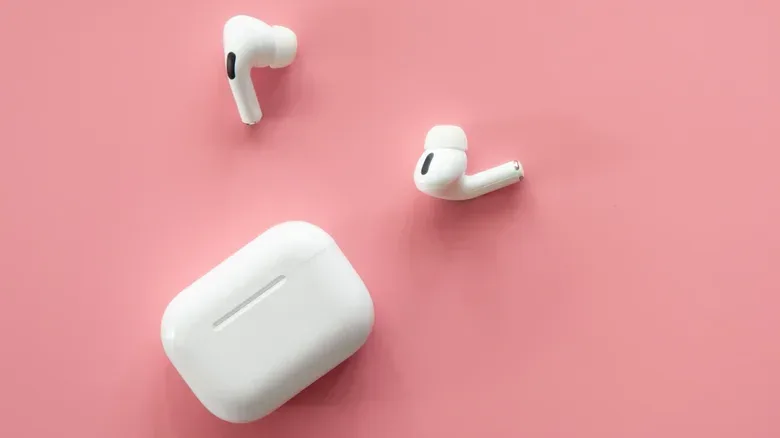
This is a meaningful distinction, not marketing trivia. Apple AirPods Pro can process translation on the iPhone after the required language packs have been downloaded. Google Pixel Buds use cloud-based translation processing and therefore require an internet connection. A cloud-based system sends work to remote servers, while local processing keeps that work on the device. For anyone expecting to rely on translation in places with unreliable service, confirming exactly which functions work without a connection should be a priority.
Translation is also more than swapping one word for another. The system relies on natural language processing, or NLP, to interpret a sentence’s meaning and context. NLP is the broad set of techniques that helps software work with human language: not merely identifying words, but considering how they relate to each other in a phrase or sentence. Some translation earbuds also use large language models, including models such as ChatGPT, to improve contextual understanding.
Context matters because a single word can have multiple meanings, while an idiom may mean something entirely different from its literal wording. The system needs enough of the sentence, and sometimes surrounding conversation, to select the intended interpretation. This is one reason a device may wait a few seconds before speaking rather than translating every sound immediately.
3. Speaking the answer: text-to-speech
Once the system has produced translated text, text-to-speech synthesis converts it into generated audio. That audio is sent to the phone, which then passes it by Bluetooth to the earbuds for playback. The listener hears a synthetic voice rather than the original speaker’s voice.
That final stage is what makes earbuds feel more natural than reading translated text on a screen. It lets the user keep listening rather than repeatedly checking a phone. It does not eliminate the rest of the workflow, though, and it cannot conceal every delay or error created earlier in the pipeline.
Why a few seconds can change the conversation
Under favorable conditions, the complete journey from captured speech to translated audio takes a few seconds. That can be quick enough for short, practical exchanges, yet it is still long enough to change the rhythm of a natural discussion. A person speaks, the device processes, the listener waits, then the translation arrives. The next reply may require the same sequence in reverse.
Some designs handle this interaction differently. With Apple AirPods Pro paired to an iPhone, the user can choose languages in the Translate app and enable Live Translation. Other earbuds may require one person to give a bud to the person they are speaking with. That hardware-sharing approach can make the two-way arrangement more direct, but it also means the conversational setup depends on the product’s intended mode rather than solely on language settings.
The practical takeaway is simple: translation earbuds are best understood as mediated conversation tools. They can reduce a language barrier, but they add a processing turn to every spoken turn. In a calm exchange, participants can adapt by speaking in shorter, clearer segments and allowing room for the response. In a fast-moving group discussion, interruptions and overlapping speech can make that structure much harder to maintain.
Accuracy claims need real-world context
Numbers such as 95% or 99% accuracy can sound conclusive, but they do not describe every conversation a buyer will have. A system may reach a very high figure in near-perfect conditions without delivering that same result amid everyday noise, unclear pronunciation or language that is rich in local references. The issue is not that a high number can never be achieved; it is that the conditions attached to it matter.
Several common obstacles can degrade translation quality:
- Unclear speech: If words are muffled, rushed or difficult to hear, speech recognition may transcribe them incorrectly.
- Background noise: Nearby voices and environmental sound make it more difficult to isolate the intended speaker.
- Dialects and slang: Regional vocabulary and informal phrasing can challenge systems trained on more standard language patterns.
- Homonyms: A word with multiple meanings needs context to be interpreted correctly.
- Idioms: Literal translation can miss the meaning of a phrase whose intent is cultural rather than word-for-word.
- Less common language pairs: Inaccuracies become more frequent when the requested pair is less widely supported.
These limits are especially important when nuance matters. A mistranslation may be harmless when ordering food or confirming a simple direction, but the same kind of error can become more consequential in a complex discussion. The technology can be extremely helpful without being infallible, and users should leave space to repeat or rephrase an important point when a result seems odd.
Offline translation is a feature with boundaries
Offline capability can be one of the most useful features in this category, but the label should be examined closely. Some earbuds, including Apple AirPods Pro and Galaxy Buds Pro, can run the full translation process offline. That means the essential workflow can continue without a steady internet connection, subject to the needed language support and downloaded resources.
Other products remain dependent on the cloud for at least some work. Google Pixel Buds are one example of a cloud-processing approach. The convenience of remote computing can therefore come with an operational requirement: no reliable connection, no translation service.
Even an offline-focused option can divide capabilities between connected and disconnected modes. Timekettle offers 14 offline language pairs. The first two are free, while the remaining pairs cost $10 each. Its media translation, calls and advanced AI features still require an internet connection. This is a useful reminder that “offline” may describe a defined set of language pairs and core translation rather than every feature shown in a product’s promotional material.
For a buyer, the right question is not simply “Does it work offline?” It is “Which language pairs and which modes work offline, and what requires data access?” That distinction matters for travel, but it also matters for anyone who wants predictable access without depending on a strong signal.
What to verify before buying
Translation ability should be evaluated alongside ordinary earbud duties. Many models also serve for calls and media playback, but translation performance does not automatically tell you whether they meet your needs for those other jobs. A single pair may be more appealing than carrying separate earbuds and a translation device, provided its full feature set fits the intended use.
A focused pre-purchase checklist can cut through broad AI promises:
- Confirm the exact languages and language pairs. Do not assume support for one popular pairing means comparable support for every pairing.
- Check where processing happens. Determine whether the phone handles it locally, whether cloud processing is mandatory, or whether the product uses both.
- Read the offline details. Look for any downloaded language packs, pair limits, additional charges and features that still need a connection.
- Consider your likely environment. If use will often involve loud spaces or multiple speakers, microphone and voice-isolation design becomes especially relevant.
- Plan for delay. A few seconds may be manageable for one-on-one exchanges but less suited to rapid conversation.
- Evaluate the non-translation functions. Calls and media playback may determine whether the earbuds can replace a regular pair.
Phone compatibility and software preparation also matter because many setups rely on the connected handset. Anyone who uses a Galaxy phone may find it useful to review how to prepare a Samsung Galaxy phone for the One UI 9 update before making broader device changes. Translation earbuds are not an isolated gadget: their language packs, applications, Bluetooth connection and processing arrangement often depend on the phone they are paired with.
The realistic promise
Translation earbuds are not magic universal interpreters, and treating them as such sets the technology up to disappoint. Their value lies in compressing a complicated AI workflow into a wearable form that can help people follow and participate in conversations across a language gap. When speech is clear, the environment is manageable, the language pair is well supported and the user accepts a short delay, the experience can be compelling.
The same device can struggle when voices overlap, slang becomes dense, a speaker uses an obscure dialect or the requested language pair has limited support. Buyers should also account for whether the system needs internet access, whether offline language packs are available, and whether supplementary features carry their own requirements or charges.
That is not a failure of the premise. It is the practical reality of asking compact consumer hardware and AI software to recognize, interpret and reproduce human language in real time. The best purchase decision comes from matching an earbud’s confirmed languages, connectivity model and everyday functions to the situations where it will actually be used—not from assuming that a headline accuracy percentage applies equally to every room and every conversation.