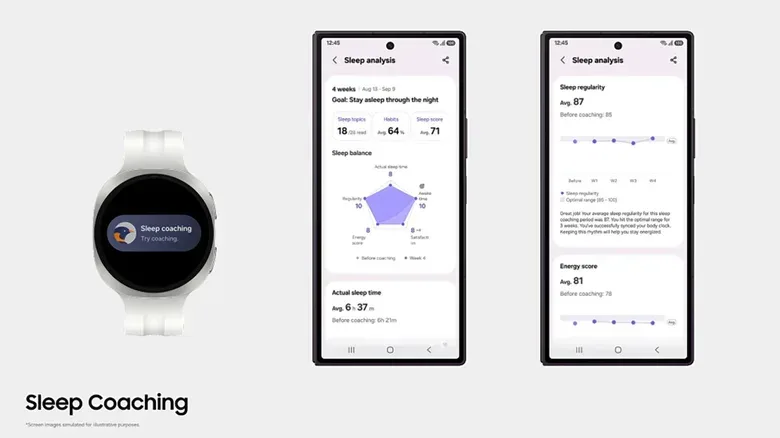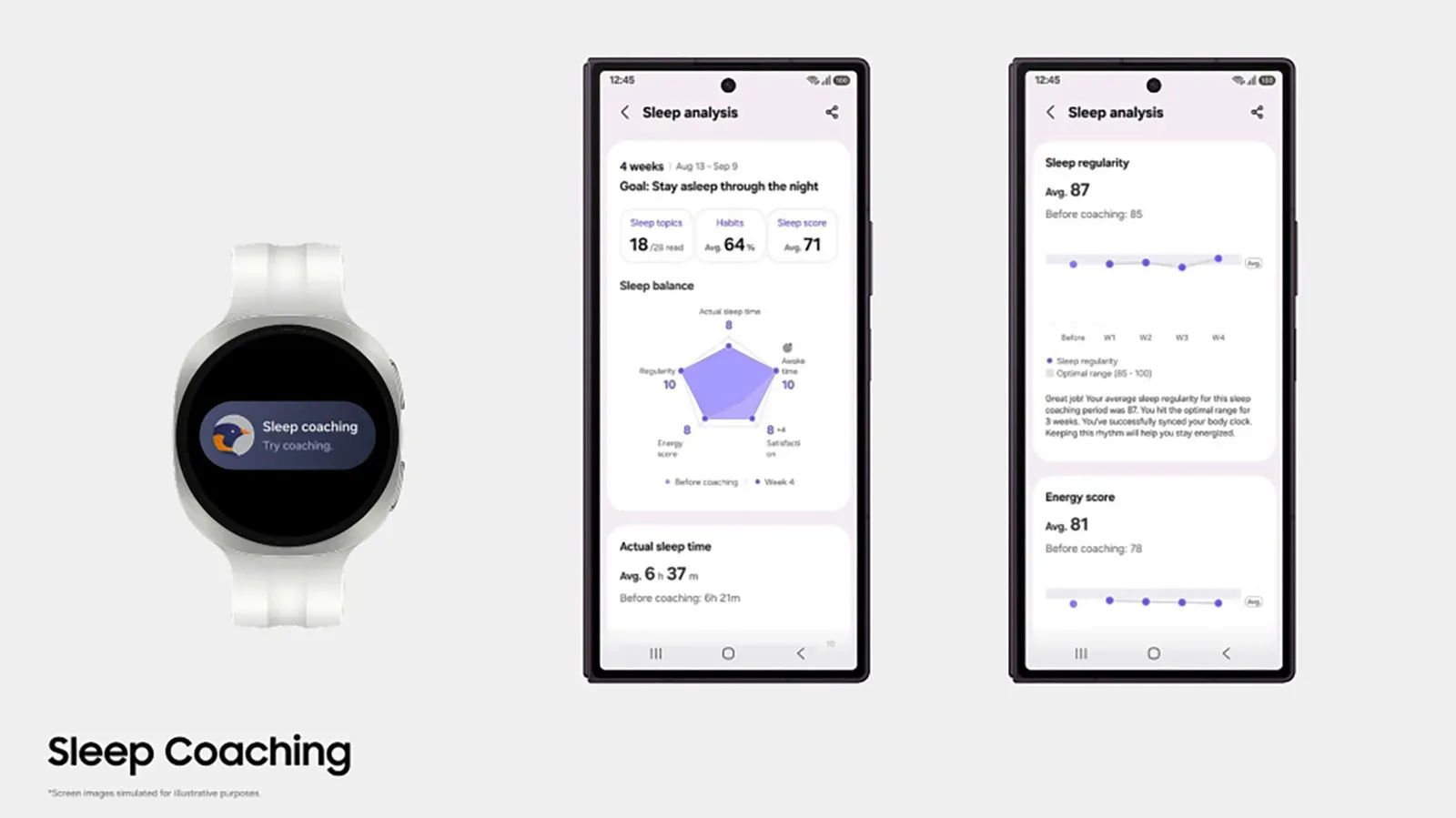
Samsung Health is making its Sleep Coaching feature much quicker to start. Rather than requiring a full week of consecutive sleep records within a month, the updated service can build a coaching plan after it has collected three days of sleep data during the previous two weeks.
It is a small change in the number of nights required, but a potentially meaningful one for people whose wearable routines are less than perfect. Watches are easy to forget on a charger, uncomfortable to wear during a hot night, or simply left behind on a weekend trip. The former requirement placed a premium on uninterrupted tracking; the revised one is built around a more flexible snapshot of a person’s recent sleep.
The feature is available to people using a Galaxy Watch 4 series device or later, along with Galaxy Fit 3 and Galaxy Ring users. Once the qualifying data is present, Samsung Health combines it with a questionnaire to create a four- to eight-week coaching program aimed at the user’s stated goals and habits.
What the three-day requirement actually changes
This update does not mean Samsung Health is turning three nights of readings into a definitive medical assessment. In the practical sense described here, the shorter tracking period is an onboarding change: it lets an eligible user enter the Sleep Coaching program sooner.
That distinction matters. Wearable sleep tracking is useful in this context because it gives the app a recent behavioural record to work from, while the setup survey supplies details the sensor cannot directly know. The survey asks about sleep regularity, interruptions, alcohol and caffeine intake, and the user’s own satisfaction with their sleep.
In other words, Samsung Health is using both measured and self-reported information. A device can record patterns connected to a night’s sleep, but a wearer is the person who can describe whether that sleep felt restorative, whether a late coffee was unusual, or whether repeated interruptions were part of a temporary situation. The new Sleep Coaching setup explicitly brings those perspectives together.
After setup, the app assigns a personalized Sleep Animal symbol and uses the available information to tailor the program. The animal is a presentation layer rather than the core coaching mechanism; the substantive part is the multiweek plan and its recommendations.
How the coaching program is meant to adapt
The program lasts from four to eight weeks, depending on the user’s goals and habits. Its recommendations can change week by week as the person’s sleep patterns change, rather than remaining a fixed checklist from day one. Samsung Health also tracks daily sleep satisfaction, provides daily habit checklists, and surfaces sleep tips.
Examples of the guidance include reducing screen and caffeine use before bed, as well as stretching outdoors after waking. Samsung frames those recommendations as being based on behavioural sleep science. The key word is behavioural: these are habit-focused prompts intended to help people notice and alter routines around sleep, not a replacement for professional medical diagnosis or treatment.
For users, the most valuable implication may be that the system can turn passive tracking into a concrete routine. A sleep report alone says what happened. Coaching adds a structure for choosing a change, following it over time, and checking whether the pattern shifts. That will be more useful to someone who wants habit reminders and trend awareness than to someone looking for an answer to a specific health concern.
Sleep terms in the new report, explained
The updated analysis places several measures in a five-sided Sleep Balance graph. It covers sleep time, sleep regularity, nighttime wakefulness, sleep satisfaction and an Energy Score. These terms are worth separating because they answer different questions:
- Sleep time is the duration of sleep recorded by the system. It is about quantity.
- Sleep regularity concerns how consistent sleep patterns are over time. It is about routine rather than a single night.
- Nighttime wakefulness represents waking during the night. It focuses on interruptions.
- Sleep satisfaction is the wearer’s own rating of how they slept. It adds subjective experience to device-led tracking.
- Energy Score is Samsung Health’s highlighted indicator intended to draw attention to areas that may need work within the report.
Putting those measures beside one another should make the reports easier to interpret than a lone duration total. A person might have logged a long night but still rate it poorly, for example, or see that an inconsistent schedule and wakefulness are more notable than the total time in bed. The graph’s purpose is not merely to generate a score to chase; it is to identify which category deserves attention in the coaching plan.
Samsung Health will also send morning insight messages that recap the previous night and offer tips. That timing is deliberate from a usability standpoint: sleep data tends to be most relevant immediately after waking, when a person can compare the app’s summary with how they feel.
Less friction can make coaching more usable
The previous requirement of seven consecutive days of data in a month created a clear barrier: miss a night and the path to coaching could be delayed. Requiring any three days from the past two weeks is more forgiving while still making the data recent enough to serve as a starting point.
It also changes the relationship between the wearable and the app. A user does not have to prove a flawless sleep-tracking streak before receiving guidance. For new Galaxy Watch, Galaxy Fit 3 and Galaxy Ring owners, that could make the feature feel available shortly after they establish the habit of wearing their device overnight.
There is still a trade-off inherent in using a smaller initial sample. Three tracked days provide less of a picture than a longer uninterrupted run. Samsung’s response, as described by the update, is not to treat setup as the end of the process: the program continues to adjust its recommendations as more sleep-pattern information arrives over subsequent weeks.
That evolving approach is important. The first three days unlock the experience; continuing to wear the device and recording satisfaction give the app more material to work with as the coaching plan progresses.
Running Coach adds two higher levels
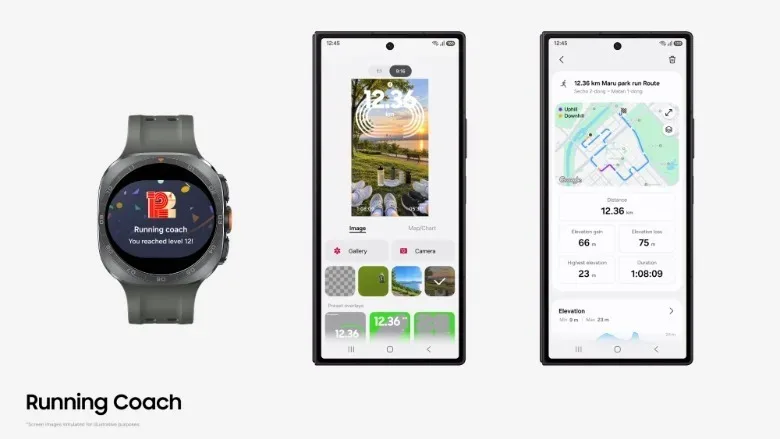
The update is not solely about sleep. Samsung is also expanding its Running Coach feature from 10 levels to 12 levels. The additional tiers are designed to better accommodate intermediate and advanced runners, giving them room to set higher targets and pursue a greater challenge.
A tiered training system is a way of grouping training difficulty or progression into defined stages. Moving from 10 to 12 levels does not, by itself, reveal the workout details within every tier, but Samsung’s stated aim is clear: the range is being extended upward rather than only changing entry-level guidance.
The company is also adding sharing tools for milestones, personal records and route highlights. For runners who treat a completed route or a new best result as part of their social fitness routine, those additions make it easier to share selected achievements from within Samsung Health.
There is a natural overlap with the interests of people who use portable tech around games and exercise. Gear designed for commutes or travel increasingly has to coexist with training devices and health tracking. For a related look at compact gaming hardware built around travel, see CRKD Atom+ enlarges its tiny controller formula for easier Switch 2 travel.
Strava route imports broaden the outdoor-training link
Samsung Health is also gaining a partnership with Strava. Users will be able to import favourite Strava Routes directly into Samsung Health for running, trail running and cycling.
That is a more specific form of integration than simply posting an activity after it is complete. A route is the planned or saved course itself, so importing it into Samsung Health can connect route selection with the platform where a person tracks their workout. It is especially relevant across the three named activities, where course choice can be a central part of planning.
Samsung describes the overall Running Coach revision as a move toward a more dynamic and connected training experience. The 12-level structure addresses progression, the sharing options address achievements, and Strava Route imports address where users train. Together, those changes position Samsung Health as more than a place to review a finished session.
Availability and what eligible users should expect
The new features are scheduled to begin rolling out this month. Eligible people will need a Galaxy Watch 4 series or newer watch, a Galaxy Fit 3, or a Galaxy Ring for the shortened Sleep Coaching setup.
Once the update reaches a compatible device and app setup, the practical sequence is straightforward: collect at least three days of sleep data within a two-week window, complete the survey, review the assigned Sleep Animal and proposed coaching program, then continue recording sleep and satisfaction so the weekly recommendations can respond to new patterns.
For people drawn to the running updates, the relevant additions are the two new upper Running Coach levels, the richer milestone and route-sharing options, and direct imports of favourite Strava Routes for running, trail running and cycling. Samsung has said these elements are part of the same feature rollout, but users should keep in mind that “begin rolling out” does not necessarily mean every eligible device receives every change at the same moment.
The central improvement is simplicity. Samsung Health is lowering the amount of perfect tracking required before it can start offering structured sleep guidance, while making the eventual reports more legible through the Sleep Balance graph and morning summaries. For the right wearer, that turns a few recently recorded nights into the start of an ongoing, adjustable habit program rather than another week-long prerequisite.