When the main television is occupied by a long game session, the neglected screen in a bedroom or dorm can suddenly become the most important display in the building. The problem is that an older TV may still work perfectly well as a panel while offering little or nothing in the way of modern streaming apps.
Amazon’s Black Friday listing for the Roku Streaming Stick HD puts the device at $19, reduced from $39. It is not a game console, nor is it meant to improve a game’s frame rate or graphics. Its appeal is more practical: it can turn a television with an HDMI port into a dedicated streaming screen without demanding another large box, another remote for basic TV control, or—on compatible setups—another wall socket.
That is particularly relevant to households where GTA 6 is already shaping the wider entertainment conversation and competition for the primary TV is real. A second screen is less about replacing the living-room setup than it is about giving everyone else an alternative for shows, sports, anime, videos, or a free live channel while somebody else keeps the controller.
What the Roku Streaming Stick HD actually adds
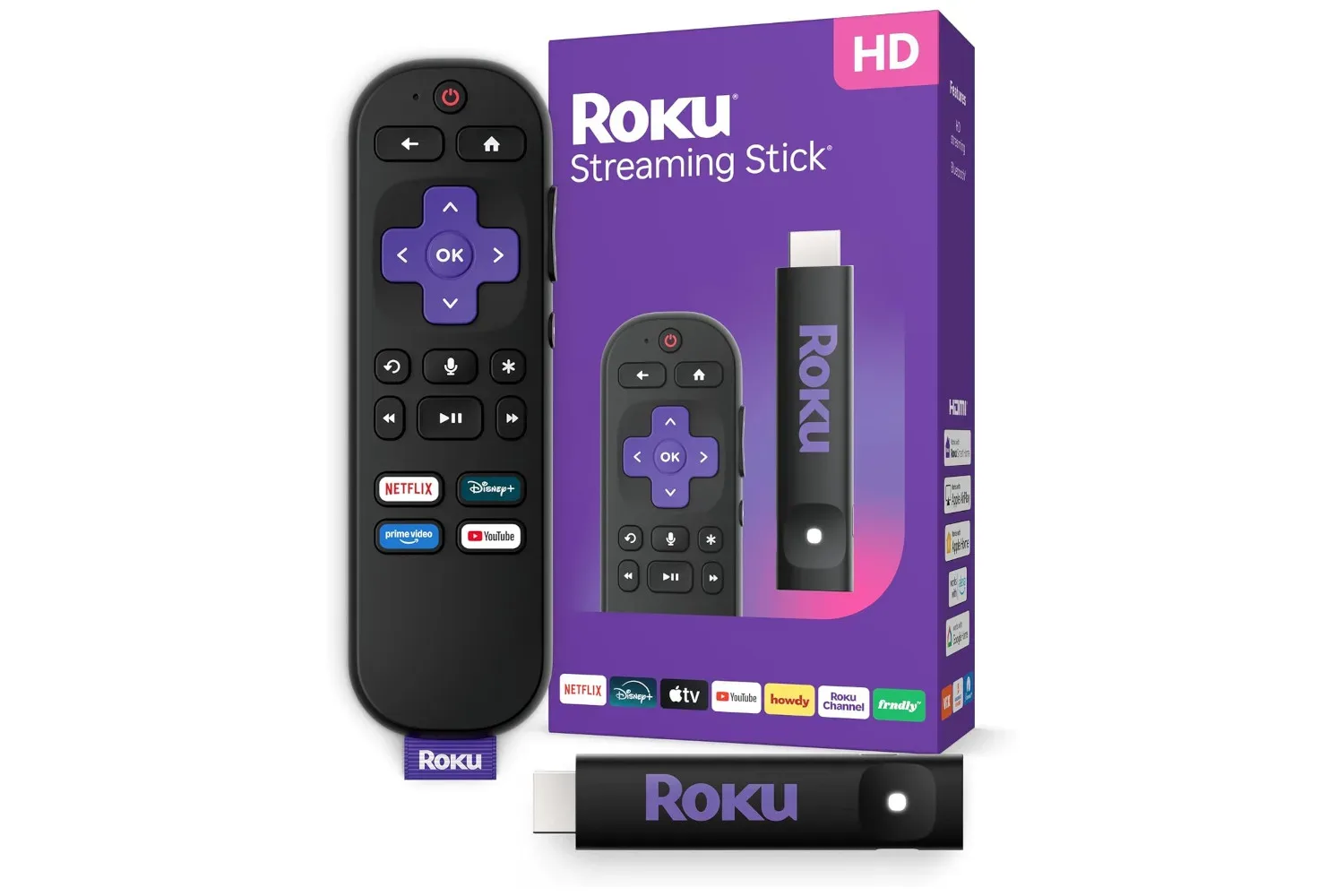
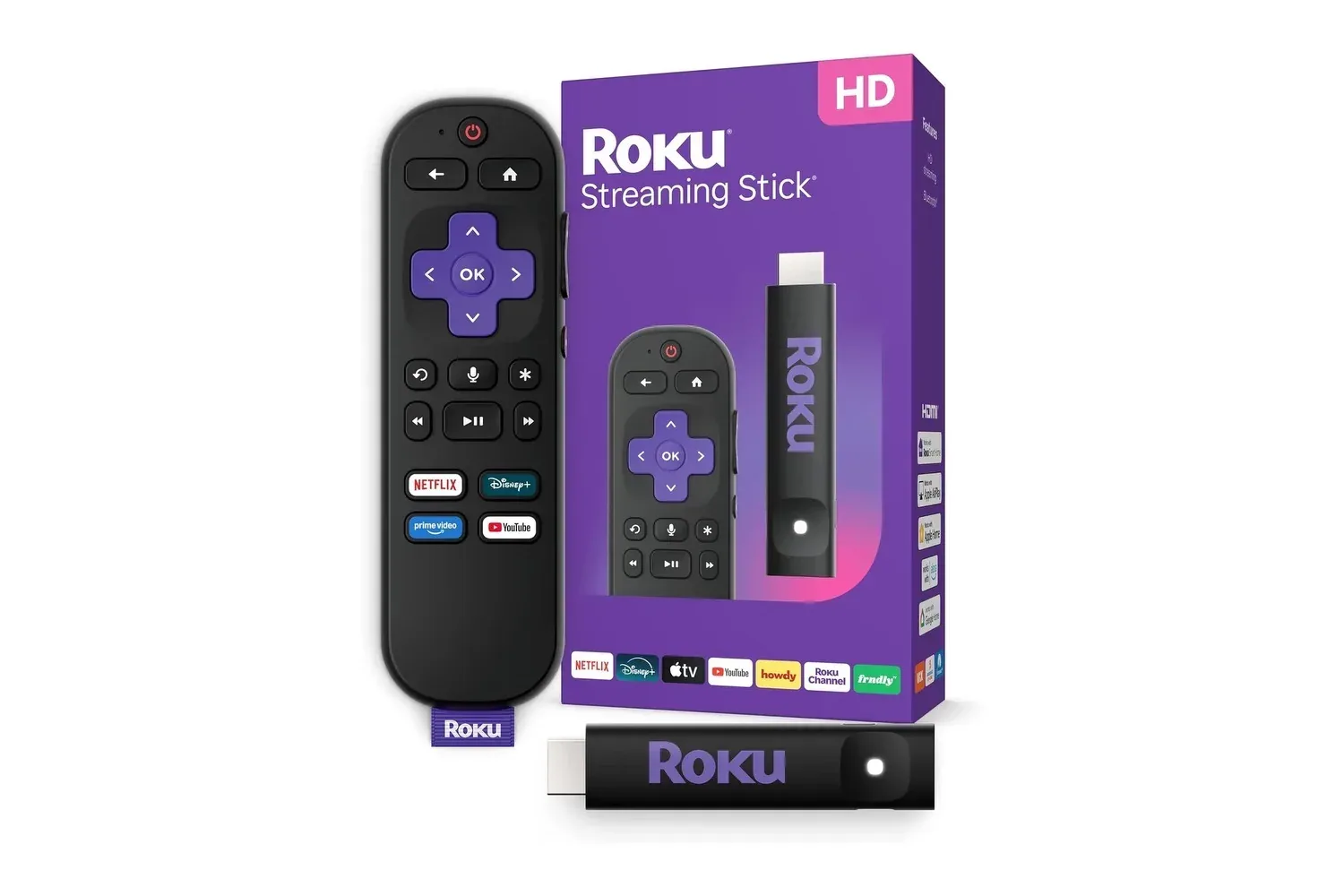
The Streaming Stick HD connects directly to a TV through HDMI. HDMI is the common connection used to carry picture and sound from devices such as consoles, streaming players, and media boxes to a television. In this case, the stick’s form factor matters: it sits at the rear of the display rather than occupying shelf space beside a console.
The design is also intended not to obstruct neighboring HDMI ports. That is a small but meaningful detail on a TV where ports may already be claimed by a PlayStation 5, a Switch 2, or another device. A streamer that solves one problem by forcing a user to constantly swap cables has not solved much at all.
The stick can draw its power from the TV, helping avoid another occupied outlet in a crowded entertainment area. Anyone who has tried to organize the wiring behind a TV stand knows that outlet capacity can become a constraint well before HDMI capacity does. Console power hardware, television cables, chargers, and audio equipment add up quickly.
Once connected, Roku presents its apps in a straightforward grid-based home screen. The core benefit is consolidation: streaming services, YouTube, Crunchyroll, and other supported services are available from the same interface, alongside a library of free films, shows, and live TV channels that includes local news and sports. Roku says it is the leading U.S. TV streaming platform by hours streamed, and that scale helps explain why major streaming services maintain apps for the platform.
HD means 1080p, not 4K
The key specification to understand before buying is in the name. This is an HD streamer that outputs at 1080p, rather than 4K. In simple terms, 1080p is a high-definition video format; 4K has a higher pixel count and can show more detail when the TV, content, and viewing conditions support it.
Related coverage includes Roku Streaming Stick HD Deal Offers a Simple Second Screen for Gaming Households.
That limitation is not necessarily a drawback for the product’s most sensible jobs. An older secondary TV, a smaller bedroom screen, or a dorm display may be 1080p itself, making 4K support beside the point. Even on a 4K screen, the better question is whether the buyer needs this device to be the centerpiece of a premium movie setup. For a low-cost screen dedicated to routine streaming, 1080p may be a reasonable trade-off.
It should not be mistaken for an all-purpose upgrade to a high-end living-room system, however. Anyone specifically seeking 4K streaming should recognize that this model is positioned around HD playback. The $19 price is useful context, but it does not change the resolution ceiling.
Convenience is the strongest gaming-household argument
The included voice remote can handle basic TV functions including power and volume, reducing the number of remotes needed for daily use. Its microphone button supports voice search, a considerably easier route to a title than entering each letter with directional controls. If an Alexa speaker is already part of the room, Roku says users can ask Alexa to turn on the TV.
These are modest quality-of-life features, but a secondary screen succeeds or fails on friction. If starting a show requires locating the old TV remote, navigating a dated built-in interface, and typing with arrow keys, the screen is likely to remain unused. A clear app grid, voice search, and basic TV control from one remote address that everyday problem directly.
The device also includes long-range Wi-Fi intended to help maintain a stable stream when the router is farther away. Wi-Fi is the wireless connection between the streamer and the home network; its reliability can influence whether video plays smoothly. Distance is only one factor in a home network, so it is not a guarantee against every connection issue, but the feature is aimed at a common placement problem: the spare TV often lives in the room farthest from the router.
A compact option for travel, with a sensible privacy advantage
The stick’s size and TV-powered design make it suited to travel as well as a fixed second room. A traveler can put it in a bag, connect it to a hotel TV with HDMI, and use their own streaming setup rather than signing into an unfamiliar device. That is a practical privacy consideration: personal streaming accounts and watch histories do not need to be entered on someone else’s hardware.
The same portable approach can work for holiday travel, provided the destination TV has an available HDMI port. It is not a claim that every hotel setup will be equally simple, but the small hardware footprint means the player is easier to bring along than a console or a larger streaming box.
Who this deal makes sense for—and who should skip it
At the listed $19 sale price, the Roku Streaming Stick HD makes the clearest case for people with a functional but underused HDMI-equipped TV. That can mean a dorm-room display, an older bedroom set, or a small television that needs modern apps without a complicated installation.
- Consider it if the goal is affordable access to streaming apps on a 1080p-capable secondary TV.
- Consider it if HDMI ports and wall outlets are at a premium around console hardware.
- Consider it if a portable personal streaming device would be useful on trips.
- Skip it if 4K streaming is a requirement, because this is a 1080p device.
- Check first that the intended TV has HDMI available and that the home Wi-Fi situation suits streaming.
There is no magical transformation here: a streaming stick will not make a bedroom TV into a new console, and it will not settle whose turn it is on the main screen. What it can do is make the displaced television genuinely useful again. For a modest Black Friday price, that focused job may be exactly what a console-heavy home needs.
Shop the products
Check current price, model and availability at the retailer.