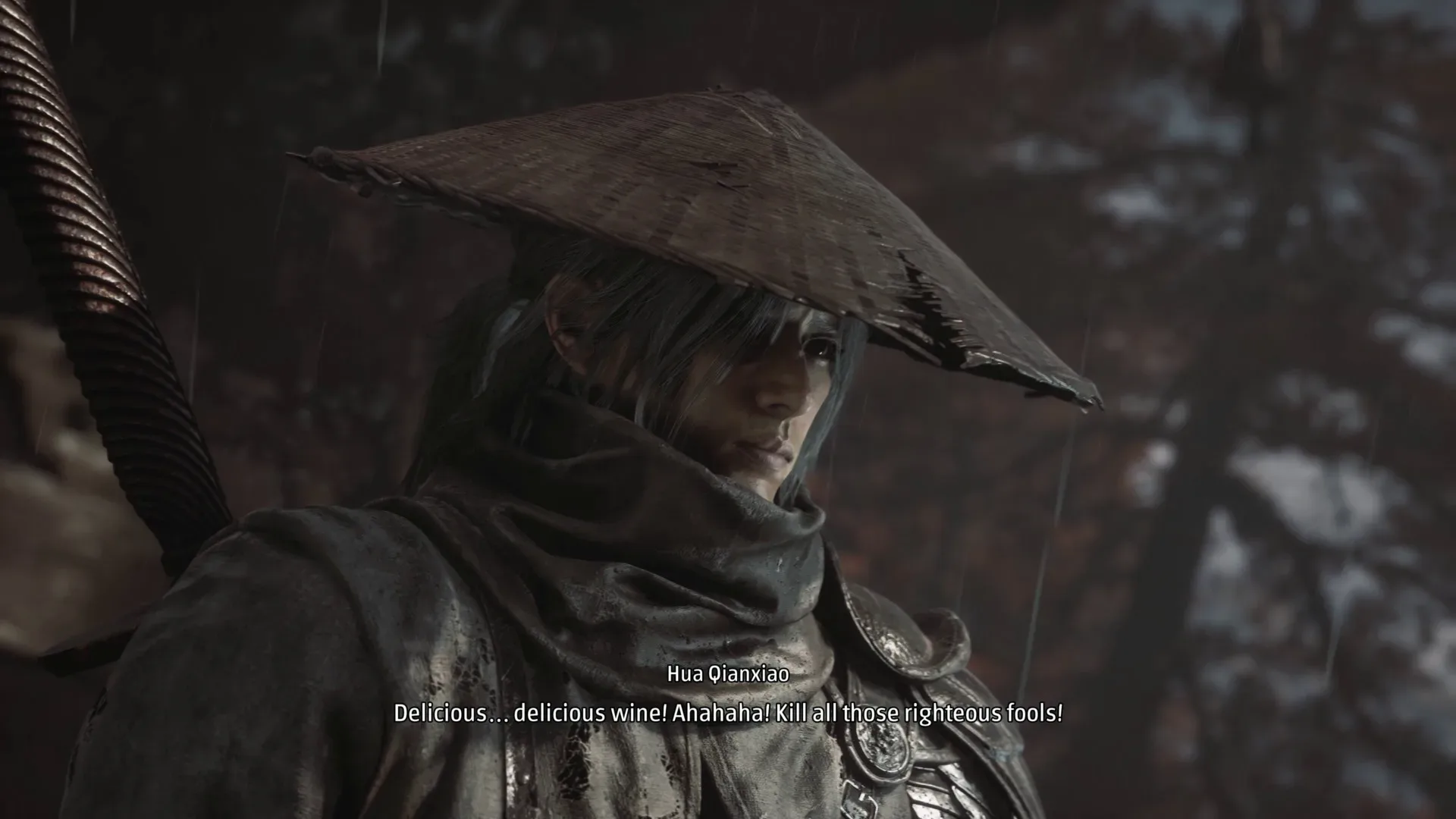
Roger Craig Smith is the new English voice of Soul, the protagonist of Phantom Blade Zero. Developer S-Game has confirmed the casting change, with Smith replacing Jay Maksenuk in the role. Maksenuk’s performance remains audible in previously released trailers and gameplay footage, but players starting the game at launch will hear Smith voice Soul throughout the experience.
The shift is notable both because Soul is the player’s central character and because it appears to have arrived relatively close to release. During a review period, the English voice for Soul was updated about a week in, after much of the game had still used Maksenuk’s performance. S-Game had indicated ahead of time that an update was planned, though it did not initially identify the replacement actor or explain the reason for the recast.
Smith’s version of Soul can be heard in the game’s launch trailer. The developer has not publicly detailed why the English-language role changed hands, so there is no confirmed account of whether the decision was creative, production-related, contractual, or driven by another factor. That distinction matters: a late casting change can invite plenty of speculation, but the confirmed facts are simply that Smith now voices Soul and that older promotional material may preserve the previous performance.
A familiar voice takes on Soul
Smith arrives with a voice-acting résumé that is instantly recognizable to many game players. He has voiced Sonic the Hedgehog, Ezio Auditore, Chris Redfield, and Batman. Those roles cover very different tones: mascot adventure, historical action, survival horror, and superhero fiction. The common thread is not that Soul will sound like any of them, but that Smith is an established performer accustomed to carrying major characters across games and other media.
For Phantom Blade Zero, the immediate practical result is straightforward. The English version of Soul at launch is Smith’s interpretation, not Maksenuk’s. Anyone revisiting an early trailer, an extended gameplay video, or other material released before the update may notice that Soul’s delivery no longer matches the version in the released game.
That mismatch is not unusual when games evolve through production. Trailers are snapshots rather than permanent technical specifications. They can retain earlier visuals, interface elements, balancing, dialogue, performances, or even cuts of scenes that change before release. In this case, the difference is particularly easy to identify because Soul speaks frequently and a lead voice is one of the strongest pieces of a character’s on-screen identity.
What “VO” means in this change
VO is shorthand for voice-over: recorded spoken performance used in a game. In a narrative action game, it can encompass story scenes, combat barks, exploration dialogue, reactive lines, tutorials, menu interactions, incidental character exchanges, and additional recording intended to make scenes flow naturally.
Replacing a protagonist’s voice is therefore more involved than exchanging a single performance in a trailer. To present one consistent English Soul at launch, the game needs the replacement dialogue integrated into the relevant content. The available information indicates that players launching the game will hear Smith as Soul entirely, rather than encountering a mixture of the two performers across the campaign.
Related coverage includes Roger Craig Smith Takes Over as Soul in Phantom Blade Zero.
There is an important limit to what can be inferred from that. The public information does not describe the recording schedule, how much material was redone, whether any dialogue was rewritten, or the technical process used to incorporate the update. It also does not establish why Maksenuk was replaced. Those production details should remain unknown unless S-Game chooses to address them directly.
Why the timing stands out
The reported review-period update gives the story an unusual timeline. For most of that period, Soul still used Maksenuk’s English performance. Roughly a week in, the developer said the protagonist’s VO had been changed, as previously planned. By the time Smith’s work could be heard, progress through the game was already near its end, limiting the amount of newly updated dialogue heard in that specific playthrough.
That does not automatically mean the game is unfinished, nor does it prove that the change was made at the last possible moment. It does mean that public-facing footage and pre-release builds may not be reliable guides to which English performance purchasers will receive at launch. Fans comparing scenes should account for the possibility that they are hearing recordings from different stages of production.
It also explains why confusion can spread quickly around a recast. Viewers may hear one actor in marketing that remains widely shared online, then encounter another actor in a launch trailer or game build. Without a clear casting confirmation, people can mistake a replacement for an audio setting, a localized variation, a temporary recording, or even an unannounced edit. S-Game’s confirmation resolves the core question: Smith is Soul’s English voice for launch.
English and Chinese audio remain separate choices
The recast applies to the English performance of Soul. Players who prefer the game’s Chinese VO are making a separate language-selection choice, and the Chinese track was described as strong during the review period. That option is especially useful in games where players want to prioritize a particular language performance rather than judge the full experience through one dub alone.
“Dub” here means an alternate-language voice track performed for the same game. It is not necessarily a literal, word-for-word replacement for another script. Localized performances have to work with character intent, scene timing, animation, pacing, and the natural rhythm of the language. As a result, two language tracks can communicate the same plot while producing different impressions of a character’s temperament or intensity.
For players deciding which track to use, the relevant point is simple: Smith’s casting affects the English Soul. It does not turn the English and Chinese performances into interchangeable versions of the same acting work. Players interested in the game’s systems rather than its language options can also consult Joking Joystick’s Phantom Blade Zero beginner guide for help with parries, Sha-Chi management, and boss-focused builds.
What players should expect from older footage
Anyone using trailers and gameplay clips to get a sense of Soul’s English characterization should check when the material was published. Earlier videos can still be useful for understanding the game’s combat, environments, encounters, and general direction, but they may no longer represent the final English lead performance.
- Older trailers and gameplay videos: These may feature Jay Maksenuk as Soul.
- The launch trailer: This is where Smith’s version of Soul can be heard.
- The launch game: Soul will be voiced entirely by Smith in English.
- Chinese VO: This remains a distinct audio option rather than part of the English recast.
That is also a useful reminder not to treat every line from pre-release footage as final. A voice performance is not merely decorative audio placed over combat. It shapes how a protagonist responds to danger, communicates urgency, and occupies story scenes. Changing that performance changes a meaningful layer of the presentation, even if the game’s larger structure remains the same.
The unanswered question is the reason for the recast
There is one central detail that remains unconfirmed: why the role changed. S-Game did not publicly provide a reason when the update was identified, and no explanation accompanies the confirmation that Smith has taken over as Soul.
It is reasonable for players to be curious, particularly given the timing and the visibility of the character. But it is not reasonable to fill that gap with a presumed dispute, performance judgment, or production problem. Casting changes can happen for many reasons, and no particular explanation has been established here.
What is clear is the player-facing outcome. Phantom Blade Zero launches with Roger Craig Smith as Soul’s English voice, while Jay Maksenuk’s take on the protagonist remains part of the game’s earlier promotional record. For a character players will hear across the full game, that makes Smith’s performance the definitive English-language starting point.