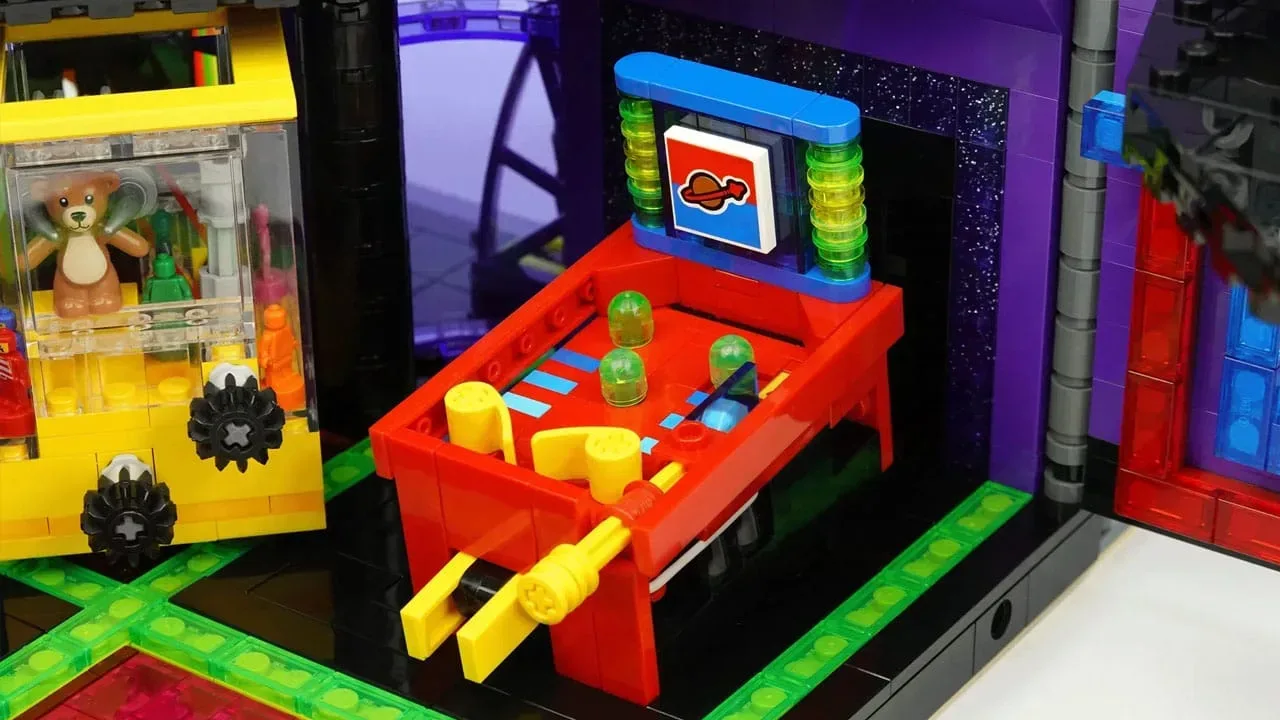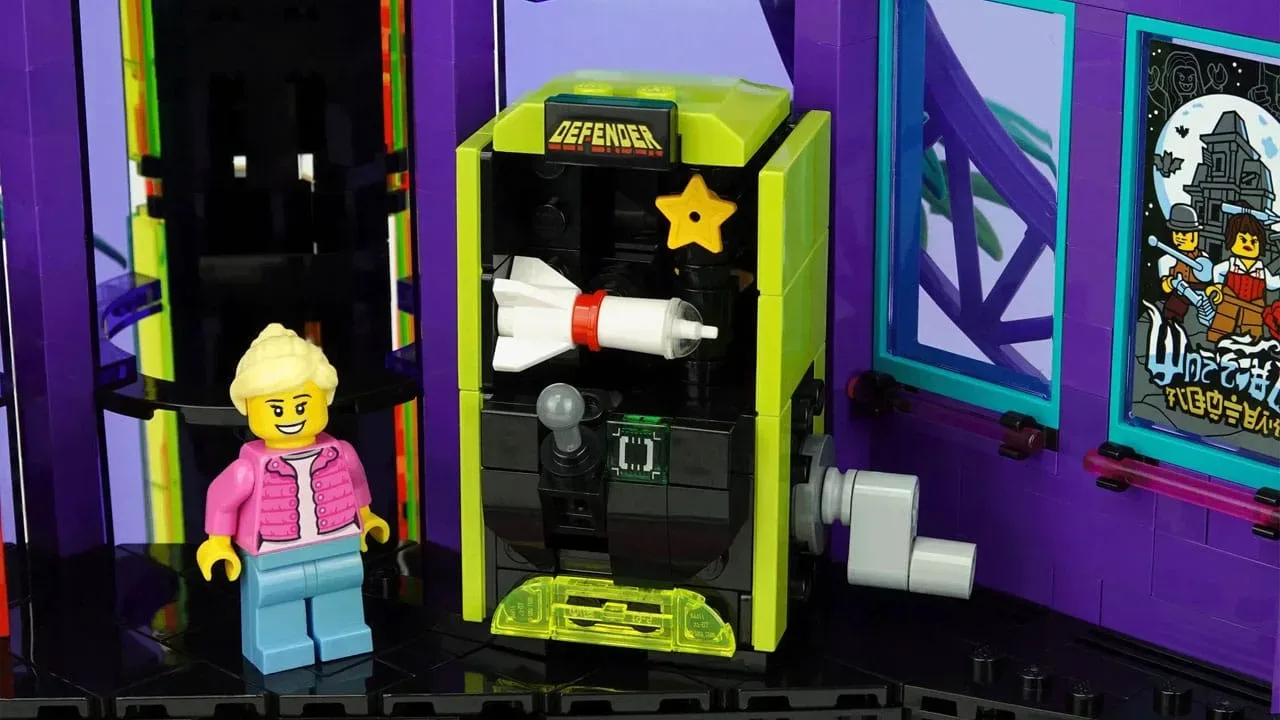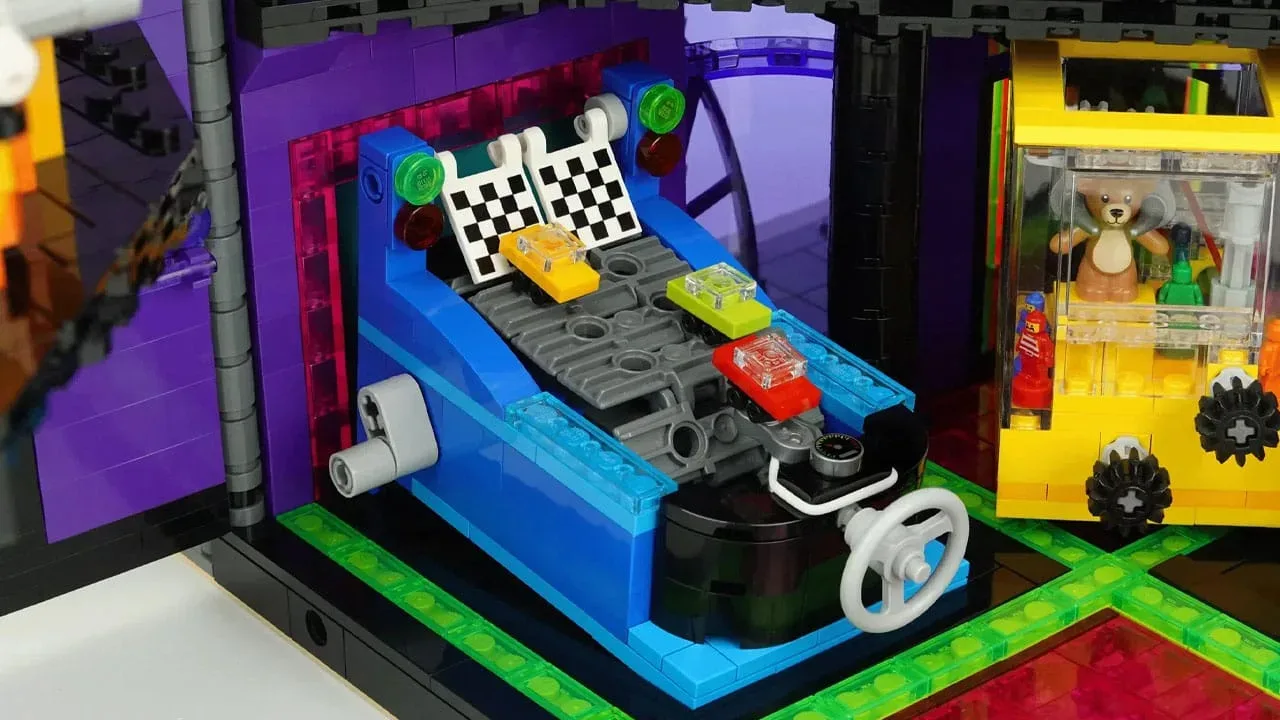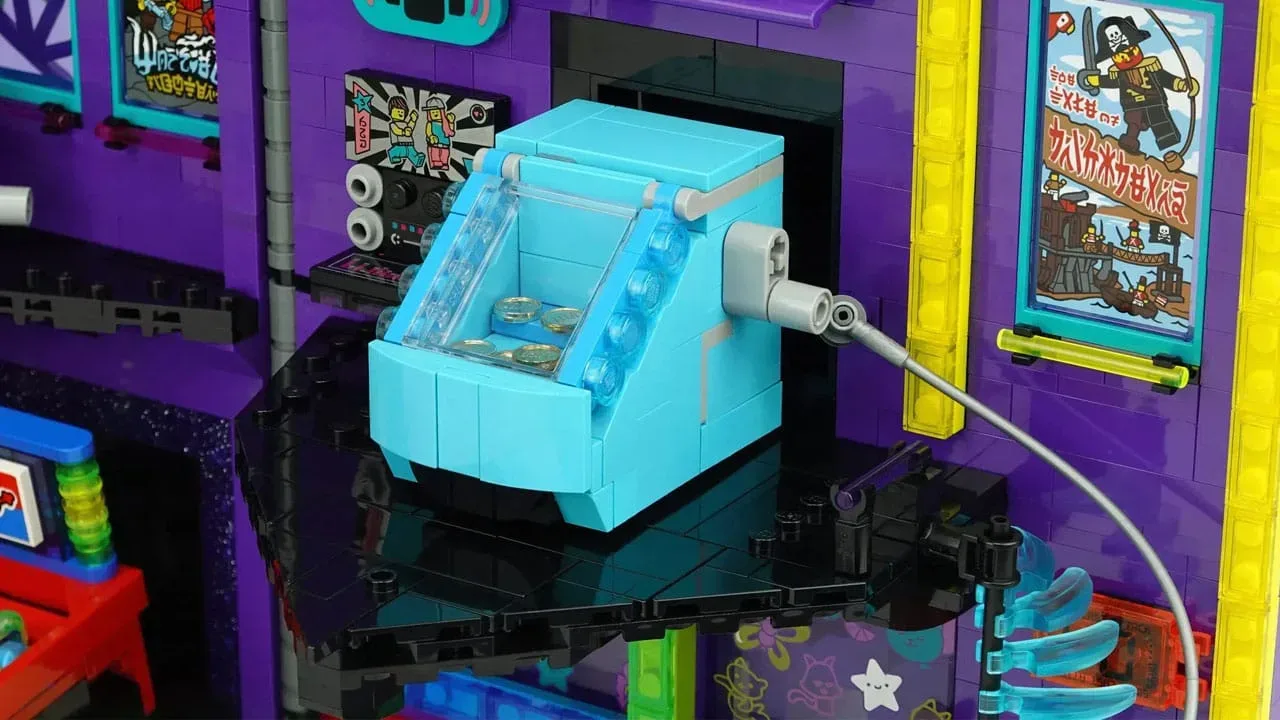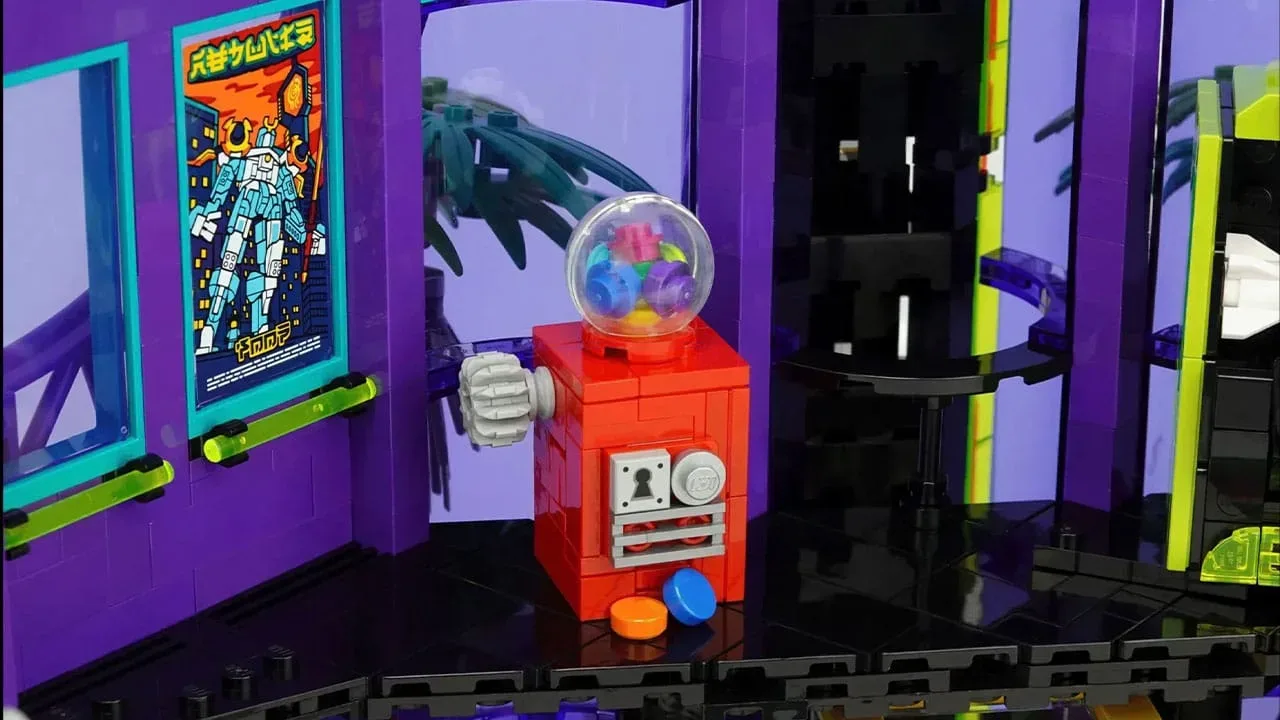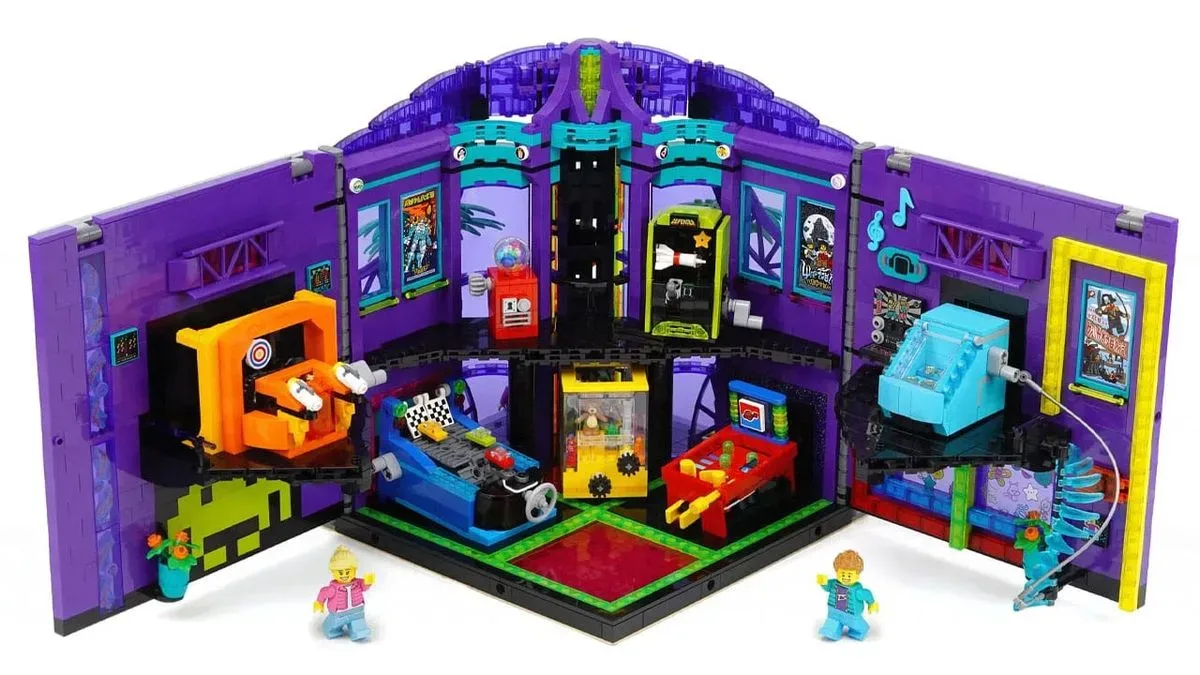
A miniature arcade designed to do more than sit behind glass has arrived on LEGO Ideas. Created by Liam Paradise, the project presents itself as a compact building when closed, then opens to reveal a detailed retro-style arcade packed with playable mechanical attractions.
That distinction is the whole pitch. Plenty of brick-built gaming tributes focus on recreating the look of a cabinet, console, or famous game scene. This design instead aims to reproduce the small interactions that make an arcade memorable: launching a pinball, trying a claw grabber, steering a racing machine, sending a coin through a pusher, or taking aim in a target gallery.
The project is newly live and had almost reached its first 100-supporter milestone at the time of publication. Support is free through LEGO Ideas, but a successful supporter tally is only the beginning of a longer route. The project has 60 days to reach 100 supporters, then 365 additional days to reach 1,000. If it reaches that point, it receives a further year to attain 10,000 supporters—the threshold required for consideration by LEGO Ideas judges.
A building outside, a playable arcade inside
In its closed configuration, the model is shaped like an old-school arcade building. Decorative palm trees, signage, vending machines, an ATM and brightly coloured exterior details give it a deliberately stylised, 1980s-inspired look. The palm trees may push the setting toward a sunny seaside fantasy rather than a strictly local arcade recreation, but the mixture of machines, signage and bold colour communicates the intended era immediately.
Opening the building is where the design earns its attention. The interior is arranged as a miniature arcade floor rather than a single oversized cabinet. That makes the project feel less like a logo-bearing display piece and more like a tiny venue builders can explore, with several distinct stations offering their own mechanism or activity.
The proposed attractions are:
- Pinball machine
- Claw grabber
- Racing simulator
- Rocket game
- Target-practice gallery
- Coin pusher machine
The listed machines span different kinds of arcade experience. Pinball is about launching and keeping a ball in play; a claw game turns prize-grabbing into a test of placement; a coin pusher uses timing and accumulating pressure; and a target gallery is built around a direct shooting or aiming challenge. Putting them side by side gives the model a broader arcade identity than a design based solely on a screen-and-joystick cabinet.
What “playable” means in a brick-built model
For this project, playable is best understood as physical interaction, not electronic emulation. The submitted design is built around functioning miniature mechanisms: the player manipulates parts of the model to operate a game-like activity. That is notably different from a model that simply depicts a classic machine with printed artwork.
Related coverage includes Working LEGO Arcade Project Brings Playable Retro Games to LEGO Ideas.
The pinball, grabber and coin-pusher concepts are especially suited to that approach because their real-world inspiration is mechanical at heart. A successful brick-built interpretation does not need a screen, software or a full-scale cabinet to make the basic appeal understandable. It needs a satisfying movement, a clear objective and enough visual framing that the player knows what the mechanism represents.
The rocket game is described as a Defender-style arcade machine featuring a rocket and a star, with a general Space Invaders-like feel. Those references communicate the visual language being tapped: a compact, space-themed cabinet and straightforward shooting-game imagery. They should not be mistaken for confirmation of licensed Defender or Space Invaders content; the project is described through its arcade inspiration rather than as an official adaptation of either game.
The racing simulator also adds a useful contrast. Where the other activities evoke carnival, boardwalk or amusement arcade fixtures, a racing cabinet points to the video arcade side of the floor. It is a small reminder that the word “arcade” can mean both a room of coin-operated video games and a wider mix of skill, chance and novelty machines.
Why the fold-out format matters
The hinged building format solves a practical storytelling problem. A conventional façade can sell the fantasy of arriving at an arcade, while the opened model gives the machines room to be seen and operated. Builders are not forced to choose between a clean exterior display and an interior packed with details; the project treats those as two modes of the same set.
That approach may also appeal to fans who like models with a reveal. Closed, it reads as a streetscape-style building. Open, it becomes a cross-section of a venue. The result is closer to a playable diorama than a single object, which is important because the appeal lies in the cumulative atmosphere of several machines standing together.
There is a useful gaming parallel in the way compact formats preserve a larger experience: the individual arcade attractions are simple, but their arrangement produces the sense of a place. A miniature racing station does not need the scope of a modern racing game to communicate its role. Likewise, it is not trying to replace the digital kart racing discussed in Mario Kart Tour’s final finish line; it represents the immediate, tactile appeal of an arcade driver.
Support is not the same as production
The project’s arrival on LEGO Ideas is significant, but it is important to separate a supporter campaign from an approved retail product. Reaching 10,000 supporters gets a submission in front of LEGO Ideas judges. It does not guarantee selection, release, final part count, packaging, price or an eventual release date.
That uncertainty is especially relevant to a mechanism-heavy idea. The attraction of the design is tied to its interactive machines, so any future assessment would necessarily involve whether those mechanisms can be translated into an official set while preserving the concept’s play value. At present, the confirmed point is simply that Paradise’s arcade is seeking support through the platform.
The campaign clock also creates a clear immediate target. Nearly reaching 100 supporters on day one is an encouraging opening, but the next stages demand substantially more backing: first 1,000, then 10,000. Anyone who wants this brick-built arcade to move forward can register support on its LEGO Ideas listing without treating that vote as a preorder or a promise of production.
A focused piece of arcade nostalgia
The strongest part of the proposal is its specificity. Instead of treating retro gaming as one generic cabinet, it brings together pinball, prize games, a coin pusher, a shooting gallery and a racer under one roof. Vending machines, an ATM, colourful signage and the fold-out architecture give those small machines a setting rather than leaving them as disconnected builds.
For arcade fans, that is the essential hook: this is a model of the activity surrounding games as much as the games themselves. It asks builders to open the doors, fiddle with the mechanisms and imagine the noise and light of a compact retro arcade—without claiming that a screen or a branded ROM is required to make the idea work.