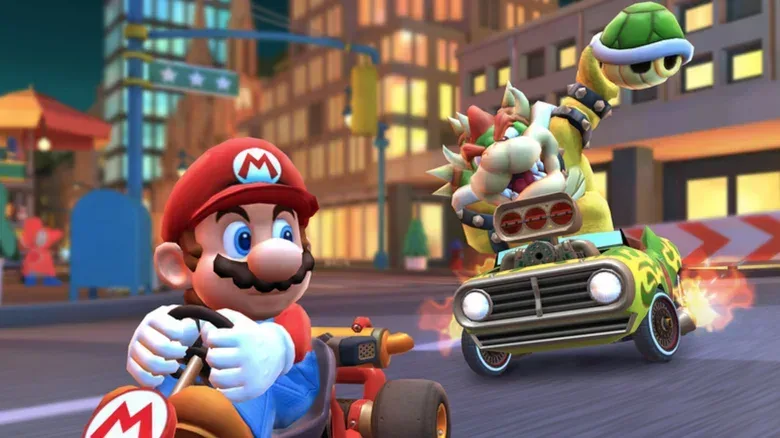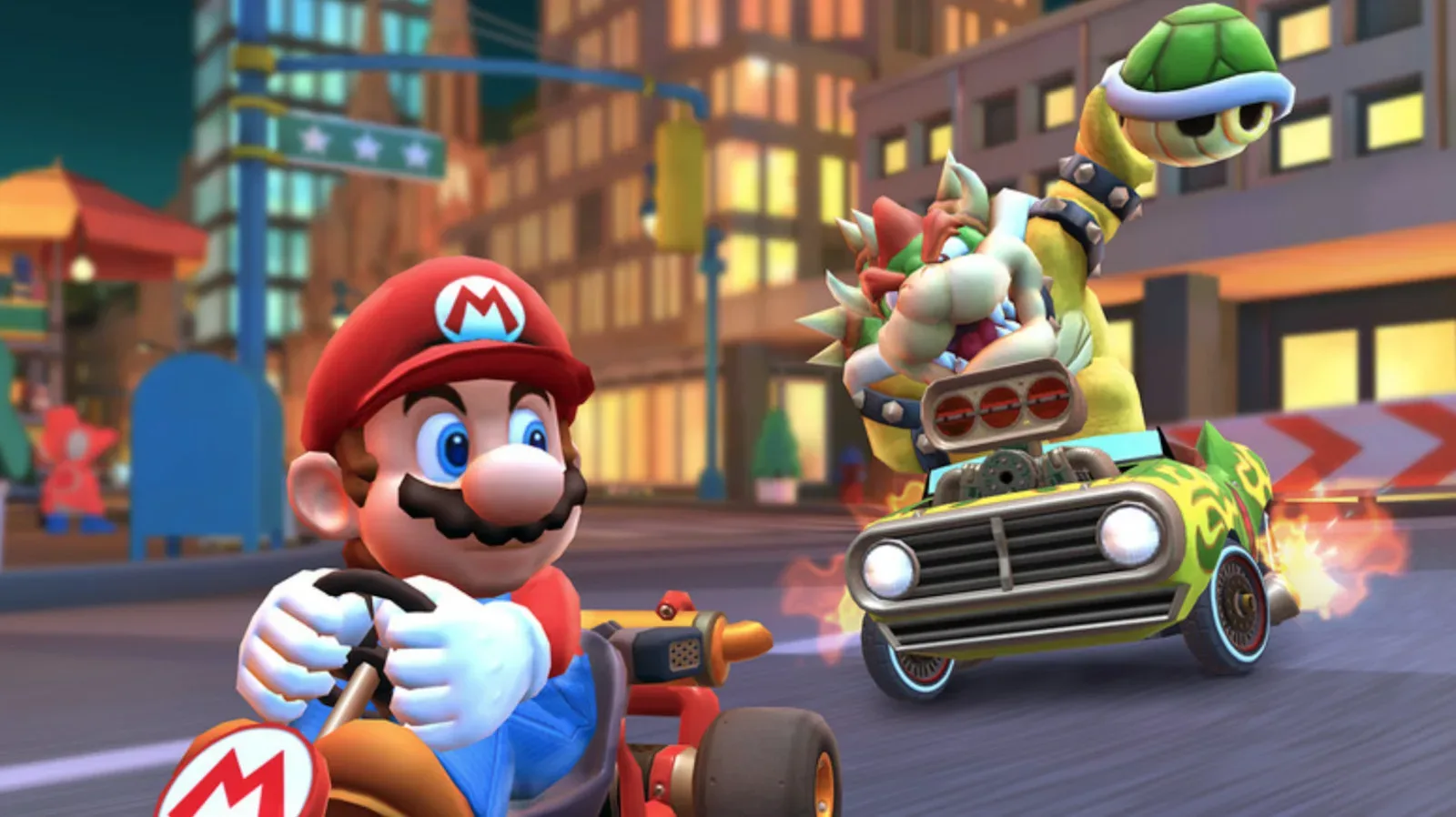
Mario Kart Tour has reached the end of its road. Nintendo’s mobile Mario Kart game, first released in 2019, is no longer an active racing service. Players can still open the app to view their statistics, but the part that made it a game rather than a digital trophy shelf—the races and ongoing live service—is finished.
The shutdown had been signposted in July, when sales of in-game currency ended and auto-renewal was switched off for the associated subscription service. The final state is now clear: this is not a pause, a seasonal break, or a handoff to a smaller version of the game. Mario Kart Tour is over as an active mobile title.
For players who made it part of a daily routine, that distinction matters. A racing game can look deceptively permanent when it sits on a phone alongside a calendar, messages and other apps. But a service-based game depends on ongoing operation. Once that service stops, the application may remain installed and may still present records of what a player did, while the activity it was built around is no longer available.
A statistics screen is not an offline game
The remaining app functionality is limited to player stats. That means Mario Kart Tour has not been converted into an offline racer. Nintendo took a different route with Animal Crossing: Pocket Camp when that mobile title was sunsetted, but there is no comparable transition here.
That difference is more important than the word “shutdown” can sometimes convey. An offline edition would preserve a playable form of the game after its network-dependent period had ended. Mario Kart Tour instead remains as a record viewer: useful for seeing a personal history, certainly, but not a way to keep competing, driving courses or engaging with the game’s former systems.
In practical terms, players should treat the statistics display as the game’s final memorial lap. It preserves an account-facing snapshot rather than the playable experience. The app opening should not be mistaken for a return of the service or for a promise that the title will become playable without an internet connection later.
What ended before the final shutdown
Nintendo had already stopped selling the game’s in-app currency and ended auto-renewal for its subscription service. Those steps were the operational wind-down: no more new purchases through the game and no subscription renewals continuing past the closure.
In-game currency is a virtual currency used inside a game instead of conventional payment at the moment an item or feature is acquired. Auto-renewal is a subscription setting that continues a paid plan at the end of a billing period unless it is cancelled or disabled. Both are standard fixtures of many free-to-play mobile games, and both became irrelevant once Mario Kart Tour’s active operations concluded.
Related coverage includes Mario Kart Tour Has Officially Reached the Finish Line.
The game was free to play, but it also used multiple currencies and gacha-style mechanics. “Gacha” describes a randomized-reward system: a player receives an uncertain item, character or other reward rather than selecting a known result directly. It is a familiar model in mobile gaming, but it also makes the closure of a live title feel especially final. Systems organized around recurring events, virtual currencies and randomized acquisition are designed for a running service, not necessarily for a boxed-off end state.
That does not make every player’s time with the game less real. It does make the available record of that time narrower. A stat screen can say something about a player’s history; it cannot recreate the loop of returning to race.
Another Nintendo mobile game leaves the grid
Mario Kart Tour now joins several discontinued Nintendo-published smartphone games, including Miitomo, Pokémon Rumble Rush, Dr. Mario World and Dragalia Lost. The list is a reminder that mobile games, particularly those built as ongoing services, can have distinctly finite lifespans even when they use some of the industry’s most durable characters and brands.
Mario Kart Tour had an especially recognizable foundation. Mario Kart is synonymous with quick races, familiar characters and playful competition, so a phone-based entry gave the series a version that could live outside a dedicated game console. The tradeoff was that this entry was constructed as a free-to-play smartphone product, with the currencies, subscription components and randomized mechanics that came with that format.
The end of Tour therefore does not signal the end of Mario Kart itself. It is the end of one particular delivery model for Mario Kart: a mobile, service-driven game whose active play was tied to its continuing operation.
It is also worth separating the development point from the larger corporate shorthand often attached to mobile spin-offs. Mario Kart Tour was primarily developed by Nintendo EPD, Nintendo’s main internal software development division. The closure ends a project connected to a major internal team, but the supplied details do not establish what that team will do next. Any claim that the shutdown automatically means a specific future Mario or Zelda project would be speculation.
Where Mario Kart players can still race
Players looking for Mario Kart on console are not short of options. On Switch 2, the available lineup includes Mario Kart World, Mario Kart 8 Deluxe, Super Mario Kart, Mario Kart 64 and Mario Kart: Super Circuit. That range spans different periods of the series and gives the franchise a much broader life beyond its now-closed phone entry.
Still, “there are other Mario Kart games” is not a complete answer for every Tour player. The convenience of a phone game is part of the product. A console entry may offer a continuing place to race, but it does not necessarily replace the exact habits, progression history or mobile format that drew a person to Tour in the first place.
There is a broader ownership question underneath that gap. With a self-contained game, access is generally tied more closely to the player’s hardware and copy. With a live-service game, access relies on the publisher maintaining servers and systems in addition to the player retaining the app. Mario Kart Tour’s final state makes that distinction unusually visible: the software remains capable of showing a history, while the central act of play has stopped.
That conversation is not confined to mobile gaming. Digital licensing and the distinction between access and ownership increasingly shape discussions across platforms, including console ecosystems. Joking Joystick has explored a related issue in its look at Xbox disc-to-digital licensing and why the disc still matters.
What the closure means for the game’s legacy
Mario Kart Tour’s legacy will now be defined by memory, player records and the place it occupied in Nintendo’s mobile catalogue. It launched in 2019, offered a free-to-play take on one of gaming’s best-known racing series, and ultimately ended without an offline successor.
There is a useful lesson in that final detail. Preserving an app is not the same as preserving a game. An icon can remain on a device. Account statistics can remain visible. But when the races themselves are no longer available, the game’s most important verb has vanished with the service.
For Mario Kart fans, the finish line is limited to Tour. The series continues on Nintendo consoles, across both newer releases and older entries that remain accessible on Switch 2. For Tour specifically, though, there will be no new cup, no new run and no last-second item pull to reverse the result. The only remaining lap is the one recorded in the stats.