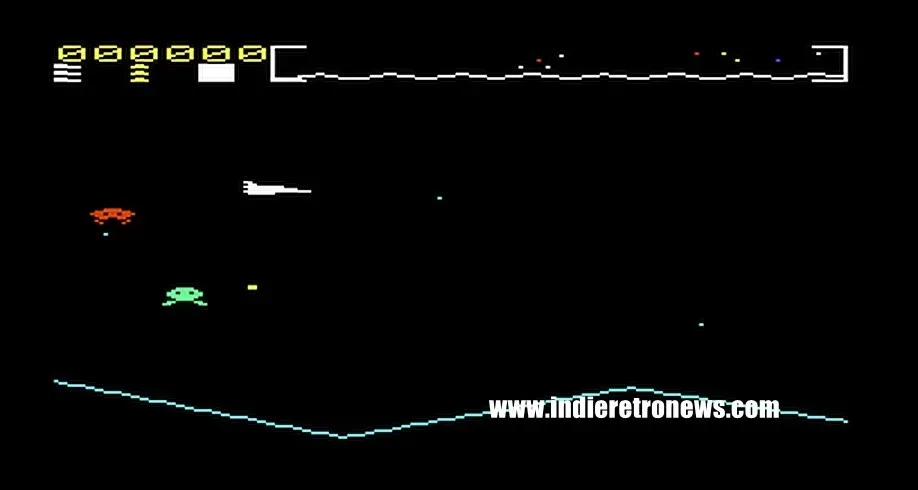
An unofficial homebrew recreation of Stargate is headed to the Commodore VIC-20, taking on the unusually ambitious task of translating rapid-fire arcade action to one of home computing’s most modest classic machines. The project is described as having been built from the ground up in machine language, with its priorities firmly set on speed, responsive control and the recognizable push-and-pull of defending humanoids while hostile extraterrestrial forces fill the screen.
That premise is the heart of the original arcade formula: players pilot a craft through dangerous skies, shoot attacking enemies and attempt to rescue vulnerable humanoids before the situation gets out of control. The VIC-20 version is positioned as an unofficial recreation rather than a licensed release, so it should be understood as a fan-made homebrew project with no stated corporate affiliation.
For a machine of the VIC-20’s era, the appeal is not simply seeing familiar names and mechanics squeezed into new hardware. It is seeing whether the game’s momentum can survive the move. A version that merely resembles an arcade cabinet is one thing; a version that keeps players making quick decisions about shooting, rescuing and escaping would be the more meaningful achievement.
Why machine language matters here
The project is said to use 100% machine language. In plain terms, machine language is code written in instructions the computer’s processor can execute directly. On older systems, that can be important because game makers have little room to waste: every calculation, sound update, control read and screen change competes for limited processing time.
That technical choice does not automatically guarantee a fast game, but it indicates what this project is trying to protect. Arcade-style action depends on immediate feedback. A craft needs to react when the joystick moves; shots must appear without a conspicuous pause; enemies have to feel active rather than intermittently updated. When multiple dangers converge, the pace is part of the design, not decorative polish.
The reported focus on smooth scrolling and responsive play therefore matters more than it might in a slower, turn-based conversion. Scrolling is the movement of the playable view as the player travels across the game world. In a game built around urgent navigation and threats arriving from several directions, uneven scrolling can disrupt both visibility and control. The stated goal is a smooth-scrolling environment accompanied by VIC-20-style sound effects.
Rescues make the action more than a shooting contest
The central task goes beyond surviving enemy waves. Players are expected to save humanoids, including by catching citizens in mid-air. That changes the rhythm of play. Instead of simply eliminating everything on screen, players must monitor where civilians are, judge when it is safe to approach and decide whether a risky rescue is worth attempting amid incoming attacks.
This is where the familiar arcade tension comes from: aggression and protection are intertwined. A player may have the firepower to clear a threat, yet still lose ground if they cannot reach endangered humanoids in time. Conversely, a rescue attempt can put the ship in a more exposed position. The result is a game structure that asks for constant prioritization rather than a single-minded pursuit of high scores.
Related coverage includes Stargate Brings Arcade-Style Action to the Commodore VIC-20.
The project description also points to enemy behavior intended to keep combat unpredictable. “Smart” enemy patterns should not be read as a detailed technical promise about artificial intelligence; no specific systems are outlined. But the design aim is clear enough. Enemy encounters are meant to demand tactical attention, rather than feeling like static targets placed only to be cleared away.
The Stargate and hyperspace are tools for pressure management
Two signature concepts are identified for the recreation: a tactical hyperspace function and the reality-warping Stargate itself. Both are important because they suggest the adaptation is aiming for the original game’s distinctive escape-and-reposition layer, not only its basic flying and shooting.
Hyperspace is best understood as an emergency movement option: a way to get out of a dangerous situation quickly when conventional flight is no longer enough. The description calls it a panic button, which captures the tactical trade-off. An escape tool can save a run, but the decision to use it must be made under pressure, when the player is already trying to track threats and protect civilians.
The Stargate is likewise presented as a major gameplay mechanic rather than a bit of visual branding. No further implementation details are provided, so it would be premature to assume exactly how it functions in this VIC-20 build. Still, its inclusion signals an effort to retain the elements that gave the arcade game its identity and its strange, escalating sense of cosmic danger.
Solo endurance and two-player options
The homebrew is described as offering single-player endurance play as well as two-player cooperative or competitive modes. An endurance run generally means trying to remain alive and effective as the challenge escalates, rather than working toward a short, fixed ending. That format is a natural fit for an arcade-inspired score chase, where repeated attempts can build familiarity with enemy behavior and rescue timing.
Two-player support could change the mood considerably. Cooperative play creates room for divided responsibilities—one player concentrating on immediate threats while another attempts rescues, for example—though the exact rules and coordination systems have not been detailed. Competitive play, meanwhile, puts score, survival or efficiency in the foreground. The important caveat is that the available information identifies the modes but does not explain their individual objectives, scoring rules or technical setup.
That restraint matters with homebrew coverage. A promising feature list is not the same as a final specification sheet. There are no stated release details, distribution information, control requirements or footage-based performance measurements here. What is known is the project’s intended feature set and its focus on a vigorous VIC-20 interpretation of an arcade classic.
A useful reminder of what retro homebrew can pursue
Homebrew projects often create the most interesting conversations when they choose an apparent mismatch on purpose. The VIC-20 version of Stargate is compelling because the goal is not presented as a simplified thematic homage. It is framed as a fast, mechanic-led recreation built around rescues, hostile waves, evasive options, scrolling and multiplayer possibilities.
Whether every arcade-inspired element lands as intended will depend on the finished implementation, and the project description leaves plenty that remains to be seen. But the ambition itself is specific: retain the frantic decision-making that makes the concept work, while tailoring it to the VIC-20’s own audiovisual character.
It also arrives amid continuing interest in old machines receiving new software rather than being treated solely as museum pieces. For another example of retro game ideas being brought to current audiences in a different form, see this look at Barbie Rewind’s modern-console and PC release.
For VIC-20 enthusiasts, arcade preservation fans and players who enjoy examining how familiar game ideas survive under technical constraints, this is a project worth watching. Its success will ultimately rest on feel: whether the ship moves cleanly, threats remain readable, rescues stay nerve-racking and the player keeps hitting that “one more run” point after the screen has become total alien chaos.