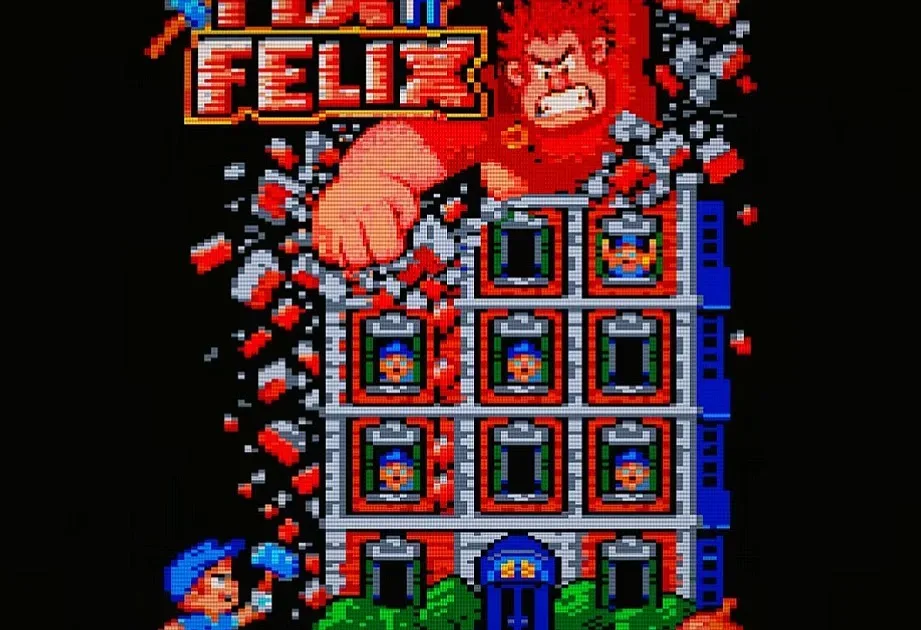
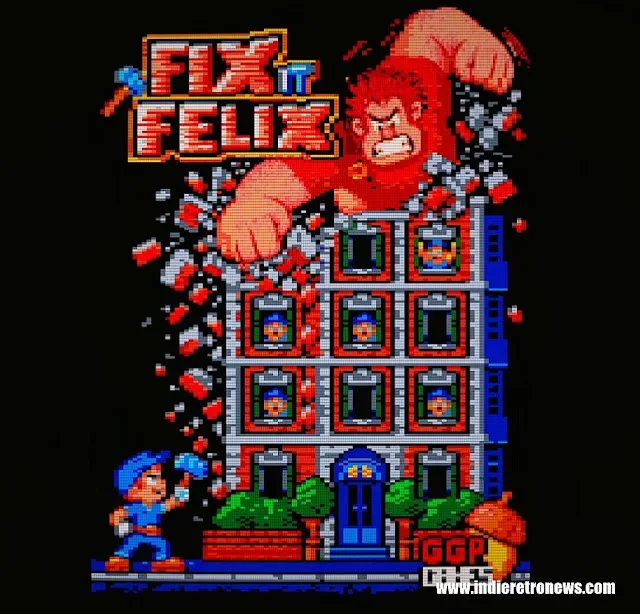
The Amstrad CPC Plus and GX4000 have gained an unexpected new homebrew game: Fix It Felix Jr., a fan project from Amstrad GGP that adapts the fictional arcade cabinet from a 2012 animated film series for Amstrad hardware.
The premise is intentionally direct and arcade-shaped. Players take control of repairman Felix Fixe Junior, climbing a building to mend windows damaged by the giant Ralph. The job becomes progressively less tidy as bricks fall, birds create hazards, and the building demands attention across its floors. Felix’s golden hammer is the central tool for undoing the destruction.
Rather than reframing the concept as an adventure or a sprawling platform game, this version is presented as a fast-paced score-chasing arcade experience. That is an especially fitting approach for a game that began as an imagined coin-op: identify damage, reach it safely, make repairs, and keep moving while the building fights back.
A fictional arcade cabinet becomes an Amstrad game
Fix It Felix Jr. has an unusual route into retro hardware. It was conceived as a fictional game within a movie world, invoking the language and structure of the 1980s arcade era. Amstrad GGP’s project turns that invented cabinet into a playable release for the CPC Plus and GX4000.
That distinction matters. This is described as a dedicated fan game, not an official release. The stated credits identify Tobikomi with the original concept and list 2026 GGP Games alongside it. MaitrejoeGGP is credited for code and graphics, Echo for music and sound, and Gomez Addams GGP for testing.
Fan projects often have to make a clear creative decision: chase surface-level recognition, or capture the rhythm that made the inspiration appealing in the first place. The details given here point firmly toward the second route. A building that changes from floor to floor, threats dropping into the player’s path, damaged windows to repair, and items positioned along windowsills all create an immediate priority system. The player is not merely travelling upward; they are deciding which repair is practical to reach and which danger is worth risking.
What the arcade loop looks like
The supplied gameplay outline establishes several connected actions:
- Climb the building: Felix advances through multiple floors rather than operating from a single fixed screen.
- Repair shattered windows: The golden hammer is used to address the damage Ralph leaves behind.
- Avoid hazards: Falling bricks and birds interrupt the straightforward repair work.
- Collect medals: Medals provide an additional on-screen objective beyond simply progressing.
- Eat pies on windowsills: Tenants leave pies for Felix, turning the building’s architecture into a place for both danger and rewards.
In arcade design terms, a core loop is the short sequence of decisions that repeats throughout play. Here, the loop appears to be movement, avoidance, repair and collection. That may sound simple, but simplicity is not a limitation when the pressure comes from competing priorities. A nearby broken window can be tempting, but a falling brick can force a change in route. A medal or pie may be valuable, yet pursuing it can place Felix in the path of another obstacle.
Related coverage includes Fix It Felix Jr. Brings Arcade Repairs to Amstrad CPC Plus and GX4000.
The result is a structure built around readable cause and effect. Ralph causes damage. Felix repairs it. Hazards make the repair route unsafe. Collectibles encourage the player to look beyond the most obvious path. It is an economical setup, and one that aligns with the stated aim of recapturing the quick, immediate feel of arcade games from the 1980s.
Why the CPC Plus and GX4000 pairing is significant
The release is specifically for the Amstrad CPC Plus and GX4000. Both sit within the Amstrad Plus family, so a project targeting the pair places the same arcade idea across two closely related retro platforms: the CPC Plus home-computer line and the GX4000 console.
For players with either system, that platform focus is the headline rather than a footnote. Homebrew is a practical way for older machines to keep receiving new software long after their original commercial era. Every new game also has to communicate with audiences who care about the character of the hardware as much as the recognizable property being adapted. In this case, the game’s premise is well suited to that context: it is compact, visually legible, driven by repeatable action, and rooted in the idea of an arcade cabinet that never existed as a conventional retail release.
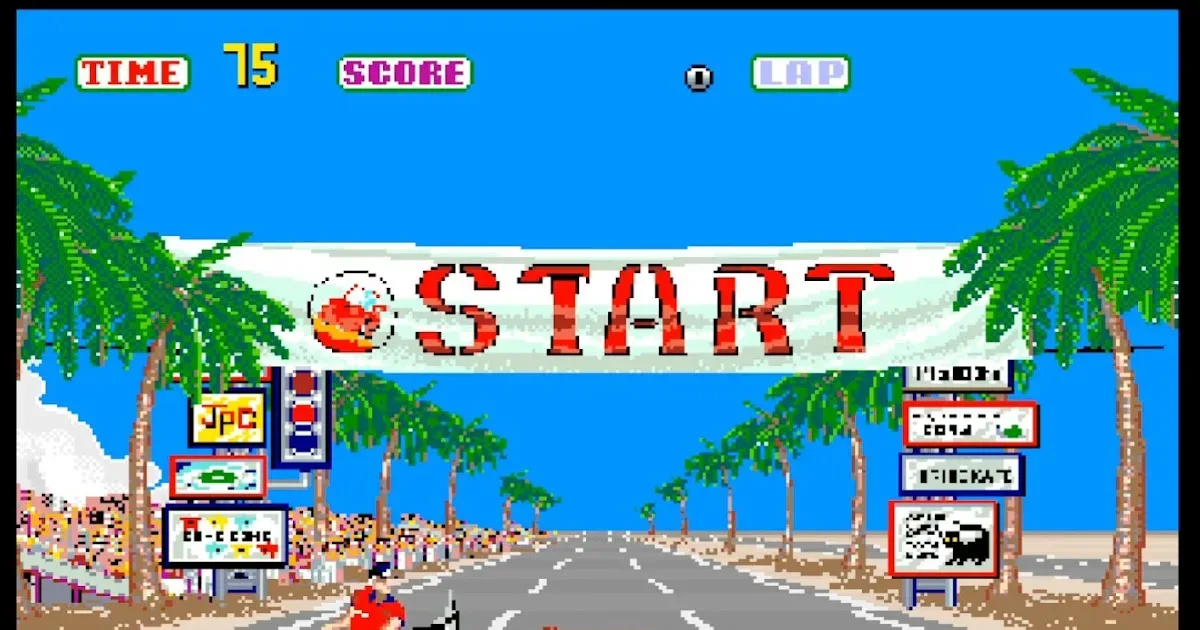
It also joins a wider pattern of contemporary projects revisiting older systems through ambitious adaptations and rebuilds. For another recent example of developers aiming at vintage hardware, see OutRun AGA Rebuild’s effort to bring full-speed racing to original Amiga hardware. The platforms differ, but the shared appeal is clear: making hardware with a long history feel active in the present.
Analysis: the challenge is prioritisation, not just reflexes
The game’s listed ingredients suggest that success depends on more than reacting quickly. A repair target is an obligation, while medals and pies are opportunities. Bricks and birds are interruptions. When all four are present, the player has to make rapid choices about order.
That is a useful way to understand why the design can remain engaging without needing a complicated rulebook. A player may know every verb available—climb, dodge, repair, collect—yet still face a changing situation because targets and hazards occupy different parts of the building. The shifting layout gives the simple mechanics room to generate tension.
The pies are particularly expressive as a design detail. They are framed as gifts from grateful tenants, which makes the collectible element part of the building’s story rather than an abstract object scattered solely for points. Medals perform a more traditional arcade function: they are explicitly collectible and provide a reason to examine routes that may not be essential to the immediate repair task.
Meanwhile, falling bricks connect the threat directly to Ralph’s destructive role. They are not a random enemy type detached from the premise; they reinforce the comic conflict between the wrecking giant and the repairman trying to keep the structure intact. Birds add a second hazard type, requiring awareness of more than debris alone.
Credits
- Original concept: Tobikomi / 2026 GGP Games, identified as a fan project
- Code and graphics: MaitrejoeGGP
- Music and sound: Echo
- Testing: Gomez Addams GGP
With its clear repair-and-avoid structure, its film-to-fiction-to-homebrew lineage, and dedicated support for the Amstrad CPC Plus and GX4000, Fix It Felix Jr. is a notably specific addition to the current retro scene. Its central promise is not modern reinvention, but the chance to play the kind of brisk, building-climbing arcade game its premise always seemed to be asking for.