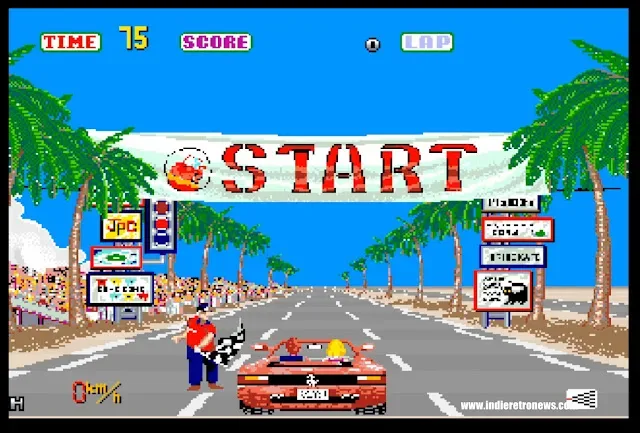
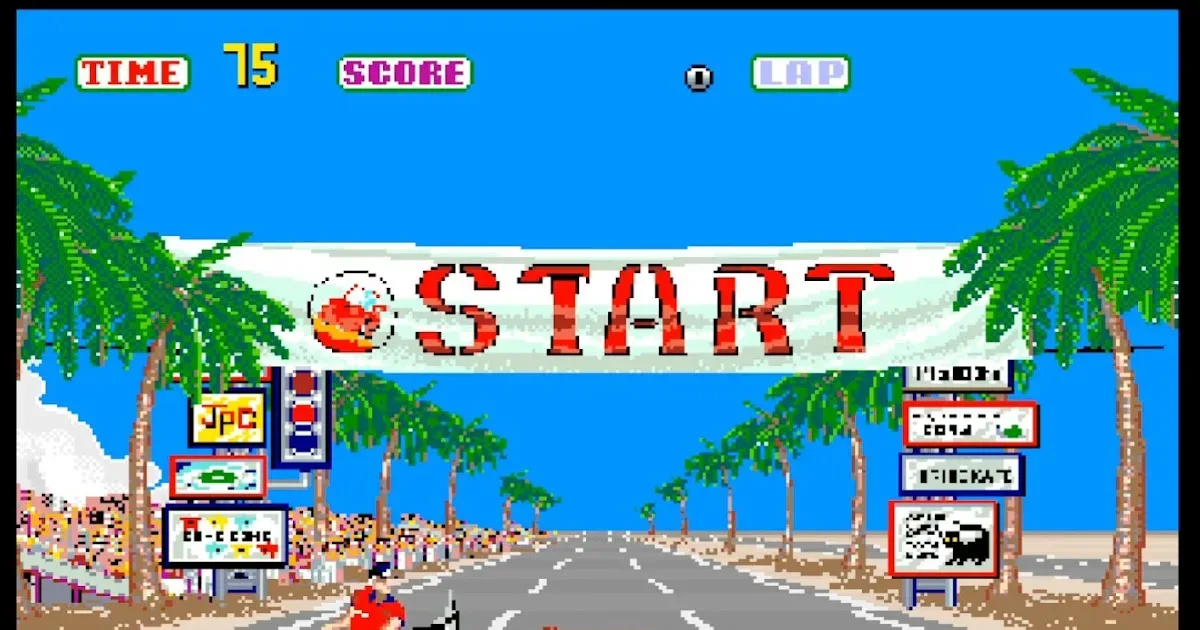
A new fan-made take on Sega’s arcade racing classic is aiming squarely at the machine that once struggled to do it justice. OutRun AGA, created by retrodnagames, is a ground-up Amiga reimagining designed for original-era Commodore hardware rather than contemporary PCs or accelerator-heavy setups.
The stated target is specific: a PAL AGA Amiga with a standard 68020 CPU and 4MB of fast RAM. Retrodnagames says the game runs at full speed on that configuration, placing its design focus on a system close to what was available in 1993. That matters because this is not simply a version that benefits from brute-force processing power. Its central rendering approach leans on dedicated Amiga hardware.
A replacement-minded remake for Amiga racing fans
OutRun AGA is positioned as an answer to the old official Amiga conversion, which is widely remembered unfavorably in the supplied background. Rather than patching or modifying that version, retrodnagames has built this project anew in assembly language.
That distinction gives the project a particularly clear technical premise. A ground-up remake is not constrained by the original port’s code structure; it can instead be designed around the desired hardware behaviour from the outset. In this case, that means pursuing an arcade-style racing experience while working within the characteristics and limits of AGA-equipped Amiga systems.
The choice of assembly language is also central to the project’s identity. Assembly is a low-level programming approach that lets a developer work much closer to a processor and a machine’s dedicated components than is typical with higher-level languages. It can be demanding and time-consuming, but it is a natural fit for a project whose aim is to make deliberate use of a particular historical hardware configuration.
Retrodnagames has also said that no generative AI was used in creating OutRun AGA. That is a development-process statement rather than a performance specification, but it underlines the creator’s stated desire for an old-school, hand-built approach.
What “blitter-driven” means here
The crucial phrase in OutRun AGA’s hardware description is blitter-driven. The blitter is one of the Amiga’s custom graphics-oriented chips: specialised hardware intended to move and manipulate blocks of visual data. Rather than asking the main CPU to do every piece of work alone, software can assign suitable graphics operations to the blitter.
For a fast-moving racer, that division of labour is important. The game’s visual workload is being built around the system’s native custom chips, not merely around faster general-purpose processing. Retrodnagames describes OutRun AGA as “purely blitter-driven,” a concise way of explaining why its expected performance is tied to its intended machine class.
Related coverage includes OutRun AGA Rebuilds Sega's Arcade Racer for Original Amiga Hardware.
The practical implication is unusually simple: a faster CPU will not make the game run faster. That does not mean faster processors are inherently irrelevant to an Amiga setup in every circumstance; it means they are not the lever that changes OutRun AGA’s execution speed, because the limiting and defining work is being handled through the custom-chip approach described by the developer.
For players accustomed to modern games, where a processor or graphics-card upgrade often translates into higher frame rates, that may sound counterintuitive. But OutRun AGA is deliberately engineered to behave like software written for a fixed, period-appropriate target. The stated goal is full-speed operation on a standard 68020 rather than scaling upward alongside newer CPU upgrades.
The required Amiga configuration
The project’s stated requirements should be read as firm compatibility guidance, not as a vague performance recommendation:
- System standard: PAL-based AGA Amiga
- CPU: standard 68020
- Memory: 4MB of fast RAM
- Performance model: full speed on that intended configuration
Each part of that list matters. AGA identifies the relevant Amiga graphics architecture for which the game was made. PAL specifies the video-system target. The 68020 establishes the baseline processor class, while the 4MB fast-RAM requirement sets a defined memory expectation. Potential players should therefore avoid assuming that “an Amiga” in the broadest possible sense is enough information to establish suitability.
Likewise, a modern processor upgrade is not presented as a way to raise OutRun AGA above its designed speed. The appeal is instead that the required baseline is close to original 1993 Commodore hardware. For enthusiasts building or maintaining a compatible system, that is a meaningful design choice: the headline experience is intended for a comparatively conventional target setup, not reserved for the most aggressively expanded machines.
Why the target hardware is part of the story
Retro projects can take many routes. Some preserve old games exactly as they were; others use newer platforms to reinterpret an older idea. OutRun AGA takes a more hardware-specific path. Its purpose is not only to evoke an arcade racer from another era, but to do so through the native capabilities of the Amiga hardware for which it was designed.
That makes the technical details more than a footnote. They explain the project’s priorities: assembly coding, use of the blitter, a PAL AGA target, and a standard 68020 with 4MB fast RAM all point to a fixed design envelope. The game is meant to squeeze performance from the platform’s own components rather than bypass them with later processing power.
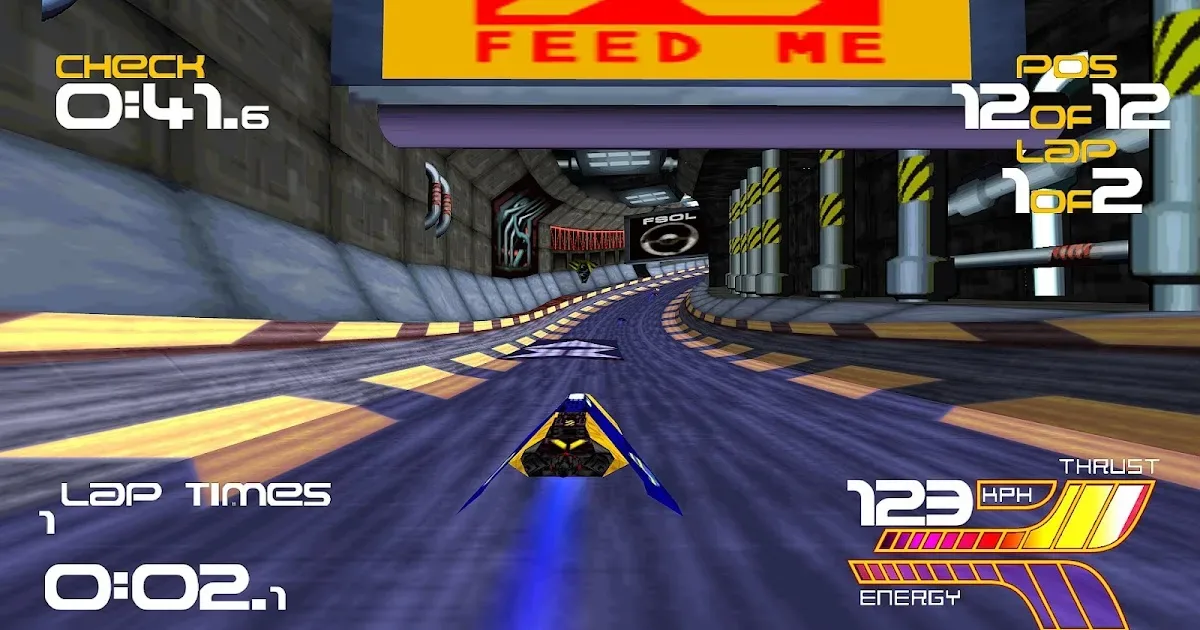
It also makes OutRun AGA an interesting companion to other ongoing Amiga-focused projects, including the more demanding system focus behind a Wipeout 2097/XL rebuild for high-end AmigaOS 3 setups. The contrast is useful: both illustrate continued interest in racing games on Amiga hardware, but OutRun AGA’s supplied specifications put the emphasis on close-to-original 1993-era hardware and custom-chip-driven speed.
What not to infer from the specification
The available details establish the intended hardware, the development method, and the performance claim on the designated baseline. They do not establish every possible compatibility case. Nothing supplied here confirms behaviour on non-PAL systems, other Amiga configurations, or individual expanded machines beyond the developer’s statement that faster CPUs will not increase execution speed.
Nor should “full speed on 68020” be read as a promise that every hardware variation will behave identically. It is best understood as the developer’s declared target: a PAL AGA Amiga, 4MB fast RAM, and a standard 68020, with the game designed around the blitter rather than CPU acceleration.
For retro-hardware fans, though, that clarity is part of the attraction. OutRun AGA is not presenting a vague compatibility story. It lays out the machine profile it wants, explains the specialised hardware path behind its performance, and makes a direct case for revisiting a famous arcade racer through the strengths of the Amiga itself.