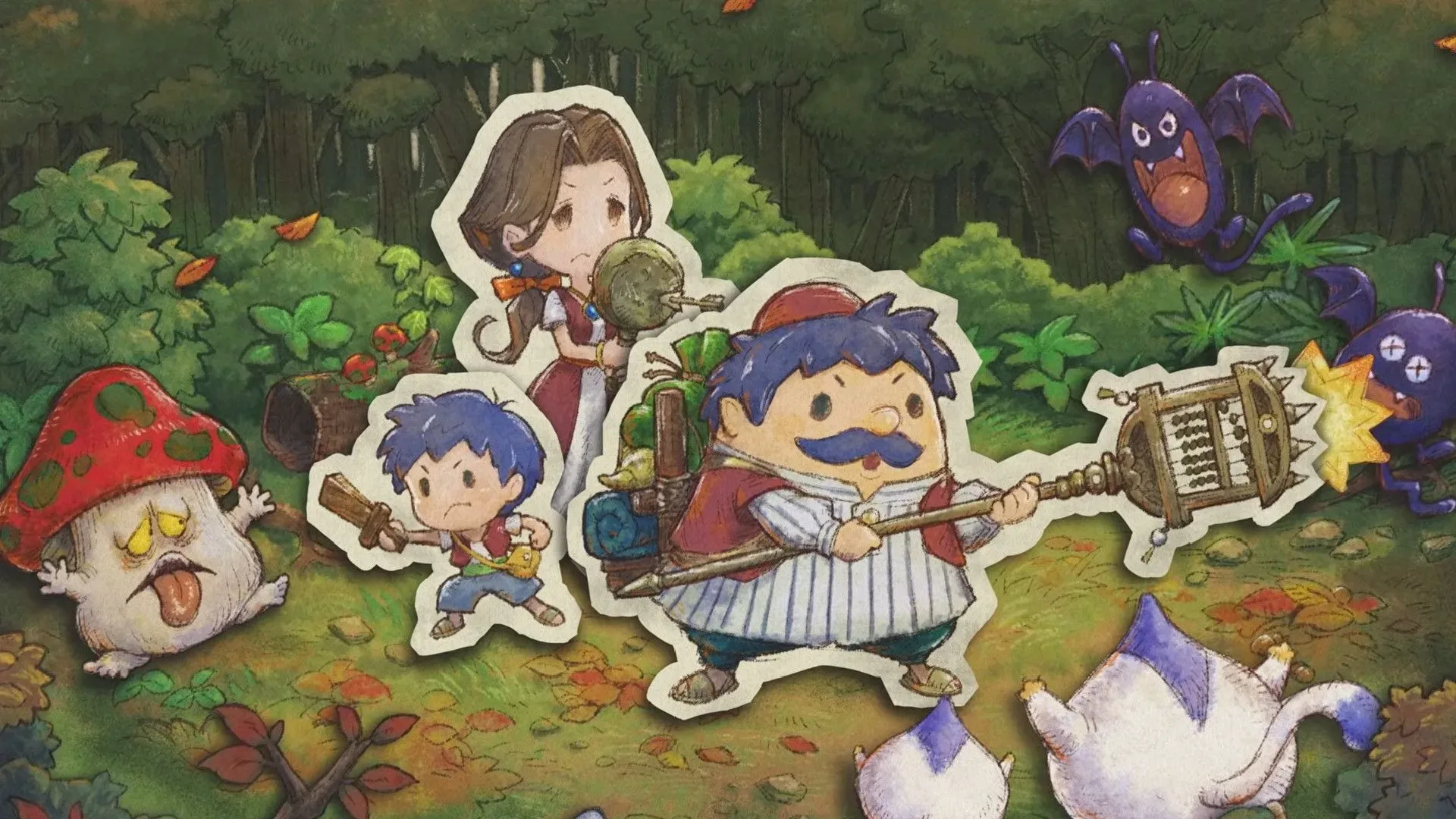
Some game releases arrive with a parade, a countdown clock, and enough trailers to make the average dungeon resident consider moving somewhere quieter. Dragon Quest Heroes: Torneko’s Mystery Dungeon Classic HD has taken a more appropriately sneaky route. The newly released version of the Super Famicom roguelike appeared as part of a Nintendo Direct presentation, then promptly became available in English after a 33-year wait.
That is a remarkably long time for a game with this particular lineage to remain outside the English-language market. Torneko’s adventure was a major Japanese success and a foundational entry in the Mystery Dungeon family, a branch of dungeon crawling that would go on to include Shiren the Wanderer, Pokémon Mystery Dungeon, and Chocobo Mystery Dungeon. For players who know those later series but never had a chance to meet one of the key games that helped establish their rules, the new release is less like discovering an obscure curiosity and more like finding the dungeon blueprint under a very old, very heavily trapped floor tile.
A historic dungeon finally opens its doors
Torneko’s Mystery Dungeon Classic HD is available now for $25 on Nintendo Switch, Nintendo Switch 2, PlayStation 5, Xbox Series X/S, and PC through Steam. Its English localization is the headline event, but the unusually broad set of current platforms means the game is also receiving a much wider modern launch than its original Super Famicom incarnation could have imagined.
The timing is notable because roguelikes are now a familiar part of gaming’s vocabulary. Terms such as procedural dungeons, permadeath, runs, builds, and “one more attempt before bed” are understood by a vast audience. Torneko’s game comes from a period when that design language was far less common on consoles, especially in a form attached to a recognizable Japanese role-playing franchise.
Its basic premise remains uncompromisingly traditional. This is a top-down dungeon crawler where movement is turn-based: take a step, and the dungeon gets its own turn to respond. Players venture downward, collect equipment and treasure, earn experience, and try to survive long enough to reach deeper floors. A defeat does not merely result in a polite checkpoint and an encouraging pat on the shoulder. The journey begins again from the start.
That structure explains why the genre can feel both punishing and magnetic. Progress is not only about a character’s numerical strength. It is also about understanding risk, protecting valuable resources, recognizing when a treasure haul is worth pursuing, and accepting that an apparently harmless hallway may have plans. In a Mystery Dungeon, a bad decision can be educational. It can also be a goblin-shaped invoice for every decision made during the previous hour.
Why Torneko matters to the Mystery Dungeon family
The game’s historical role is difficult to overstate. Chunsoft adapted core ideas from the original Rogue, the influential computer game that gave the genre its name, and placed them inside the world of Dragon Quest. Torneko, a familiar character from the series, became the vehicle for an adventure built around repeatable dungeon expeditions rather than a conventional linear JRPG campaign.
That combination helped make the format approachable in Japan. The systems could still be severe, but the setting, character, and visual language were recognizable to Dragon Quest fans. The result proved popular enough to establish a lasting model: take the tense, turn-by-turn logic of a dungeon expedition and pair it with characters or worlds players already care about.
Related coverage includes Dragon Quest Heroes: Torneko's Mystery Dungeon Classic HD Finally Arrives in English After 33 Years.
Chunsoft later expanded the concept with the original Shiren the Wanderer series. From there, licensed Mystery Dungeon projects extended the formula to other audiences. Pokémon’s version turned carefully navigating a hostile labyrinth into a creature-centered adventure with an enormous international following, while Chocobo brought Final Fantasy’s cheerful yellow bird into its own perilous maze arrangements. Those series developed their own identities, mechanics, and devoted communities, but their shared ancestry traces back through Torneko’s dungeon work.
It is an unusual legacy because it is both direct and expansive. The original game is not simply “similar to” later roguelikes in a broad genre sense. It helped establish a named series framework that became a home for several distinct franchises. After three decades without an official English version, this release gives players a chance to see the earlier form of a design tradition that continued to mutate, multiply, and periodically steal everyone’s items after an unfortunate collapse.
Classic rules with a restrained visual update
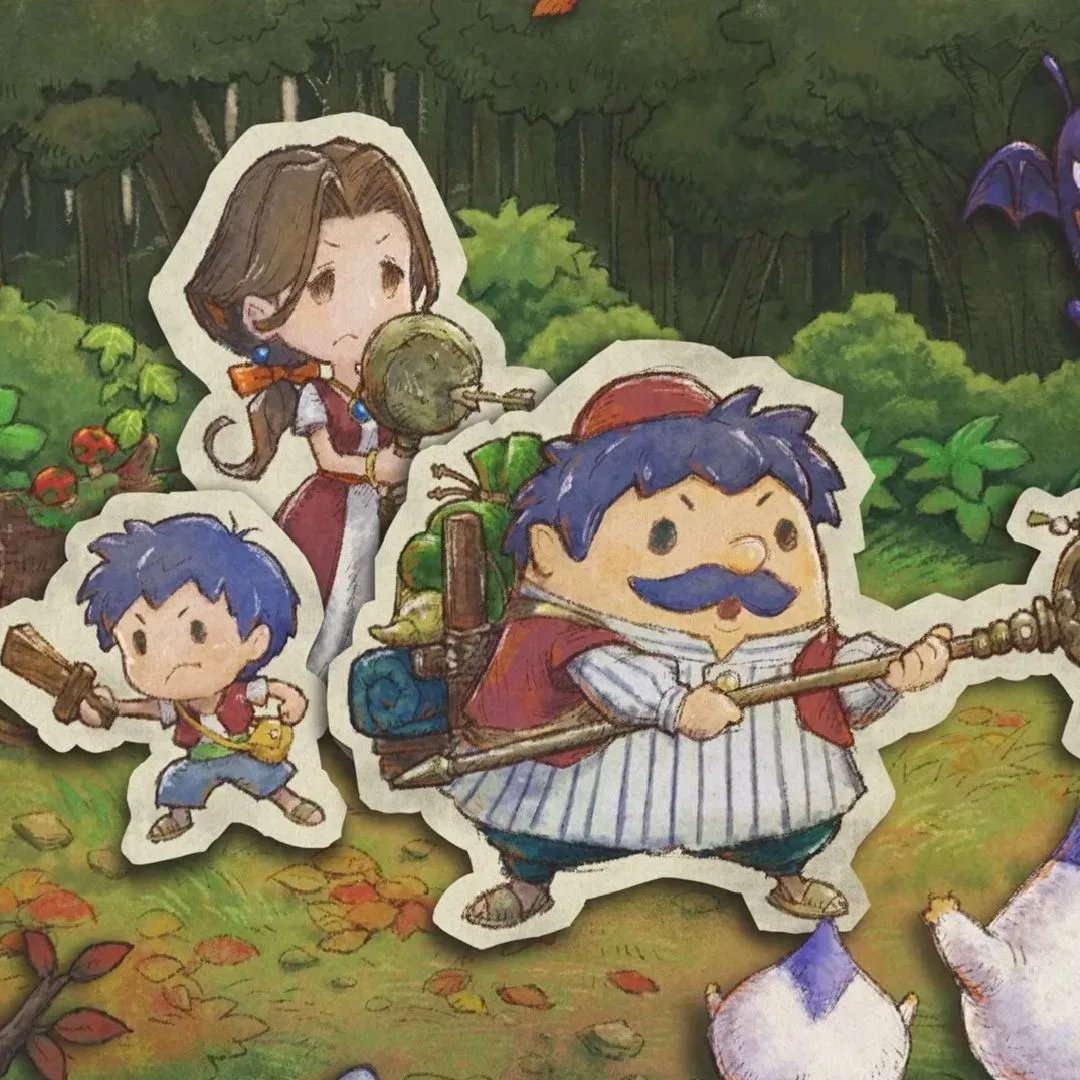
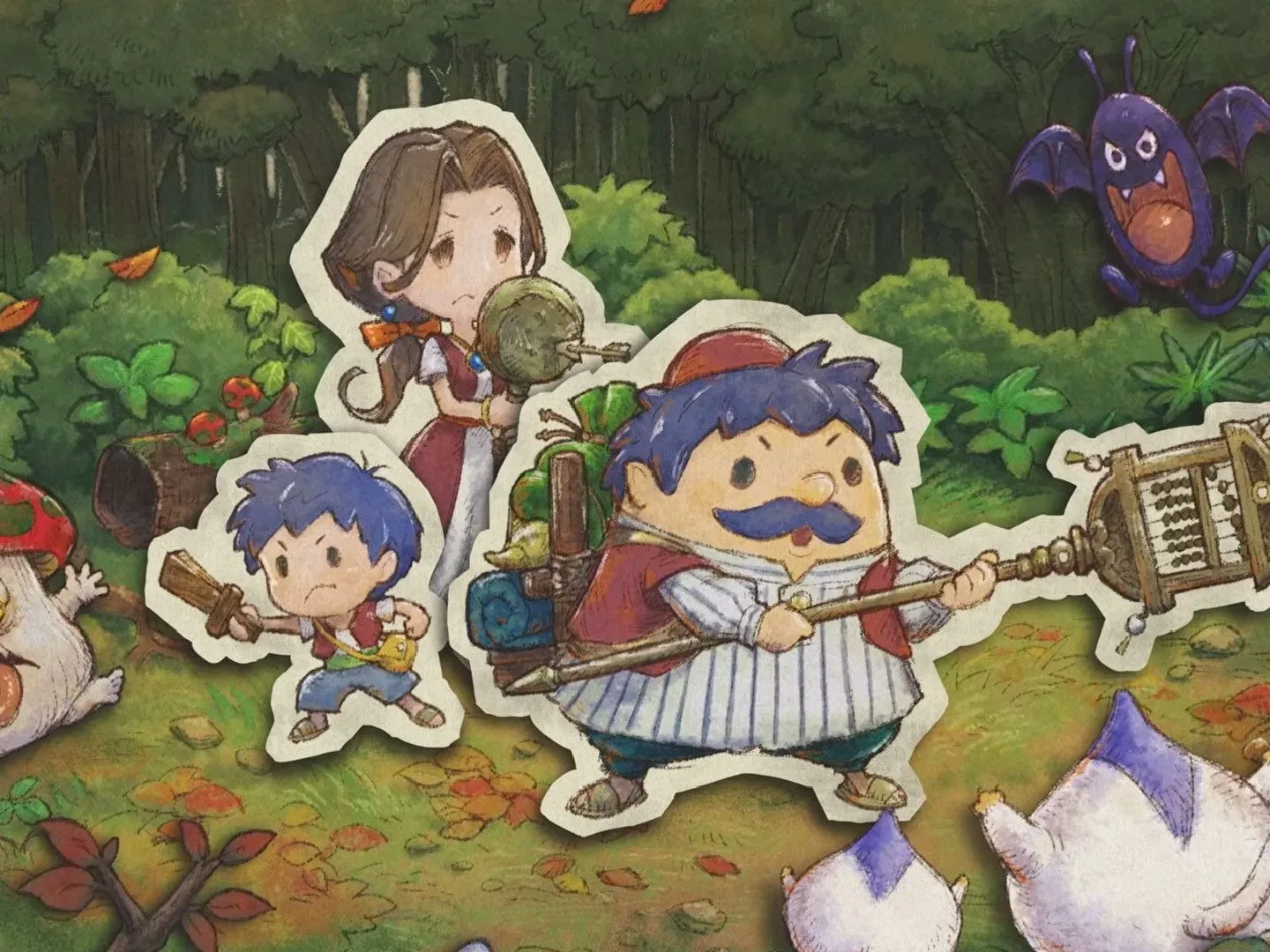
The Classic HD edition appears designed to preserve the old-school character of the original rather than rebuild it into an entirely different game. Its presentation has been lightly enhanced, with a look intended to sit closer to Square Enix’s modern HD-2D styling. That is a meaningful distinction for a revival like this. A visual refresh can make an older game easier to approach on contemporary screens without sanding away the odd angles, pacing, and mechanical sharpness that made it historically important in the first place.
Nothing about the game’s central loop suggests that it has been converted into a more forgiving modern action game. Its identity is still rooted in cautious, grid-conscious exploration and the possibility of losing a run. That may be exactly the appeal for veteran dungeon-crawling fans. It also gives newcomers a useful reminder that “roguelike” once meant a specific kind of strategic, turn-driven adventure rather than a catch-all label for any game containing random upgrades and a dramatic post-defeat button.
Players coming from newer entries in the genre should therefore expect the game’s age to matter. The appeal here is not a promise that every 1990s design convention has been replaced by a contemporary convenience. It is the chance to engage with a formative game while it retains its fundamental priorities: plan the next move, respect the dungeon, carry what you can, and do not assume the dungeon respects you back.
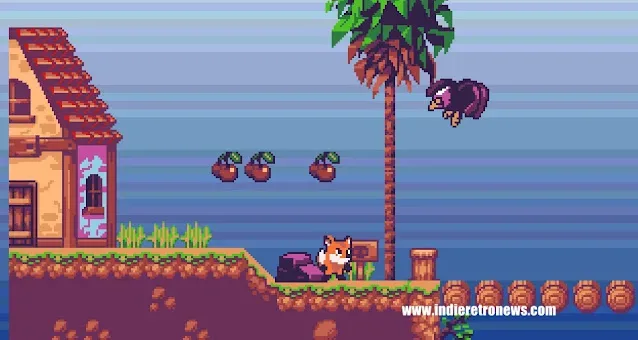
For retro-focused Nintendo followers, the release also lands alongside a continuing flow of older games and formats finding a new audience. Foxy’s Run and its Commodore Amiga development offer a different example of the same broader enthusiasm for keeping classic-era game ideas active rather than leaving them sealed in hardware history.
Steam gets a viewer-interference option
The most conspicuously modern feature is specific to the Steam version. A free streamer-oriented DLC add-on lets viewers influence “mysterious events” during dungeon runs. The available information does not spell out the exact forms those events will take, so it is sensible not to assume viewers will be handing out either lifesaving supplies or catastrophic banana peels. Still, the concept is clear: a solitary, highly strategic dungeon crawl can be opened to audience participation and the uncertain whims of chat.
That feature will not be central to most players, particularly those approaching the game as a long-awaited piece of Dragon Quest and Mystery Dungeon history. But it is a curious fit for the format. Roguelikes naturally produce tense, discrete stories: a fortunate treasure find, an overconfident choice, an unexpected monster encounter, and a run that suddenly becomes a rescue mission for a backpack full of valuables. Allowing an audience to trigger mystery events could make those stories even less predictable.
Importantly, the DLC is free and presented as an optional streamer-focused addition, not as a replacement for the core game. Players on the other announced platforms can focus on the classic dungeon experience, while Steam users who broadcast can invite a little additional chaos into a genre already famous for producing it without assistance.
An overdue chance to play the original in context
For Dragon Quest fans, the release puts Torneko back in the spotlight in a role far removed from a standard party-based quest. For roguelike players, it provides an official English route into a pivotal console interpretation of Rogue-style design. And for Mystery Dungeon devotees, it fills in a major gap in the family history.
The most compelling part of this release is therefore not just its upgraded appearance or even its multi-platform availability. It is the fact that a game that helped inspire several long-running dungeon-crawling paths can finally be encountered in English without requiring players to treat a decades-old import as an archaeological artifact. Torneko’s dungeon has been waiting a long time. It remains full of treasure, danger, and the timeless possibility that the next step is absolutely fine right up until it is not.