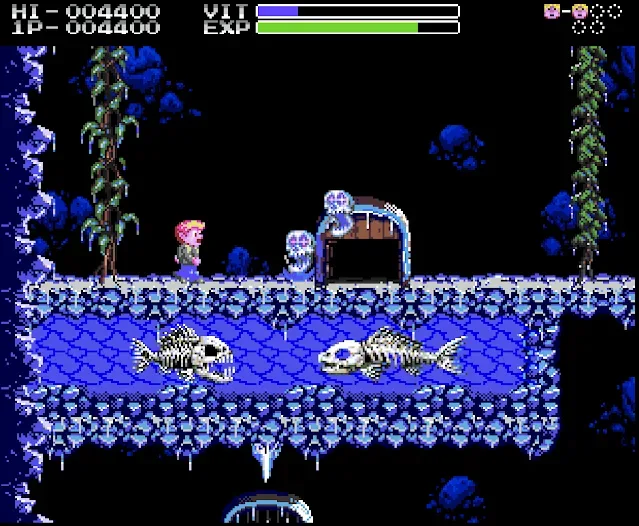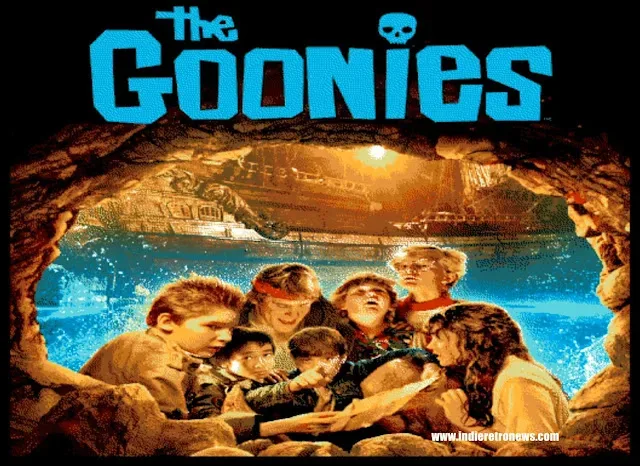
Some retro projects aim to recreate a favorite game exactly as remembered. Others use that memory as a launchpad for a version that could have existed on another machine all along. The AmiGoonies belongs firmly in the second camp: it is an in-development Commodore Amiga tribute to the 1986 MSX game The Goonies, built as the original approaches its 40th anniversary.
The project is not being presented as a finished release, and that distinction matters. Its graphics, levels, music, and gameplay systems remain in motion, with some features still experimental or incomplete. But its stated direction is clear: carry the fast, puzzle-led platform action associated with the MSX original onto Amiga hardware, while taking advantage of the machine’s visual and scrolling capabilities.
For fans of old-school computers, it is also a particularly fitting crossover. The developer describes the work as a personal bridge between MSX and Amiga influences—two platforms that helped shape their early enthusiasm for games and creative work. That kind of personal connection is often what gives a homebrew conversion its reason to exist beyond a technical exercise. The objective is not merely to move familiar rooms from one system to another; it is to celebrate the feel and identity of a game that lodged itself in players’ memories.
A film tie-in with a long computer-game afterlife
The Goonies was more than a movie title on a game box. The 1986 computer game drew closely from the film’s settings and puzzle ideas, using locations and obstacles that echoed its on-screen adventure. Players guide a member of the Goonies through stages, working through hazards and puzzles before reaching an exit.
The game’s original computer lineage was broad. It appeared on Commodore 64, Atari 8-bit computers, Apple II, and MSX, and later reached ZX Spectrum and Amstrad CPC through US Gold. That spread is part of why the game has remained visible in retro circles: different computer communities have their own relationship with it, whether through the version they played at home, screenshots in magazines, or the larger appeal of a film-inspired platform adventure.
In this case, The AmiGoonies specifically takes the 1986 MSX version as its touchstone. That focus gives the project a recognizable target rather than treating every historical port as one blended design. The original’s balance of brisk action, platforming, screen-by-screen exploration, and puzzle-solving is identified as the core to revive.
Retro platform games can mean very different things from one machine to the next. Some are about pin-point jumps, some lean into scrolling momentum, and others turn each room into a compact navigation problem. The appeal of revisiting them is often tied to those small design pressures rather than simply seeing an old character sprite again. For a broader look at how movement complexity and camera friction can define platforming preferences, see this comparison of Super Mario Galaxy and Super Mario Sunshine.
An Amiga-specific approach
The AmiGoonies is being developed with the Scorpion Engine and is intended for Commodore Amiga systems. The project’s original ambition encompasses both AGA and OCS Amigas, though the current update is AGA-only. An OCS version is planned to follow later, rather than being available at this stage.
AGA and OCS are meaningful labels in the Amiga world, not just technical fine print. They refer to different generations of the platform’s capabilities, and the current AGA focus sets the immediate technical target for the work shown and tested so far. Anyone hoping to run it on older OCS hardware should therefore treat that version as a future plan, not a current build.
The development goals include hardware-driven multidirectional scrolling, large colorful maps, detailed sprites and bobs, and an upbeat soundtrack intended to carry an arcade-like energy. “Bobs,” short for blitter objects in Amiga terminology, are part of the vocabulary that makes this feel like an Amiga project rather than a generic modern reinterpretation wearing retro colors. The aim is to use the host machine’s character in the presentation, including smooth movement and substantial on-screen visual elements.
Those are goals for the completed project, however, rather than promises that should be mistaken for final confirmed performance. Because development remains ongoing, individual visuals, levels, music, and systems may change. That uncertainty is normal for a hobby production, especially one assembling new art, audio, level work, and gameplay logic at the same time.
The people shaping its graphics and sound
The AmiGoonies credits several contributors for the art and music taking shape around the project. Luis Carlos “Razor” Zardo is creating tilesets. Paulo Amaweks is responsible for sprites, while Marlox is contributing additional graphics. The music contributors named are Esau and Maktone.
That collaborative list is worth highlighting because the stated visual ambition depends on more than code. Tile work establishes the texture and structure of the environments; sprites determine how characters and hazards read in motion; additional graphics can fill out the world; and music does much of the heavy lifting when a project is trying to evoke a particular era without merely repeating it. A tribute can be faithful in spirit while still becoming its own production through those decisions.
There is a practical upside to the team being direct about the project’s unfinished status. It sets appropriate expectations for anyone following along. The game is a work in progress, not an archival release with every detail locked down. The final arrangement of levels, the shape of its gameplay systems, and the music and graphical details may continue evolving as development proceeds.
Testing has included original hardware
The current AGA-focused work has been tested on a real Amiga 1200, as well as in WinUAE and FS-UAE emulators. That does not amount to a release-date announcement, nor does it establish a final compatibility list. It does indicate that the project has been checked in both original-hardware and emulation environments during its active development.
For an Amiga homebrew project, that is a welcome detail. Real-hardware testing remains important when a game is designed around the character of a classic platform, while emulator testing can be useful across modern setups. Still, the current build’s AGA-only status remains the central compatibility point: an OCS edition is intended later, but has not arrived with this update.
Why an Amiga version makes sense
The original game’s history already crosses multiple computer formats, so an Amiga tribute feels less like an unexpected detour than a new chapter in a very old migration route. Its movie-derived environments, direct objective of reaching each exit, and platform-and-puzzle structure provide a sturdy base for a machine-specific reimagining. The Amiga’s reputation for colorful presentation, scrolling, and distinctive music makes it an understandable home for a project trying to retain the old game’s momentum while expanding its visual presence.
There is also something charmingly appropriate about the timing. A game tied to a youthful adventure film is being revisited for a 40th anniversary through a project openly driven by nostalgia, creativity, and youthful joy. The AmiGoonies is not finished, and interested players should avoid reading its planned features as final guarantees. Yet the combination of a focused MSX reference point, named art and music contributors, AGA development, a future OCS goal, and testing on an A1200 gives this tribute a tangible identity already.
For now, it stands as an evolving Amiga project with a straightforward mission: bring the spirit of 1986’s MSX The Goonies to Commodore hardware in a form shaped by the Amiga itself.