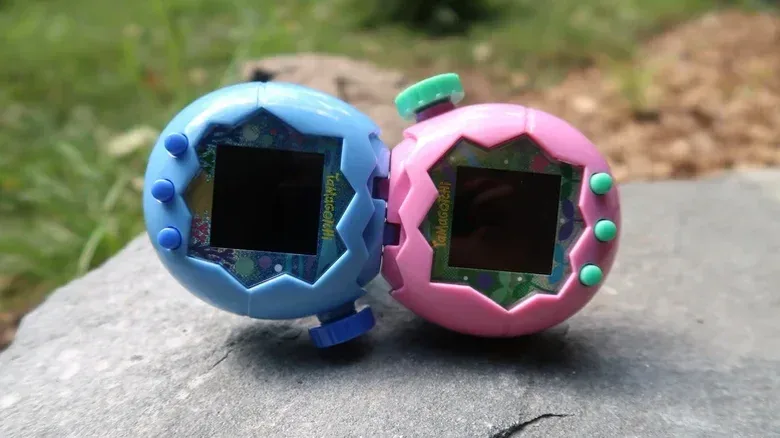
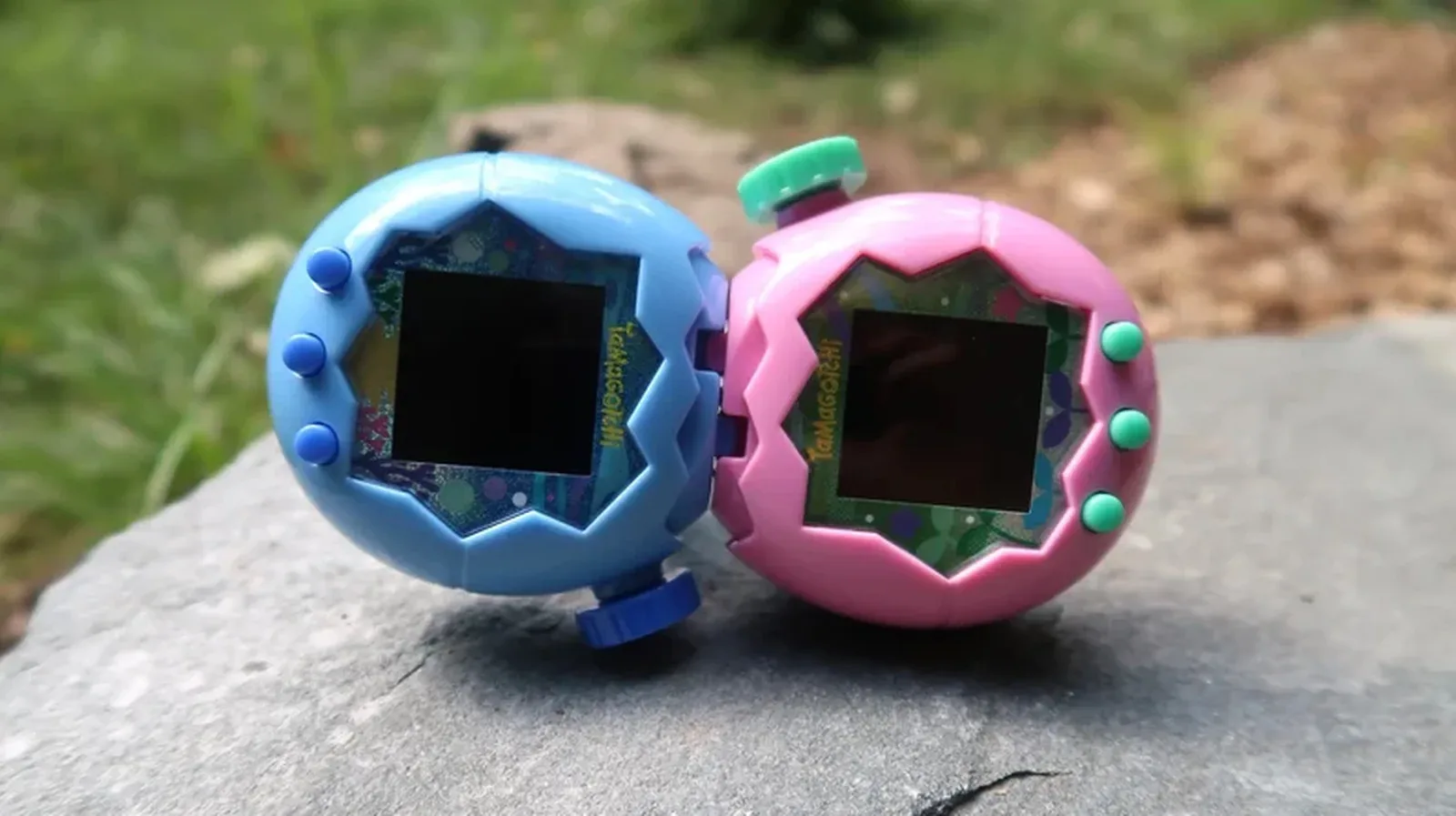
The Tamagotchi Paradise has become an improbably tiny stage for a very large flex: customized units have now been shown running Pokémon Gold and Pokémon Silver. The games are not merely appearing as decorative screens or menu mock-ups. Shared photos and videos indicate that they are playable, and the modder behind the paired builds has said the two devices can connect to trade Pokémon.
That makes this less of a sensible replacement for a Game Boy Color and more of a magnificent piece of portable-game hardware mischief. A Tamagotchi is supposed to ask whether you fed a little creature. These modified Paradise units can apparently ask whether you want to send it to another tiny egg-shaped computer.
What has been shown
Reddit user markivino shared images and video of two heavily customized Tamagotchi Paradise devices running Pokémon Gold and Pokémon Silver. The standout claim is the link functionality: connecting the two modified devices reportedly allows Pokémon trading between the games.
For Pokémon fans, trading is more than a novelty checkbox. The original games were built around the idea that players would connect separate systems to exchange creatures. Seeing that social, hardware-dependent feature reproduced on a pair of altered virtual-pet devices is the part that turns a funny screen swap into a particularly ambitious modding demonstration.
The posts do not establish every technical detail behind the work. It is not clear from the material available which software, hardware alterations, display work, control changes or connection method were used. It also does not prove that every Tamagotchi Paradise can perform the same trick, or that this is a simple install for an unmodified retail unit. Those distinctions matter: a polished-looking custom project can involve a substantial amount of experimentation that is invisible in a short clip.
Still, the visible result is clear enough to appreciate. Two devices designed for raising digital pets are displaying and playing games associated with Nintendo’s Game Boy Color era, then reportedly communicating with one another for a core Pokémon activity.
Why Pokémon trading is the real punchline
Pokémon Gold and Pokémon Silver are especially fitting games for a Tamagotchi experiment, even if the form factor is plainly not ideal. Both Pokémon and Tamagotchi revolve around portable creatures, persistence and the urge to check on a pocket-sized companion. Putting one inside the other creates a delightfully excessive nesting doll of handheld digital-pet culture.
Trading deepens the connection. In practical terms, a trade requires two compatible game instances to communicate. It is the difference between displaying a classic game on unusual hardware and demonstrating that the project can support an interaction central to the original experience. The small scale of the Tamagotchi Paradise makes that achievement look even stranger—and therefore better.
Related coverage includes Tamagotchi Paradise Mods Put Pokémon Gold and Silver on a Virtual Pet.
There is no need to pretend the device is the best place to play a Game Boy Color title. The appeal is not ergonomic superiority, a larger viewing area or an easier control layout. The appeal is the opposite: this is an intentionally weird, carefully customized object that makes a familiar game look completely out of place while preserving enough functionality to be meaningful.
A mod does not have to be the most practical way to use a game system to be technically interesting. Sometimes its entire purpose is proving that a ridiculous idea can work.
A second mod chooses the more obvious game
Another community member, DuckBrush, shared a White Glacier Tamagotchi Paradise running Tamagotchi for Game Boy. That pairing is less absurd on paper, but no less charming. A Tamagotchi game running on a Tamagotchi is the kind of circular logic that virtual-pet fans have earned through decades of keeping little pixel creatures alive—or at least attempting to.
It also highlights the breadth of what this corner of the community finds interesting. One project uses the Paradise as a miniature home for landmark monster-collecting RPGs; another puts a franchise-relative back onto related hardware. Neither is simply about reproducing a stock experience. Both are about reinterpreting a device through custom work.
Modding gives Paradise a different kind of value
Tamagotchi fans have long customized their devices in several ways. Community projects include custom shells, modern hardware made to emulate older Tamagotchi models, and altered content featuring new characters, backgrounds, items and accessories. Against that backdrop, the Paradise experiments are not a total departure from the culture. They are an escalation: instead of changing how a virtual pet looks or what it contains, these mods appear to make the device host a completely different class of software.
The Tamagotchi Paradise arrived in 2025, and reactions to the model have been mixed. That makes its apparent modding potential notable. A device that leaves some owners underwhelmed in its out-of-box form can attract a second audience when hobbyists discover that it can be reshaped into something unexpected.
That does not mean modding resolves every complaint someone might have with the standard product. Nor does one pair of sophisticated builds automatically make a platform broadly open, beginner-friendly or suitable for everyone. It does, however, change the conversation around what the hardware can represent. For the right tinkerer, a device’s limitations can become a design brief rather than a dead end.
What “moddable” should—and should not—mean here
It is worth being precise with the term modding. In this context, it refers broadly to user-created alterations to hardware, software or a device’s appearance. A custom shell is a cosmetic mod. Loading alternative characters or backgrounds changes the device’s content. Running a game associated with another platform is a far more technically involved-looking outcome, but the exact steps and components have not been detailed here.
That missing information is important for anyone tempted to replicate the feat. The shared posts demonstrate an end result, not a consumer-ready guide. Prospective modders should not assume a stock Tamagotchi Paradise can run Game Boy titles without modifications, that every custom unit will behave the same way, or that a working trade setup can be recreated without specialist knowledge.
There are also practical reasons to treat highly customized handhelds differently from ordinary toys or plug-and-play electronics. A one-off build may be difficult to repair or replace, while undocumented modifications can complicate troubleshooting. Anyone carrying unusual gaming gear away from home may also want to plan its protection and inspection needs; our guide to flying with handhelds, consoles and controllers covers the basic travel considerations.
The point is not convenience
There is a recurring temptation, whenever a tiny device is made to run a beloved old game, to judge it against the original platform or against modern handheld options. That misses the fun. The Paradise is not being positioned as the definitive Game Boy Color machine. It is a proof of imagination housed in a virtual-pet shell.
And the Pokémon trading report gives the project its most memorable detail. A pair of customized Tamagotchi Paradise devices reportedly doing the classic two-system Pokémon exchange is a wonderfully specific collision of portable gaming history and fan ingenuity. It is inconvenient. It is niche. It is probably not what anybody expected from a 2025 Tamagotchi.
Which is exactly why it rules.