Some games are old enough to be treated less like software and more like weather systems. Super Street Fighter II Turbo is one of them: a 1994 arcade landmark whose explosive offense, matchup-specific oddities and ruthless execution demands have been studied for decades. So when Akira Nishitani, one of the original designers associated with Street Fighter II and Final Fight, publicly wondered whether the game could be adjusted again, he was not merely proposing a balance patch. He was tossing a fireball directly into a museum display case.
In September 2026, 32 years after Super Turbo arrived in arcades, Nishitani suggested he would like an opportunity to take another look at the game. He also made clear that his involvement with this particular version had been limited, and jokingly warned that a revision could become something of a nerf-heavy exercise. It is an intriguing thought experiment from a major figure in fighting-game history, but it is important to underline the distinction between an interesting idea and an actual product: there is no announced rebalanced edition of Super Street Fighter II Turbo.
A balance patch for a game that became its own rulebook
Modern fighting games teach players to expect balance updates. A character dominates a tournament season, a developer changes damage values or frame data, and everyone begins the next round of debate before the patch notes finish loading. That rhythm is familiar in the era of regularly supported competitive games. Super Turbo, by contrast, built much of its identity around a version of the game that players learned to navigate as-is.
That does not mean the game is universally regarded as perfectly balanced. Far from it. Its reputation has always included powerful tools, polarizing matchups and systems that can make even experienced competitors feel as though they have opened an ancient scroll and immediately been hit by a tiger knee. Yet that uneven terrain is part of what longtime players know, practice and discuss. The question is not simply whether an adjustment could make particular situations fairer. The harder question is whether making them fairer would create a different game with a different competitive personality.
This is why the response from fighting-game players has been cautious rather than automatically celebratory. A balance pass can improve accessibility, reduce oppressive tactics and expand viable character choices. It can also remove the weird details that turn a decades-old fighter into a living discipline rather than a cleanly optimized historical artifact.
Chun-Li and Honda illustrate the problem
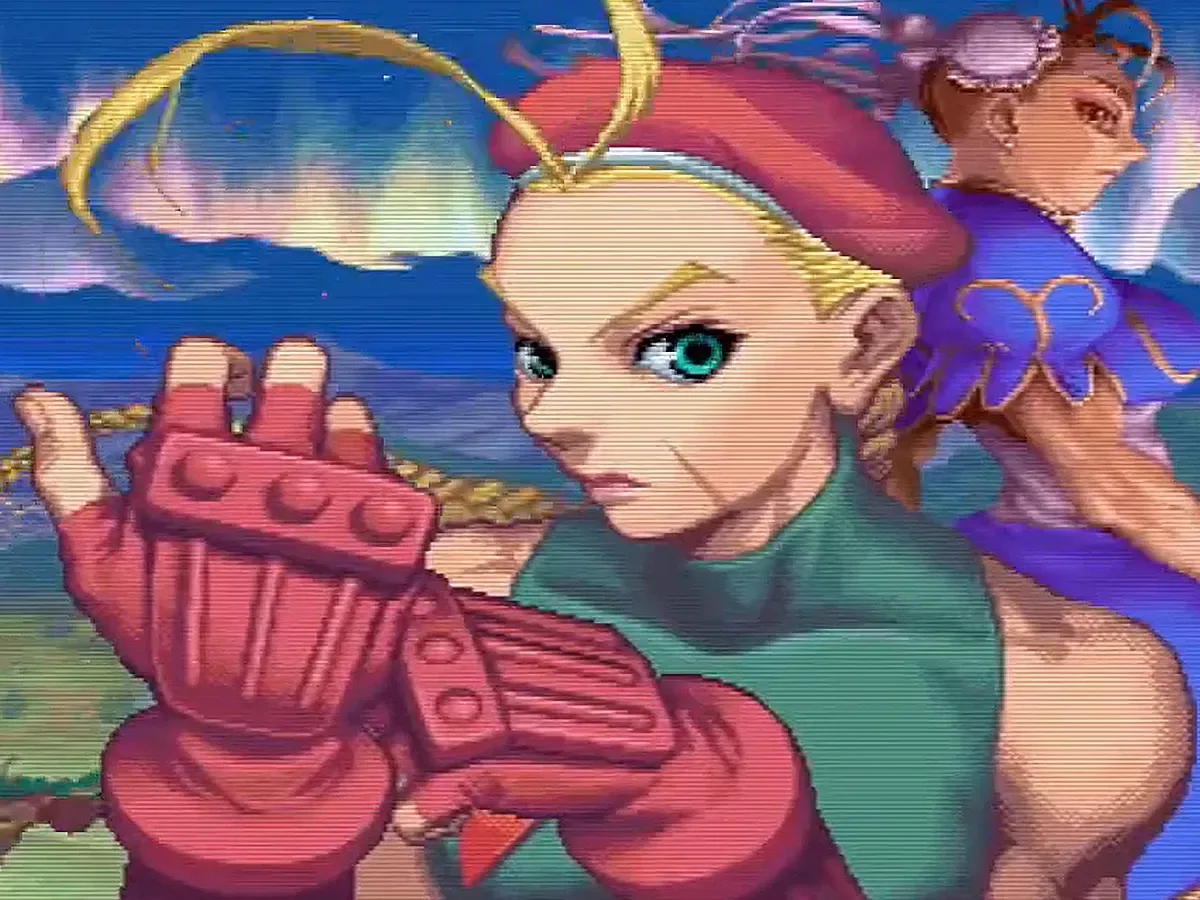
Commentator and fighting-game historian James Chen pointed to a useful example of the tightrope involved. He argued that removing Chun-Li’s ability to store her Super would likely make her less interesting, even if the mechanic appears to be an obvious candidate for a logical adjustment. On the other hand, he noted that removing Honda’s stored Oicho Throw could make Honda more enjoyable to fight against.
Those two observations capture why “balance” is not a simple slider marked unfair on one end and fun on the other. A change can improve one player’s experience while taking away a defining strategic layer for another. It can solve a notorious frustration but flatten a character’s identity. It can make the matchup chart more orderly while making the game less distinctive.
For a legacy competitive game, the important question is not just what deserves to be weakened. It is what history, strategy and player expression disappear when it is.
Related coverage includes Akira Nishitani Floats a Modern Balance Pass for Super Street Fighter II Turbo.
That is especially true in a title where knowledge has accumulated across generations. Strategies are not merely values written in code; they are part of a social language. Veteran players pass down matchup knowledge, setups and cautionary tales. New players learn that the game’s rough edges are not accidental debris to sweep away before company arrives. In many cases, those edges are the reason the game still has a room full of people arguing over it.
Super Turbo has been revisited before
The notion of revisiting Super Turbo is not without precedent. Capcom has repeatedly returned to older fighting games through collections and updated releases. In 2008, Super Street Fighter II Turbo HD Remix gave the game a high-definition presentation and was received positively by critics at the time. In 2017, the Nintendo Switch received Ultra Street Fighter II: The Final Challengers, another reworked take featuring updated visuals, added characters and balance adjustments.
Those releases demonstrate that an old fighting game can be reintroduced in more than one form. They also make the current conversation more interesting: players do not have to choose between the impossible extremes of pretending every revision is sacrilege and assuming every alteration is automatically progress. Multiple versions can preserve different intentions. One can retain the original arcade experience, while another can openly pursue a modernized ruleset.
That approach would likely be less disruptive than replacing the version players already know. A separate remix could invite experimentation without declaring the old game obsolete. The original would remain available for its established community and historical record; a revised branch could test how Nishitani or another design team might tackle the famous imbalances three decades later. In fighting games, where version differences can redefine the metagame overnight, clear separation matters.
It is also worth remembering that competitive communities often embrace version-specific identities. Players may choose one release because it has a particular combo route, another because it has a different roster, and still another because one strange mechanic creates an entire layer of mind games. The archive is not always a straight line toward a final, perfect edition. Sometimes it is a shelf of fascinatingly different machines, each with its own button layout and temperament.
Why the timing makes the idea feel plausible—and still uncertain
Capcom’s current fighting-game attention is understandably centered on Street Fighter 6, which remains a major contemporary entry in the series. That success does not tell us whether the company wants to commission another formal overhaul of a 1994 game. Nishitani also no longer works at Capcom. He founded Arika in 1995, where he continues to develop games; the studio is well known among fighting-game fans for Fighting EX Layer, a spiritual successor to the Street Fighter EX lineage.
In other words, Nishitani’s interest carries real historical weight, but it should not be interpreted as confirmation that a project is in production. Rights, internal priorities, development resources, preservation considerations and competitive expectations would all matter before a hypothetical new edition could become reality. A casual public prompt can begin a valuable design conversation without becoming a release schedule.
There is a broader industry lesson here, too. As games increasingly receive post-launch changes, old competitive titles become a useful counterpoint. A patch can be necessary, welcome and healthy. It can also alter the record of what players practiced, competed in and remembered. Even a comparatively small adjustment can have huge consequences when it lands in a game whose systems have been mapped for 32 years. Recent patch conversations around other games, such as an Elden Ring update that closed a multiplayer item loophole, show how intensely players can examine changes to established play. Now scale that scrutiny up to one of the foundational fighting games.
The case for leaving the cabinet unlocked
Still, the very existence of this debate is a compliment to Super Turbo. A game that nobody played anymore would not inspire concern about whether a revision might spoil its character. The title retains an active scene and lasting affection despite its age, and that survival means its design remains worth discussing in the present tense.
A careful new version could potentially make a persuasive case for itself if it treated the original with respect, made its goals explicit and did not erase the established release. But the burden would be high. It would need to recognize that the wild systems players call broken may also be systems they call beloved. A nerf list is easy to write; preserving the electricity of an arcade classic while changing its circuitry is the difficult part.
For now, Nishitani’s comment is best viewed as a provocative invitation: should a legendary game be frozen at its most famous moment, or can a new interpretation coexist beside it? The fighting-game community’s answer appears to be a cautious “maybe”—followed, naturally, by thirty years of matchup notes, a heated debate about stored supers, and someone insisting that the weirdness is exactly the point.