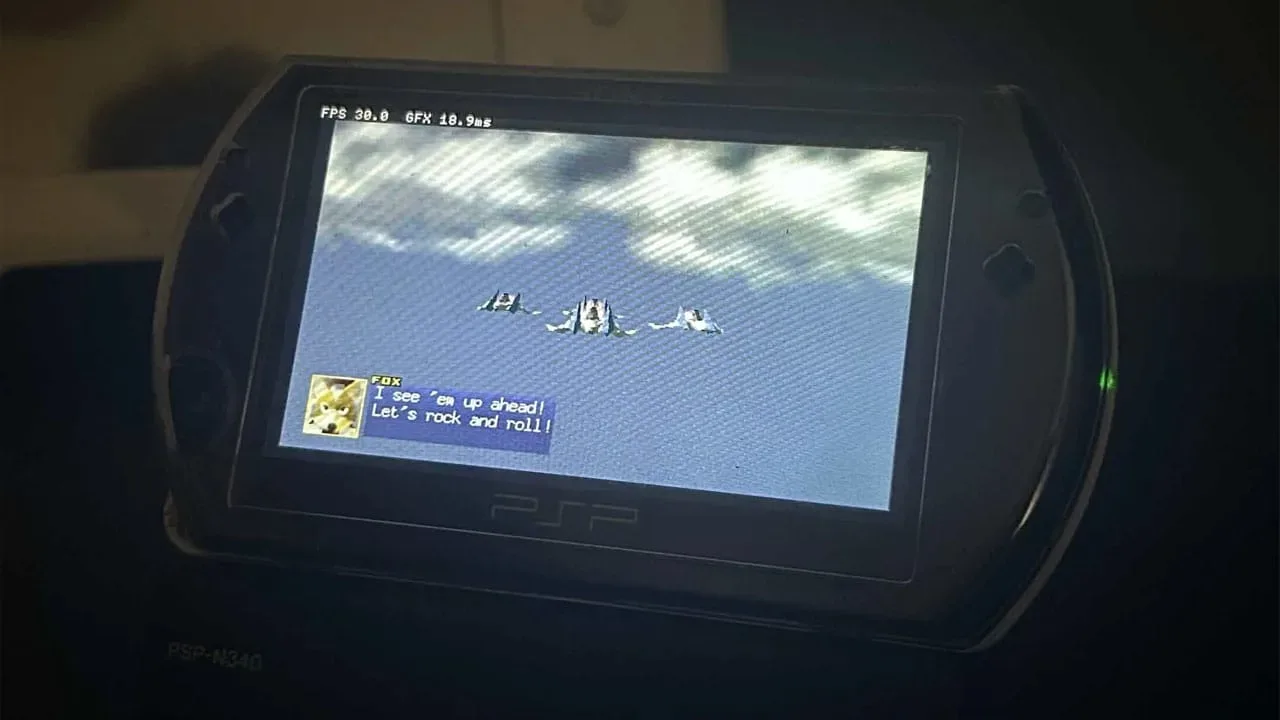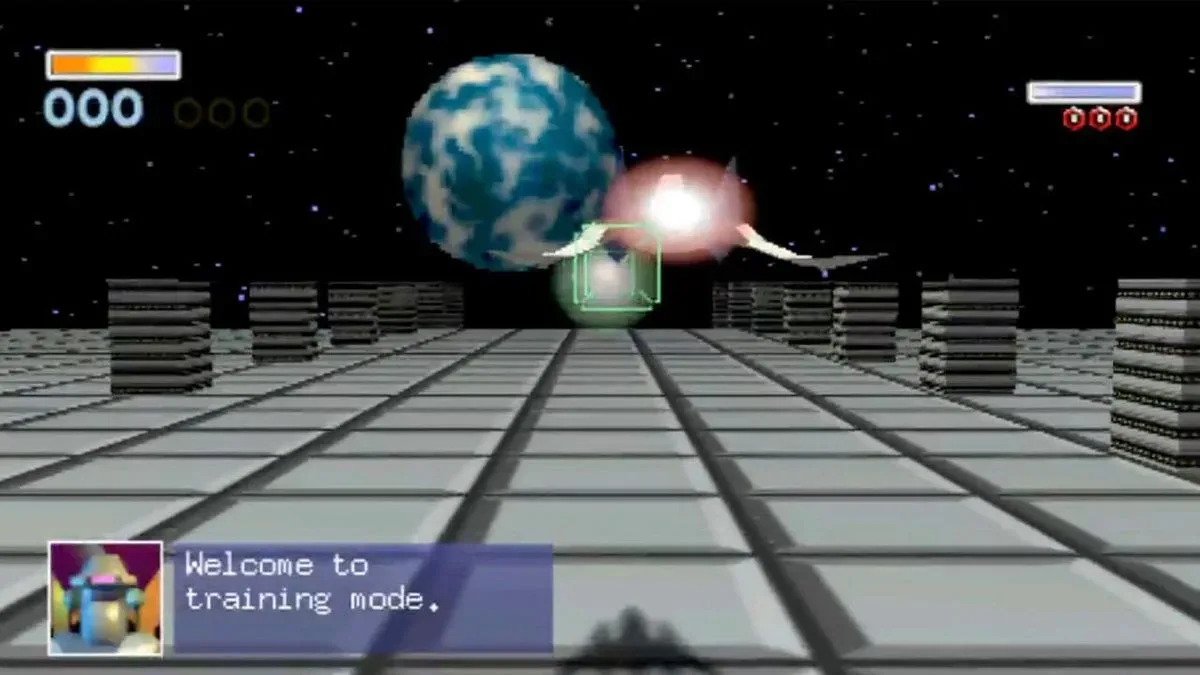
Fox McCloud has found an unlikely new cockpit: Sony’s PSP. A fan-made effort led by Daniel Welch has brought Star Fox 64 to the handheld with 60FPS rendering, and the work is already being shown running on both an original PSP and the PPSSPP emulator.
It is an especially entertaining turn for a game so strongly tied to Nintendo 64 hardware. The PSP has long been a favorite machine for portable retro play, but this is not merely a case of loading the Nintendo 64 game through an emulator. The project is a port intended for PSP, with footage shared by Welch highlighting a remarkably fluid-looking result.
There is an important technical asterisk attached to that headline, however. While rendering is operating at 60 frames per second, the game’s simulation is still running at 30Hz. In plain English: the image output is being refreshed at the higher rate, while the underlying game logic has not yet moved beyond its current 30Hz behavior. That makes this an impressive milestone rather than a declaration that every part of the conversion is finished.
A classic space flight, now aimed at PSP
Star Fox 64, called Lylat Wars in the UK, remains one of the most recognizable games in Nintendo’s spacefaring series. Its missions, rail-shooter structure, branching routes and talkative wingmates make it a natural candidate for revisiting—and, apparently, for persuading a much later handheld to do barrel rolls on command.
The PSP is hardly a stranger to ambitious community-made software. Its portable format, controls and enthusiastic homebrew following have made it fertile ground for projects that stretch the system well beyond the official library. But getting an N64-era title into a dedicated PSP port, then demonstrating 60FPS rendering on actual hardware, is the sort of technical curiosity that gives retro enthusiasts a reason to look twice at a console that has been around for decades.
Welch has been working on the project for roughly four months. That relatively short publicly stated development span makes the current demonstration all the more notable, while also explaining why the project should be viewed as ongoing work. The port has momentum, but it has not been presented as a completed, fully finalized release.
What 60FPS rendering does—and does not—mean here
Frame-rate terminology can become a tiny asteroid field, particularly with old games, fan ports and emulation all sharing the same conversation. The useful takeaway is straightforward: this version is rendering at 60FPS, which can make motion appear smoother than a 30FPS presentation. Yet Welch has also specified that simulation remains at 30Hz.
Simulation covers the internal pace at which a game processes its systems. Depending on how a game is built, changing that rate can affect movement, animation timing, input behavior, enemy patterns and other elements that must remain synchronized. Rendering frames more frequently is a different challenge from rebuilding or retiming the simulation itself. A project can therefore show 60FPS visuals without claiming that its complete internal timing has become 60Hz.
Related coverage includes Star Fox 64 Reaches PSP Hardware With 60FPS Rendering.
That distinction is not a downgrade to the accomplishment. It is simply the accurate status of this work at the moment. The current result demonstrates that the PSP can display the port at the higher render rate, on real hardware as well as in PPSSPP. The remaining 30Hz simulation point is a useful reminder that fan development is often iterative: one large breakthrough can arrive before every deeper technical task is solved.
The PSP build has been demonstrated with 60FPS rendering, but its simulation is presently 30Hz.
For anyone watching clips and wondering whether “60FPS” automatically means every gameplay process has doubled in rate, the answer here is no. The port’s progress deserves the finer detail, especially because that detail gives followers a clearer picture of what may still be tackled in later versions.
Real PSP hardware matters
PPSSPP support is valuable on its own. The emulator gives more people a practical way to follow projects associated with PSP software, particularly for those who do not keep a working handheld ready for emergency interplanetary defense. Still, confirmation that the port works on an actual PSP is the headline’s most charming part.
Original-hardware demonstrations answer a different question from emulation: not simply whether software can be run in a flexible modern environment, but whether it functions on the modest device for which the port is being made. For preservation-minded players and hardware tinkerers, that is a major part of the appeal. It turns the PSP from a device used to access retro games into a destination for a new adaptation of one.
The news also lands during a busier period for Fox McCloud. Star Fox has received an update on Nintendo Switch, while Star Fox Adventures has joined Nintendo Switch Online’s GameCube Classics collection. Those developments do not change the independent PSP project, but they create a welcome moment in which several corners of gaming are paying attention to the series at once.
Players interested in portable hardware accessories may also be watching how contemporary handheld ergonomics evolve. For a more current Switch-focused example, CRKD Nitro Deck 2 has begun global shipping for Switch 2 and older Switch models. The PSP port occupies a very different, enthusiast-driven space, but both stories reflect the enduring appeal of putting games in players’ hands rather than leaving them tethered to a television.
Not the first new home for Star Fox 64
This is not the first time the Nintendo 64 adventure has traveled outside its original machine. It has previously been ported to Dreamcast, and it is also available across a range of retro handheld setups. Each route has its own goals: convenience, preservation, experimentation, enhanced performance or simply the joy of seeing software run somewhere it was never expected to go.
The PSP version stands out because it marries that impulse with an iconic handheld platform and a specific performance target. The machine’s buttons and analog nub are not a literal duplicate for the original Nintendo 64 setup, but the appeal is obvious. A complete, polished port could give fans another way to carry the Lylat system around, with the familiar visual character of PSP software and a potentially very smooth presentation.
For now, though, restraint is warranted. No final readiness date, distribution details or broader feature list have been established here. It would be premature to treat the project as an immediately available replacement for other ways of playing, or to assume that the remaining simulation work will be resolved on a particular schedule.
The community work behind the spectacle
The most exciting part of projects like this is often the methodical persistence behind a short gameplay clip. A smooth few seconds of Arwing action can conceal months of technical investigation, debugging and adjustment. Welch’s four months of work have produced a result substantial enough to demonstrate on physical PSP hardware, and that is a meaningful marker of progress even with further development ahead.
It also underscores why clear technical notes matter. The phrase “they said it couldn’t be done,” used in Welch’s social post, captures the playful defiance that powers many modding and homebrew projects. But the accompanying 30Hz simulation note is equally valuable because it sets expectations without diminishing the work. A good work-in-progress showcase can be both exciting and candid.
Anyone who wants to keep an eye on the PSP port’s evolution should follow Daniel Welch’s updates. The project has already cleared the attention-grabbing hurdle: Star Fox 64 is visibly running on a real PSP with 60FPS rendering. Whether subsequent work brings the simulation beyond 30Hz is the next big question—and one worth watching for anyone who enjoys the strange, wonderful afterlife of classic hardware.