Retroid’s Pocket Classic is now available for $69 before shipping when buyers use the coupon code $30OFF at checkout on the company’s official store. The code takes $30 off the handheld’s $99 listed price, and applies to Retroid’s Pocket 5 as well.
This is presented as a final-stock sale for the Pocket Classic, Retroid’s current last vertical handheld. Once the remaining stock is gone, the model is described as gone permanently. Stock can change quickly, but at the time of publication just two Pocket Classic variants were still listed: Classic 6 and PKM Yellow. Both are six-button models with 6GB of RAM and 128GB of storage.
A final clearance price for a distinctive Android handheld
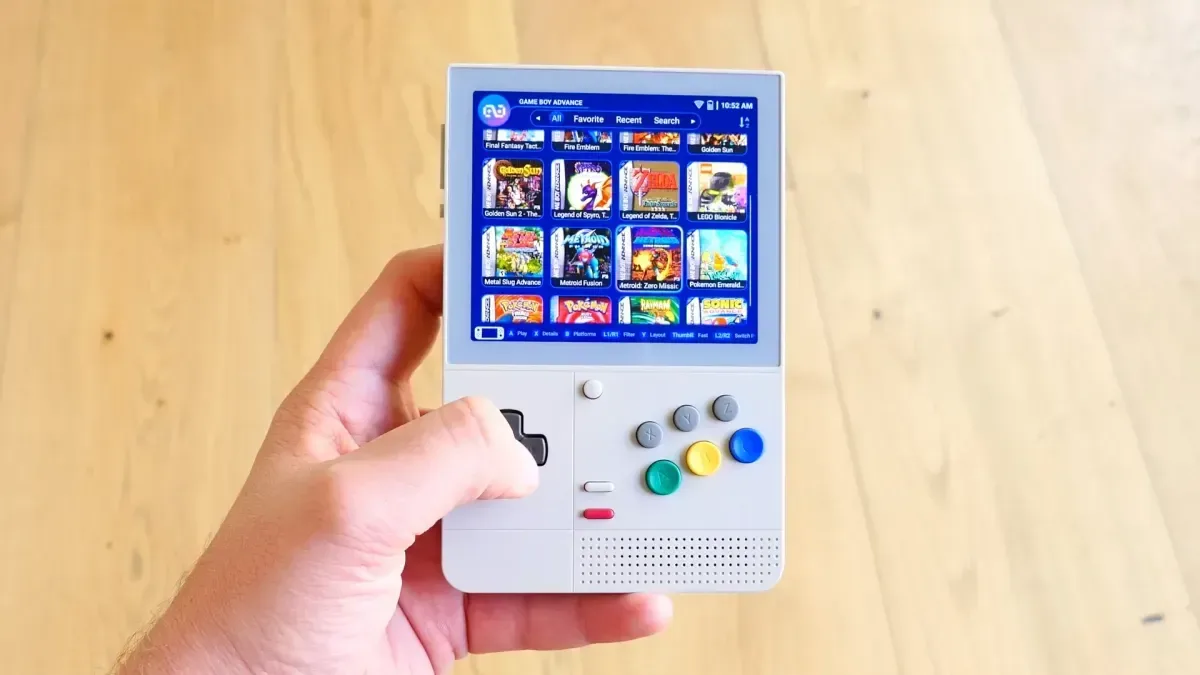
The Pocket Classic’s new $69 price is notable less because it transforms the machine into a high-end all-purpose emulator and more because it places a very particular design at a low entry price. It is a vertical Android handheld built around a 3.92-inch AMOLED display, a square-oriented screen, and no analogue stick. Those decisions naturally narrow its ideal use case, but they also give it a clearer identity than a device attempting to cover every console generation and control scheme.
For players drawn to older games, the format matters. Vertical handhelds place the screen above the controls rather than beside them, echoing the basic arrangement of older portable systems. A square display is also a better visual fit for some earlier game formats than a wide modern panel, although it is not a universal answer for every platform. Retroid’s choice here looks aimed at people who value the feel and presentation of a focused retro device over maximum flexibility.
The Pocket Classic offers a choice of four or six action buttons, but the remaining sale stock is limited to the six-button versions. More face buttons can be useful for platforms and games designed around larger control sets, while the lack of an analogue stick remains the more important practical limitation. It makes the device a less natural match for software that depends on analogue movement, camera control, or twin-stick inputs.
What the performance claim does—and does not—mean
The handheld is described as having aged in performance terms, with reliable emulation reaching through the original PlayStation. That is a helpful boundary for prospective buyers. It should not be read as a promise that every game from every system will work identically, nor as a blanket indication of performance beyond that range. Emulation results can vary with the game, emulator software, settings, and the demands of the original hardware.
Emulation is software-based recreation of another system’s behavior. In simple terms, an emulator lets a modern device run software made for older hardware by imitating the original machine’s functions. The original PlayStation is a sensible reference point because it signals a generation of 3D games that is more demanding than many earlier 2D platforms, while still sitting well below the requirements associated with newer consoles.
That makes the Pocket Classic’s expected lane reasonably clear: it is a compact Android option for retro-focused use, especially where a vertical grip, square display, and digital controls are desirable. Buyers looking for a machine chiefly to play games that assume analogue inputs should consider that control layout first, rather than treating the $69 price as the deciding specification.
Related coverage includes Retroid Pocket Classic Reaches $69 With Final Stock Dwindling.
The display is another major part of the proposition. AMOLED, short for active-matrix organic light-emitting diode, is a display technology in which pixels emit their own light. In practical terms, that can allow deep blacks because pixels can switch off individually. The 3.92-inch screen is relatively large within the context of a small vertical handheld, though its square shape remains the defining trait for fitting content and interface layouts.
Remaining configurations and the coupon details
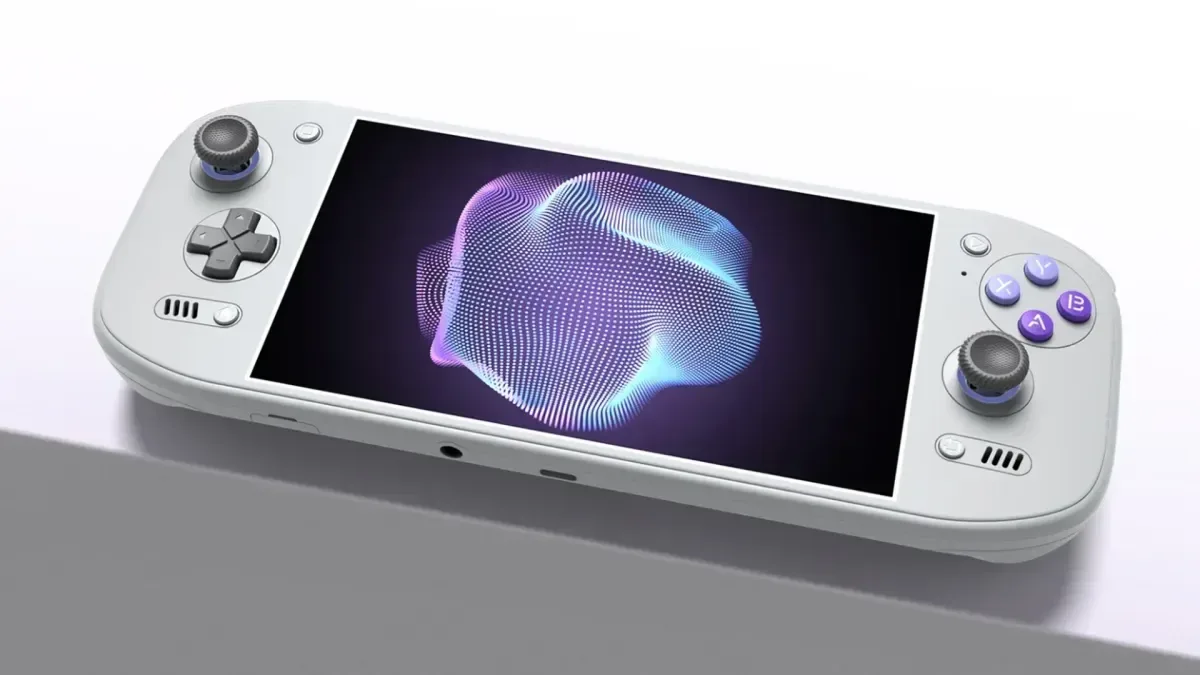
For the Pocket Classic, the arithmetic is straightforward: the listed $99 price drops to $69 with $30OFF, before shipping. The code is also valid on the Retroid Pocket 5, bringing that model from $179 to $149 before shipping.
- Retroid Pocket Classic: $99 listed price; $69 before shipping with $30OFF.
- Remaining Pocket Classic variants at publication: Classic 6 and PKM Yellow.
- Remaining Pocket Classic specifications stated for those variants: six action buttons, 6GB RAM, 128GB storage.
- Retroid Pocket 5: $179 listed price; $149 before shipping with $30OFF.
The Pocket 5 appeared to have more choice left, with four color variants listed at the time. The Classic’s more limited selection makes it the urgent purchase only for someone who already wants this precise format. A low final-sale price is not, by itself, a reason to buy a device with a control arrangement that does not suit the games a player actually intends to run.
Why the Pocket Classic’s limits may be its appeal
There is a tendency to judge retro handhelds chiefly by the highest-generation system they can emulate. That comparison is useful, but incomplete. Controls, display shape, ergonomics, operating system, storage, and the intended game library all influence whether a device will be enjoyable in regular use.
The Pocket Classic is unusually explicit about its compromise: it does not have an analogue stick, and its performance is not positioned as cutting-edge. Yet a focused design can be preferable for a narrower library. A player mainly interested in games built around a directional pad and face buttons may value the vertical stance and square screen more than unused performance headroom.
Conversely, the same traits can make it a poor fit for someone expecting one portable machine to cover every era, genre, and control style. The six-button layout adds options for digital-input games, but it cannot substitute for analogue hardware where a game was designed around it. The most sensible shopping question is therefore not whether $69 is low in isolation, but whether the Pocket Classic’s screen and inputs suit the systems and games already on a buyer’s list.
A small-device route into retro play
The sale also lands at a time when retro gaming continues to span both original hardware projects and modern ways to revisit older libraries. For a different example of the continued interest in vintage systems themselves, Super Pac-Man’s 32K Commodore VIC-20 port shows how older platforms remain active destinations rather than merely sources for emulation.
The Pocket Classic occupies a separate but adjacent space: modern Android hardware shaped around older styles of play. Its appeal is not that it replaces original systems, nor that it has the broadest possible feature set. Rather, it is a compact device whose stated strengths are its AMOLED panel, vertical form factor, button options, and original-PlayStation-level emulation target.
What prospective buyers should check before ordering
Because this is described as a sell-through sale, availability and the exact color selection may change after publication. Anyone interested should verify the model, color, final checkout total, shipping cost, and that the $30OFF code has been applied before completing an order.
It is also worth confirming the distinction between the Pocket Classic and the Pocket 5. The same discount code covers both, but they are not interchangeable purchases. The Classic is the vertical, square-screen device with no analogue stick; the Pocket 5 is the alternative reduced from $179 to $149. The right deal depends on desired controls and intended software, not only the larger discount percentage.
For buyers specifically after a six-button vertical Android handheld for older games, though, the Pocket Classic’s $69 price puts a tightly defined piece of hardware at its lowest stated cost while the final units remain. With only Classic 6 and PKM Yellow reported as available at publication, waiting for an even lower price could also mean missing the device entirely.