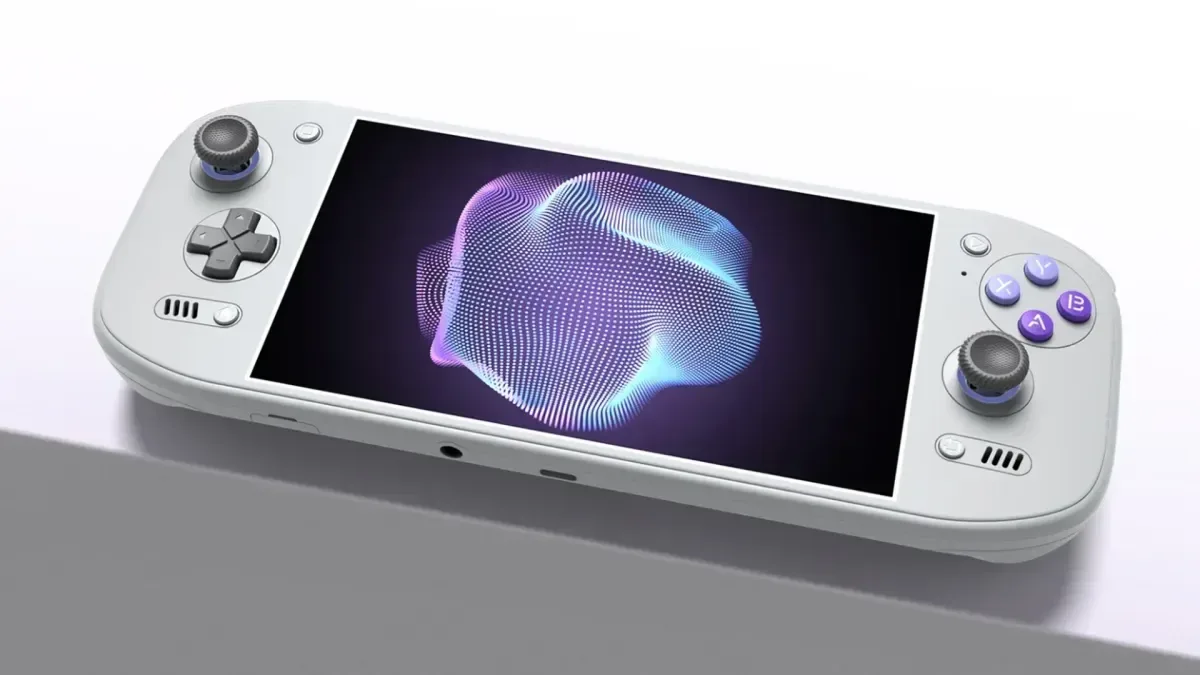
AYN has opened pre-orders for the Odin 3 Portal, a single-screen Android handheld that pairs a 7-inch OLED display with Qualcomm’s Dragonwing Q8 processor, a 9,000mAh battery and physical controls aimed at both Android gaming and retro-game emulation. Early-bird pricing begins at $399 for the 12GB RAM/128GB storage model and reaches $669 for the 16GB/1TB configuration.
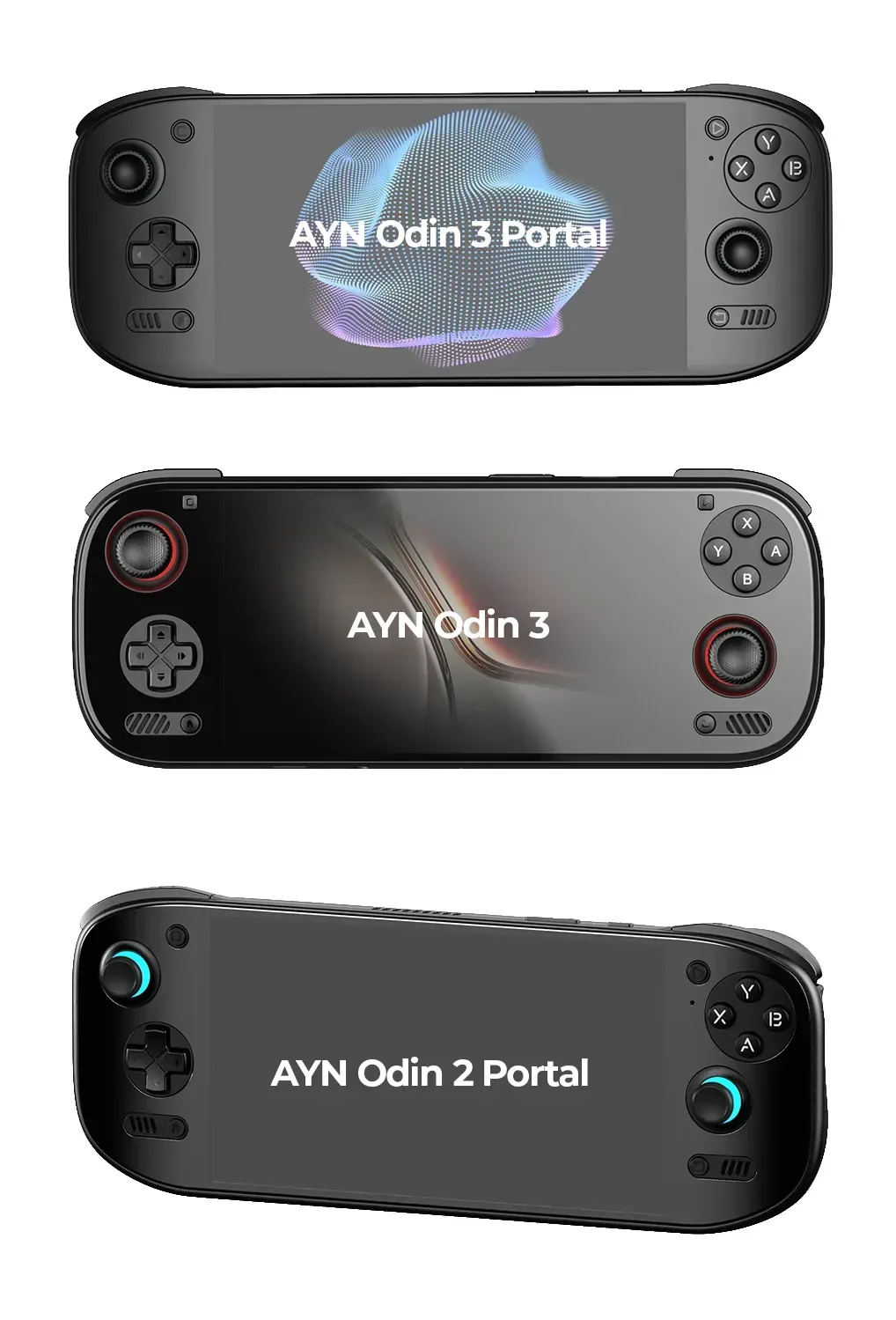
The name requires a little unpacking. The Odin 3 Portal sits within AYN’s Odin 3 family, but “Portal” is not simply a shorthand for a faster processor. It denotes a more recently refreshed design with quality-of-life changes, including the larger display, added battery capacity and expanded storage choices. Its styling is said to closely resemble the older Odin 2 Portal, making the company’s naming convention potentially confusing for anyone comparing the models at a glance.
Pre-orders opened on October 22 at 9:30 p.m. EDT. AYN lists shipping as beginning in early November 2026, though prospective buyers should treat that as a stated target rather than a delivery guarantee. The device carries a one-year warranty.
The hardware at a glance
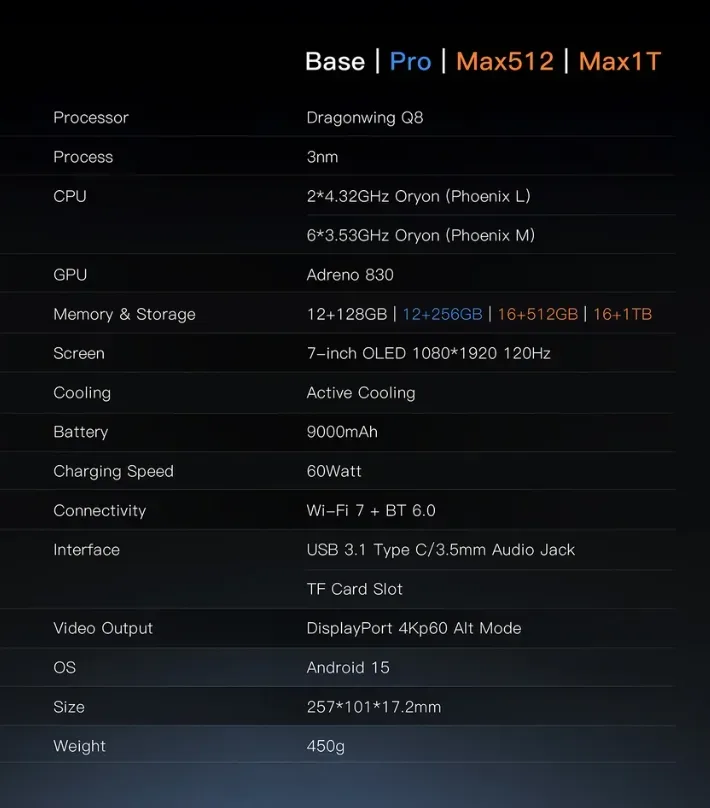
The Odin 3 Portal is built around the Qualcomm Dragonwing Q8, described as a Snapdragon 8 Elite without the cellular modem, alongside an Adreno 830 GPU. In simple terms, the CPU handles general processing duties, while the GPU is responsible for rendering graphics. Their pairing is central to the Portal’s pitch as a high-end Android handheld rather than a compact device intended only for older systems.
- Chip: Qualcomm Dragonwing Q8
- Graphics: Adreno 830 GPU
- Screen: 7-inch OLED, 1,920 x 1,080 resolution, 16:9 aspect ratio, 120Hz refresh rate
- Operating system: Android 15
- Battery: 9,000mAh
- Charging: up to 60W
- Wireless: Wi-Fi 7 and Bluetooth 6.0
- Weight: 450g
- Colours: Black, White and Cold Grey
OLED refers to a display technology in which pixels can light themselves rather than relying on a conventional backlight. That can be useful for games with dark scenes because black portions of the image can appear genuinely black. The 1,920 x 1,080 resolution is commonly called 1080p, while the 16:9 shape matches the widescreen format used by many modern games and video services.
The 120Hz figure describes how often the display can refresh each second. A higher refresh rate can make interface movement and compatible games look smoother than a 60Hz panel. It does not, on its own, mean every game will run at 120 frames per second; the game software, emulation settings, thermal conditions and processor workload still determine actual performance.
Controls, cooling and the portable trade-off
AYN lists Hall-effect analogue sticks with removable caps, analogue triggers, rear paddles and silent ABXY face buttons. Hall-effect sticks use magnetic sensing rather than the conventional physical contact arrangement, a design associated with reducing wear-related input drift. Removable caps may also be useful for players who prefer a different stick feel, although no alternate caps or accessories were detailed beyond the availability of optional ergonomic grips.
The analogue triggers matter for games that recognize degrees of pressure rather than a simple on-or-off press. Rear paddles add additional inputs within reach of a player’s fingers, which can be useful for remapping controls in supported games or apps. Whether every Android title or emulator can take equal advantage of those extra controls will depend on its own controller support and configuration options.
Related coverage includes AYN Odin 3 Portal Pre-Orders Open With 7-Inch OLED and Dragonwing Q8.
Cooling is another meaningful specification for a handheld with this class of processor. The Portal includes a fan with Quiet and Customise modes. Active cooling can help a device sustain demanding work by moving heat away from internal components, though fan behavior, noise, temperatures and performance over long sessions need independent testing. “Quiet” and “Customise” identify the available modes, not a measured noise promise.
At 450g, the Portal is not positioned as an ultra-light pocket system. That weight should be considered alongside the 7-inch screen and 9,000mAh battery: the ingredients that support a larger, higher-spec handheld also make for more mass in the hands. Optional ergonomic grips suggest AYN recognizes that comfort may be as important as raw specifications for people planning extended use.
Android games, streaming and emulation
Android 15 gives the Odin 3 Portal access to Android software, while its Wi-Fi 7 and Bluetooth 6.0 connectivity are relevant to wireless controllers, headphones and cloud or local game streaming. Streaming is distinct from running a game on the handheld itself. In a streaming setup, the game is processed on a remote server, PC or console and the video is sent to the Portal, while button presses travel back across the network. A fast, stable connection can therefore matter as much as the handheld’s local graphics horsepower for the experience.
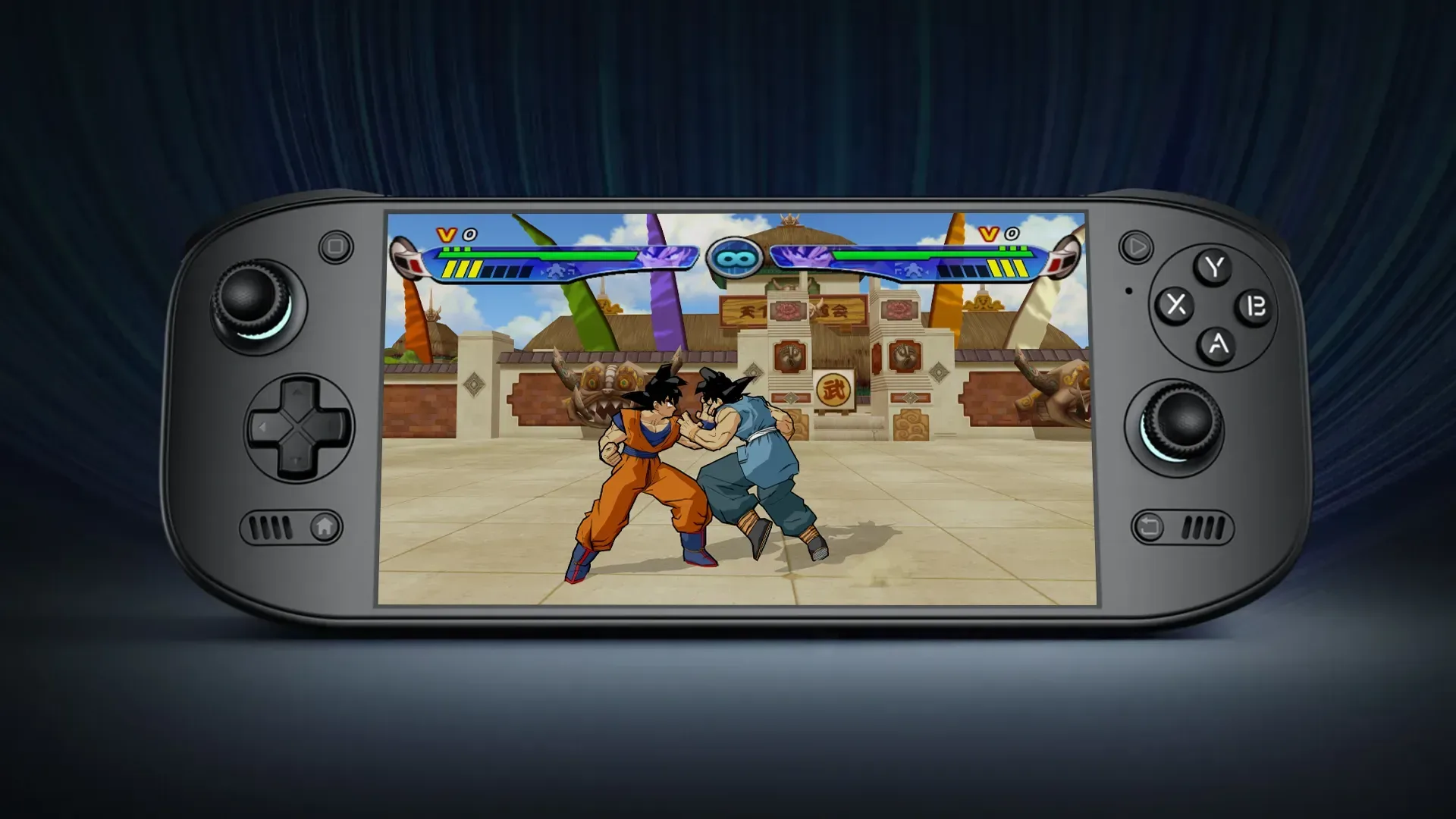
The Portal is also being positioned for emulation. Emulation is software that recreates the behavior of another piece of hardware, allowing compatible game software to run on a different device. The prospective systems mentioned for the Odin 3 Portal include PlayStation 2, PlayStation 3, Nintendo 3DS, GameCube and Xbox. Those are broad capability categories rather than assurances that every game will work flawlessly.
That distinction is especially important with technically demanding platforms. Results can vary by emulator maturity, individual game, chosen resolution, graphics backend, control mapping and the settings a user selects. Some higher-demand titles may require configuration work. Buyers looking specifically for one game or one system should wait for focused compatibility coverage rather than assume that the presence of a powerful chip guarantees identical results across a library.
The same caution applies to suggestions that the hardware may be capable of handling Switch emulation. No universal compatibility or performance commitment is established here. More generally, users are responsible for ensuring their game software, BIOS files and other materials are obtained and used lawfully in their jurisdiction.
For players whose main interest is Nintendo’s current ecosystem rather than Android or emulation, a separate look at recent Nintendo Switch Online additions offers a reminder that official subscription libraries serve a different role from a configurable Android handheld.
Configurations and early-bird prices
AYN is offering four memory and storage combinations. RAM is short-term working memory used by apps and the operating system while they are running; storage is the longer-term space used for installed applications, files and media. More storage can reduce the need to manage a large local library, while more RAM may be useful in heavier multitasking situations. The supplied details do not establish specific performance differences between the listed configurations, so it is sensible to choose based on capacity requirements rather than presume a fixed frame-rate advantage.
- Base: 12GB RAM, 128GB storage — $399 early-bird price; $419 listed retail price
- Pro: 12GB RAM, 256GB storage — $479 early-bird price; $499 listed retail price
- Max: 16GB RAM, 512GB storage — $549 early-bird price; $579 listed retail price
- Max: 16GB RAM, 1TB storage — $669 early-bird price; $699 listed retail price
The $20 gap between the advertised early-bird and retail price is consistent across all four tiers. The bigger choice is therefore not the launch discount but how much local capacity is appropriate. The base model offers the lowest entry price, while the 1TB model costs $270 more and is meant for buyers who place a premium on built-in storage. There is no supplied information about expandable storage, so shoppers should not assume it is available.
What to weigh before placing a pre-order
The Odin 3 Portal’s specification sheet makes a clear case for a large-screen Android handheld: 1080p OLED at 120Hz, modern wireless standards, a substantial battery, active cooling and a control layout with analogue triggers and rear paddles. It also arrives in a market where the details beyond a spec list can be decisive.
Before committing, buyers may want to establish which applications, emulators and streaming services they actually plan to use; whether 128GB will be enough without confirmed expansion; and whether the 450g chassis suits the kind of sessions they expect to have. Those questions are more practical than treating the highest RAM and storage tier as automatically necessary.
It is also worth waiting for independent assessment of screen brightness, battery life, charging behavior, thermals, fan noise, build quality, software setup and sustained performance. None of those outcomes can be inferred completely from a processor name, a battery rating or a 120Hz panel. The Portal’s stated early-November 2026 shipping window and one-year warranty are useful purchase considerations, but they do not replace the value of detailed testing once retail units are in use.
For now, the Odin 3 Portal is a premium, single-display Android option with a deliberately broad brief: local Android gaming, streaming and configurable retro gaming in one 7-inch device. Its appeal will rest not only on Dragonwing Q8 performance, but also on how well AYN’s large OLED design, controls, cooling and software experience come together outside the specification sheet.