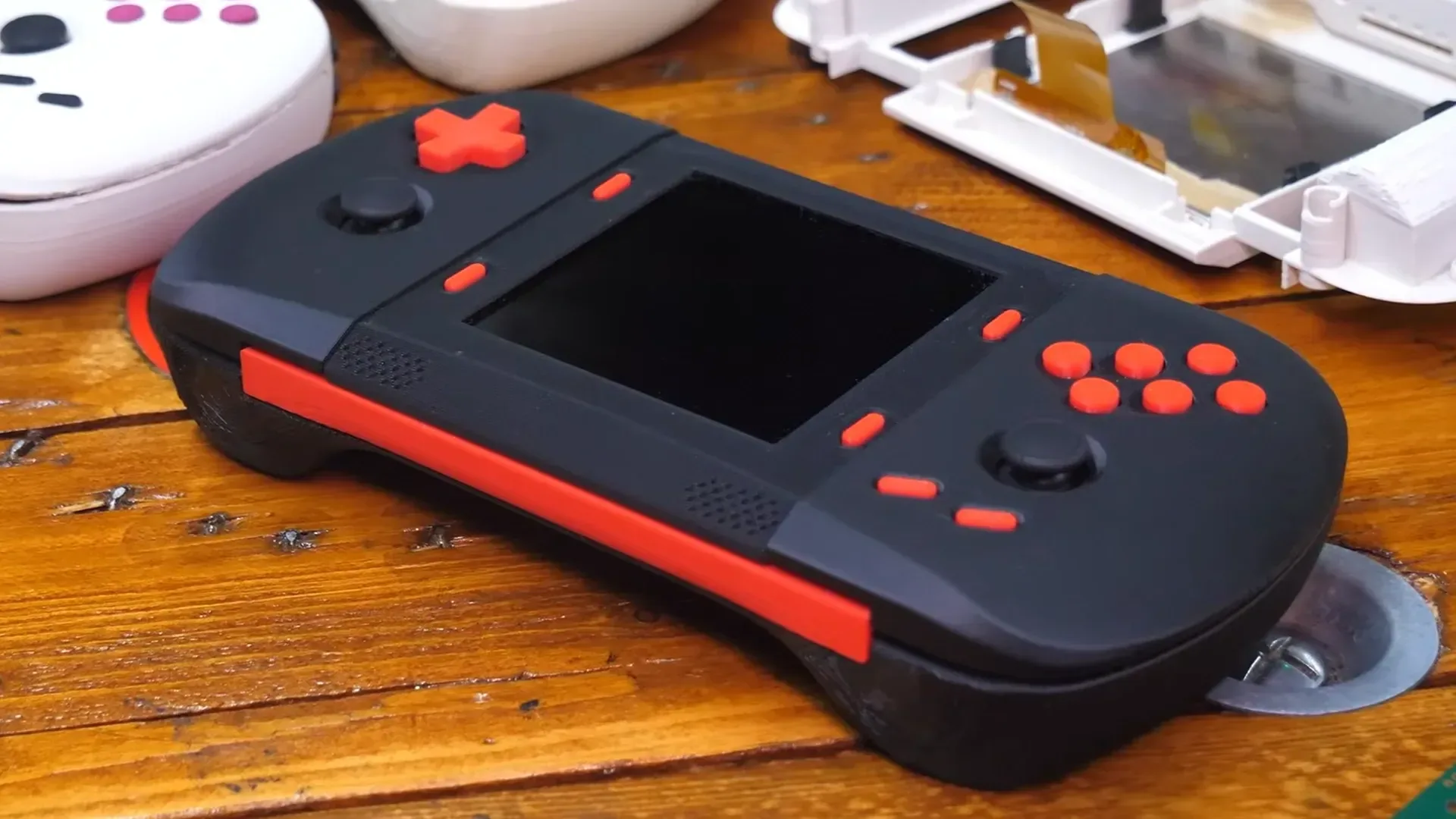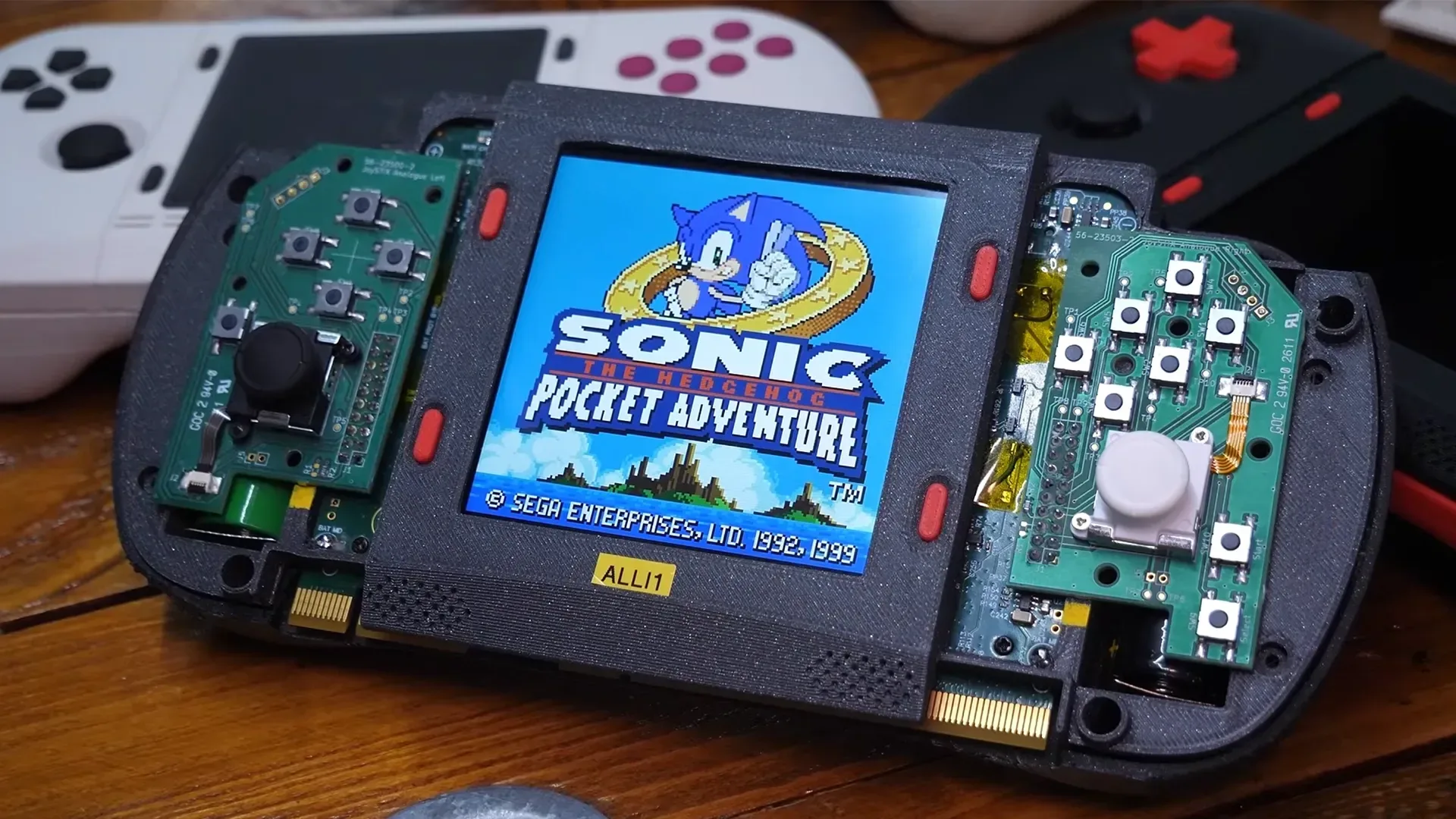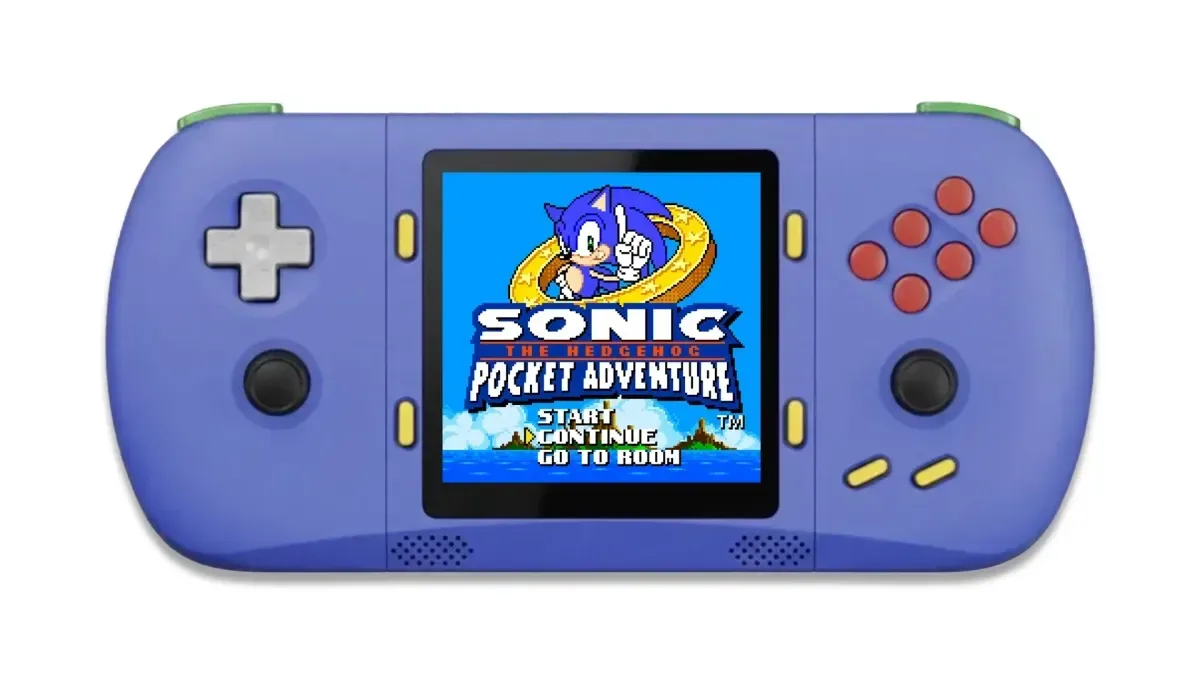
The Multisystem Pocket 2 is beginning to look less like a concept and more like a recognisable handheld. A new development update has shown the current direction for the independently made MiSTer FPGA portable: a broad, substantial-looking machine with a square display, six face buttons, dual analogue sticks and four shoulder buttons.
Its silhouette recalls the landscape-first bulk of Sega’s Game Gear and Atari’s Lynx rather than the slim, vertical outline associated with a Game Boy. That is not merely a nostalgic styling exercise. The control count and larger chassis point to a device intended to cover a wide range of older systems in one portable package, while leaving physical room for the inputs those platforms may require.
There is important fine print, though. The model shown is a 3D-printed prototype, the internal hardware is not final, and a price has not been shared. The team behind the project is still requesting community feedback as development continues. The stated goal is to complete the handheld by the end of the year, but prospective buyers should treat that as a target rather than a locked retail date.
A portable MiSTer device, not a finished product
The Pocket 2 is being built by The Retro Collective, a UK-based content creator and museum, as an independently developed handheld based around the MiSTer FPGA ecosystem. Its stated remit includes support for retro platforms such as the NES, Game Boy, Neo Geo and Sega Mega Drive, also known as the Sega Genesis in some regions.
That is a notably broad ambition. Those systems are associated with different screen shapes, control layouts and performance characteristics. The Pocket 2’s square display is especially interesting in that context. Square screens can make sense for some older content, but the update does not provide the panel’s resolution, size, refresh behaviour or how games with other aspect ratios will be displayed. Those unanswered details matter as much as the shell design for a handheld meant to serve several generations of games.
Nor is the machine at the stage where every component decision is settled. Prototype hardware exists to answer questions about ergonomics, fit, cooling, ports and internal layout before a consumer version is made. A 3D-printed enclosure is useful for that process, but it does not necessarily represent the texture, durability, tolerances or overall feel of the eventual production unit.
The current plan is for an injection-moulded final enclosure. In practical terms, injection moulding is a manufacturing process in which material is formed in a dedicated mould, rather than built up layer by layer as it is in common 3D printing. That should give the shipping hardware a more polished and consistent finish than the development shell shown so far. It does not, however, answer the outstanding questions around specification, cost or availability.
Why the controls matter
The Pocket 2’s proposed controls are unusually generous for a retro-focused handheld: six action buttons, two analogue sticks and four shoulder buttons. A familiar directional control remains central to the visual layout, while the paired sticks signal that the designers are planning beyond the most basic two-button systems.
Related coverage includes Multisystem Pocket 2 Reveals Its Game Gear-Inspired FPGA Handheld Design.
There is a trade-off. More inputs can broaden the range of software a device can sensibly accommodate, but they can also make a portable feel crowded if button spacing, trigger travel and grip shape are not carefully resolved. The device’s thick, horizontal form may be an effort to address that issue. A roomier case can offer more natural hand positions and space for shoulders and sticks, though its real comfort cannot be judged from images of a prototype alone.
The six-button arrangement also has an obvious retro appeal. Some systems and arcade-style layouts benefit from more face buttons than a traditional two-button portable setup supplies. Yet the update has not published a definitive compatibility list or described how every core and input profile will be handled. The safest reading is that the hardware is being designed with flexibility in mind, not that each possible platform experience has been finalised.
That distinction will matter to shoppers who want a small plug-and-play nostalgia machine rather than a device built for configuration. MiSTer has a strongly enthusiast-oriented reputation, and the Pocket 2 appears aimed at that audience: people who value flexible hardware, care about input options and may be willing to participate in the feedback process while the product is being refined.
What FPGA means in this context
FPGA stands for field-programmable gate array. It is a type of programmable chip that can be configured for a particular hardware task. In the retro-gaming world, FPGA projects are often valued because they seek to reproduce the logical behaviour of original hardware through dedicated hardware configurations, commonly called cores.
That differs from the conventional software-emulation approach used by many Linux- and Android-based retro handhelds. With software emulation, a processor runs a program that imitates the old machine. With an FPGA approach, the chip is configured to behave more like the relevant circuitry at a logical level. Both approaches exist to make older software playable on modern equipment, but the technical route is different.
It is also worth avoiding an easy oversimplification: FPGA does not automatically mean a player will see dramatic differences in every game, and software emulation is not inherently poor. The practical experience depends on the individual system, the particular core or emulator, the display, controls and setup. The Pocket 2’s appeal is therefore likely to be strongest for players who specifically want MiSTer compatibility and the hardware-focused approach associated with FPGA projects, rather than for everyone simply seeking the least expensive way to revisit old games.
For a related look at retro software being adapted to a different kind of portable hardware, see this New Nintendo 3DS collection story.
What remains unknown before launch
The update provides a much clearer visual identity, but it does not establish a final buying proposition. There is no announced price range. That omission is especially significant for a niche, independently created FPGA handheld, where the hardware focus and smaller-scale production could place it in a different bracket from mass-market Linux or Android emulation devices.
There is also no final internal specification, no confirmed full platform list and no indication that the prototype’s exact physical dimensions will carry unchanged into production. Even the target completion window should be read in light of the project’s active feedback stage. Seeking comments now is a healthy sign that the makers are listening, but it also means that adjustments remain possible.
For anyone considering a future purchase, the sensible approach is to follow the project for final hardware details rather than decide on the render alone. Look for confirmation of the display specification, battery expectations, storage and loading workflow, ports, operating setup, support for MiSTer cores, ergonomics, regional ordering and warranty arrangements. None of those particulars have been established in the current update.
A distinctive direction for a specialist handheld
The Multisystem Pocket 2 has chosen a conspicuously physical identity at a time when many retro handhelds chase pocketability or borrow a familiar vertical template. Its large-looking case, square screen and extensive controls instead suggest a portable intended to be held for long sessions and adapted to multiple kinds of classic software.
That makes the design reveal meaningful even without a final price or specification. It clarifies the project’s priorities: a substantial grip-oriented format, an FPGA foundation and enough controls to avoid treating every past system as if it were built around the same simple layout. The next challenge is turning that promising outline into a finished, injection-moulded device with the technical details enthusiasts need to make an informed decision.