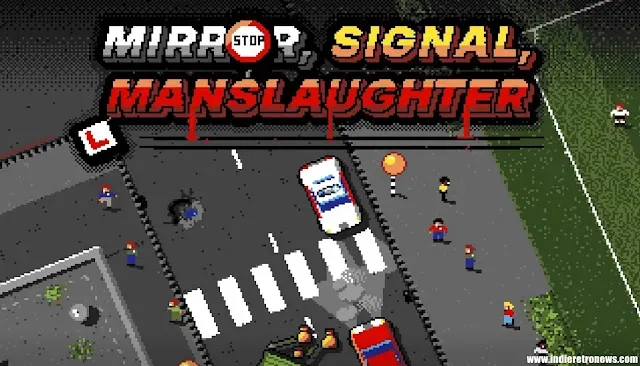
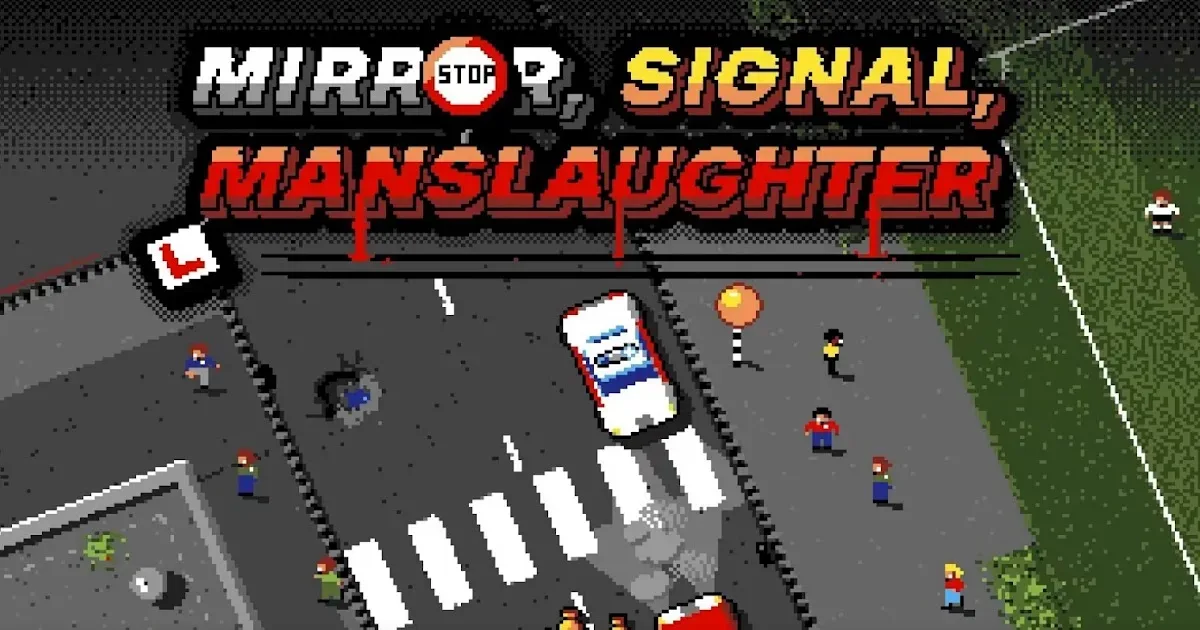
Commodore Amiga fans have a new curiosity to put on the radar: Mirror Signal Manslaughter, a newly unveiled game from chiptune musician and developer LukHash. The project is presented as an affectionate, knowingly mischievous tribute to British studio Sensible Software, filtered through a 16-bit crime-game premise that evokes the broad idea behind Grand Theft Auto.
That comparison comes with an important historical wrinkle. Mirror Signal Manslaughter is said to revive an abandoned Sensible Software concept conceived in 1991, years before Rockstar’s crime series reached shelves. Rather than positioning itself as a direct continuation of an unreleased Sensible game, LukHash’s project appears to use that lost premise as a springboard: a speculative, tongue-in-cheek look at the sort of game the studio might have pursued had the original idea moved forward.
The title is therefore interesting for more than its very Amiga-friendly name. It sits at the intersection of modern homebrew development, retro-platform enthusiasm, and the enduring appeal of unfinished game concepts. It is a new work for old hardware, but one whose identity is built around an alternate-history question: what could a crime-focused Sensible-style game have looked like in the early 1990s?
A tribute rather than a recovered release
It is worth being precise about what Mirror Signal Manslaughter is and is not. The available description identifies it as a brand-new title for the Commodore Amiga, developed by LukHash. It also connects the project to an abandoned 1991 concept once imagined by the Sensible Software team. That makes it a revival in the creative sense, not evidence that a completed, previously lost Sensible Software game has suddenly resurfaced.
This distinction matters because the language around retro discoveries can blur several very different things together:
- A recovered game is an older build, prototype, or finished release found after being unavailable.
- A remake recreates an existing game, usually from a known original.
- A spiritual successor or tribute is a new work that deliberately draws on a prior creator, style, genre, or unrealized idea.
Mirror Signal Manslaughter belongs in that third category based on the information currently available. Its connection to Sensible Software is part of its creative premise and cultural reference point. The project is an homage to a possibility, one made with the perspective of decades of hindsight.
Why the 1991 detail changes the story
Describing the game as “GTA-style” is useful shorthand, but it can obscure the timing at the heart of this announcement. The Sensible Software idea reportedly dates to 1991, while Rockstar’s iconic crime series arrived later. That chronology gives the homage its central joke: the basic notion of a vehicle-and-crime-oriented game was apparently in the air before the series that became synonymous with the concept had entered the picture.
That does not mean the abandoned pitch should be treated as an early version of Grand Theft Auto, nor does it establish any direct creative lineage between the two. The available details support a narrower and more intriguing claim: Sensible Software had imagined a concept in a similar broad territory, and LukHash has now fashioned a 16-bit tribute around that forgotten “what if.”
Related coverage includes Mirror Signal Manslaughter revives a lost Amiga game idea.
For modern players, “GTA-style” often carries a huge bundle of expectations: a sprawling city, an open-ended mission structure, an elaborate world simulation, radio stations, countless vehicles, and cinematic storytelling. None of those specific features have been detailed here for Mirror Signal Manslaughter. In this context, the phrase should be understood as a genre-level reference to a crime-game concept, rather than a checklist of confirmed systems.
That is also what makes the Amiga framing compelling. A contemporary game can refer to a famous genre without trying to imitate every convention that genre accumulated over decades. A 16-bit lens naturally shifts the question away from scale and toward character. The project’s hook is not the promise of recreating a later blockbuster on vintage hardware; it is the chance to explore a playful imagined branch of Amiga-era design.
The Sensible Software connection
Sensible Software remains a natural touchstone for an Amiga tribute because its name carries a particular creative identity. Mirror Signal Manslaughter leans into that association by adopting a knowingly comic title and presenting itself as a loving nod to the studio’s sensibility. The announced premise is less about strict historical reconstruction than it is about capturing a certain spirit: British, irreverent, compact, and willing to turn a potentially serious crime-game setup into something more cartoonishly mischievous.
Even the name does useful work. “Mirror Signal Manslaughter” twists the mundane vocabulary of driving into a darkly comic phrase. It signals that the game is unlikely to approach its subject with straight-faced grit. The description likewise characterizes the project as tongue-in-cheek, so readers should view the Grand Theft Auto comparison through that comic and retro-styled filter.
There is a broader preservation angle here as well. Unmade projects are usually preserved only as fragments: a recollection, a title, a pitch, a note about what a team once hoped to make. Those fragments can prompt endless speculation, but they rarely become playable artifacts. A new game inspired by such an idea cannot replace the original lost work, yet it can give the concept a renewed life as something active rather than merely anecdotal.
That process necessarily includes interpretation. LukHash is not working in 1991, and players encountering the game will not be encountering it in 1991 either. The result is better understood as a conversation across eras: an old abandoned notion is being reconsidered through a modern developer’s affection for the Amiga and a clear awareness of everything that happened to the crime-game genre afterward.
What “16-bit” means here
“16-bit” is often used as visual shorthand for pixel art, but the term has a more specific historical relationship to the hardware generation in which the Amiga was a defining platform. In everyday use, it now also conveys an aesthetic and design language: readable sprites, compact play spaces, immediate feedback, bold presentation, and a focus on ideas that can be quickly understood on screen.
The announcement describes Mirror Signal Manslaughter as reimagining a classic Grand Theft Auto-style concept through a distinctly 16-bit lens. That wording suggests the point is not to simply reduce a newer format until it fits older hardware. It is to ask how the premise would be expressed if the constraints and visual personality of that earlier era were the starting point.
For prospective players, this is a useful expectation-setting distinction. A retro-platform game can be newly made while still choosing an older creative vocabulary. In this case, the appeal lies in the combination of contemporary development activity and an explicitly historical frame: new Amiga software, inspired by a never-completed early-1990s proposal, presented with a playful homage in mind.
A meaningful addition to ongoing Amiga development
Mirror Signal Manslaughter also underlines a simple fact about the Amiga in 2026: it remains a platform people want to make things for. The new release is not presented as a museum item or a retrospective package. It is a fresh project aimed at a computer whose original era is long past, made by a developer whose background includes chiptune music as well as game creation.
That kind of work gives retro gaming a living dimension. Interest in older systems is sometimes framed entirely around preservation, collecting, or revisiting established classics. Those pursuits matter, but new creations broaden the picture. They invite players to use old platforms as places where unfamiliar games can still appear, and where old design ideas can be revisited without pretending that time stopped.
The game’s premise is particularly well suited to that approach. An unfinished concept from 1991 is inherently open-ended. There is no complete original against which every choice must be measured. Instead, the tribute can acknowledge the idea’s origins while making room for LukHash’s own interpretation. That freedom is likely why the project can be both nostalgic and deliberately cheeky rather than solemn.
What has and has not been confirmed
The key confirmed details are straightforward: LukHash has unveiled Mirror Signal Manslaughter; it is a new game for the Commodore Amiga; it is framed as a tribute to Sensible Software; and it draws inspiration from a scrapped 1991 concept associated with the studio. The project’s pitch connects that concept to the broad crime-game space later popularized by Grand Theft Auto.
Beyond that, restraint is sensible. No specific gameplay systems, release timing, pricing, supported Amiga configurations, distribution arrangements, or detailed technical requirements have been established in the supplied information. The project is described as downloadable, but those practical details are not specified here. Prospective players should avoid assuming features merely because the game has been compared to GTA or because it is positioned as a Sensible-style homage.
For readers following today’s larger crime-game conversation, the contrast with the next major Rockstar release is striking. GTA VI’s ongoing discussion of criminal role-playing and chaos occupies one end of a genre spectrum; Mirror Signal Manslaughter’s appeal is rooted at another, in an Amiga-era thought experiment and a compactly comic tribute.
That is enough to make the project notable. Mirror Signal Manslaughter is not simply chasing retro aesthetics or borrowing a famous genre label. It is using an abandoned 1991 notion to imagine an alternate route for one of the Amiga’s most celebrated creative legacies—then turning that imagined route into an actual new game.