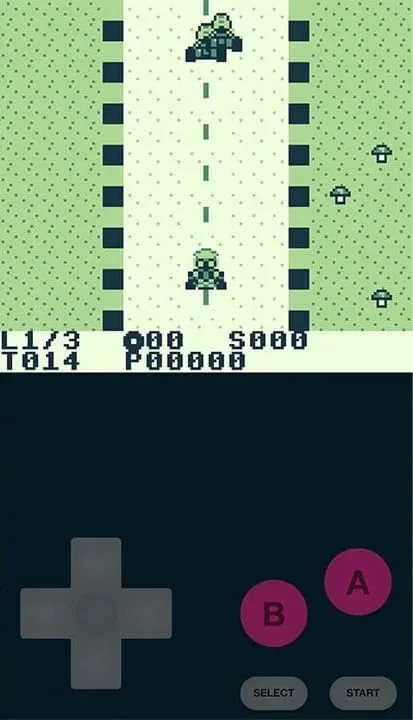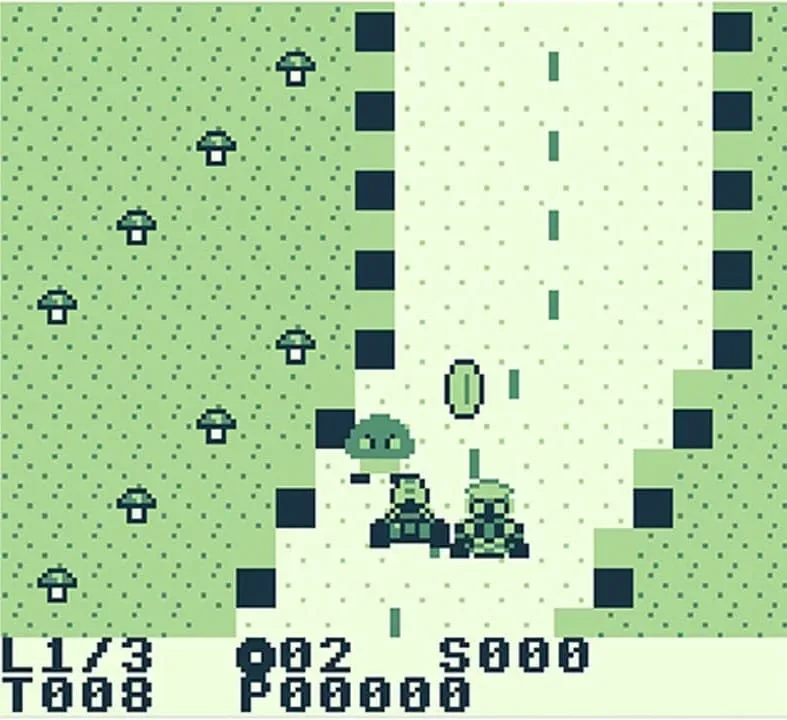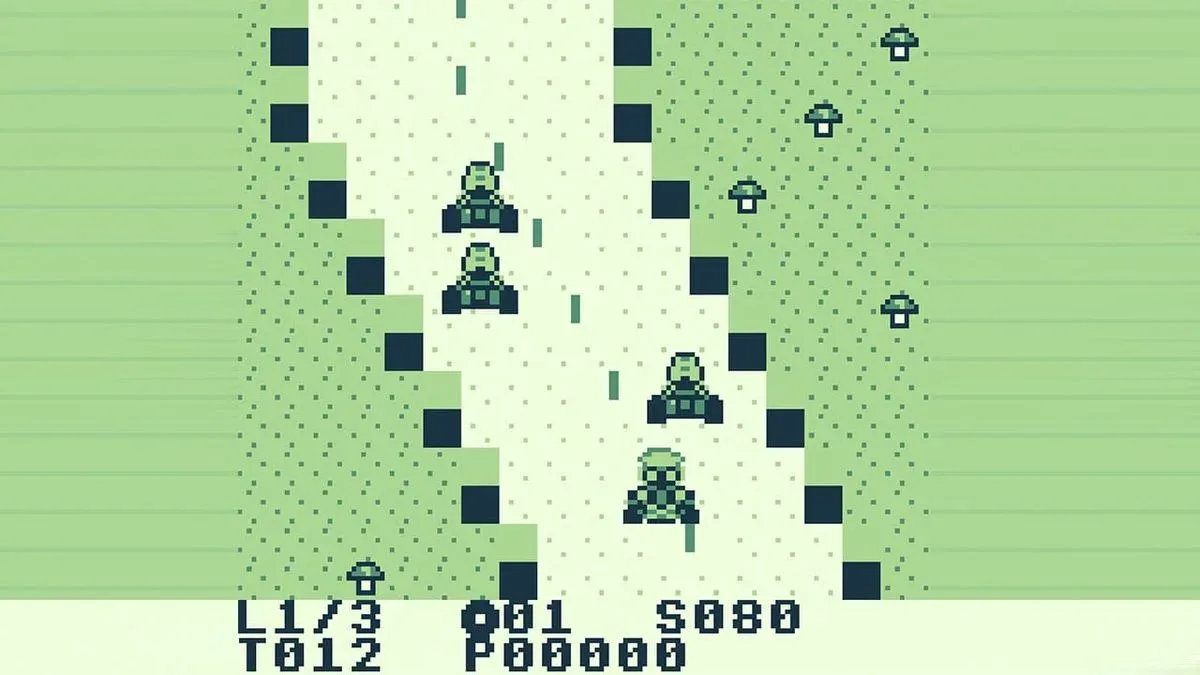
A new browser-based kart-racing demake, Mario Kart Rally DMG, imagines a much earlier handheld take on Nintendo’s famous racing formula. Created by Dallasapp711 and released free through Itch.io, the project trades modern presentation for an intentionally compact 8-bit, dot-matrix-style look, with chiptune music and a Game Boy-inspired interface.
The pitch is pleasingly direct: open it in a browser and race. The game is designed to work on mobile devices as well as desktop browsers, so players can bring it up on an iPhone or iPad without setting up an emulator. That low-friction approach is a major part of the appeal. This is not presented as a cartridge release or a game for original handheld hardware; it is a browser game that uses the visual language of an early portable.
A demake built around the Game Boy look
A demake is a new interpretation of a game or idea as though it had been created for less powerful technology. Rather than attempting to reproduce every feature of a later title, a demake chooses constraints: simpler-looking graphics, reduced detail, different controls or a stripped-back structure. The point is often equal parts design experiment and nostalgia. What would the core idea look and feel like if it had arrived earlier?
Mario Kart Rally DMG takes that question into handheld territory. Its presentation is designed around an 8-bit dot-matrix aesthetic, while its soundtrack leans on chiptune sounds. “DMG” is the project’s chosen Game Boy-facing label, and the game is said to be optimized for that style of presentation even though it is playable only through a browser rather than on an original device.
That distinction matters. A game can evoke a platform without being software that runs on that platform. Here, the aim appears to be the immediate visual and interface feel of a classic handheld racing game, delivered through a modern, accessible format. No emulator window is required, and the game’s simple Game Boy-esque controls are intended to be usable on a touchscreen.
Checkpoints, timers and arcade momentum
The project does not appear to be trying to match the depth of a later handheld kart game feature for feature. Its racing has a more arcade-led structure: drivers need to reach checkpoints before the timer expires in order to continue progressing. That gives races a clear pressure point beyond simply maintaining position.
Checkpoints are designated points on a course that a player must pass. In a timed racing structure, each one effectively verifies forward progress. Missing a route or losing too much speed is costly because the clock, rather than only rival racers, becomes an opponent. It is a concise design choice that suits a quick browser game: the objective is understandable immediately, and a run can create urgency without lengthy explanations.
The tracks draw inspiration from familiar classic game locations, while the on-track presentation includes 8-bit Goombas and collectible coins. Those details place the game firmly in a playful Mario-adjacent visual tradition, but the checkpoint format suggests a particular focus on short, repeatable driving sessions rather than a detailed simulation of a full console kart racer.
Related coverage includes Mario Kart Rally DMG Brings 8-Bit Kart Racing to the Browser.
Why the browser format fits
Browser games are particularly well matched to compact retro-style projects because they remove much of the setup between curiosity and play. For this release, that means a player can move from seeing the game to trying a race without downloading a separate emulator or configuring a handheld environment. Mobile compatibility extends that convenience to devices people already have close by.
There is also an interesting contrast in the premise. Mario Kart Rally DMG is styled after limited portable hardware, yet accessing it is more convenient than using vintage hardware: a current phone or tablet can serve as the entry point. The project preserves the fantasy of an old handheld experience without requiring the physical machine it references.
That convenience should not be confused with original-hardware support. The available information is explicit that the game is browser-only, not something players can load onto an original handheld. Anyone hoping for a cartridge, a ROM intended for a physical Game Boy, or a standalone release should treat those as separate possibilities rather than features confirmed for this project.
An affectionate alternate-history experiment
The appeal of a demake is often less about proving that older technology could have done everything a later game does, and more about discovering which pieces of an idea survive reduction. Kart racing depends on readable courses, quick reactions, recognizable obstacles, a sense of speed and an easy-to-grasp goal. Mario Kart Rally DMG narrows those ingredients into a small-screen, 8-bit-inspired frame.
It is not positioned as being as technically advanced as Mario Kart: Super Circuit, the Game Boy Advance entry. That comparison is useful precisely because it sets expectations: this is a deliberately smaller concept, not a claim to deliver the sophistication of a more developed handheld installment. Its value is in the “what if?”—a version of this kind of kart chaos filtered through an earlier portable aesthetic.
Fan-led reinterpretations and platform-inspired remakes continue to create space for that sort of curiosity. They can make familiar design language feel strange again by changing the assumed hardware context. A bright, fast kart racer becomes monochrome-styled and compact; elaborate systems become a timer, checkpoints, hazards and coins; the act of launching a game becomes opening a tab.
Mario Kart Rally DMG also arrives at a moment when questions about Nintendo games appearing in unexpected technical contexts remain part of the conversation. Recent debate around a reported 4K run of Breath of the Wild on a jailbroken PS5 shows how quickly attention can shift from the game itself to the platform it is running on. This browser project heads in a very different direction: not higher resolution or more hardware power, but an intentionally reduced visual style and a quick-access browser format.
What players should expect
- Free access: The project is available to try for free on Itch.io.
- Browser play: It runs through a web browser rather than an emulator setup.
- Mobile support: It is designed to be playable on phones and tablets, including iPhone and iPad.
- 8-bit-inspired presentation: Expect a dot-matrix, Game Boy-style visual approach and chiptune music.
- Arcade race structure: Progress depends on reaching checkpoints before time runs out.
- Not original-hardware software: Despite the DMG framing, it cannot be played through an original handheld based on the available details.
The game’s creator has emphasized that no AI was used in its creation, framing Mario Kart Rally DMG as a deliberately old-school production. For players drawn to browser curiosities, fan-made technical thought experiments or the idea of a pocket-sized alternate history for kart racing, that combination of accessible play and purposeful constraint is the whole proposition.
It may not be a replacement for a fully featured handheld Mario Kart, and it is not trying to be. Mario Kart Rally DMG is better understood as a compact, playable riff on an unrealized possibility: an 8-bit-flavored kart race built for a Game Boy-shaped imagination and opened with a modern browser tab.