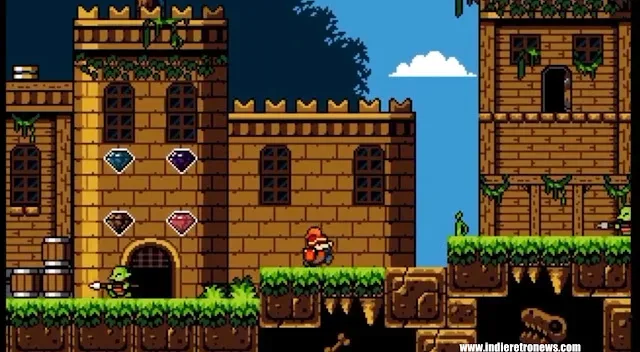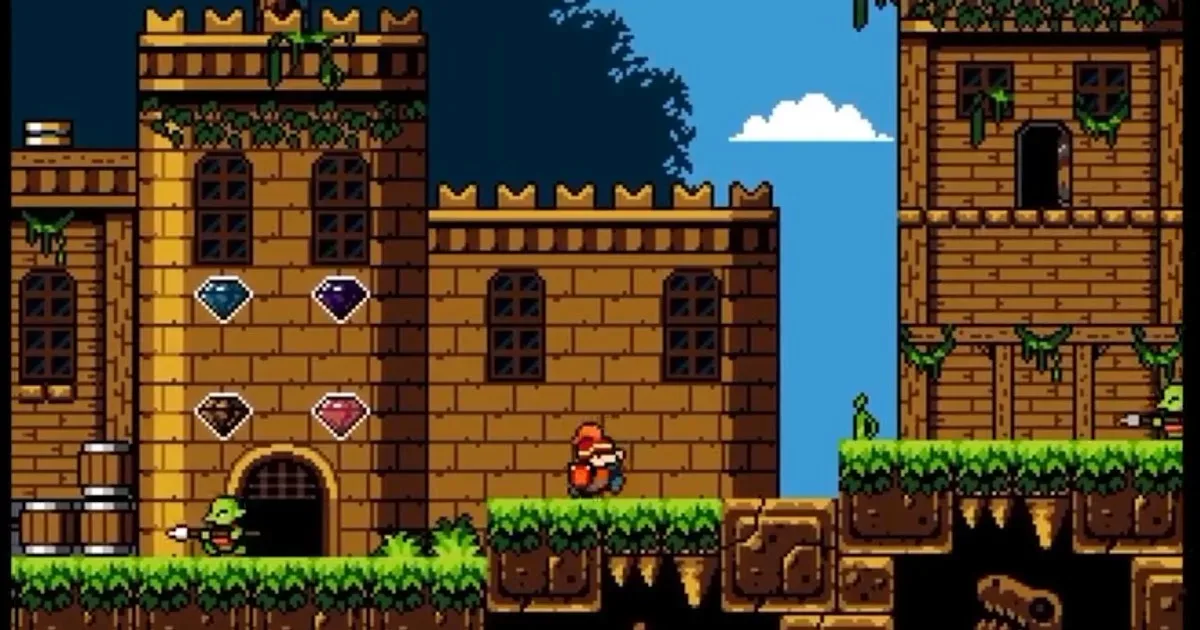
Amiga 500 homebrew development has another medieval quest on its horizon. HooGames2017 is working on Lost in the Middle Ages, an adventure built with Scorpion Engine that combines enemy encounters, item gathering, experience-based character growth and a world designed to reward poking around beyond the obvious route.
The project is still actively taking shape, so its eventual number of levels is not set. What is clear at this stage is the intended play pattern: five complete stages have been built, each containing hidden areas and secrets, and players will be able to enter houses in the game world in search of rewards. That makes exploration more than scenery in the developer’s stated plan; it is a core part of advancement and discovery.
A stranger, a king and a prophecy
Lost in the Middle Ages opens with an outsider being found in a village and taken before its king. Rather than treating the visitor as an unexpected disruption, the king says he has been waiting for this particular stranger. The ruler’s expectation is tied to a prophecy: the newcomer is meant to become the kingdom’s saviour.
It is a direct story setup, but one that gives the player character an immediate role in the world. The hero is not simply passing through a medieval backdrop; the kingdom’s leadership has placed enormous expectations on them from the outset. How that premise develops, and which enemies or locations stand in the hero’s way, remains unconfirmed while the game is in development.
Progression is tied to fighting and finding things
HooGames2017 has outlined a traditional progression system in which defeating opponents and collecting assorted items earns experience points. Experience points, commonly shortened to XP, are a measure of character progress: accumulate enough and the hero becomes more powerful. The precise effects of powering up have not been detailed, so it is not yet known whether growth will affect health, attacks, movement, equipment, or another aspect of play.
Still, the basic structure is notable because it makes combat and exploration complementary activities. Enemies provide one path to XP, while items provide another. A player who checks an unassuming house or spots a concealed route may receive a tangible benefit rather than only a visual Easter egg. Conversely, hidden content can add a reason to revisit the edges of a stage instead of moving immediately toward its apparent endpoint.
That approach suits a game with secrets especially well. Hidden areas are most compelling when they serve both curiosity and progression: players get the satisfaction of finding something overlooked, while the find has an understandable role in making their character stronger. The details of the item pool have not been announced, but the developer has explicitly connected collecting items with gaining experience.
Wonder Boy is the reference point, not a promise of a replica
The project draws direct gameplay inspiration from Wonder Boy. That comparison establishes a useful expectation for the kind of rhythm HooGames2017 is pursuing: a classic-style adventure where movement through stages, confrontations with foes and awareness of the environment all matter. It should not be read as a claim that Lost in the Middle Ages duplicates every system, stage format or feature of that earlier game. Only the broad gameplay inspiration has been identified.
Related coverage includes Lost in the Middle Ages Brings Wonder Boy-Style Adventure to Amiga 500.
The planned ability to walk into local houses is the clearest expression of that exploratory angle. Buildings are often simple background dressing in compact action games; here, they are intended as spaces worth entering because they may hold rewards. It is a small design decision with a potentially large effect on how players read the world. A village becomes a place to investigate rather than merely a stretch to cross.
For Amiga players who enjoy new software designed around older hardware, that focus on searchable spaces may be as important as the medieval theme itself. The stated five stages are not being presented as the complete final game, and their secret-filled construction points toward an experience that values observation alongside reflexes.
What Scorpion Engine means here
Lost in the Middle Ages is being made with Scorpion Engine. In this context, an engine is the development framework used to create a game: it provides the technical foundation that supports a project’s gameplay and presentation. Naming the engine does not, by itself, confirm the final performance profile, controls, visuals or feature set of this particular release. Those particulars have not been laid out.
What it does establish is that the new game follows HooGames2017’s work on other Amiga titles, including ARC4NERD, Dr. Dangerous and Phantom Leap. That existing catalogue gives the developer a clear connection to the platform, while the newly revealed project shifts attention toward a prophecy-led medieval adventure built around progression and secrets.
There is also plenty of room for the game to change. The developer has said its scope is evolving and has not fixed a final level count. That uncertainty is important for anyone tracking the project: five complete stages are a development milestone, not a final statement of total content, and features described now should be understood as part of an in-progress build rather than a locked release specification.
What is confirmed—and what is still open
- Platform: Amiga 500.
- Developer: HooGames2017.
- Technology: Scorpion Engine.
- Setting: A medieval kingdom involving a prophesied outsider.
- Progression: Enemy defeats and collected items grant experience points used to power up the hero.
- Exploration: Hidden areas, secrets and enterable local houses with rewards are planned.
- Current stage count: Five complete stages have been built.
- Still undecided: The final number of levels and the project’s ultimate scope.
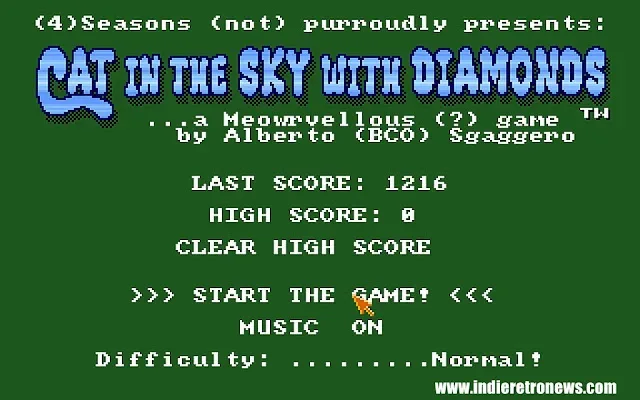
For a look at another recent Amiga 500 project with a very different premise, see Cat in the Sky with Diamonds and its psychedelic reflex-arcade focus.
For now, Lost in the Middle Ages has a defined identity even if it does not yet have a defined final scale: a developing Amiga 500 adventure where a foretold hero grows through battle and discovery, and where a door that looks incidental may lead to the next useful reward.