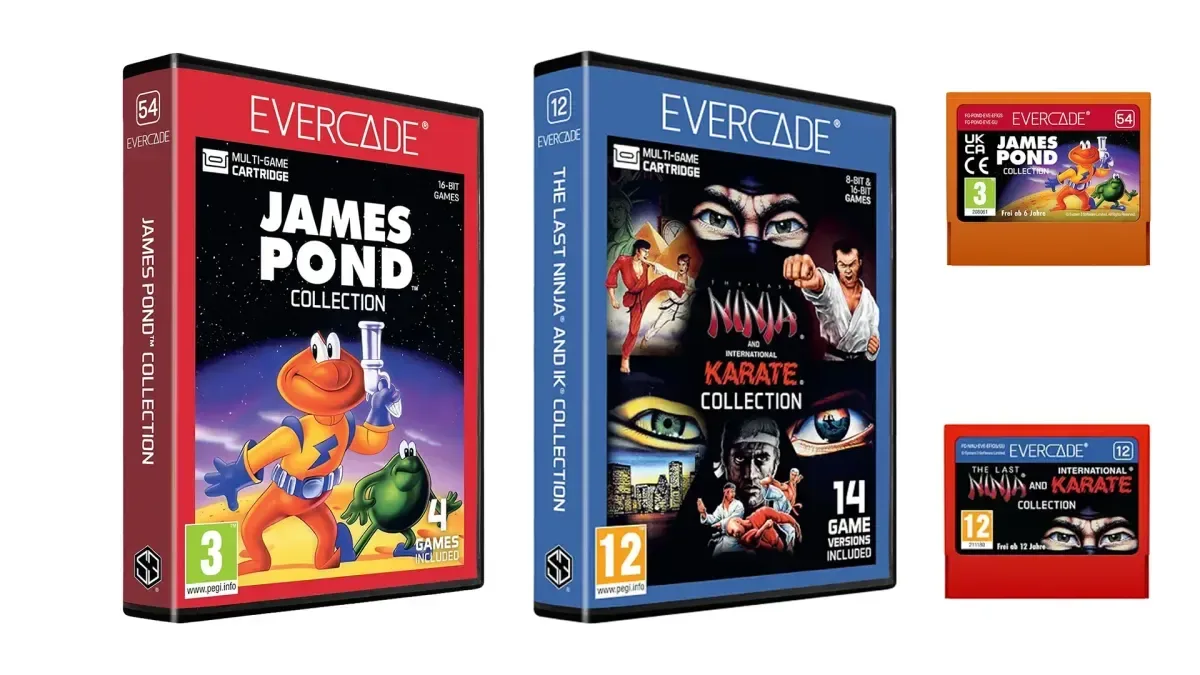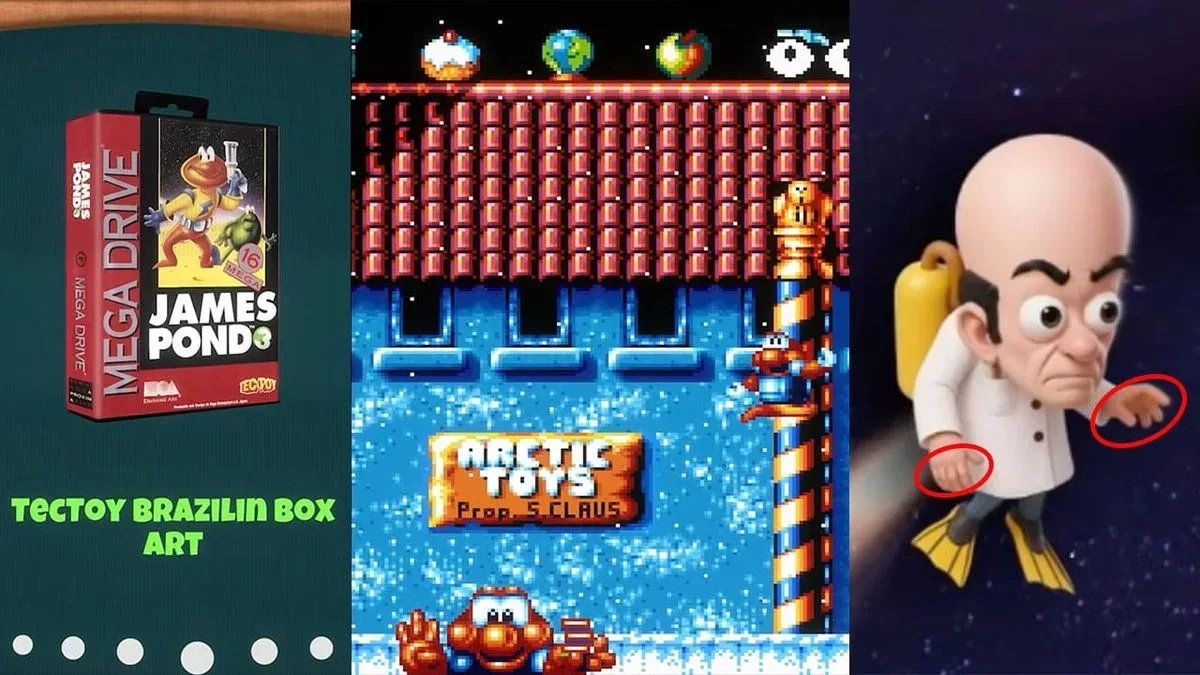
James Pond Legacy should be enjoying a relatively simple victory lap. The collection’s pitch has plenty to like: bring a much-loved set of retro games to a contemporary audience, make their original play more accessible, and surround them with museum-style material that gives the character and his history some much-needed context. Instead, the latest gameplay trailer has prompted attention for an avoidable reason. A misspelling appears twice in its promotional material, rendering “Brazilian” as “Brazilin.”
One typo is an ordinary human mistake. Repeating the same typo, in a trailer intended to introduce and sell a legacy collection, changes the impression. It suggests that nobody made a final pass over an asset after it was assembled. That is a frustrating signal for fans because preservation projects live or die on confidence. Players are not merely being asked to revisit old games; they are being asked to trust that the people presenting them understand why they mattered in the first place.
The trailer does contain reasons for optimism about the package itself. Its footage points to the familiar James Pond gameplay remaining at the center, rather than being smothered by unnecessary reinvention. For a catalog built on its original identities, that restraint matters. The legacy of these games is in their design, character, challenge and unmistakable period flavor. A collection does not need to replace those qualities to be worthwhile. It needs to make them easy to experience and present them with care.
The trailer’s strongest case is in its play options
James Pond Legacy is set to include widescreen support, rumble, and multiple screen settings. Those are modest additions on paper, but they answer real questions that retro players have when returning to older titles on newer displays and controllers. Widescreen presentation can make a game feel less boxed-in on modern hardware, while rumble can add a tactile layer that the original releases could not offer in the same way.
The display options may be the most important part of the offering. Players will be able to choose a pixel-focused presentation or turn to scanline and CRT-style effects intended to evoke the look of games on older televisions. No single setting is objectively correct for every player. Some want crisp, sharply divided pixels; others want the softer blend, scanlines and visual character associated with a living-room CRT. Providing both approaches recognizes that preservation is not simply about running old code. It is also about giving people meaningful control over how that code is encountered.
That flexibility is increasingly familiar across retro-focused hardware and re-releases. Modern players are used to seeing options that range from clean integer-style scaling to filters designed to restore some of the texture lost when older visuals meet flat panels. James Pond Legacy appears to understand this baseline expectation. The question raised by the trailer is not whether these features are welcome. They plainly are. The question is whether the overall presentation can meet the same standard of attention.
For readers following the broader retro-hardware space, the appetite for configurable modern ways to enjoy classic games is visible in products such as the Retroid Pocket Duo and Duo Lite. Whether a player chooses emulation hardware, original equipment, or a curated commercial collection, the desired outcome is similar: convenient access without treating the games’ past as an inconvenience to erase.
An interactive museum could be the collection’s real hook
The proposed interactive museum is potentially the most exciting part of James Pond Legacy. It is expected to offer information on the games and characters while also letting visitors look through different pieces of artwork associated with the series. That kind of archive turns a compilation into something more substantial than a launcher with a menu background. It can explain how a franchise was sold, how its characters evolved, and why different regional or historical materials may look so different from one another.
Related coverage includes James Pond Legacy Trailer Draws Criticism Over Repeated Spelling Error and Promotional Art.
There is particular value in putting old artwork in front of players rather than allowing it to disappear into scattered scans, old magazine advertisements and private collections. Box art, character illustrations and promotional material are part of a game’s cultural record. They may be stranger, brighter and more commercially blunt than the game itself, but they capture the era in which it was made. A well-organized museum can help a new audience see James Pond as more than a set of levels: it can place the series within the wider texture of retro game design and marketing.
That is why the response to the new trailer feels sharper than a reaction to a routine social-media typo. The collection is promising archival care, while its current promotional campaign has given some observers the opposite impression. The mismatch is the issue. A museum asks an audience to look closely. Its own presentation should withstand close looking.
Artwork questions remain a reputational problem
Promotional artwork connected with James Pond Legacy had already attracted criticism before the gameplay trailer arrived. Viewers pointed to unusual details in images, including an example involving Creepy Keith’s inconsistent finger count, and took those details as signs of generative-AI imagery. System 3 Software has said it did not use AI. That denial is important: the available material does not establish, as fact, how the artwork was made.
At the same time, the public reaction illustrates a problem that publishers cannot dismiss. Images with warped anatomy, inconsistent details or an unfinished feel can invite AI speculation even when a company disputes that conclusion. Once that association takes hold, it can become difficult to separate the work from the argument around it. This is especially risky for a heritage release, where audiences tend to expect deliberate restoration and accurate representation of an established visual world.
The trailer’s text mistake makes that issue harder to move past. It does not prove anything about the artwork or the production process. It does, however, reinforce a broader perception of weak quality control. The repeated “Brazilin” wording gives viewers a concrete, easily verifiable flaw to discuss. In a promotional environment already facing scrutiny, every visible error becomes part of the same story.
A retro collection can offer excellent games and thoughtful features, yet still lose goodwill if its public-facing materials look rushed.
Why polish matters even when the games look good
There is an awkward irony here: the gameplay shown in the trailer is encouraging precisely because it resembles the games people remember. That should be the easy selling point. The collection’s extra options seem thoughtfully chosen, and the museum concept could give it genuine historical value. But marketing is not a detachable wrapper. It sets expectations for the care applied to menus, credits, art, explanatory text, emulation behavior and every other piece of a compilation.
Retro fans are often willing to be patient with old design decisions. They may accept stiff movement, punishing layouts, strange difficulty spikes or technical quirks because those elements are part of the original experience. They are considerably less forgiving of new mistakes introduced around those games. A typo made decades after the original release is not nostalgia. Nor are questionable modern assets a substitute for archival presentation.
None of this means every prospective player will weigh the situation the same way. Some will care primarily about having James Pond titles collected with modern conveniences. Others may regard the artwork controversy as unresolved because System 3 Software denies using AI, while still finding the trailer’s spelling lapse unprofessional. Another group may decide that the marketing has diminished their interest regardless of the gameplay. Those responses can coexist, and the collection will ultimately be judged most fairly when its complete contents and final execution can be examined.
What James Pond Legacy still needs to prove
The project still has a clear route to winning people over. Its final materials need careful proofreading. Its museum needs accurate, thoughtfully presented context. Its visual options need to work cleanly and give players understandable choices. Above all, its release should demonstrate that the people involved value the games and their history as more than a recognizable name for a trailer.
The useful parts of the recent footage should not get lost: widescreen support, rumble, selectable display treatments and archival ambitions are all sensible additions to a classic-game package. Yet the “Brazilin” error is a reminder that presentation quality is itself a feature. When a collection asks fans to return to an old favorite, the least it can do is show that the invitation was checked before it was mailed.