Video-game preservation can sound like a grand, abstract promise: save old games so people can continue to play and study them. Electronic Arts’ newly available 25-game collection makes the process feel much more tangible—and much messier. It begins with an office storage room, stretches through nearly 20,000 archival items on obsolete physical formats, and ends with classic games returning to modern storefronts only after technical restoration, extensive testing, fan collaboration and, in at least one case, a difficult music-licensing search.
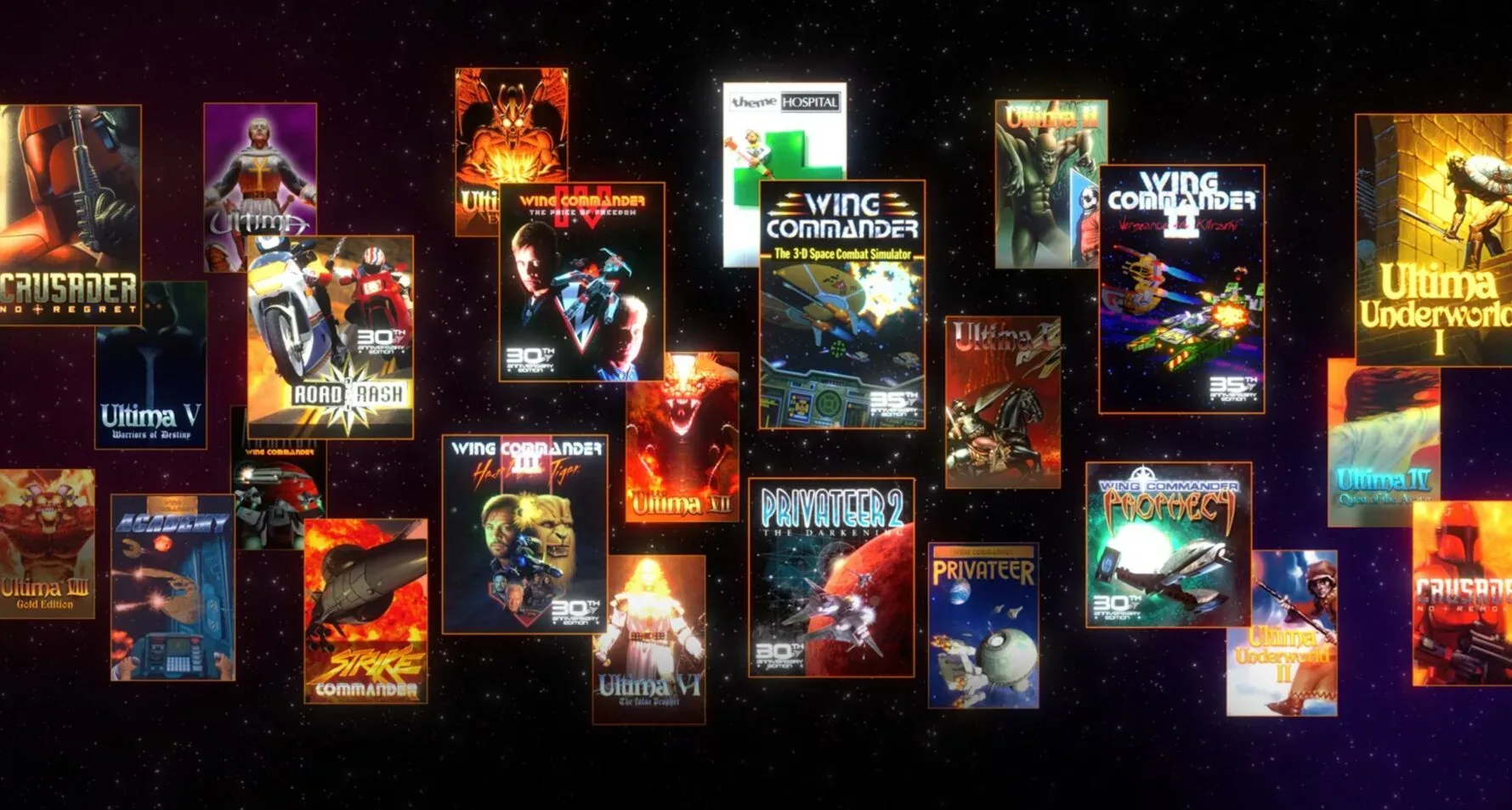
The collection is now available through Steam and GOG. It combines seven enhanced anniversary editions with 18 ports designed to bring the original experiences to modern platforms. The lineup spans influential PC series including Wing Commander and Ultima, along with Road Rash, Theme Hospital, Strike Commander, and the two Crusader games.
There is an immediate consumer-facing benefit: these games can again be bought through current digital stores, and the complete 25-game collection is listed at more than 50 percent off. But the more important story is what had to happen before that sale could exist. Preservation is not simply finding a file and uploading it. A game release can involve source materials, videos, audio, executable builds, documentation, licenses, compatibility work and the accumulated knowledge of people who have kept a title running long after its original era.
A vault discovery became a four-year project
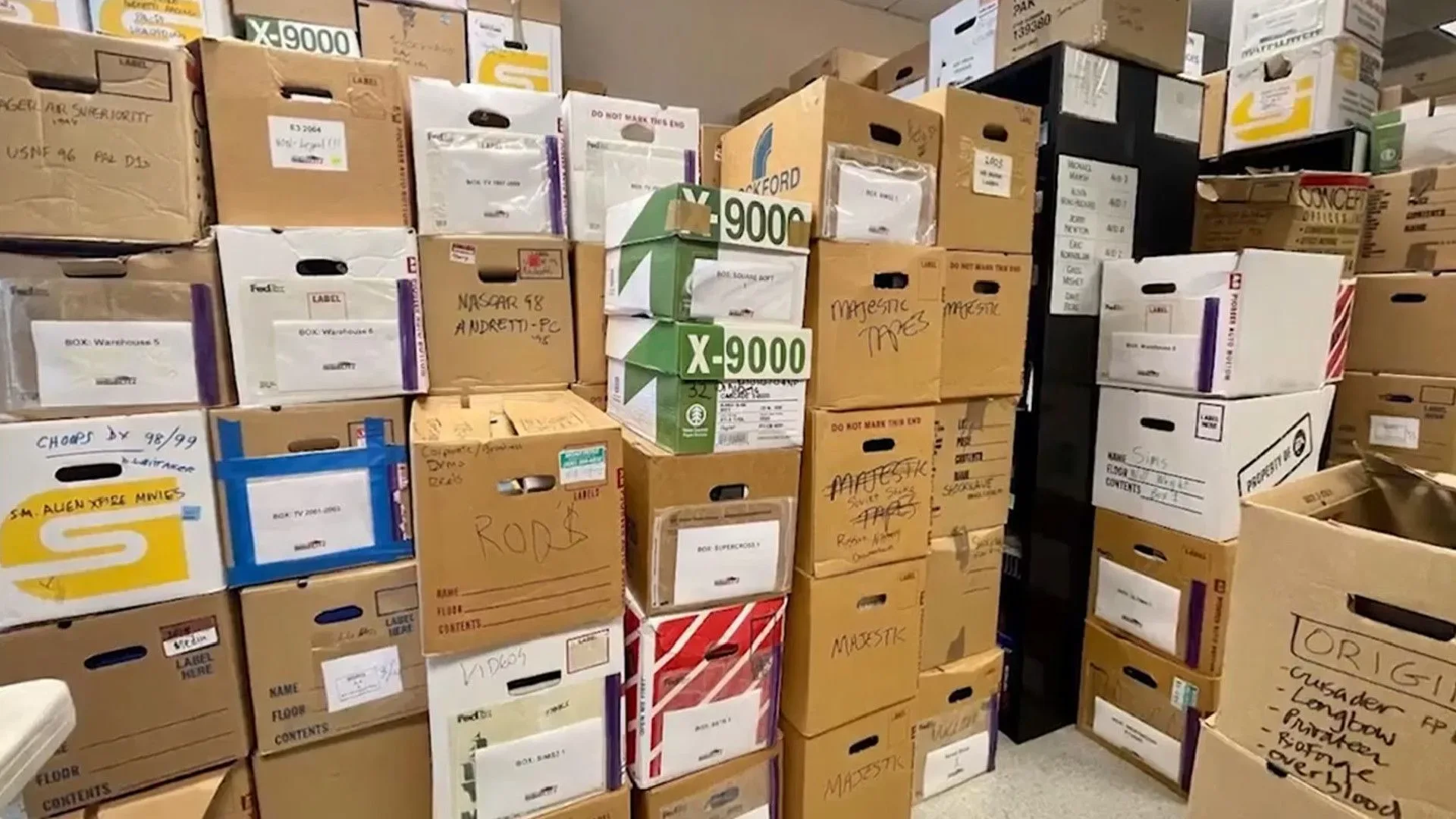
The effort traces back to 2022, when EA Senior Producer Jim Vessella returned to the office after the COVID period and was clearing remaining Betacam tapes connected to the Command & Conquer Remastered Collection. A facilities employee pointed him toward another room at EA’s Redwood Shores campus containing comparable materials.
That room was a physical-media vault holding close to 20,000 archival assets. The materials included Betacam, VHS and D1 tapes, as well as film reels and CD-ROMs. Those formats illustrate why preservation requires urgency as well as patience. Media can remain physically intact while the machinery, expertise, and workflows needed to read it become progressively less common. Before an old game can be reissued, a company may first need to establish exactly what it has, what condition it is in, and which assets are usable.
A small team began cataloging and digitizing the archive. Cataloging means identifying and organizing material so that it can be located and understood later; digitizing means converting physical assets into digital forms that can be accessed with contemporary tools. Neither step automatically produces a commercial game build, but both create the foundation for one.
From there, the team made the business case to bring selected rediscovered games back to market. That phrase matters. Archival recovery does not erase the practical questions surrounding a commercial release: Is the project technically feasible? Which pieces are missing? Are there rights that need to be cleared? Can the game meet an acceptable quality threshold on current systems? Preservation and release are related goals, but they are not identical jobs.
What is in the 25-game release
Seven titles are presented as enhanced anniversary editions, meaning they include improvements rather than being described solely as straightforward ports:
- Road Rash: 30th Anniversary Edition
- Wing Commander: 35th Anniversary Edition
- Wing Commander II: Vengeance of the Kilrathi: 35th Anniversary Edition
- Wing Commander III: Heart of the Tiger: 30th Anniversary Edition
- Wing Commander IV: The Price of Freedom: 30th Anniversary Edition
- Wing Commander Prophecy: 30th Anniversary Edition
- Privateer 2: The Darkening: 30th Anniversary Edition
The other 18 titles are ports intended to retain the original experience while making the games available on modern platforms:
- Wing Commander: Privateer
- Wing Commander: Academy
- Wing Commander: Armada
- Strike Commander
- Theme Hospital
- Crusader: No Remorse
- Crusader: No Regret
- Ultima I: The First Age of Darkness
- Ultima II: The Revenge of the Enchantress
- Ultima III: Exodus
- Ultima IV: Quest of the Avatar
- Ultima V: Warriors of Destiny
- Ultima VI: The False Prophet
- Ultima VII: The Complete Edition
- Ultima VIII Gold Edition
- Ultima IX: Ascension
- Ultima Underworld: The Stygian Abyss
- Ultima Underworld II: Labyrinth of Worlds
It is useful to distinguish the two labels. A port generally refers to adapting software so it functions in a different technical environment—in this case, making an older PC game operate on modern platforms. An enhanced release signals that the work goes beyond that baseline with additional improvements. The available details do not assign a feature-by-feature list to each anniversary edition, so players should avoid assuming every enhanced game has the same changes.
Wing Commander restoration required an active community
The Wing Commander work highlights another truth about long-lived games: fans can preserve technical knowledge that the original owner no longer has readily at hand. Vessella worked with an existing community around the series, including collaboration focused on restoring the games for remastering.
For Wing Commander III: Heart of the Tiger, a small group of key community members used a Slack channel and iterated over a two-year period. One contributor identified as Matt released new builds of an Enhancement Patch, while Vessella playtested those builds and returned feedback, technical notes and suggestions. The iteration accelerated in spring 2025, with troubleshooting and design discussion taking place between builds.
That is a particularly valuable model because it acknowledges two forms of expertise. A rights holder can supply access, formal release support and archival material. A dedicated community can bring years of accumulated understanding about a game’s quirks, expected behavior and technical edge cases. Neither side alone necessarily has the complete picture.
The work was also not frictionless. Vessella described a Saturday in 2025 spent replaying the same mission dozens of times under changing conditions while inspecting log files in pursuit of a crash. A log file is a record generated by software that can help developers track events and errors. Repeatedly recreating a failure under controlled variations is a core debugging method: the team changes one factor at a time to narrow down what causes the fault.
That anecdote is a reminder that an old game being playable is not the same as it being stable. A preservation release has to navigate unusual hardware assumptions, legacy software behavior and situations only revealed through focused testing. Even then, the possibility of an undiscovered crash cannot be ruled out. The team’s process shows the practical value of testing against real gameplay rather than treating recovered materials as automatically release-ready.
The Wing Commander games are especially demanding restoration candidates because the series is known for using substantial full-motion video, often shortened to FMV, and cinematic storytelling. FMV refers to prerecorded video sequences incorporated into a game. Reassembling that material at a standard players will accept can involve more moving pieces than making a single game executable launch. GOG’s preservation-team engineers also collaborated on the project.
For PC-game fans interested in the wider challenge of making old and evolving online experiences function in the present, the debate around a reported Northshire Abbey rebuild for World of Warcraft: Forever points to a related question: how much technical reconstruction is necessary before a familiar game experience can be credibly revived?
Road Rash shows why rights can be as fragile as code
The Road Rash anniversary edition introduces a separate obstacle: music licensing. The restoration team contacted every band whose music appeared in the game in an attempt to clear the rights. In this context, licensing is permission to use music in a newly distributed version of a product. A game’s original release does not guarantee that every included song can simply carry over decades later.
One band’s clearance remained unresolved for months because the team could not locate one member. With no contact, there could be no license. By September 2026, the team was only days away from removing that band’s music from the 30th Anniversary Edition. A final lead succeeded, however, and the final license was completed in mid-September.
That outcome matters beyond one soundtrack. It demonstrates how easily a re-release can become an altered historical record, even when the publisher has the game itself and wants to preserve its original character. Code is only one component of a videogame. Music, recorded performances, video, branding and other material may carry separate permissions. The inability to obtain one approval can force a compromise regardless of the technical work already completed.
The collection’s path—from physical tapes and discs to storefront-ready games—shows that preservation is less like pressing “restore” and more like coordinating an archival, engineering, legal and community project at once.
Why these releases matter to players
For players, the practical result is direct: a large group of older EA PC games is accessible from Steam and GOG, with seven anniversary editions and 18 modern-platform ports. For anyone returning to a favorite, the release offers a legitimate route to obtain games that can otherwise be difficult to access in their intended form. For newcomers, it lowers the barrier to encountering a broad set of games from major PC series.
There is also a more durable implication. The archive was discovered in 2022, yet the commercial release followed after four years of work. That timeline puts a real scale on the labor behind preservation. The bottleneck was not a lack of cultural importance—these are foundational titles such as Ultima and Wing Commander. It was the chain of tasks required to take historical materials and responsibly transform them into products people can use now.
EA’s 25-game return does not answer every preservation problem, and it should not be treated as proof that every lost or delisted game can be restored the same way. Instead, it provides a concrete example of the conditions that can make recovery possible: surviving materials, people prepared to find and catalog them, institutional approval, engineering support, fan expertise, and rights clearances that arrive before the deadline.
That is what makes the collection more than a nostalgia bundle. It is evidence that archives can still contain playable history—but only if someone does the painstaking work needed to bring it out of the room.