
Not every World of Warcraft idea can be sold with a bullet-point list of systems. Sometimes the pitch needs a place players already know by heart, given a fresh coat of light, and an opportunity to make longtime fans stop arguing for a minute.
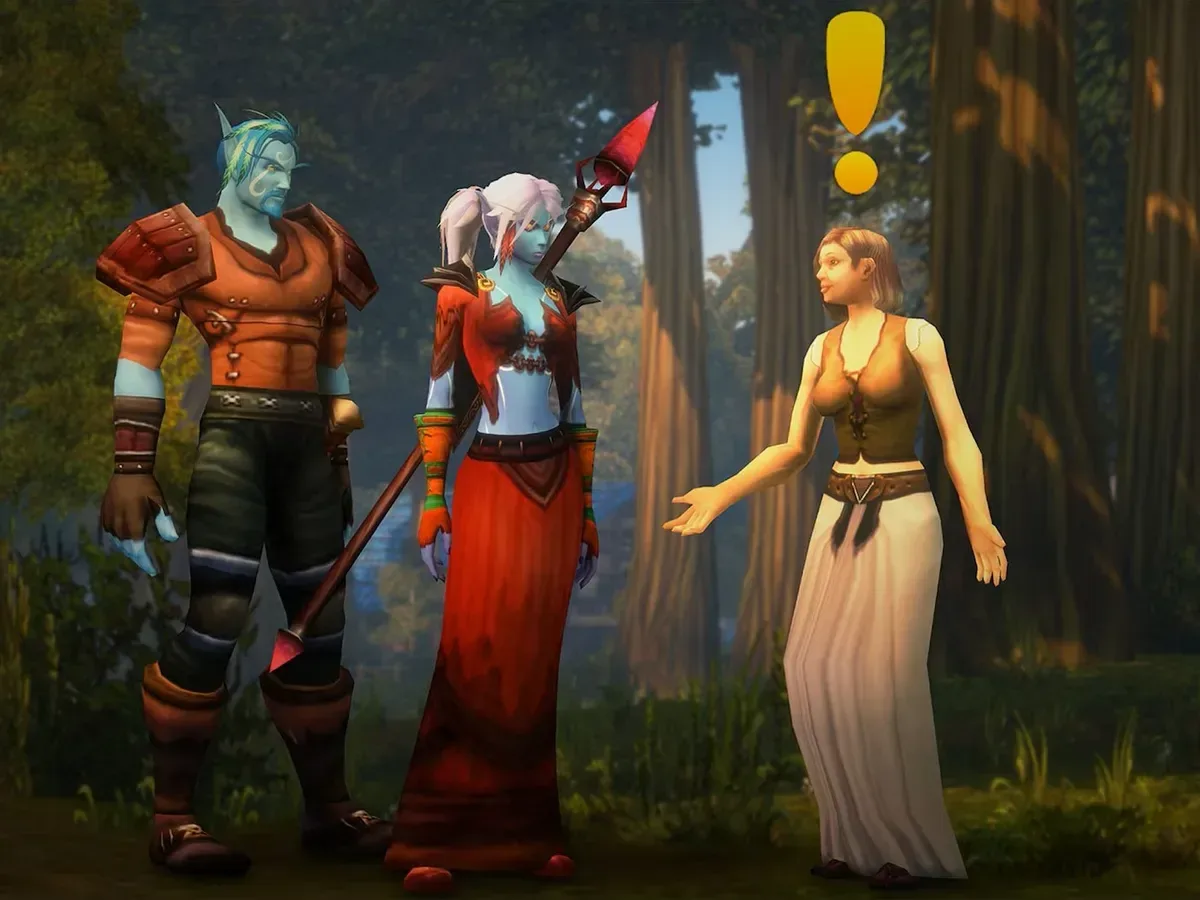
That appears to have been the role of Northshire Abbey in the development of World of Warcraft: Forever. Senior game designer Josh Greenfield said the project faced internal doubt, including from team members devoted to the original version of WoW Classic. The turning point came when the team presented a rebuilt version of the familiar starting area, using a new lighting system and updated visuals.
“There were a lot of people who were diehard, original Classic players on the team who were skeptical,” Greenfield said. “And we knew we had something special when we showed them that ‘beautiful corner’ and they said, ‘OK, yeah, I’m in.’”
It is an unusually revealing detail for a project that could otherwise sound confusing from its name alone. World of Warcraft now has multiple versions moving along different paths, and Forever is not simply a visual toggle for Classic or a replacement for the main game. Its premise is to remain in the game’s 2004-era Azeroth rather than advance through the historical chain of expansions.
What World of Warcraft: Forever is trying to preserve
The most important distinction is progression. World of Warcraft: Forever remains set in 2004 Azeroth and retains the old level-60 cap. A level cap is the highest character level players can reach; keeping it at 60 establishes a firm boundary around character advancement and the era of the game that the branch is built to represent.
That does not mean Forever is intended as an untouched archive. The project combines dramatically upgraded visuals with features that did not exist in the original vanilla release. New dungeons and quality-of-life features are part of that proposition.
Quality of life, often shortened to QoL, is broad game-development shorthand for changes designed to make routine play clearer, smoother or less cumbersome. The available details do not specify which particular Forever features fall under that label, so it would be premature to treat the term as a promise of any one convenience. What is clear is the larger design tension: the branch wants a fixed early-Azeroth setting while still making selective additions around it.
That balancing act helps explain why internal skeptics mattered. For players who care deeply about original Classic, visual modernization and new content are not automatically improvements. A revised version has to communicate that it understands the atmosphere and identity of the old game, rather than merely using a recognizable world as a backdrop for something fundamentally different.
Related coverage includes World of Warcraft: Forever Won Over Skeptics With a Rebuilt Northshire Abbey.
Why Northshire Abbey makes sense as the demonstration
Northshire Abbey is more than a random patch of scenery in this account. The team described its updated version as a “beautiful corner,” and it was selected as a visual showcase during the process of persuading decision-makers and skeptical Classic loyalists.
That choice is practical. A location already embedded in players’ memories gives a graphics update an immediate point of comparison. Lighting is particularly useful in such a demonstration because it affects how a scene is read at a glance: the perceived depth of buildings, the separation between foreground and background, the visibility of surfaces and the overall mood. A stronger lighting system can be felt without requiring an audience to understand a technical presentation.
The key is not simply that a familiar space can look sharper. It needs to look like itself. For a Classic-focused audience, recognition is part of the value. The rebuilt Abbey apparently offered enough of that recognizable character, alongside the upgrade, to shift people who had initially questioned whether another WoW branch was necessary.
That is also why the anecdote carries more weight than a generic claim that visuals have improved. The reported response came from people described as diehard original Classic players, the group most likely to question changes made in the name of modernization. Their change of mind does not settle how every player will react, but it suggests the development team used fidelity to a remembered place as a test for its larger approach.
Forever and Classic are parallel ideas, not the same track
For anyone trying to sort out the naming, the simplest framing is this:
- World of Warcraft: Forever: stays in 2004 Azeroth, keeps the level-60 ceiling, upgrades presentation and introduces additions such as new dungeons and quality-of-life features.
- World of Warcraft: Classic: continues on a parallel path that follows the updates and expansions that arrived after the original 2004 release.
In other words, Classic is built around revisiting the game’s historical onward journey, while Forever is built around making the original era a continuing destination. The distinction is easy to blur because both draw from the same foundational version of World of Warcraft. Yet their direction of travel is different: one moves through the expansion sequence, while the other establishes a permanent home in the initial period and develops within that boundary.
That structure has practical implications for players. Someone attracted chiefly to the original level range and setting may find the fixed focus of Forever more immediately legible. Someone who wants the later progression that followed vanilla will be looking at Classic’s continuing track instead. The source material does not lay out every content or account-detail implication between the branches, so those decisions should not be assumed from the broad concept alone.
A smooth launch is notable, but the meaning is still in the follow-through
Forever has been described as well received by critics and players, with community members calling it the smoothest WoW launch ever from a performance perspective. For a large online game, performance at launch is not a minor footnote. Server stability, access and general responsiveness shape the first shared experience players have with a new branch, especially when curiosity is concentrated into a narrow release window.
Still, launch reception and long-term identity are different questions. A technically smooth opening can give a project room to establish itself, but Forever’s more unusual challenge is sustaining a version of Azeroth that is deliberately fixed in era while also receiving new material. The reported plan to add dungeons and quality-of-life features means its success will depend on how players judge the fit of each change with that 2004 foundation.
That is a conversation familiar to online communities: smooth technical performance can improve the conditions for a launch, while ongoing confidence comes from the cadence and character of updates. In a different PC multiplayer context, community response and the way feedback is measured can also reshape how a game’s reception is read. Forever’s early praise is encouraging, but its separate design goal makes the content decisions ahead especially significant.
The Abbey is a statement of intent
Northshire Abbey’s role in the pitch is ultimately a small but useful window into Forever’s philosophy. The project was not reportedly greenlit by presenting old WoW unchanged, nor solely by promising a technically brighter version. It won support by showing a recognizable piece of the original world reinterpreted with enough care that skeptics could see the appeal.
For players, that makes the clearest expectation less about a single feature and more about a standard. Forever is positioning itself around 2004 Azeroth, level 60 and an evolving set of additions that are meant to exist without pushing the branch down the same expansion path as Classic. Whether every future change meets that standard is an open question. But the Northshire demo explains the target: preserve the sense of place, improve the presentation, and make any new layer feel at home there.