
World of Warcraft Forever may look like a sudden arrival to anyone who has watched players ask for a more adventurous version of Classic for years. Blizzard’s own account suggests a far slower path: the concept was discussed before World of Warcraft Classic launched in 2019, then held back while the company first delivered a more direct return to Vanilla-era World of Warcraft.
The eventual catalyst was Season of Discovery, the experimental Classic mode introduced in 2023. Its reception gave the team evidence that an audience existed for a version of old-school World of Warcraft that did more than preserve familiar content. It could alter the formula, add surprises and still retain the appeal of the original setting. That response helped shift the conversation from a temporary experiment to the question of what a permanent version could be.
That permanent version is World of Warcraft Forever, described as Blizzard’s Classic+ project. The timing, then, was not simply a matter of someone discovering that players like nostalgia. It reflects a combination of community reaction, internal permission to proceed and technical work needed to present an older game in a new framework.
Classic first, then experimentation
Blizzard senior game designer Josh Greenfield said the team had discussed the broad Forever idea before Classic’s 2019 release. But the initial priority was a straightforward Vanilla World of Warcraft port. That choice matters because it established a baseline: players could return to the original-era game before Blizzard tested how much change that audience would accept.
“Classic+” is community shorthand rather than a technical genre. In this case, it means building on the Classic foundation while adding or revising elements instead of treating the original version as untouchable. The difficult part is not recognizing the appeal of new content. The difficult part is deciding which changes still feel compatible with a game whose appeal is deeply tied to specific systems, zones and social rhythms.
Classic’s early purpose was preservation-oriented. A direct port asks a relatively clear question: can the older version be made accessible again? A project such as Forever asks a messier one: what should happen after that return, and how far can the game evolve before it stops satisfying people who came back for Classic in the first place?
Season of Discovery became Blizzard’s means of testing that second question in public. As Classic continued to age, the team grew more willing to experiment, and the 2023 mode offered concrete examples rather than a theoretical pitch.
What Season of Discovery changed
Season of Discovery introduced substantial revisions to Classic. Among them were ability gems, as well as the conversion of older five-player dungeons into raid-scale content. Blackfathom Deeps was one cited example.
Related coverage includes World of Warcraft Forever Was Years in the Making, With Season of Discovery Paving the Way.
For players less familiar with MMO terminology, a five-player dungeon is typically a smaller group activity with a compact party structure. A raid is a larger cooperative encounter format, generally built around more participants and more complicated coordination. Turning a dungeon into a raid does not merely add enemies or increase health totals; it changes the social and mechanical expectations around content that players may already know well.
Ability gems similarly signaled a willingness to revise what characters can do. The important point is not just that a new system existed. It is that the system demonstrated an appetite for making Classic feel unfamiliar in selected ways. That is a high-stakes test for a game mode rooted in an old design, because class abilities and group composition sit near the center of how an MMO is played and discussed.
The experiment also had effects beyond Classic. Blizzard later released Mists of Pandaria Remix in 2024 and Legion Remix in 2025, showing how a revised, event-like approach could influence the modern version of the game as well. Those modes are not presented as identical to Season of Discovery, but the sequence illustrates an organization becoming more comfortable treating established World of Warcraft eras as material that can be reworked rather than only replayed.
The community response became the green light
Greenfield tied Forever’s progress directly to how players responded to Season of Discovery. In his description, that was when Blizzard began seriously asking what a permanent version of this approach would be. The success of the experimental mode also helped persuade leadership to allow Forever’s development to move ahead.
That distinction is useful. Player enthusiasm can establish that an idea has potential, but a permanent MMO initiative requires more than enthusiasm. It needs internal backing, development capacity and a technical plan. Season of Discovery appears to have supplied the first part of that equation: evidence that changing Classic was not automatically a contradiction in terms.
It also reduced a particular creative risk. An experimental seasonal mode can be used to learn what resonates, including where players welcome deviations and where they resist them. A permanent game has a higher burden because its systems and content must hold attention over time. Blizzard’s decision to proceed suggests that the response to Season of Discovery made that longer-term bet feel more credible.
None of this means every experiment automatically becomes a permanent feature, or that Forever’s future content is already mapped out in public. The available account supports a narrower conclusion: Season of Discovery provided the confidence to make the project real, not a complete public blueprint for everything Forever will become.
Northshire Abbey and the technical proof of concept
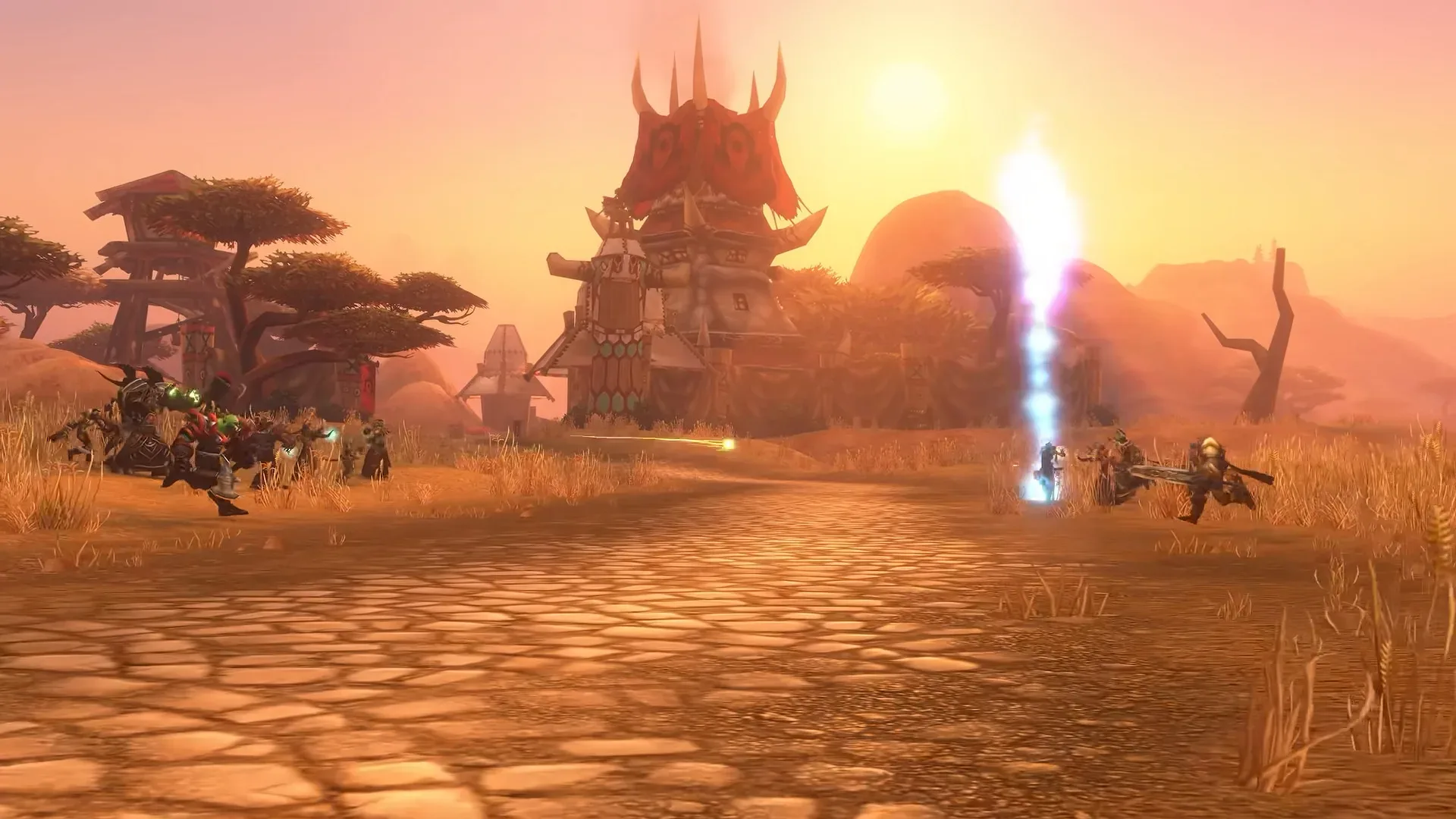
Creative approval was only part of the story. Blizzard also worked on new graphics engines for Forever, and Northshire Abbey became a key internal demonstration. The familiar early-game location functioned as a technology showcase that won broad support inside Blizzard.
A tech demo, or technical demonstration, is a focused build used to prove that technology can achieve a desired result. It does not necessarily represent the full product. Its job is to make an idea tangible: show how environments render, how systems operate or how a new visual foundation changes the feel of an existing place.
Northshire Abbey was an especially practical choice for that purpose. It is a recognizable opening area, so a redesigned or technically updated version gives viewers an immediate point of comparison. Rather than explain an engine in abstract terms, a team can show a location people already know and let the contrast do the convincing.
That is significant for a project built around memory. A modernized visual or technical layer has to support the sense of returning to an older World of Warcraft, not simply turn it into something unrecognizable. The Northshire demo appears to have helped resolve that internal challenge by showing that the project’s technology and its nostalgic premise could work together.
A strong start, with the longer test still ahead
Forever launched earlier this week to a reportedly smooth opening, with players reacting positively and few reported server problems. Blizzard devoted roughly 200TB of memory to supporting the launch. For an MMO, that kind of preparation matters because server stability affects the experience immediately: login queues, disrupted sessions and unreliable realms can dominate conversation before players have had time to evaluate the game itself.
The opening response has also been positive from early critical impressions. One early assessment praised Forever’s ability to make a return to this version of Azeroth feel worthwhile while emphasizing that the larger question is whether Blizzard can sustain the experience through the remaining levels and future surprises. That caution is appropriate. A launch can demonstrate demand and infrastructure readiness; it cannot, by itself, prove that a permanent Classic+ model will remain compelling.
Forever’s real task is therefore broader than a clean release. It must balance the familiarity that draws players back with the new ideas that justified making a separate, permanent project at all. Seasonal experimentation can thrive on novelty and a limited window. A long-running world must give its community reasons to continue inhabiting it.
For Blizzard, the project is the clearest result yet of several years spent moving from preservation to controlled reinvention. Classic established the return trip. Season of Discovery showed that the route could be changed. The Northshire Abbey demonstration helped make the technical case. And Forever is the effort to turn those lessons into an enduring destination.
The larger industry context also makes the project notable. Legacy games are increasingly being revisited through preservation efforts and new releases, as seen when older games returned to modern storefronts through preservation work. World of Warcraft Forever takes a different route: not simply making an earlier version available again, but using an established era as the basis for continued development.
Whether that approach keeps working will depend on Blizzard’s ability to choose its changes carefully. The evidence behind Forever’s creation is clear enough, though: the game was years in discussion, and Season of Discovery transformed it from a long-running possibility into a project Blizzard was ready to build.