GOG is widening its preservation work with a newly updated Road Rash, planned Anniversary Edition updates for several Wing Commander games, and a new publishing label named Retro Vibe. The announcements arrive alongside changes intended to make the PC storefront more useful as both a library and a community space: GOG Galaxy is headed to Linux, while GOG Social will bring a forum into the user’s game library.
The common thread is straightforward, even if the work behind it is not. GOG is making older PC games operate more comfortably on current machines while also backing new projects that deliberately evoke older design eras. For players with longstanding digital libraries, the practical value is less about a nostalgia filter and more about reducing the usual friction around revisiting a classic: display quirks, control limitations, operating-system compatibility and missing material can all stand between a purchased game and actually playing it.
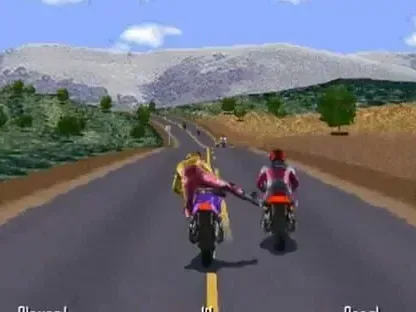
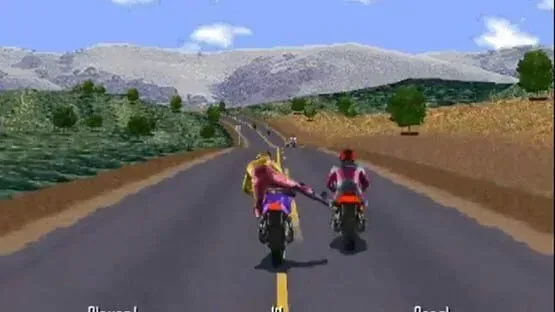
Road Rash gets a modern PC touch-up
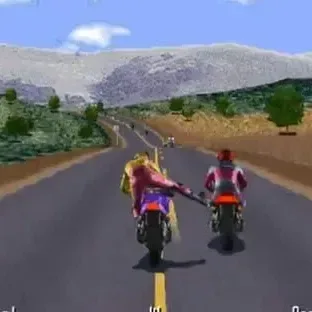
Road Rash, the aggressive motorcycle-racing game, is available now with compatibility improvements for modern systems and modern control inputs. That puts it in the same broad preservation lane as the forthcoming Wing Commander work: the goal is not merely to keep an old installer downloadable, but to make an older game easier to run and control on a contemporary PC.
“Modern systems” can mean a great many things in preservation work. PC games were often made with assumptions about the software and hardware of their time, including display resolutions, input devices and operating systems. Those assumptions do not necessarily survive unchanged. A title may launch but look wrong at current screen sizes; it may function but lack convenient controller support; or it may have issues that only emerge after the original environment has disappeared.
GOG’s stated approach includes going into a game’s code to resolve persistent bugs, adjust resolutions, add controller support and restore missing cutscenes where possible. In other words, the maintenance can involve both technical compatibility and the game’s original presentation. The preservation program has made more than 1,700 fixes across its catalog work.
For Road Rash, the immediate takeaway is simple: the updated version is available now, and its changes are designed around current PCs and input methods. It is an example of preservation as maintenance rather than museum glass—keeping an older game accessible without requiring players to reconstruct an old computing setup just to get started.
Wing Commander Anniversary Editions will include legacy builds
Next on the schedule are Anniversary Edition updates for Wing Commander 1–4, Wing Commander: Prophecy Gold and Privateer 2. The plans cover a notable stretch of the space-sim series, and each release will include both the original legacy version and its revised Anniversary Edition.
That dual-version approach matters. A legacy version is the older release preserved in a form close to its established configuration. An Anniversary Edition, in this case, is the touched-up variant intended to make the game more approachable on present-day setups. Providing both acknowledges that compatibility and historical fidelity are related goals, but not identical ones. Some players want the smoother modernized route; others may prefer to access the traditional version alongside it.
Related coverage includes GOG Expands Preservation Efforts With Road Rash Update, Wing Commander Refreshes and Retro Vibe Publishing.
For Prophecy, GOG worked with modders and is adding controller support as part of an effort to make the game easier to approach. Controller support does not redefine the underlying game, but it gives players another option beyond a keyboard-and-mouse setup. For space simulators in particular, preferred control methods can be a meaningful part of how a game feels, so an extra supported input route can be more than a menu bullet point.
People who already own the applicable original Wing Commander titles through GOG will receive the Anniversary Editions as free downloads when they launch. That avoids treating the refreshed versions as entirely separate purchases for existing owners and lets users choose the edition that suits their setup.
The planned updates cover Wing Commander 1–4, Prophecy Gold and Privateer 2, with both legacy and Anniversary Edition versions included.
The work also continues a broader preservation effort supported through GOG Patrons. The initiative has brought 300 older games forward for modern operating systems with help from more than 10,000 patrons. Its most recent beneficiary is Nox, the action RPG originally developed and published by Westwood Studios and EA in 2000.
That number—300 preserved games—offers useful context for the Road Rash and Wing Commander news. These are not isolated compatibility patches appearing without a wider plan. They are part of an ongoing effort focused on games that might otherwise become increasingly awkward to use as operating systems, displays and peripherals evolve.
Why DRM-free ownership is central to the preservation pitch
GOG’s storefront model is built around DRM-free releases. DRM, or digital rights management, refers to technical measures used to control access to digital software. A DRM-free game can be backed up, copied to another PC owned by the customer, and stored on a drive or disc without relying on a continuing online authorization check.
That does not make every digital preservation issue disappear. A backup cannot independently solve bugs, incompatibility or a game’s lack of support for modern hardware. It does, however, give buyers more flexibility in keeping their installation files. In the context of older games, that flexibility pairs naturally with GOG’s maintenance work: users can retain installers, while the store’s preservation program aims to keep games usable on newer machines.
The distinction is worth making because “available to buy” and “conveniently playable” are different states. An old title can technically remain in a catalog yet still present a discouraging setup problem. Conversely, a preservation update can make returning to a game substantially easier even when the core content has not changed. Road Rash’s compatibility and control work, and the planned Wing Commander editions, fit into that second category.
For PC players building a long-term library, the appeal is therefore practical as well as sentimental. Offline backups provide one layer of control; modern compatibility work provides another. Neither replaces the other.
Retro Vibe is GOG’s label for new games with old-school DNA
Preservation is only half of GOG’s current expansion. The company has also introduced Retro Vibe, a publishing arm devoted to “new games with a classic soul.” The label is for newly made games rather than restored catalog titles, but it is clearly aligned with an audience interested in recognizable genres, strong stylistic hooks and design language associated with earlier PC eras.
The announced Retro Vibe lineup includes:
- Cop Bastard, a first-person shooter with a VHS-like visual treatment and bullet-time action reminiscent of the slow-motion combat associated with Max Payne.
- The Looter, a side-scrolling shooter built around demanding boss encounters.
- Shardpunk 2, a tactical cyberpunk RPG.
- Project Warlock: Lost Chapters, a boomer shooter described as featuring very large weapons.
- After Hell Freezes Over, a greyscale indie game that remains comparatively mysterious.
Several of those descriptions use useful genre shorthand. A boomer shooter generally describes a fast, old-school-flavored first-person shooter, a label that emphasizes the style’s retro lineage rather than the age of its players. A tactical RPG centers strategic decision-making, and often positioning or planning, within role-playing progression. Bullet time is a stylized slow-motion effect that can give players more time to react during action scenes.
These labels establish expectations, but they should not be mistaken for a detailed feature list. The information currently identifies each project’s genre and broad aesthetic direction; it does not establish release dates, pricing, platforms beyond the GOG context, or a complete accounting of modes and systems. The lineup can be wishlisted, which is the clearest current action for players who want to keep track of it.
As an editorial move, Retro Vibe also gives GOG a way to connect the past-facing side of its business with new development. Preserving an older game is concerned with sustaining access to an existing work. Publishing a new game with classic inspirations is a different task: it asks creators to use familiar genre language while making something original. Grouping both efforts under the same wider umbrella suggests that GOG sees classic PC gaming as an active design space, not solely a back catalog.
GOG Social and GOG Galaxy for Linux expand the platform side
The storefront itself is receiving social and launcher updates. GOG Social is an integrated forum system that lets users tag games in posts, creating direct paths to the relevant store pages. Its listed tools include spoiler markings, threaded replies, reactions, post edits, media support, bookmarks and topic subscriptions.
For a catalog that spans a large number of older titles, game-linked discussion could be particularly useful. Players frequently look for setup tips, control advice, technical fixes or recommendations before deciding whether to install a legacy game. The announced feature set does not guarantee that every question will have an answer, of course, but embedding discussions near a library and store listing makes the connection between a conversation and the relevant game more immediate.
GOG Galaxy, the company’s launcher for bringing libraries from multiple stores into one place, is also coming to Linux. The Linux release will include new customization and personalization options. This is a platform expansion for Galaxy rather than a statement that every game in a connected library will work identically on Linux; game-by-game compatibility remains its own question. Still, Linux users will be able to access the launcher’s library-aggregation purpose on their operating system.
For readers following the broader PC ecosystem, the move sits alongside other platform developments, including a recently announced Steam release for Apple Crumble. GOG’s announcement is distinct in focus: it is as much about maintaining access to established games and organizing libraries as it is about selling an individual new release.
What players should take from the announcements
The most immediate item is Road Rash, which has already received its modern-system and input updates. Wing Commander fans should watch for the Anniversary Edition launches, particularly because existing GOG owners will get the refreshed editions free and because the packages will retain legacy versions alongside the revised releases.
Meanwhile, Retro Vibe is a label to watch rather than a complete release calendar. The announced games establish the range of genres the label is pursuing, from shooters to a tactical RPG, but the available details stop short of firm scheduling and product specifics. Wishlisting is available for tracking those titles.
More broadly, the update makes GOG’s strategy unusually legible. It is preserving older games through compatibility and quality-of-life work; it is adding ways to archive DRM-free purchases; it is creating a home for freshly made retro-minded projects; and it is building social and launcher infrastructure around the library. For anyone whose PC backlog includes classics that have become difficult to revisit, that combination is more meaningful than a simple anniversary celebration. It is an attempt to ensure that old games remain things people can play, discuss and keep—not just names they remember.