A new homebrew called Cuthbert in Castle Wolfenstein has pushed the Commodore Plus/4’s familiar little adventurer into an unexpected genre: first-person shooting. It is not an official Microdeal release, but it deliberately opens with imagery that longtime Cuthbert players should recognize before making a sharp turn into pseudo-3D dungeon crawling beneath Castle Wolfenstein.
The premise places the action in 1943, while B. J. Blazkowicz is occupied fighting Nazis in the upper reaches of the fortress. Cuthbert sees an opportunity to sneak downstairs in search of treasure. Instead, the expedition leads to Dr. Schabbs’ hidden laboratories, stores of stolen gold, and enemies far more dangerous than a quick basement raid ought to involve.
That setup is knowingly mischievous: Cuthbert is not framed as a grand military hero here, but as an opportunistic treasure hunter who has wandered into a much harsher problem. The result is a crossover-style homebrew premise that uses the contrast between a recognizable retro character and a grim fortress setting as part of its identity.
A familiar opening, then a change of perspective
The game reportedly begins in a way designed to evoke Cuthbert’s earlier adventures: stone walls, a vertical shaft, and an exit at the bottom. That opening serves as more than a nostalgic reference. It establishes a visual and mechanical expectation, then disrupts it the moment the player reaches the exit.
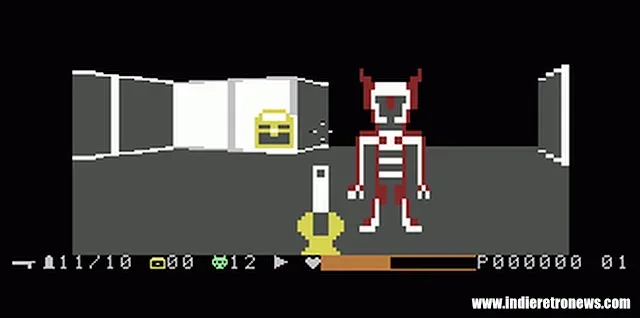
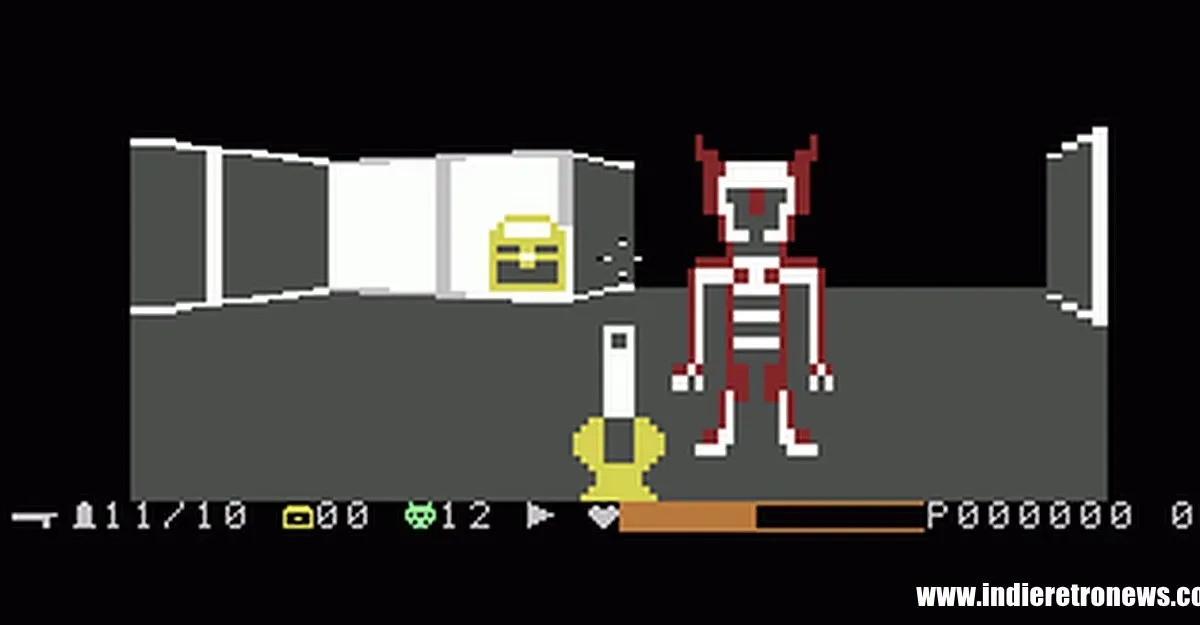
Beyond that point, the game changes to a pseudo-3D perspective. The term generally describes a game that creates an impression of depth and forward movement without claiming to be a fully three-dimensional world rendered in the modern sense. Here, that shift changes the player’s relationship with the castle. Rather than reading the level from a conventional side-on or overhead view, players must confront corridors and spaces from inside the maze.
It is an especially notable direction for a Plus/4 project because the game’s ambition is not simply to decorate a familiar arcade structure with a different theme. The central play experience is built around navigating first-person-style spaces, locating valuables, surviving threats, and identifying a way onward.
Ten floors of treasure hunting and survival
Cuthbert in Castle Wolfenstein contains ten levels below the fortress. Its underground route includes interconnected chambers, halls broken up by pillars, ring-shaped courtyards, galleries, and laboratory blocks. Those location types matter because they suggest that each floor is intended to be more than a straight sequence of corridors. Pillars can obstruct sightlines, courtyards can complicate bearings, and connected rooms can make it easier to lose track of a route back.
The objective is direct but demanding: collect every treasure chest, survive, and find the exit to the next floor. That is a classic arcade structure, where success depends on completing the level’s full task rather than merely reaching its endpoint. An exit is not enough if chests remain behind.
Related coverage includes Cuthbert in Castle Wolfenstein Brings First-Person Action to Commodore Plus/4.
For players, that makes exploration part of the challenge instead of a diversion from it. A treasure chest is both a reward and a requirement. Every unexplored corner could contain the last needed item, but retracing a path also means remaining exposed to the dangers inhabiting the fortress. The basic loop is therefore easy to explain and potentially tense in practice: explore, remember the layout, gather what is required, and live long enough to advance.
What “pseudo-3D” changes in a maze game
In an overhead maze, the player can often assess several nearby routes at once. A first-person or pseudo-3D view restricts that information. What is around a corner, behind a pillar, or through a connecting passage has to be discovered by moving through the space. That limitation is not merely technical window dressing; it can become the source of suspense.
It also increases the value of navigation discipline. Players approaching the game may want to treat each level as a place to map mentally: note distinctive room shapes, keep track of branches not yet investigated, and avoid assuming that a visible route is the only one. Since every chest is required, a rushed route to the exit risks leaving unfinished business behind.
The fortress setting supports that format neatly. Galleries, laboratories, and courtyard-like rings are spaces that can make orientation less obvious than a plain sequence of hallways. A ring-shaped area in particular can return a player to a familiar point from an unexpected direction, while a pillared hall can turn a large room into a series of partial sightlines rather than one easily readable arena.
A homebrew that uses its hardware as the point
Homebrew is new software made for a platform outside that platform’s original commercial release cycle. In this case, the significance is tied closely to the target machine: the game was built specifically for the Commodore Plus/4. Its arrival is a reminder that retro development is not limited to preservation or simple recreations. Creators still use old hardware to pursue designs that would have been surprising, unusual, or impractical to encounter in that machine’s original era.
That does not mean every pseudo-3D game should be measured against contemporary first-person shooters. It is more useful to look at what this project chooses to emphasize: an immediate perspective shift, maze-like level construction, collection-driven progression, and a recognizable arcade goal. Those choices give the Plus/4 game a defined identity instead of making it a vague technical demonstration.
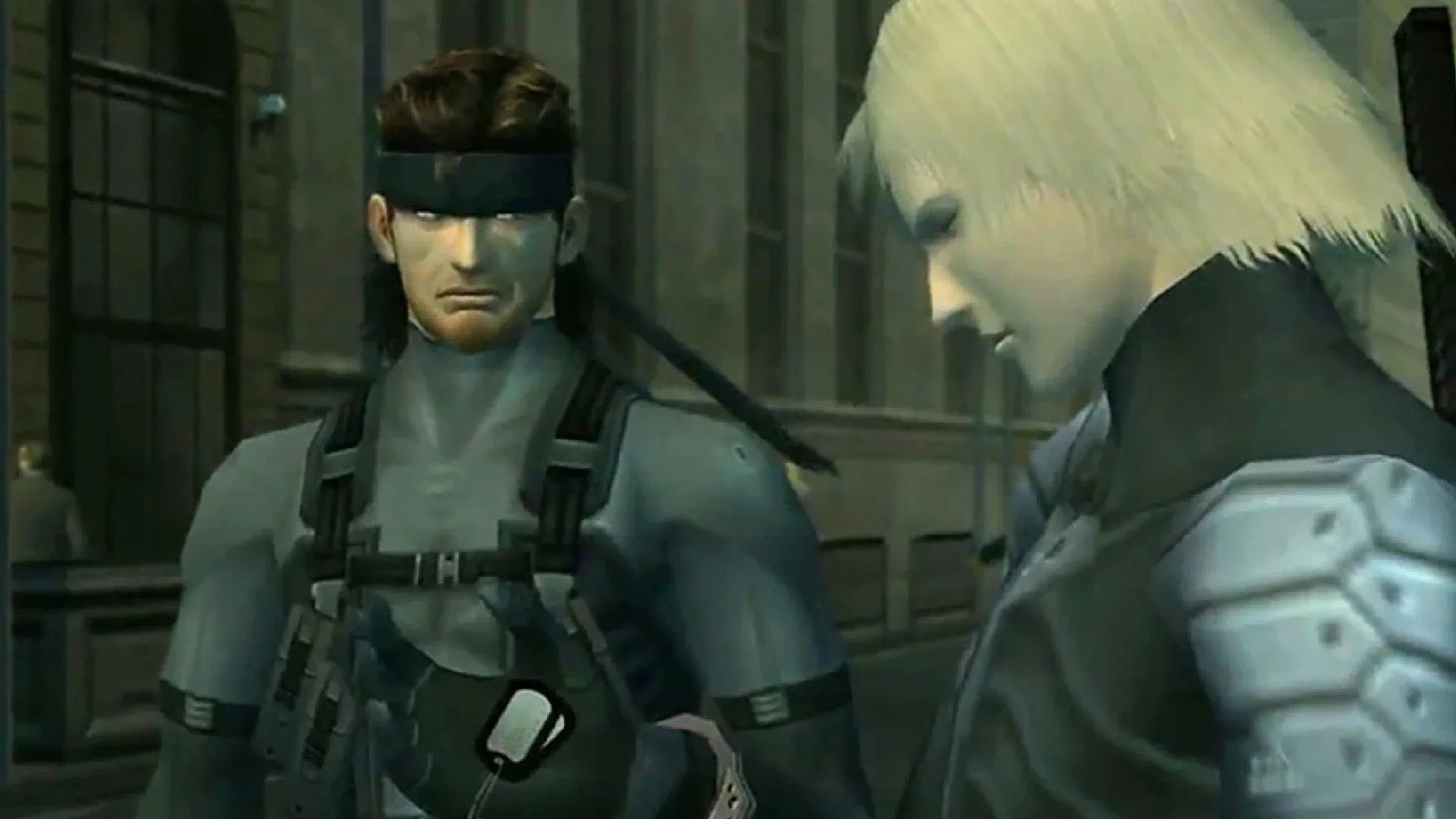
First-person perspectives are still a fertile place for reinterpretation in older games and newer fan projects alike. For a very different example of how perspective can reshape a familiar game space, a planned VR mod for Metal Gear Solid 2’s Tanker chapter shows how revisiting viewpoint can change the feel of established environments. Cuthbert’s new outing works from the opposite end of gaming history, but the appeal is comparable: a changed perspective asks players to read a known kind of adventure in a new way.
Credits and the unusual Cuthbert connection
The project lists Proky for code, while Csabo is also credited for code. The available credits do not explain how the programming work was divided, so it is best not to infer specific responsibilities beyond those listings.
Its use of Cuthbert is central to the pitch. The opening callback means the homebrew is not treating the character as a random skin placed over a shooter. It begins by acknowledging the older adventures’ visual language, then uses the threshold at the bottom of the shaft as a literal and stylistic transition. One exit marks the point where an old-school setup becomes a fortress expedition viewed through a pseudo-3D lens.
The Wolfenstein element similarly provides more than a title reference. The underground laboratories, stolen gold, hostile inhabitants, and 1943 framing create a clear reason for the game’s ten-floor descent. Cuthbert enters looking for riches; the player inherits the consequences in a series of increasingly committed survival-and-collection runs.
What prospective players should expect
- Platform: Commodore Plus/4.
- Structure: Ten levels beneath Castle Wolfenstein.
- Viewpoint: A pseudo-3D, first-person-style perspective after the opening sequence.
- Main task: Find every treasure chest, stay alive, and locate each floor’s exit.
- Environment types: Connected rooms, pillared halls, ring-shaped courtyards, galleries, and laboratory areas.
- Credits: Proky is listed for code; Csabo is also credited for code.
The key attraction is the collision of two retro sensibilities: Cuthbert’s arcade-rooted identity and a first-person castle maze built for the Plus/4. Rather than presenting a routine sequel, Cuthbert in Castle Wolfenstein turns that collision into its premise, its perspective, and its central challenge.