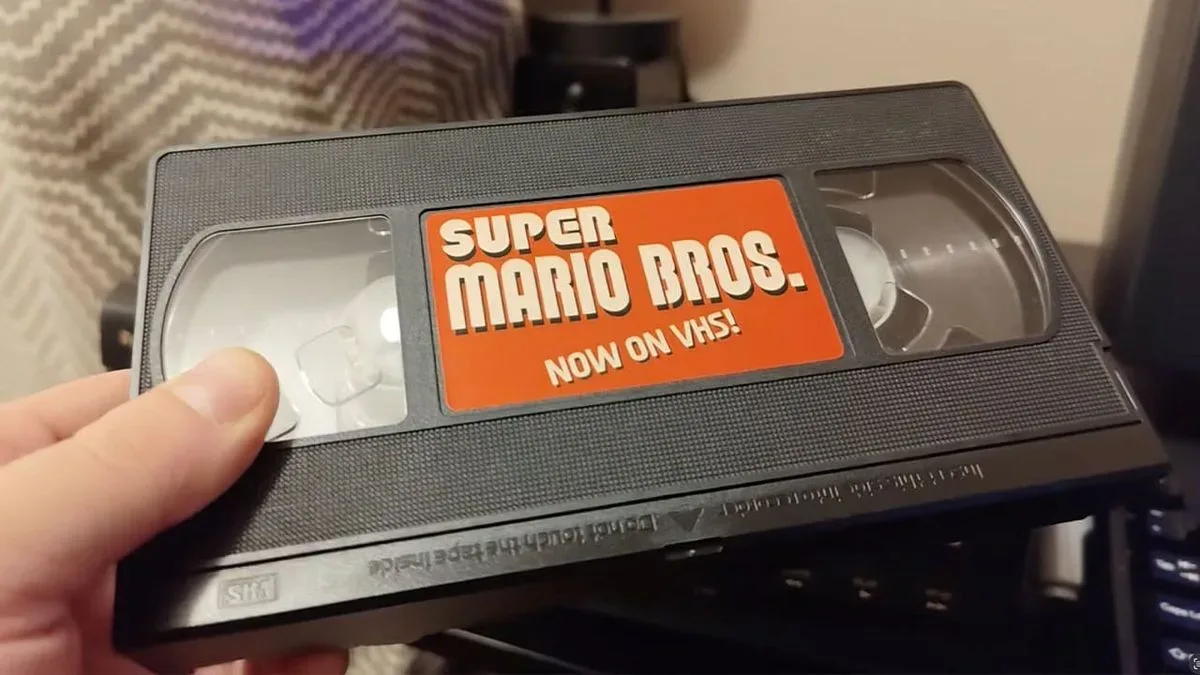
VHS was built to play a recording from beginning to end, which is almost the opposite of how a video game works. A tape can reliably deliver a movie, a music video or a guided quiz segment, but it does not normally react to a player deciding to move left, fire a weapon or press a button at exactly the right moment. That inherent mismatch is what makes Throaty Mumbo’s custom VHS gaming project so compelling: it treats an old linear video format as one component in a system that can still respond to the person holding the controller.
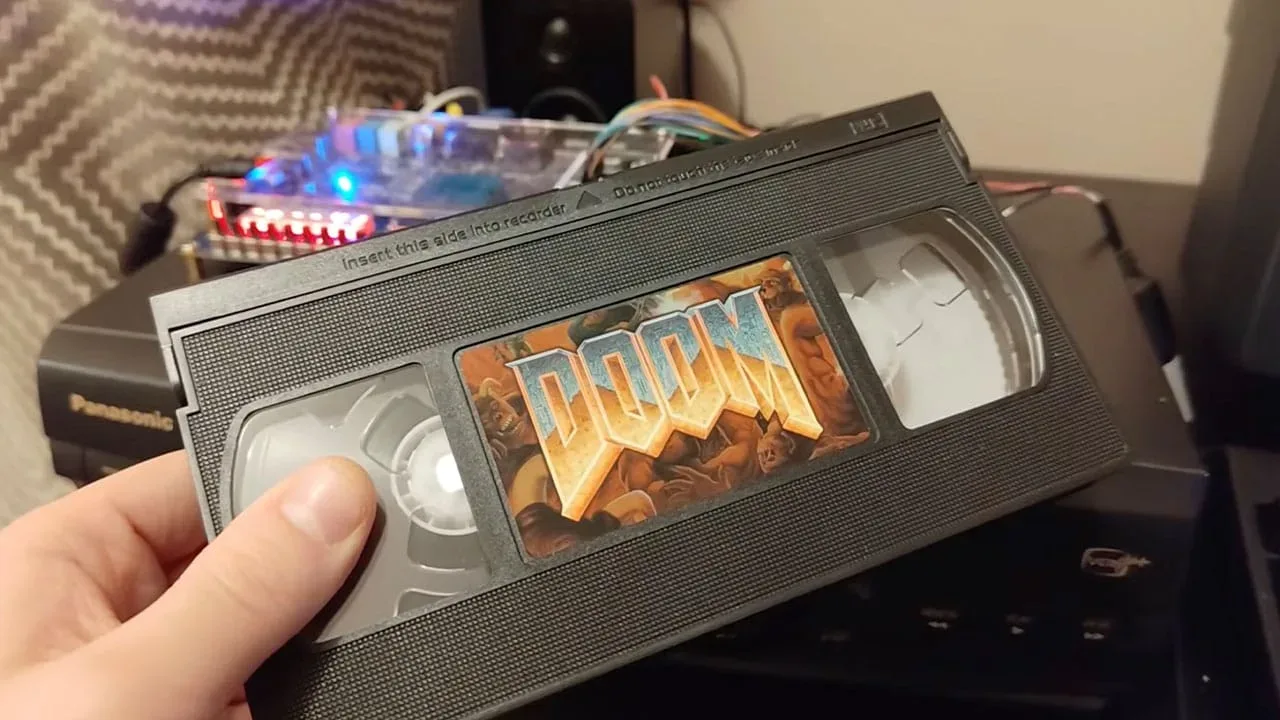
The modder has built an FPGA-based VHS console for interactive retro-game demos, with footage showing concepts inspired by Super Mario Bros. and DOOM. The project follows a look at the Action Max, a 1987 console that used VHS tapes rather than the cartridges associated with machines such as the NES and SNES. The new system is not presented as a conventional commercial-era VHS console or as a claim that a tape itself has become a game cartridge. Its intriguing idea is more precise: prerecorded VHS material can be paired with modern custom hardware so that player input still matters.
Why VHS and games have always been an awkward pairing
Traditional tape playback is linear. A recording plays in its recorded order, meaning its picture and sound do not change simply because a player wants a different outcome. Games, on the other hand, depend on branching behavior. The game system reads an input, updates its state, and produces the next image based on that input. The distinction may sound obvious, but it is central to understanding this build.
Older VHS-related games found ways to use the medium without asking it to do everything. Parker Brothers’ Clue Murder Mystery, known as Cluedo in the UK, dates to 1985 and is an early example of VHS being incorporated into a game experience. The Action Max took a more overtly console-like route in 1987. It used tapes as its medium, along with a sensor attached to the television and a light-gun-style zapper. That arrangement allowed the player to interact with what was on screen, even though the tape content itself proceeded along a prerecorded path.
That is an important historical distinction. VHS gaming does not automatically mean a fully simulated game is running from tape. It can instead mean that tape supplies video while the game structure, scoring, sensing or button interpretation happens elsewhere. Throaty Mumbo’s work revisits that divide with hardware capable of adding a much more visibly responsive layer.
The custom hardware at the center of the build
The project uses a DE1-SoC FPGA board and an RP2350 microcontroller unit, or MCU. Those component names matter less than their jobs within the broad concept. An FPGA, short for field-programmable gate array, is hardware that can be configured for a particular digital task. In a retro-hardware project, it can be useful when the creator needs closely controlled behavior rather than a single fixed-purpose chip. An MCU is a compact programmable controller suited to handling defined tasks and communication between parts of a device.
In this case, the combined setup is intended to create a console with real interaction rather than a tape experience that is identical every time it is played. That is the technical leap suggested by the demos. The VHS recording can provide a backdrop or a planned visual sequence, while the electronics interpret controller actions and contribute the changing gameplay element.
It is best understood as a hybrid design. The tape is not being asked to become a modern storage device, and the custom console is not simply replacing VHS with a standard digital game. Each part has a role: prerecorded analog video establishes material that can repeat or run in sequence, while dedicated hardware supplies responsiveness.
Related coverage includes Modder Builds an Interactive VHS Game System for Retro Classics.
What the demos show
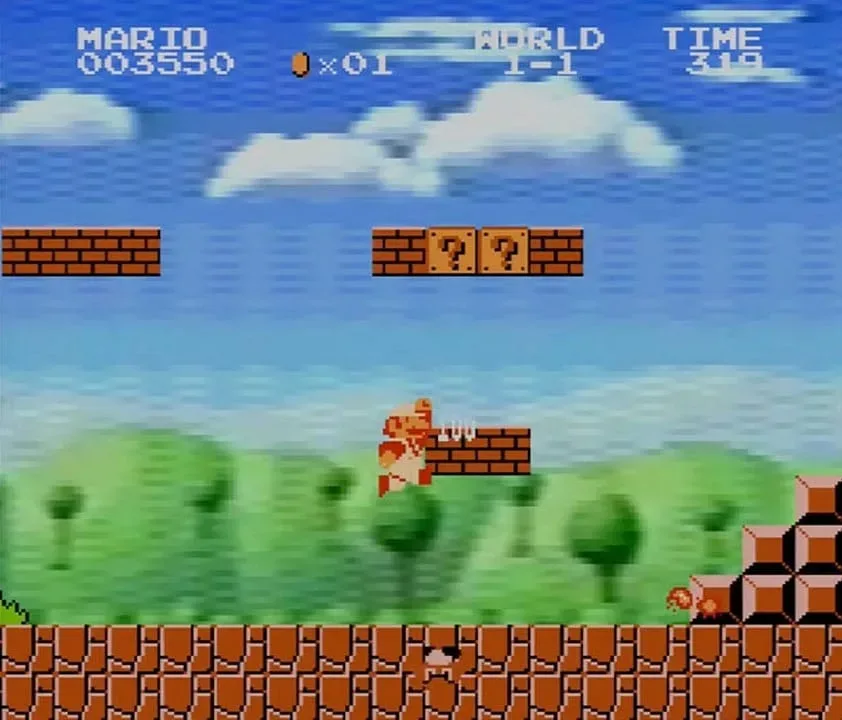
The Super Mario Bros.-inspired VHS demonstration uses a prerecorded looping background. That choice illustrates a practical way to make the format legible. A looped environment can keep delivering familiar visual material while the system overlays or coordinates the interactive portion. Rather than forcing a tape to generate every possible game state, the build can work within the strengths of a recorded sequence.
The DOOM-inspired demonstration takes a different form, using quick-time-event-style moments. Footage shows inputs on an N64 controller being used to perform attacks. A quick-time event is a prompt-driven sequence in which success depends on pressing the required button at the appropriate time. It is a particularly sensible fit for an experiment involving prerecorded footage: the visual action can be planned in advance, while timing and player input decide whether the interactive moment is completed.
Some of the earlier clips in the video move at a frantic pace, resembling a rapid series of mini-game ideas. The more structured demos, particularly those built around a looping background or a specific input prompt, make the system’s intended logic easier to see. The player is not merely watching a tape. They are being asked to act, and the hardware is designed to recognize that action.
What “interactive VHS” does and does not mean here
The phrase can invite a misleading mental picture of a full classic game squeezed directly onto videotape and freely playable in every direction. The footage supports a more interesting, more grounded interpretation. This is a custom platform that combines VHS playback with external processing and controls. Its interaction is demonstrated through carefully chosen formats that suit the medium, such as a repeating scene and timed responses.
That limitation is not a shortcoming; it is the creative rule that gives the project its identity. Technical art often gets more inventive when it stops trying to make old equipment behave exactly like new equipment. VHS has visible, physical playback characteristics and fixed recorded footage. A purpose-built FPGA console adds a responsive system around those traits rather than pretending they do not exist.
The result also clarifies why the Action Max remains a useful reference point. Both concepts place a tape-based presentation alongside player interaction, but this newer build explores the idea with a modern custom hardware stack and game demos chosen to showcase that interaction. It is less a replacement for cartridge consoles than a playful extension of a strange branch of game-history design.
A restoration-minded experiment with a different goal
Retro projects are often discussed in terms of preservation: keeping original hardware operational, transferring aging media, or recreating old systems as faithfully as possible. This build occupies a neighboring space. It starts with vintage technology and historical design ideas, then uses them to create a new device and new demonstrations. That means the value lies in the experiment as much as in the nostalgia.
Throaty Mumbo’s video also presents signal behavior in visual form and walks through how the demos are assembled. That educational element is useful even for viewers with no intention of building an FPGA machine. It makes the hidden relationship between video playback, controller input and custom electronics easier to appreciate. The familiar VHS cassette becomes more than a relic of passive viewing; it becomes a constraint around which a new interaction model can be designed.
There is a wider appeal in seeing an obsolete consumer format treated as material for engineering rather than as a museum piece. The project does not suggest VHS will become a practical mainstream platform for games. Instead, it shows why old technology still has room for fresh experiments when somebody understands both its limits and its potential. That same curiosity sits near broader debates about what tools contribute to creative work, including questions raised in game development’s evolving relationship with emerging technology.
For retro enthusiasts, the headline achievement is not simply seeing recognizable game imagery on a CRT-era format. It is seeing a player’s choices connected to a medium that was never designed to accommodate them in this way. The tapes remain prerecorded, the hardware carries the interactive burden, and the boundary between the two is exactly where the novelty lives.