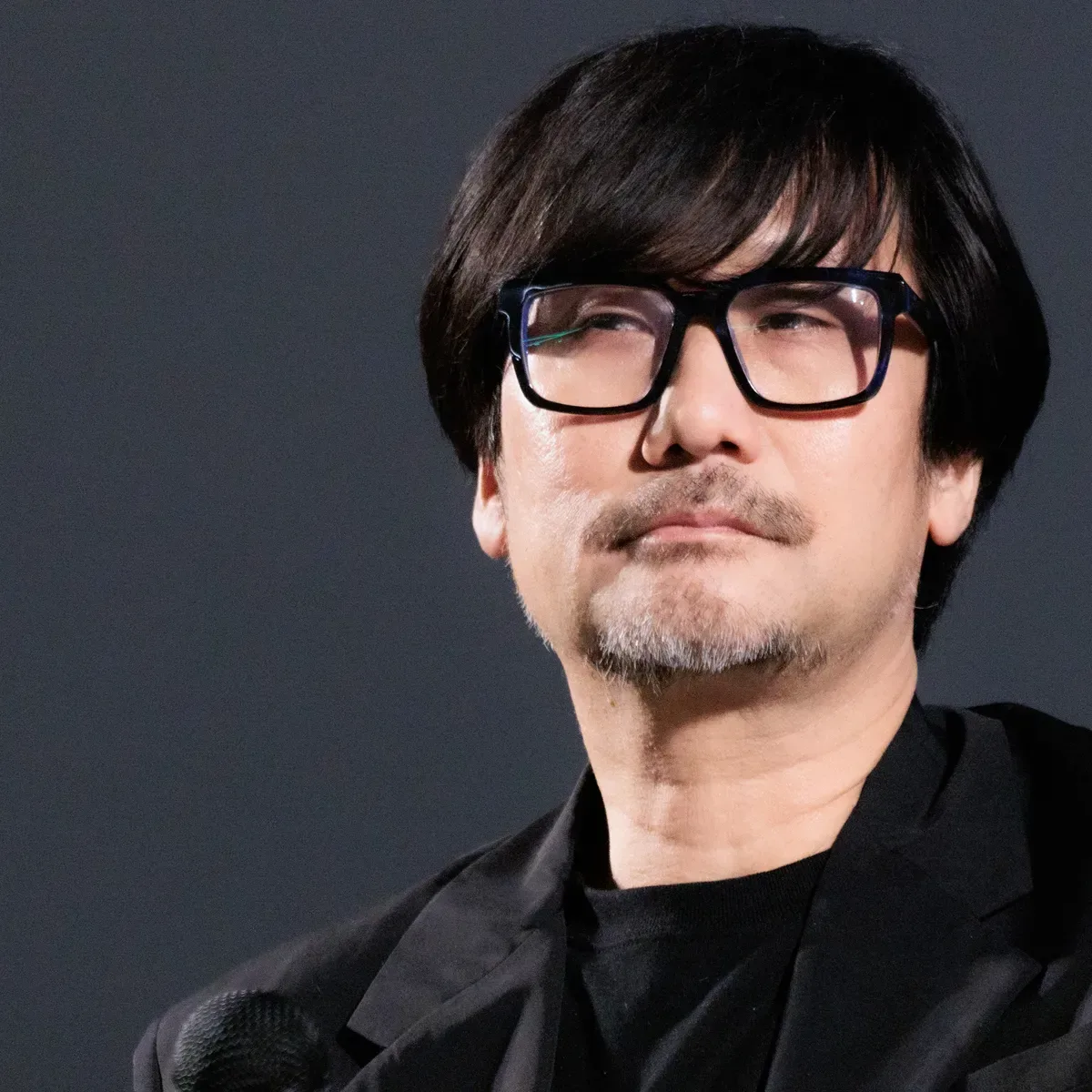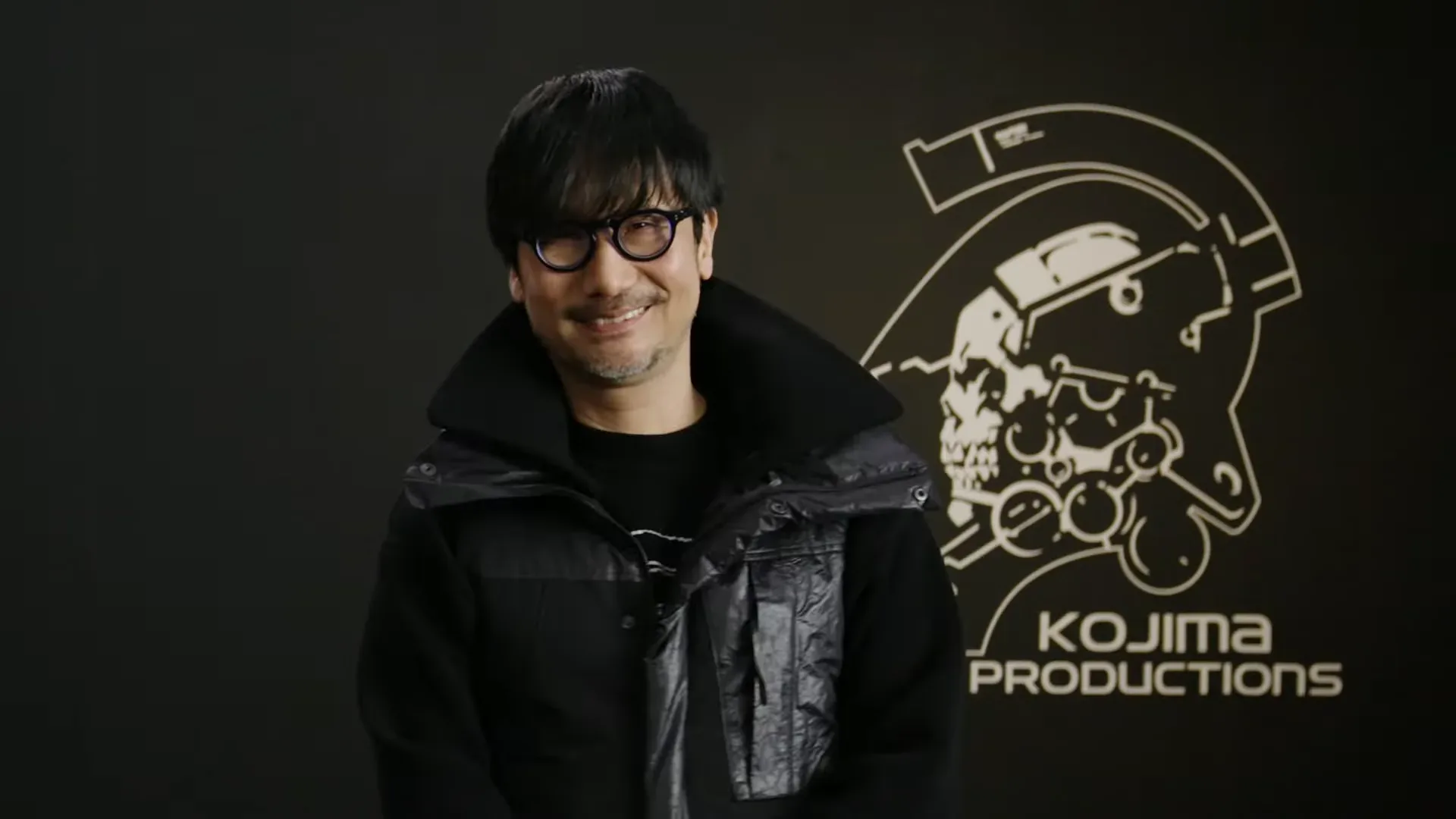
Hideo Kojima has outlined a cautious, creator-first view of AI following discussion around AI upscaling and Death Stranding 2. Speaking on the Koji10 podcast, Kojima said he has “mixed feelings” about the technology: he can see practical value in tasks such as restoring old photographs, adding colour, and potentially easing parts of film restoration, but he is uneasy with software making creative changes on its own.
That distinction is the heart of his argument. Kojima is not presenting AI as inherently useless, nor claiming that every automated tool has the same purpose. Instead, he draws a line between assistance on technical restoration and intervention in choices that originally carried artistic meaning. In his view, a lighting setup, for example, is not simply raw visual data to be sharpened or replaced. It may have been a deliberate decision by the person who made the work.
“As a creator, I have mixed feelings about this technology,” Kojima said. “AI is good at bringing old photographs to life or adding color to them, right?”
He suggested that AI could eventually handle work now carried out in restoration, including processes involved in preparing older films for 4K presentation. But he also identified the limitation that matters most to him: a system may be able to alter an image without understanding why it was originally framed, lit, coloured, or left imperfect in a particular way.
Restoration is not the same as creative revision
The debate around AI in games is often muddled because “AI” can describe very different tools. In this instance, the discussion includes AI upscaling associated with Nvidia DLSS 5, while Kojima’s examples also cover restoration of photographs and films. These applications can overlap in their use of machine-led image processing, but the creative stakes are not necessarily identical.
Upscaling broadly refers to producing a higher-resolution-looking image from lower-resolution material. In a game context, it can be part of the process that aims to deliver a clearer image. In archival or remastering work, a similar ambition—more apparent detail or a higher-resolution presentation—can invite a different question: is the tool recovering information, interpreting it, or changing the look of the original?
Kojima’s concern sits squarely in that last territory. He noted that people still restore old films in 4K by hand and acknowledged that AI could make such work easier. Yet he said he would not want an original work changed too extensively simply because a system was capable of doing so.
“As the person who made the original, I wouldn’t want someone changing it too much,” Kojima said. “There was a reason I chose a particular lighting setup. It would be different if AI understood those intentions.”
Related coverage includes Hideo Kojima Questions AI's Place in Creative Work After Death Stranding 2 DLSS 5 Debate.
This is a useful way to separate efficiency from authorship. A process can save time and still require supervision. A result can appear technically cleaner while no longer reflecting the choices that defined the original. Neither outcome is automatically good or bad, but the latter is why creator control remains central to arguments about AI-assisted remasters, visual preservation, and game production.
Control is Kojima’s condition
Kojima’s comments do not amount to an absolute prediction that AI will stay out of creative production. He said the technology will “probably become standard” in some form, and he described a present in which engineers and production teams may incorporate AI to streamline projects. His hesitation is instead aimed at autonomy: who decides what changes are made, and whether the person responsible for the work can direct the system.
When asked about the possibility of AI making changes independently, Kojima’s response was blunt: “I wouldn’t like that.” He left room for a different arrangement if he were controlling the AI within his own work, while also making clear that he was not fully certain where that boundary will settle.
That qualification matters. “Human control” is sometimes used as a vague reassurance in technology debates. Here, Kojima links it to a concrete creative problem. If a tool adjusts lighting, texture, colour, or another element of presentation, a creator needs to be able to judge whether the adjustment supports the intended result rather than merely optimizing for a technical target.
For audiences, this is a reminder that higher resolution and faithfulness are separate measures. A future version of a game or film may look more detailed in a purely technical sense, yet still depart from the original’s atmosphere. Conversely, a careful restoration can employ modern tools while retaining a creator’s intentions. The important issue is not whether a process is automated at all, but how much authority the tool has over interpretive decisions.
Why Death Stranding 2 is part of the discussion
Death Stranding 2 became part of the conversation surrounding Nvidia DLSS 5, prompting a wider look at what AI-led image processing can offer and where it may create discomfort. Kojima’s remarks suggest that this episode has sharpened his doubts about the technology’s role at Kojima Productions, particularly where a tool is understood as capable of making alterations rather than following a tightly controlled creative direction.
The available comments do not set out a technical assessment of DLSS 5, nor do they announce a specific production policy for Death Stranding 2, OD, or Physint. It would therefore be a leap to describe Kojima as declaring a blanket ban on all AI-related tools. What he has actually articulated is narrower and more substantial: an artist should not casually surrender creative decision-making to a system that cannot grasp the reasons behind the work.
That caution is especially relevant to games because a game’s presentation is made from countless interdependent decisions. Lighting can guide attention, establish tension, conceal or reveal information, communicate place, and define mood. If an automated system changes how an image is rendered or presented, the question is not merely whether a screenshot appears sharper. It is whether the player is seeing the scene in a way that continues to serve its intended purpose.
It also has practical implications for conversations about remakes and remasters. Kojima speculated that remakes may eventually become less common if AI can perform enough restorative work. But restoration and remaking are not interchangeable terms. A restoration seeks to preserve and present an existing work; a remake implies remaking material in a new form. Kojima’s emphasis on original lighting and artistic choices indicates why that difference is consequential. A technical update can become a creative reinterpretation if the process begins making unapproved aesthetic decisions.
Automation may expand, but skepticism remains
Kojima expects increasingly capable systems to become more routine. He imagined a distant future in which resolution advances further and AI may carry out more work automatically. Yet he did not present that outcome as something he welcomes. “Maybe AI will eventually do all that automatically,” he said. “In a hundred years, the resolution may be even higher. But I don’t much like the idea.”
That is not nostalgia for lower-resolution images or a rejection of all restoration. It is a warning against treating automation as the only measure of progress. In creative fields, the ability to generate, modify, or enhance material is not the same as possessing the judgment to decide when a change should happen. The work of engineers and production teams may become faster with AI assistance, but speed does not erase the need for accountability.
The games business is already confronting those questions in other areas. For a recent example of how generative-AI concerns can affect public-facing game material, see the investigation that led to a RuneScape 3 trailer being pulled. Kojima’s comments add a related perspective from a creator: even where a tool may be useful, the person whose work is being shaped should retain meaningful authority over the result.
What this means for Kojima Productions’ next projects
There is no announced technical checklist here for Kojima Productions’ upcoming games. Kojima did, however, tie his reservations to the notion of controlling any AI used in his own work. That gives fans a clear principle to watch: if AI-assisted processes are ever part of a project, the issue for Kojima is likely to be whether they remain directed by people rather than acting as independent creative decision-makers.
OD is progressing smoothly, Kojima has said, and he has described it as a completely new type of game that tests the thresholds of fear. Physint is also among the studio’s named projects. Beyond those broad points, the comments provide no basis for claims about either game’s specific technology or visual-production methods.
For now, Kojima’s position is best read as a demand for restraint rather than a simple yes-or-no verdict on AI. Tools can assist with restoration. They can potentially streamline parts of production. But if they alter the artistic decisions embedded in a work without the creator’s direction, they risk becoming more than tools. That is the prospect Kojima says he does not much like.