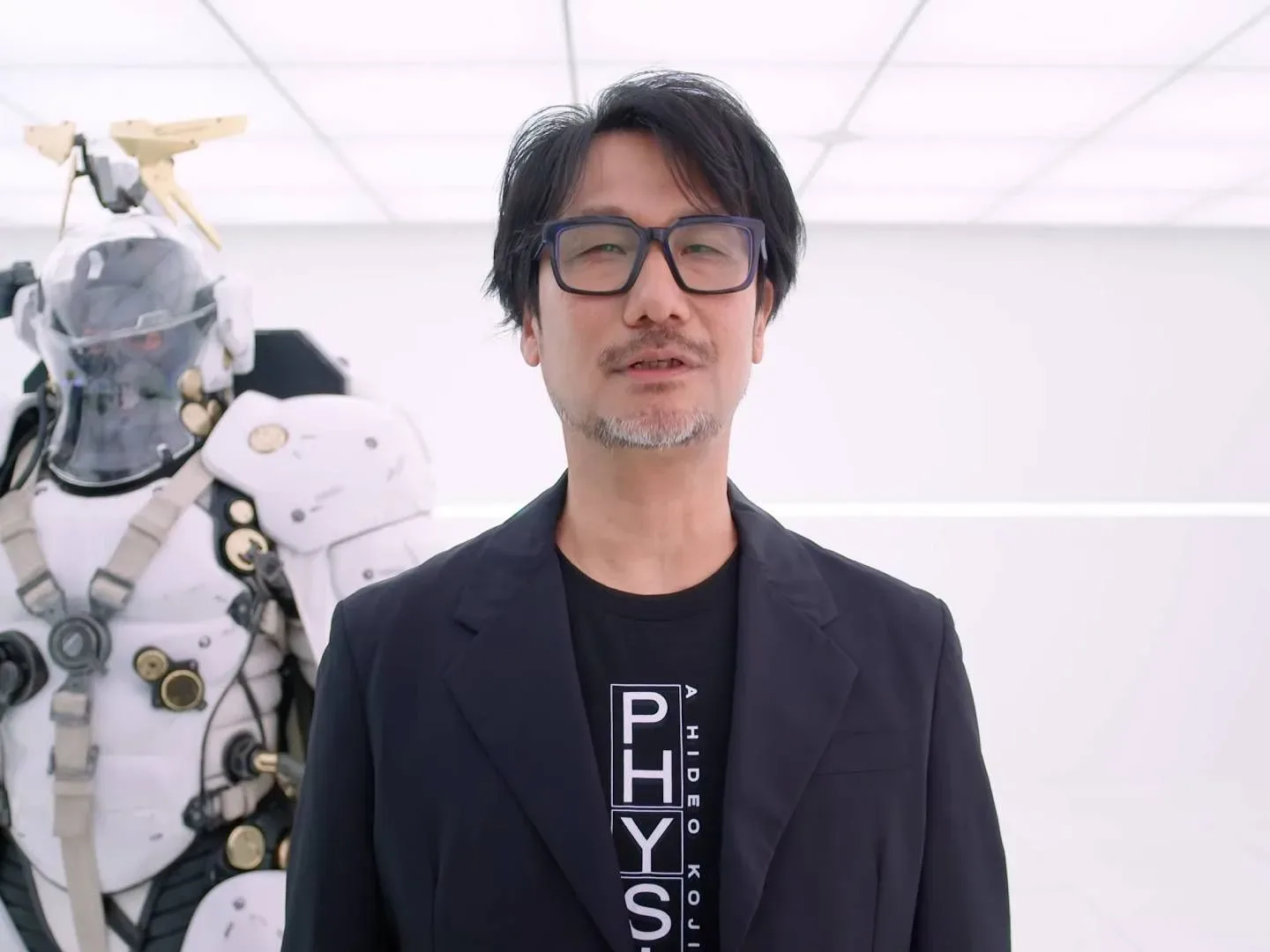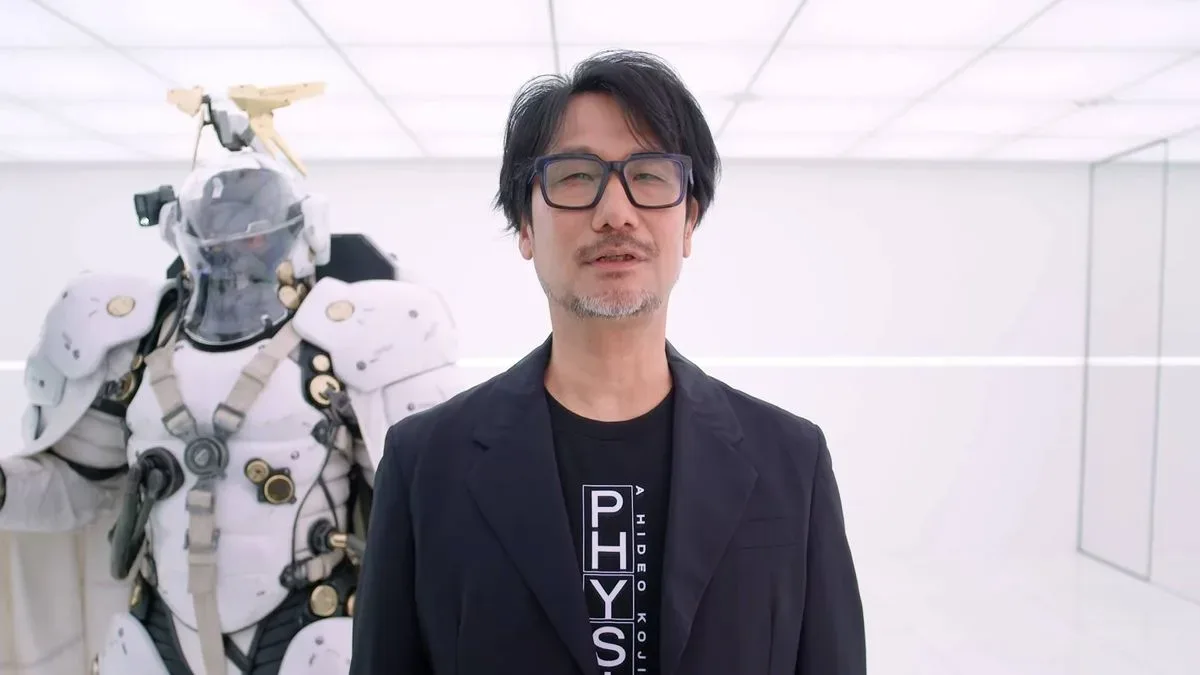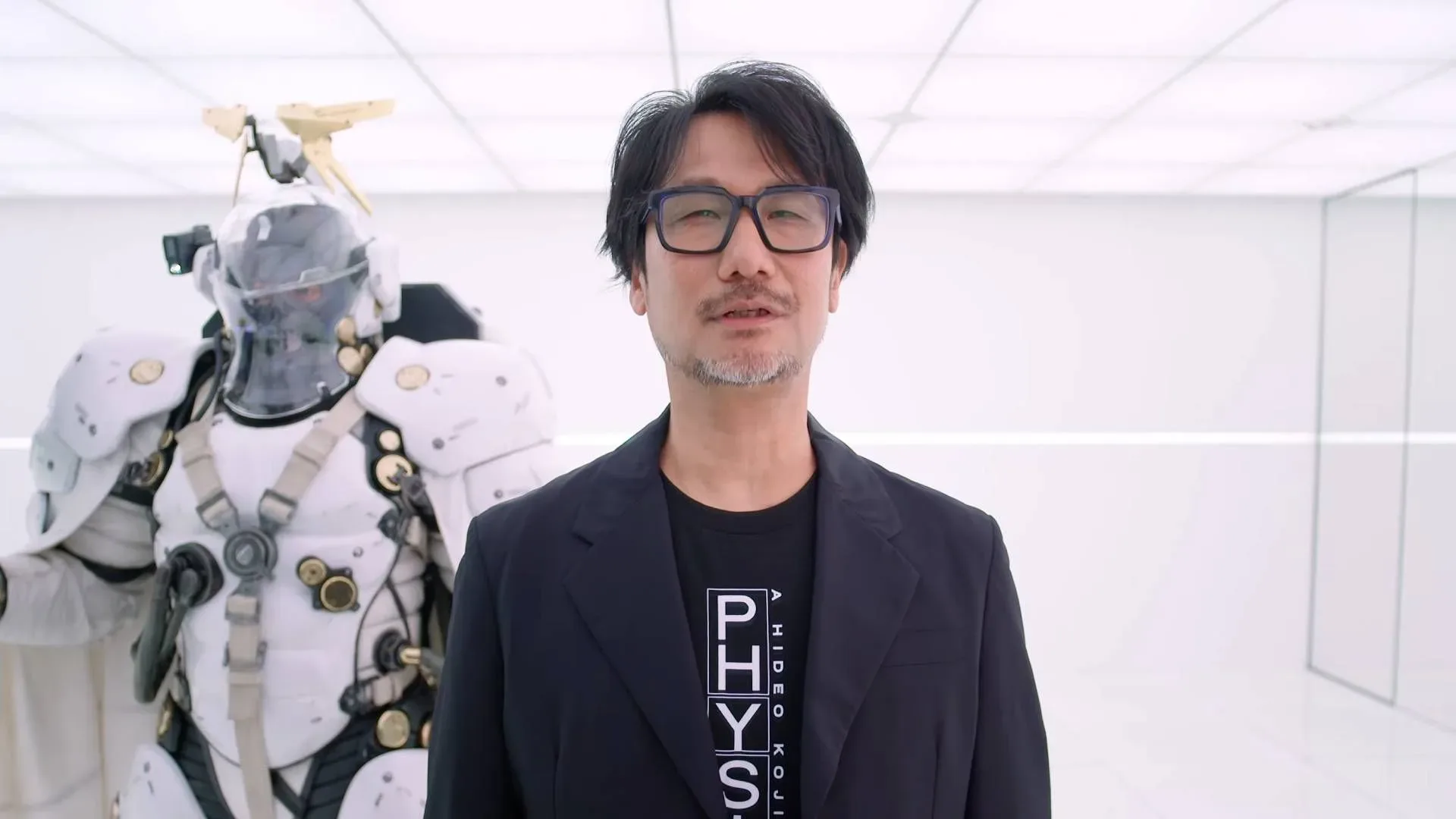
Hideo Kojima has posted another image from inside a Sony office, and it has immediately restarted the kind of corporate-relationship detective work that follows nearly every Kojima Productions update. The October 16 post places Kojima in a lounge-like space with a large illuminated Sony logo visible behind him. It confirms a Sony visit; it does not, on its own, confirm a new game, a publishing agreement, or a platform arrangement.
That distinction matters. Kojima’s public image, Sony’s long association with his work, and reports that the action-espionage project Physint has since shifted toward Xbox create an easy narrative: a former partner meeting an old ally after a split. The available evidence supports only the narrower point that Kojima is still spending time with Sony. Everything beyond that remains interpretation.
Still, it is an interesting image at a moment when Kojima Productions appears to be working across more than one major platform-holder relationship. OD, the mysterious horror game featuring Sophia Lillis and Hunter Schafer, was already linked with Microsoft. Reporting has also said Sony chose not to publish Physint after the project missed multiple deadlines, with Kojima then reaching a comparably sized agreement with Xbox. Bill Skarsgård was subsequently announced for a lead role in Physint.
The picture therefore does not settle the company’s next move. If anything, it is a useful reminder that creative relationships, publishing relationships and platform strategy are not necessarily the same thing.
What the photo actually establishes
The post shows Kojima at a Sony-branded location. Sony has multiple offices and divisions, and there is no confirmed identification of the particular office in the material available. Kojima had also shared other images from Sony locations only days earlier, apparently from a separate visit.
That is enough to make the photos noteworthy, particularly given Kojima’s history with PlayStation-facing projects. It is not enough to establish why he was there. A visit could involve discussions about an existing relationship, a future idea, business meetings unrelated to game publishing, or simply a professional catch-up. None of those possibilities can responsibly be promoted from speculation to fact without a direct announcement.
In practical terms, fans should treat the Sony logo as a clue about access and continued contact, not as a logo stamped on an unannounced box. Studios and creators routinely maintain relationships with companies even while projects move elsewhere. The same is true when a publisher passes on a specific proposal: declining to publish one game does not automatically mean ending every connection with the developer behind it.
Why Kojima’s Sony connection draws so much attention
Kojima’s name is deeply associated with PlayStation in the public imagination. The supplied background specifically points to Metal Gear Solid and Death Stranding as major milestones connected to that relationship. Those games helped create an expectation that a Kojima project and a PlayStation context naturally belong together, even when the actual business details may be more complicated.
Related coverage includes Hideo Kojima's Sony Visit Fuels Fresh Questions Around Kojima Productions' Next Moves.
That history gives a simple office photograph more symbolic weight than it would carry for many other creators. Fans are not only seeing an executive-style visit. They are seeing a familiar partnership that appears, at minimum, not to have become publicly hostile.
It is also worth separating franchise hopes from announced work. The photo does not confirm Death Stranding 3, nor does it indicate who would publish any hypothetical future entry. An established series can prompt understandable speculation, but speculation about a sequel is still different from a disclosed production plan.
The reported Physint change, explained carefully
Physint is described as an action-espionage project and has been framed as a potential successor in spirit to the kind of work Kojima is known for. Reports say Sony elected not to publish it after multiple missed deadlines. That wording is important: it concerns the publishing arrangement for a project, not a confirmed rupture between Kojima Productions and Sony as companies or creative partners.
A publisher is the company that helps fund, market, distribute and commercially support a game. The developer is the studio making it. In some cases, the same company fills both roles; in others, an independent studio works with a different publisher for each project. When publishing plans change, it can affect financing, release strategy and platform assumptions, but it does not necessarily prevent the developer from continuing its work or from collaborating with the former prospective publisher later.
Reporting indicates Kojima secured an Xbox deal within days, and the Skarsgård casting news followed through that relationship. That sequence suggests Kojima Productions had an alternative route for the project. It does not reveal the game’s release date, its specific platforms, the exact contractual terms, or the development status beyond what has been publicly described.
The bigger takeaway is not that one side has “won” Kojima. It is that the studio’s projects may be supported through different arrangements. For players, that can mean future announcements need to be judged individually rather than by assuming the whole studio is permanently aligned with a single console brand.
OD and Physint make the studio’s next steps harder to predict
OD was already associated with Microsoft and is described as a horror game starring Sophia Lillis and Hunter Schafer. Physint, meanwhile, is reported to have found its way to Xbox after Sony passed on publishing it. Taken together, those details make Microsoft an important current partner for Kojima Productions.
But the Sony photos show that continued contact remains possible even with that Microsoft activity. This is where the online discussion can become too binary. A studio does not have to choose between treating every company as a lifelong exclusive partner and never speaking to it again. Entertainment development involves long planning periods, separate teams, confidential proposals and projects at different stages. A meeting photo cannot tell outsiders which of those factors applies.
For those watching for concrete signals, stronger evidence would look different: a formal announcement naming a publisher, a trailer carrying platform branding, an official project page, or a statement from Kojima Productions, Sony or Microsoft. Until then, the most accurate reading is restrained: Kojima visited Sony, has done so more than once recently, and no public explanation for those visits has been established.
What not to read into a branded backdrop
- Not a confirmed PlayStation exclusive: Sony signage is not a platform announcement.
- Not proof of a new contract: no terms, title or publishing deal were disclosed in connection with the photo.
- Not confirmation of a sequel: there is no announced Death Stranding 3 tied to the visit.
- Not a contradiction of Xbox partnerships: professional relationships can coexist, and separate games can have separate publishers.
- Not a full account of Physint’s status: reports describe a publishing change, but the photo adds no verified development or release information.
There is a broader industry lesson here, too. When a high-profile creator posts an intentionally polished image from a recognizable corporate environment, audiences will understandably look for a hidden message. Sometimes that is the point of sharing it. But a tease is not the same as confirmation, and the gap between the two is where rumor tends to outrun the available facts.
For now, the Sony visit is best understood as evidence that the relationship remains visibly cordial, despite the reported publishing shift around Physint. Whether it leads to another Kojima Productions project with Sony is unknown. The studio already has substantial work connected to Microsoft, and the next meaningful update will need to come through an explicit announcement rather than an LED logo in the background.
Players tracking the business side of major game projects can also see how platform ecosystems are changing in the wider industry through this look at how another large RPG team is developing its next project. Kojima Productions’ situation is different, but the underlying point is similar: the people making games, the companies funding them and the platforms eventually hosting them can all shift over a project’s long life.