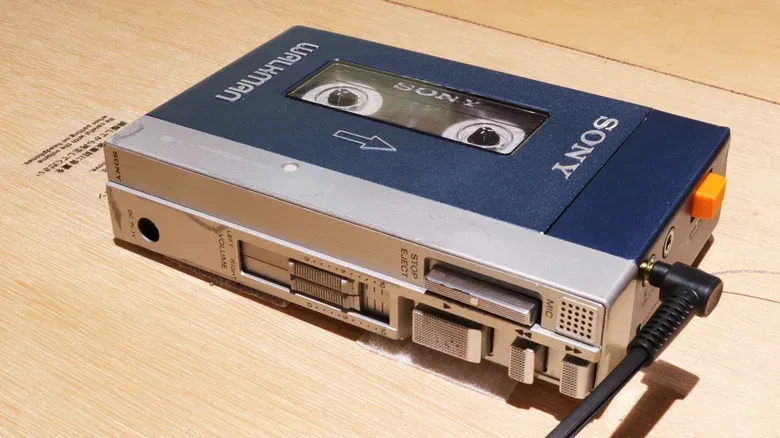
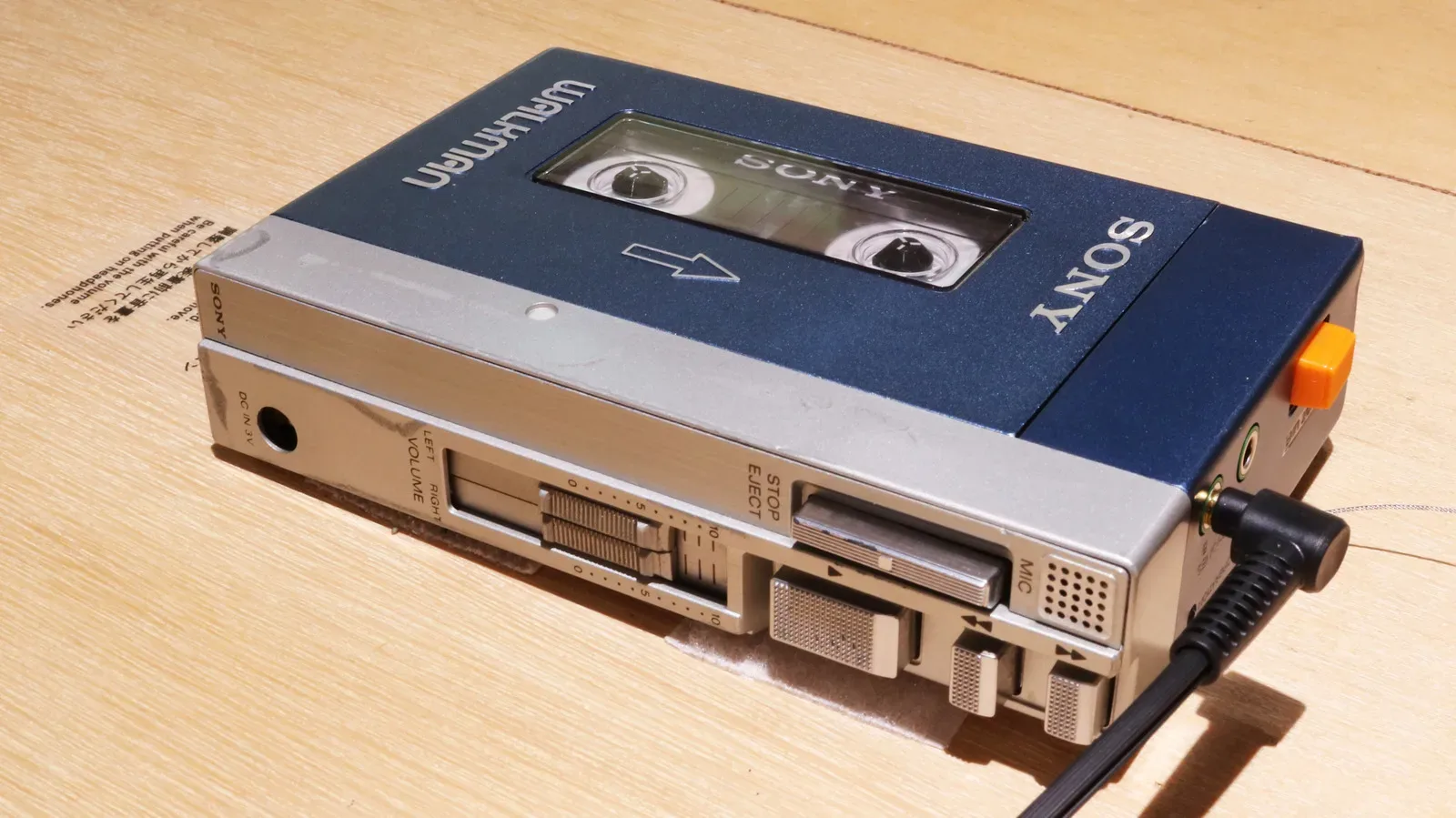
The original Sony Walkman was never a cheap little novelty. When the blue-and-silver TPS-L2 reached Western markets in 1980, its $200 price translated to roughly $800 in today’s money after inflation. That makes the machine’s legacy more interesting: the device that helped turn personal music listening into an everyday habit began as a substantial purchase, not an impulse buy.
That price also puts a modern Sony Walkman lineup in sharper perspective. The name survives on digital music players priced from $75 for the basic NW-E394 to $5,900 for the flagship NW-WM1ZM3. Those products serve radically different audiences and use radically different technology, but they share a through line with the TPS-L2: Sony is still selling dedicated devices for people who want their music experience separated from the rest of their pocket technology.
The TPS-L2 was portable, social and expensive
Sony did not invent the magnetic cassette player, but the Walkman made the format a defining part of portable listening. Instead of keeping tapes in the living room or car, listeners could clip a player to a belt and take stereo music with them. That shift is easy to take for granted after decades of phones, streaming apps and wireless earbuds, yet the underlying proposition was unusually specific for its time: personal music in motion.
The TPS-L2 had some compromises that could have sounded unappealing to early buyers. It weighed 14 ounces and lacked recording capability. Its hardware was based on a modified Sony Pressman recorder chassis, but its purpose was playback rather than making recordings. Convincing people that they needed a dedicated cassette player with that limitation took effort. Sony’s street-level marketing helped make the case, and the player sold 30,000 units within two months of its 1979 debut in Japan.
Its features show that the original vision was not merely solitary listening. The TPS-L2 included two mini headphone jacks, allowing two people to listen at once. The bundled MDR-3L2 headphones, with their orange foam earpads, became part of the product’s unmistakable visual identity alongside the metal blue-and-silver casing.
There was also a “hotline” button. Rather than forcing the wearer to remove the headphones to speak with someone, it reduced playback volume and turned on a microphone. It was a simple answer to a practical problem: portable headphones can isolate a listener from the person standing next to them. Two AA batteries provided the power.
In other words, the TPS-L2’s historic importance was not based on a long checklist of functions. It combined cassette playback, portability, recognizable industrial design and a few thoughtful social touches into a product that made a new habit feel desirable. In 1986, “Walkman” entered the Oxford English Dictionary, a sign of how thoroughly the brand had become connected to portable audio itself.
What the inflation comparison actually says
Inflation comparisons do not mean an older device and a new one offer equivalent value or capability. A TPS-L2 cannot stream music, hold a digital library or communicate wirelessly. Its $200 launch price and an approximate $800 present-day equivalent instead describe purchasing-power context: spending $200 on the Walkman in 1980 represented a much larger commitment than the same number on a price tag now.
Related coverage includes Sony Walkman Prices: From $200 TPS-L2 to a $5,900 Digital Player.
That makes the original machine notably closer, in inflation-adjusted terms, to Sony’s premium modern products than to its lowest-cost player. It also complicates the nostalgic idea that older consumer electronics were simple and inexpensive. The TPS-L2 may look comparatively modest next to a phone, but it was a purpose-built piece of metal-and-cassette hardware with a premium position.
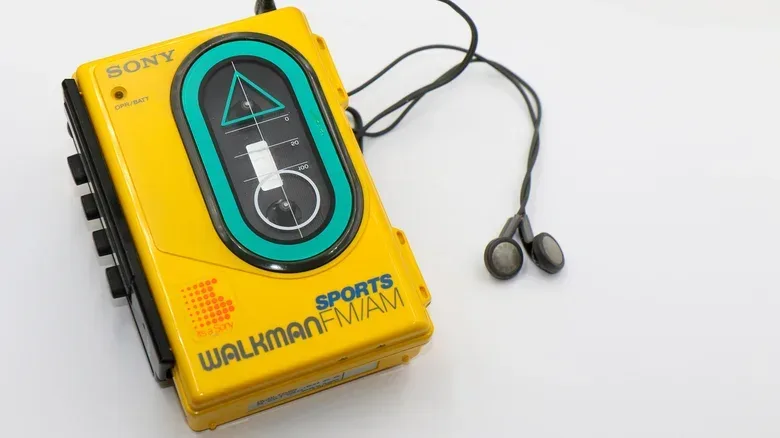
Sony went on to sell more than 200 million cassette-based players before ending cassette Walkman production in 2010. The brand’s U.S. naming had initially used Soundabout, before Walkman became standardized. Over the following decades, Sony expanded its portable-audio approach through Discman and MiniDisc players, then moved into modern portable media players.
For roughly two decades, Walkman was a dominant personal-audio name. MP3 players and Apple’s iPod later changed the market, while mobile phones consolidated music playback with communications and other everyday tools. Apple’s place in that transition is part of the broader story of how dedicated devices gave way to multipurpose hardware; its modern consumer-tech changes continue to make headlines, including the closure of the Apple Support Community and its forum redirect.
The important distinction is that Walkman did not disappear as an idea. It shifted from mass-market cassette companion to a specialized digital-audio label.
Modern Walkmans cover three very different buyers
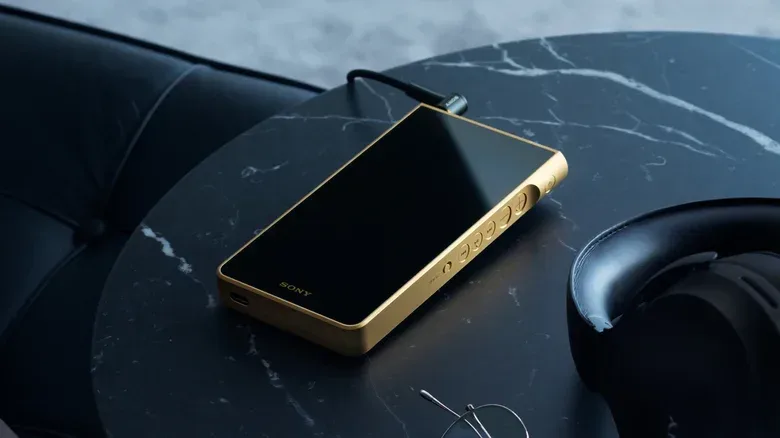
The most striking current figure is the $5,900 NW-WM1ZM3. This digital audio player, often shortened to DAP, sits at the enthusiast end of the lineup. A DAP is a dedicated device for playing digital music files, as opposed to a phone that also handles calls, messaging, cameras and a wide range of apps.
The NW-WM1ZM3 runs Android, supports Wi-Fi streaming and uses a 5.5-inch touchscreen. Its chassis is precision-milled from oxygen-free copper. That material description refers to copper manufactured with very low oxygen content; here, it is part of a construction approach aimed at high-end audio buyers. Sony positions the player around bass authority, clarity and dynamic sound.
At this level, the comparison with the original Walkman is philosophical more than technical. The TPS-L2 made listening portable. The NW-WM1ZM3 asks buyers to pay for a highly specialized version of digital portability, with premium material choices and streaming included. Its price is roughly equivalent to $1,500 in 1980 dollars, making it an even more conspicuous purchase in historical terms than the $200 TPS-L2.
Below it is the 2023 NW-A306, listed at $350. This is a middle ground for listeners who want a dedicated player with support for high-resolution audio files and high-quality codecs.
A codec is the method used to encode and decode digital audio. In practical terms, codec support affects which audio formats and transmission methods a player can work with. “Hi-res” is shorthand for high-resolution audio files, a category aimed at listeners seeking playback beyond more conventional compressed-file expectations. Those terms matter to buyers considering a dedicated player, but they should not obscure a straightforward limitation: the NW-A306 has 32GB of storage, with only about 16GB usable.
Usable storage is the portion left for the owner after the operating system and preinstalled software take their share. On a music device, that distinction matters immediately. A nominal capacity can sound comfortable until the space available for files is half the headline number. The supplied information does not establish how many albums that storage can hold, because that varies with file format, resolution and album length, but the constraint is clear enough: a library-heavy user needs to account for it.
At the entry level, the $75 NW-E394 is a much more stripped-back proposition. It drops Android, Bluetooth and SD card expansion, with 8GB of internal storage. Bluetooth is a wireless short-range connection commonly used for headphones and speakers; SD card expansion means adding removable storage. Removing both streaming-oriented software and expandable storage makes this model a basic portable player rather than an all-purpose digital-music hub. With only 8GB built in, space can become limiting quickly.
Why the original TPS-L2 remains a collecting landmark
The TPS-L2 has gained fresh cultural visibility long after cassette Walkman production ended. In 2014, Guardians of the Galaxy put the model prominently in the hands of Peter Quill, played by Chris Pratt. The character uses the player for the Awesome Mix Vol. 1 tape, presented in the film as a gift from his mother.
That exposure helped send vintage TPS-L2 prices into the hundreds or thousands of dollars among collectors. It is a useful reminder that collector value is not the same thing as an original retail price, nor is it a guarantee for every example. The $200 1980 price is the launch-price benchmark; later collector-market amounts are driven by interest in a particular vintage object and its renewed pop-culture association.
For collectors, the TPS-L2’s appeal is unusually easy to understand from the hardware itself. It has a visual identity people recognize, a place in the development of portable music habits, an early sales story, a branded legacy and a major film connection. Those elements give it importance beyond its cassette mechanism. Its twin headphone ports and hotline function also preserve a period-specific sense of how people imagined portable listening would fit into real social life.
The original Walkman’s $200 launch price, the inflation-adjusted estimate of about $800 and the current $75-to-$5,900 spread all point to the same lesson: “Walkman” has never described one fixed kind of product. It has described Sony’s changing answer to portable listening. The tools moved from AA-powered cassette playback to Android, Wi-Fi and touchscreen interfaces, but the dedicated-player concept has proved more durable than the cassette format that made the name famous.