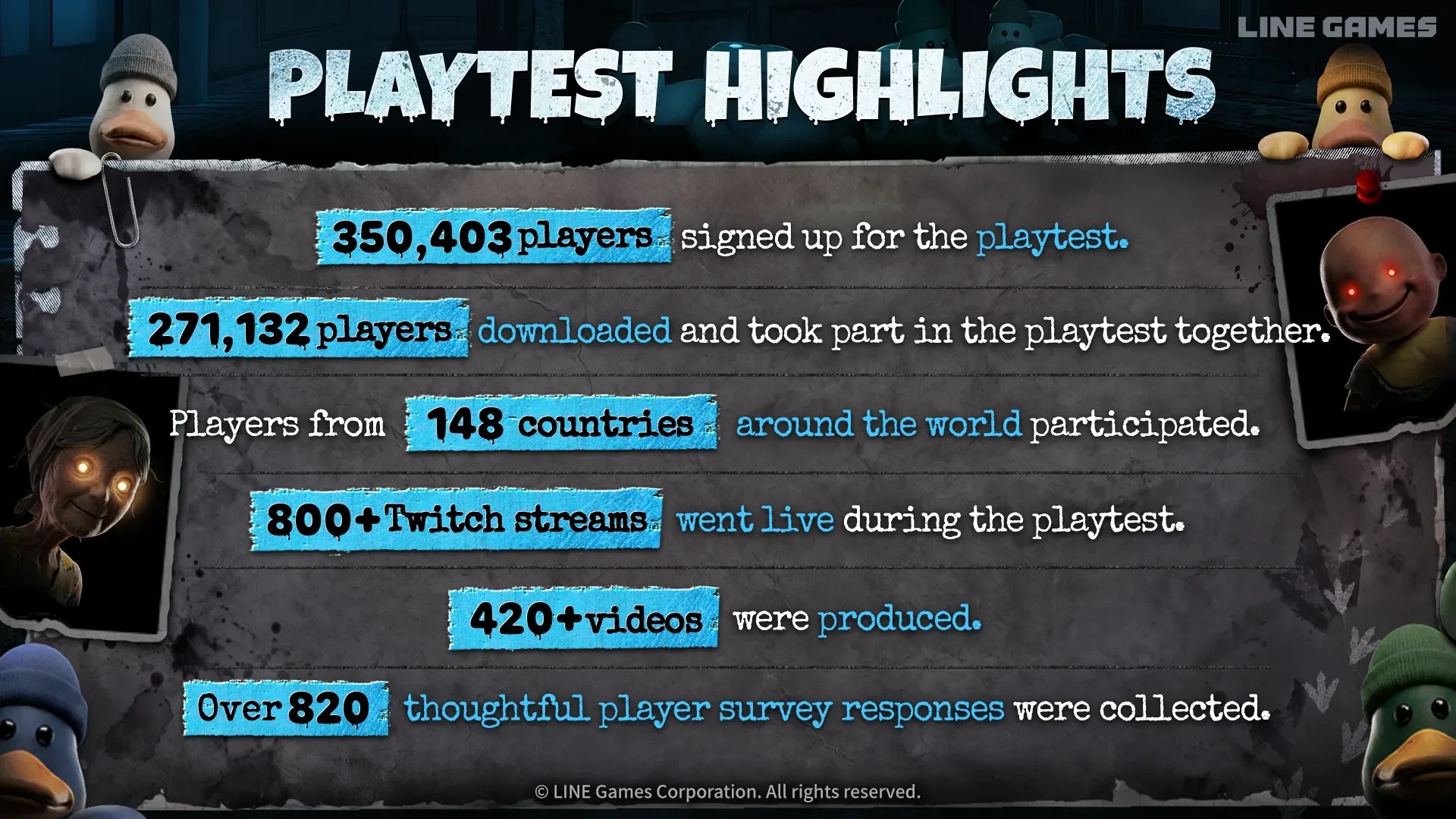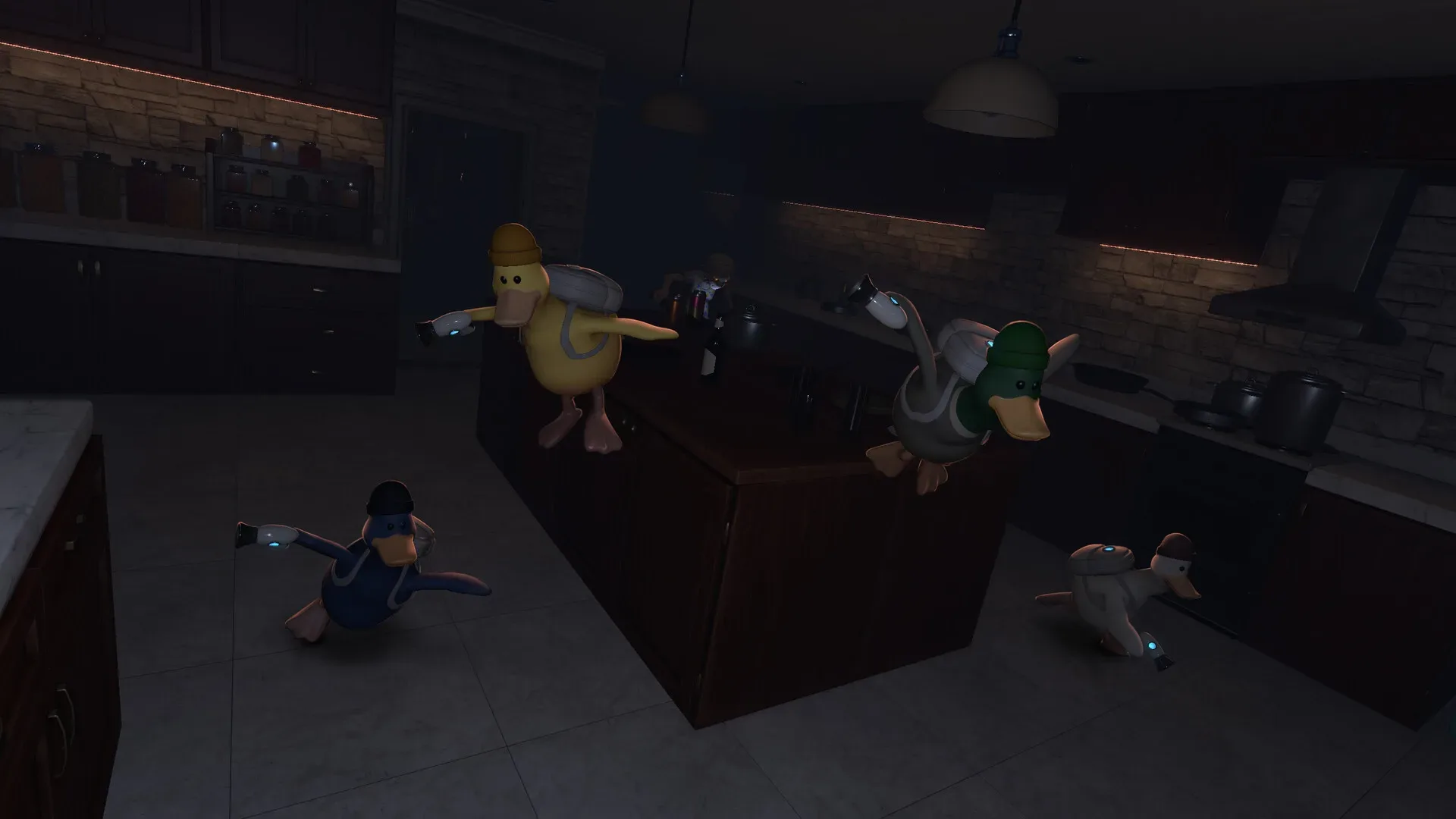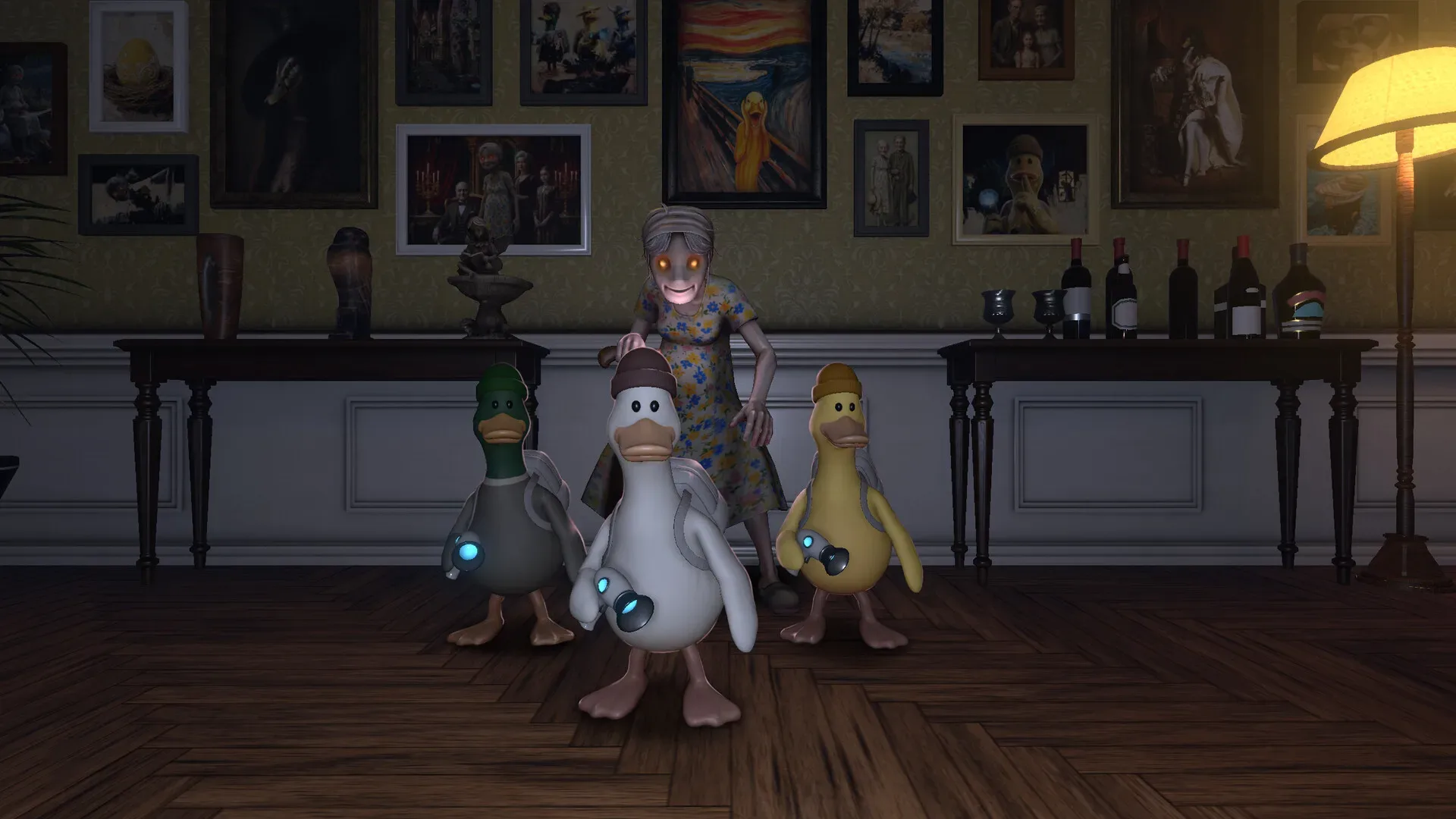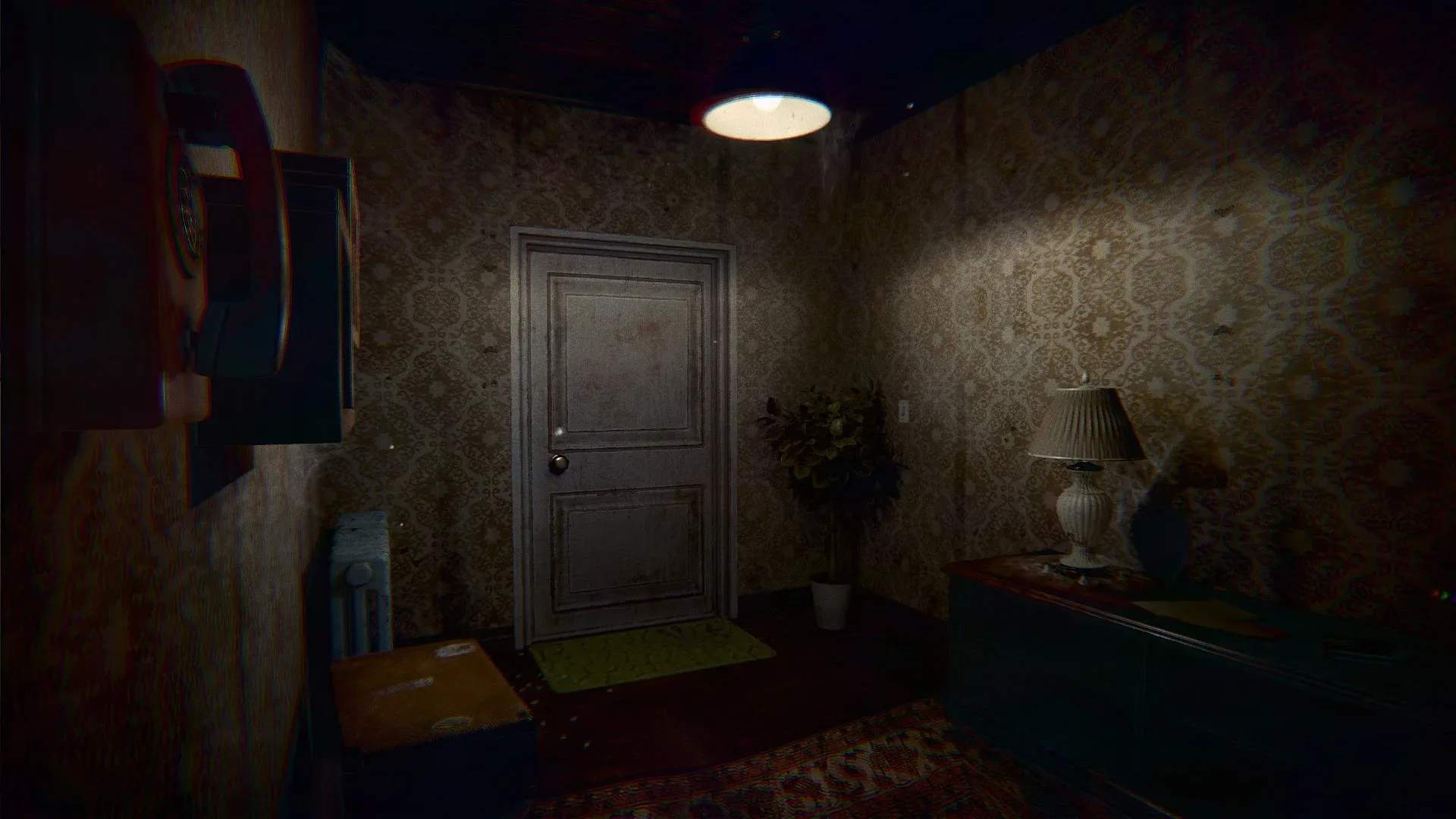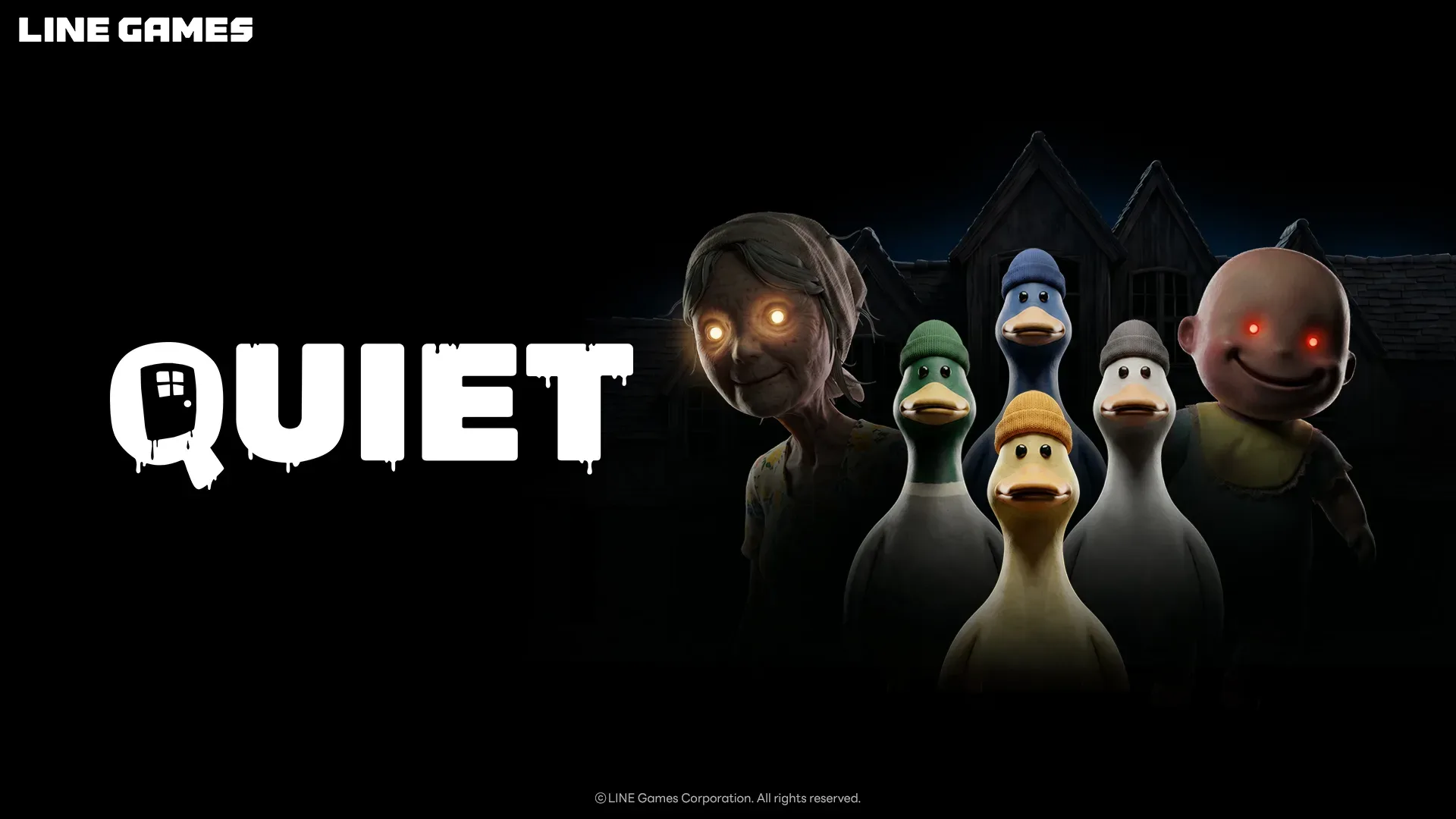
QUIET, the upcoming one-to-four-player co-op horror game from LINE Games, has completed its first playtest with 271,132 participants. The test attracted 350,403 sign-ups, and the players who downloaded and joined came from 148 countries.
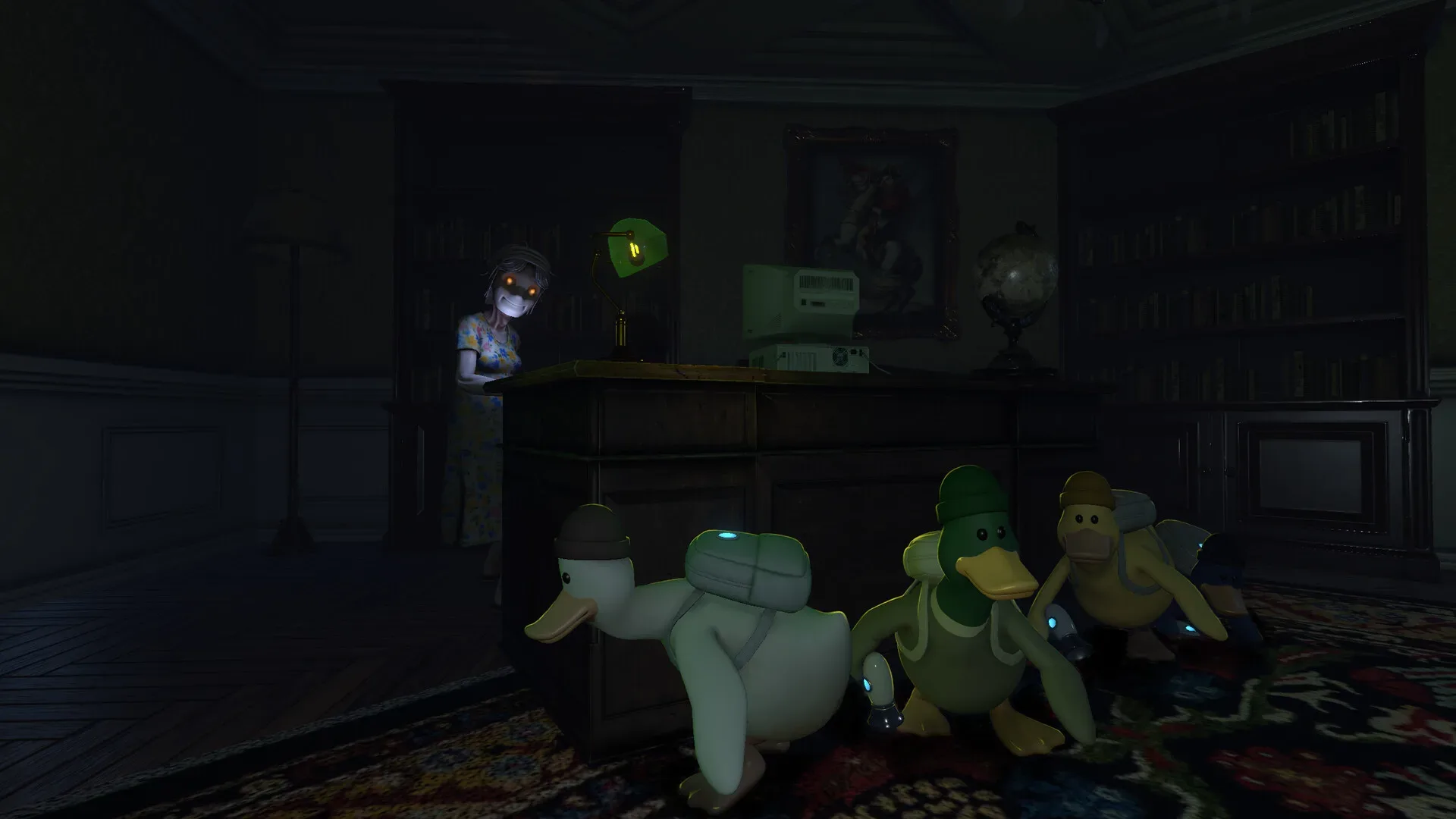
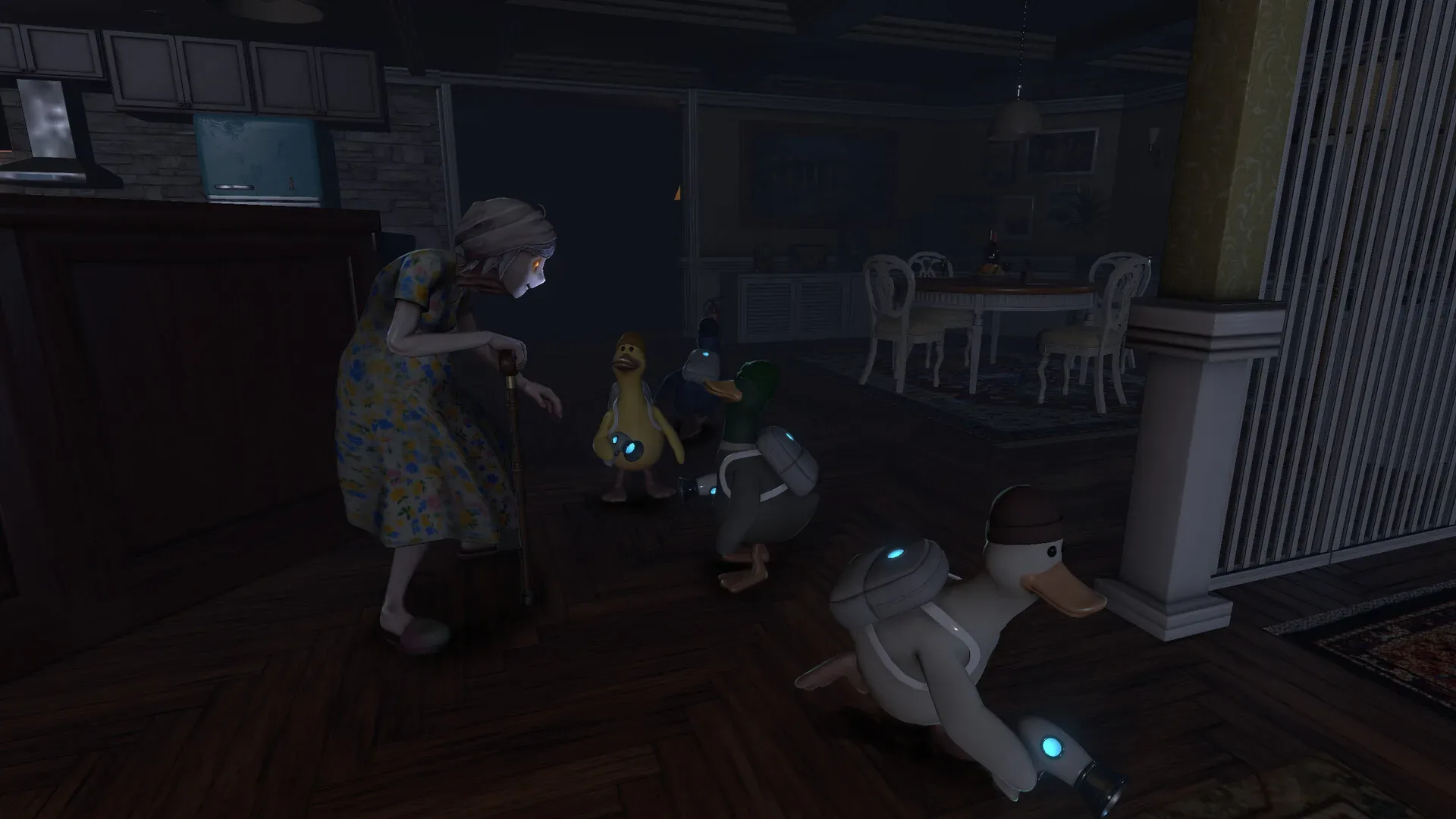
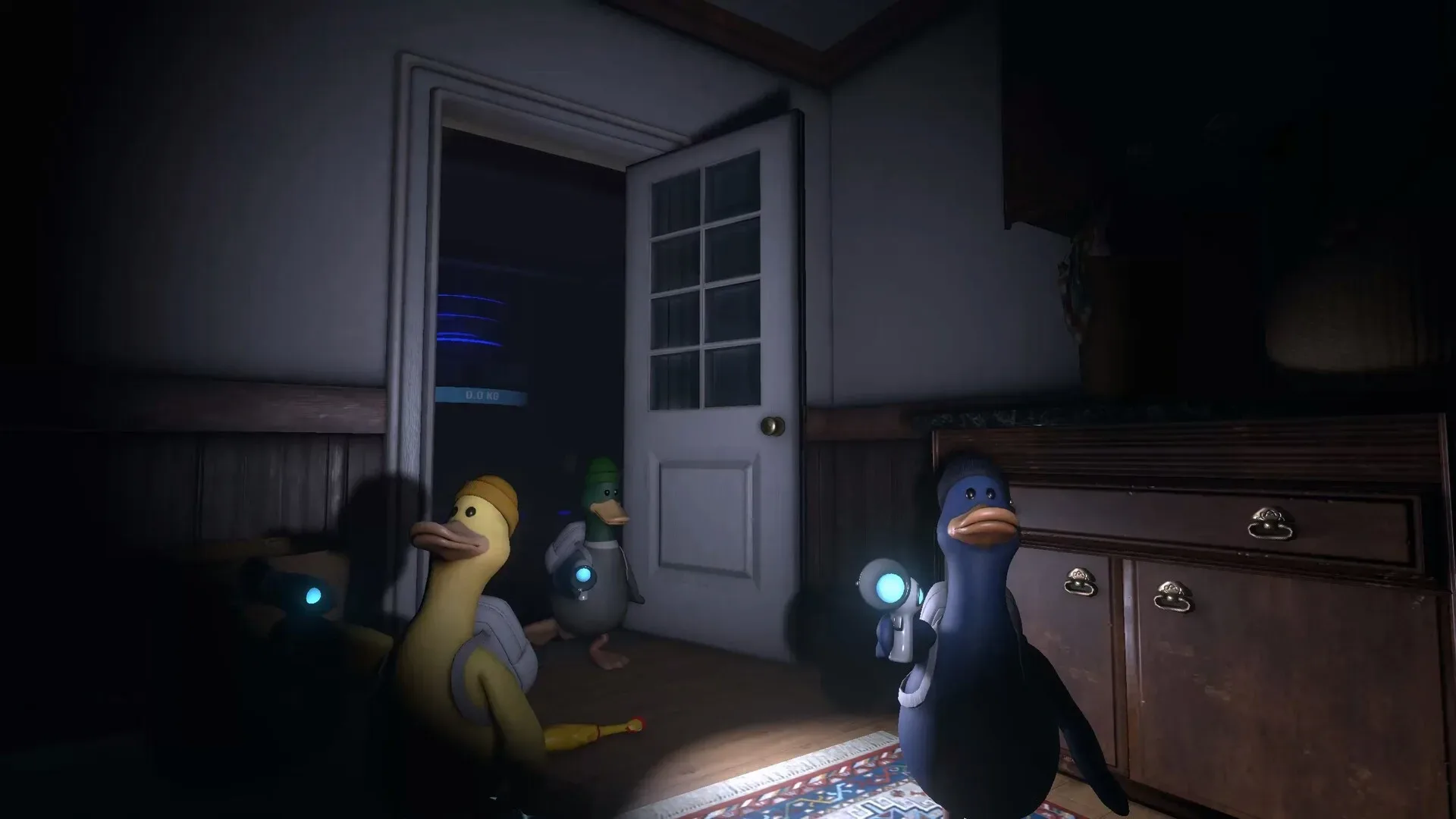
That is a substantial first public sampling for a game whose central idea depends on both player coordination and player restraint. QUIET casts its teams as alien ducks stranded far from home, then sends them into a paranormal mansion to recover the parts needed to repair their ship. The complication, naturally, is that something dangerous occupies the house—and it can be alerted by noise.
For a co-op horror game, the reported playtest scale matters less as a declaration that every design question is settled than as a large pool of situations to study. Teams of strangers, duos of friends, and full four-player groups can all approach a sound-sensitive game differently. A broad test creates more opportunities to see where players understand the stakes, where they create accidental chaos, and where a frightening rule becomes frustrating instead.
A mansion escape built around keeping quiet
The goal presented in the playtest is straightforward: search the mansion for ship-repair components, survive its paranormal threat, and get the alien ducks out. The systems surrounding that objective give QUIET its identity. Players can make sound through movement, by dropping objects, and through their real-world voice.
Sound-based stealth means sound is not merely atmosphere or a scripted jump-scare trigger. It is part of the game’s risk system: actions that make noise may reveal the team to the homeowner. In QUIET’s case, voice is also an input to that system. The developer specifies that a microphone is required, so speaking aloud is not simply a social layer sitting outside the game. It is part of the intended danger.
That distinction could make ordinary co-op habits much more consequential. In many multiplayer games, players solve uncertainty by immediately calling out what they see, directing teammates, or reacting loudly when something goes wrong. Here, those instincts may undermine the team. The intended tension appears to come from managing information and panic without producing the noise that brings trouble closer.
Dropped objects are another important detail. A physical mistake can become a group problem: one player fumbles while searching, a sound is made, and everyone may have to respond. That creates a co-op structure where caution is shared rather than individual. A player who rushes ahead is not only risking their own attempt; they may compromise teammates who were being careful.
Why the microphone requirement is a major design choice
Requiring a microphone establishes a clear expectation for prospective players. QUIET is designed around live voice as well as conventional controls. That can support an unusually direct connection between the people at their desks and the characters moving through the mansion: the noise made in the room may have consequences in the game.
It also gives the development team a particularly important area to examine after a playtest. The supplied details do not say how the sound system measures voice or what adjustments may follow, so it would be premature to assume any specific changes. But the feedback and gameplay data gathered during the test can help the team assess whether players grasp why an alert happened, whether quiet communication feels feasible, and whether the game’s systems produce suspense rather than confusion.
Practical group behavior will be central to that question. Teams need enough communication to coordinate a search for parts, but the game’s premise pressures them not to communicate in the most instinctive way. That tradeoff is the hook. It may also be where successful groups develop their own discipline: deciding who searches which space, reacting quickly to an accident, and knowing when not to turn a surprise into a shouted conversation.
What the playtest numbers show—and what they do not
LINE Games reported 350,403 registrations and 271,132 players who downloaded and participated. Those are related but different measures. Registrations indicate interest in access; participation indicates the number of people who went on to download and enter the test. The gap between them should not be read as a player-quality score or a verdict on the game. It simply distinguishes sign-up activity from actual test participation.
The international reach is notable as well. Participants came from 148 countries, giving the team feedback from a broad geographic spread. In a game involving live voice and multiplayer coordination, that breadth can expose a wide range of play habits and technical circumstances. The available information does not break those responses down by region, language, group size, or playtime, so no more detailed conclusions can be drawn from the country count alone.
Community activity around the test was also considerable. More than 800 Twitch streams went live, while players and creators made more than 420 videos. Those figures describe visible interest around the playtest, although they do not tell us how many viewers each stream or video reached, how long they ran, or how audiences reacted. What they do establish is that QUIET’s duck-in-a-haunted-house setup generated a sizeable amount of broadcast and video activity while players were able to try it.
More than 820 player survey responses were collected. Surveys offer a different kind of information from gameplay telemetry. Gameplay data can show what players did—such as patterns of movement or moments where a team’s run ended—while surveys can capture what players say they understood, liked, disliked, or found difficult. Neither is automatically complete on its own. Used together, they can help identify whether a measurable issue aligns with a player-reported experience.
QUIET’s core challenge is not simply finding the parts. It is getting a team to act like a team when making noise can endanger everybody.
Co-op horror’s shared-risk proposition
QUIET supports between one and four players, which places solo play and group play under the same basic mansion-escape objective. The supplied playtest details emphasize cooperation for up to four players, especially the way noisy errors can imperil the entire party. That suggests the group format is not just an optional social mode added to a horror scenario; shared vulnerability is central to the game’s premise.
“The homeowner” is the game’s named looming threat in the available description. It is important not to read beyond that label: the test information says the homeowner can be alerted by player noise, but does not define its behavior, the mansion’s layout, the number or types of threats, or the exact conditions for escape. The confirmed foundation is the search for repair parts under the pressure of a paranormal mansion and a sound-sensitive enemy.
There is an inherent comic-horror contrast in sending alien ducks into such a setting. The premise has a playful surface, while the mechanics push toward silence, coordination, and fear of making an error at the worst moment. The strongest version of that contrast would be a game where a group’s inevitable laughter, surprise, and frantic instructions are precisely what raise the danger. The test’s emphasis on real-world voice indicates that QUIET is actively built to explore that possibility.
Players who follow multiplayer horror games may also be interested in another recent psychological-horror project centered on an unsettling enclosed experience, though QUIET’s defining feature is its up-to-four-player, microphone-required stealth structure.
What comes next for QUIET
LINE Games says it collected feedback and gameplay data throughout the playtest and will use both to inform QUIET’s next development phase. No release date, platform list, future test dates, or specific design changes were included with the playtest results.
For now, the clearest takeaway is that QUIET’s first test put its core concept through a large real-player trial: alien ducks searching a paranormal mansion, a ship to fix, a homeowner to avoid, and a rule that turns sound—including players’ own voices—into a shared liability. The next development phase will determine how the game acts on the responses gathered from that experiment.