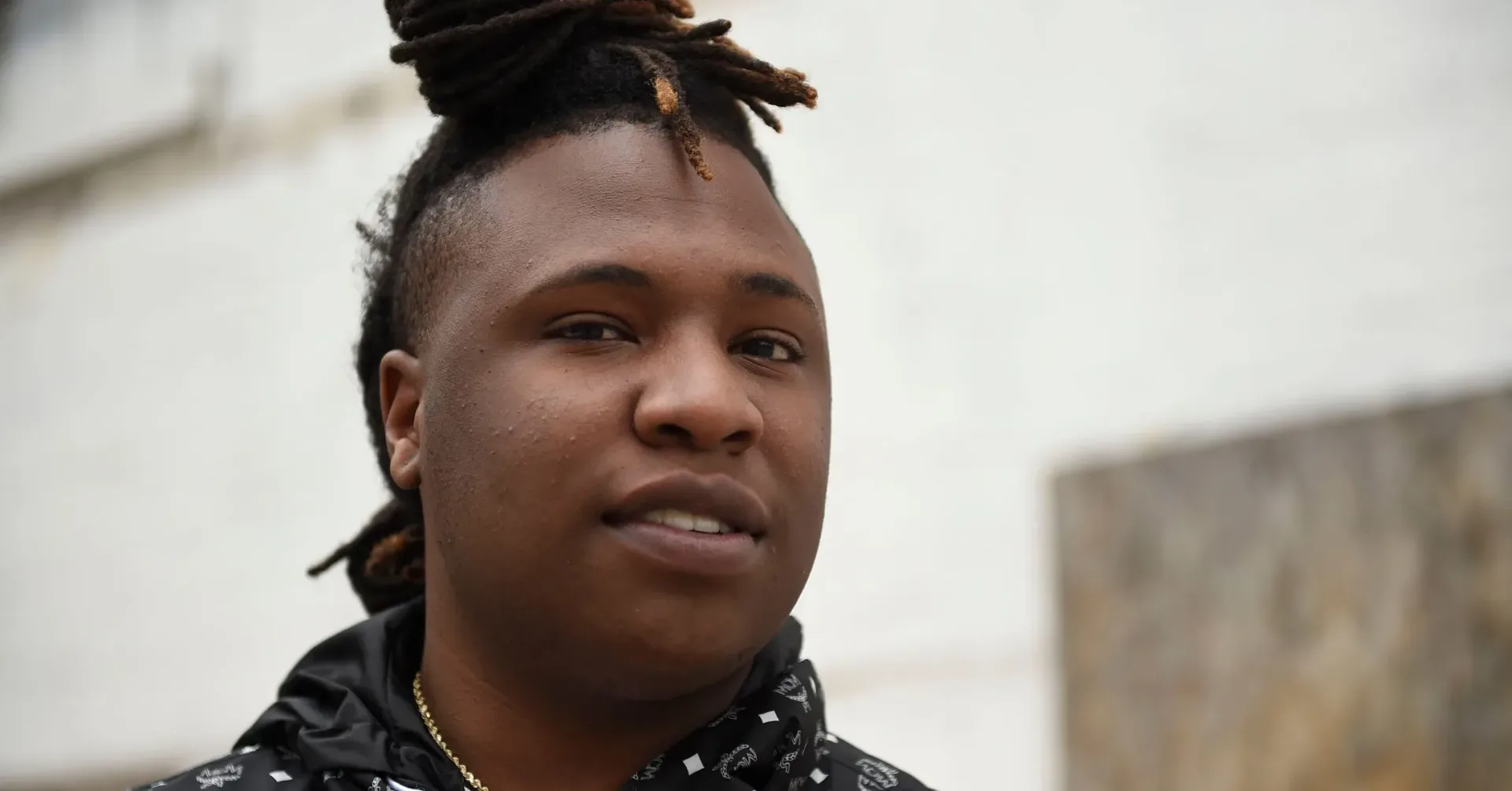
Quando Rondo has pushed back on online rumors claiming that he was sent back to jail or federal prison. The rapper, whose legal name is Tyquian Bowman, addressed the speculation directly through an Instagram Story, telling followers not to believe what he characterized as fake news.
The available information does not substantiate the claim that Bowman has been arrested again or returned to prison. What appears to be driving the confusion is the distinction between release from a prison facility and the completion of a federal sentence. Those are not necessarily the same thing.
Bowman remains under federal supervision while serving the final portion of his sentence in community confinement. That status means he is no longer housed at the federal prison where he had been held, but it does not mean his sentence has fully ended.
Why the rumor is misleading
Reports of an arrest or return to prison can spread quickly when a person has a complicated legal status, especially if a brief public appearance or an incomplete update is treated as proof of something larger. In this case, the known record points to a transfer within the federal system rather than a new detention event.
Earlier this year, Bowman was transferred out of FCI Edgefield in South Carolina. Federal Bureau of Prisons records listed him under RRM Atlanta, a designation connected to the agency’s residential reentry management process.
That terminology matters. A transfer away from a prison does not automatically equal an unrestricted release, and it also should not be confused with a return to custody. The information available supports a middle ground: Bowman is out of the prison facility but still completing a sentence under Bureau of Prisons oversight.
What community confinement means
Community confinement is a broad term for a supervised transition arrangement. It can involve a residential reentry center, often called a halfway house, or home confinement. The supplied information does not establish which specific arrangement applies to Bowman, so it would be inaccurate to state that he is definitely in one setting or the other.
What can be said is that both arrangements differ from ordinary incarceration in a federal prison. A residential reentry center is designed as a structured transition setting, while home confinement places a person in the community under restrictions and supervision. Neither status, on its own, means that the underlying federal sentence has been discharged.
That distinction is the central issue behind the rumor. The claim that Bowman is simply “free” leaves out the final, supervised segment of his sentence. Conversely, the claim that he was sent back to jail is not supported by the available records or by any credible report cited in the material at hand.
The sentence and the transfer
Bowman pleaded guilty in 2024 to conspiracy to possess with intent to distribute and distribute marijuana. He received a 33-month federal sentence and served roughly 15 months in prison before moving into community confinement.
His sentence was subsequently reduced by five months. That reduction cleared the way for the transition from FCI Edgefield into the community-confinement phase. The projected full release date remains November 11.
A projected release date is not identical to a declaration that someone has already completed every part of a sentence. In this context, it identifies the expected endpoint of Bowman’s federal term while he is still under Bureau of Prisons supervision. It also explains why descriptions of his status can look contradictory at first glance: he has left prison, yet he has not reached the projected full-release date.
Separating the confirmed details from the speculation
The confirmed picture is relatively narrow:
- Bowman denied the online rumor that he had been taken back into custody.
- No credible report or official record presented here indicates a new arrest or a return to federal prison.
- He was transferred from FCI Edgefield to a community-confinement status associated with RRM Atlanta.
- He remains in the final portion of a federal sentence after a marijuana-conspiracy conviction.
- His projected full release date is November 11.
Everything beyond those points requires caution. An internet post, a rumor account, or a vague claim of someone being “back in jail” is not enough to establish a new custody event. It can also blur several separate ideas—incarceration, community confinement, home confinement, supervision, and full release—that have different meanings in practice.
For fans, the practical takeaway is simple: a lack of a prison-facility placement does not mean a person’s sentence has ended, while a community-confinement designation does not itself show that a person has violated conditions or been newly jailed. In Bowman’s case, the public record described here supports the latter interpretation: he is continuing his sentence outside the prison where he was previously held.
Why precise language matters in legal-status reporting
Celebrity rumors often compress legal developments into the quickest possible framing. “Released,” “free,” “locked up,” and “back in jail” may be easy shorthand, but they can obscure the status that actually determines where a person is in the federal process.
Calling Bowman fully released would omit the continuing supervision and the projected November 11 endpoint. Calling him back in prison would suggest a new action that the available evidence does not show. The more accurate description is that he is in community confinement and still completing his federal sentence.
The story is also a reminder that public updates about entertainers can travel faster than the records needed to verify them. A direct denial from the person involved is meaningful, but the key supporting detail here is that no credible report or official record has surfaced to show a new arrest or prison return.
Legal developments remain an important part of the wider music-business conversation, even when the facts of each case need to be handled separately. For another example of how financial and legal matters can intersect around music figures, see coverage of creditor claims involving Tay Keith’s estate.
For now, the evidence supports a straightforward correction to the rumor: Quando Rondo has not been shown to have returned to jail. He remains in a supervised community-confinement phase while approaching the listed end of his federal sentence.