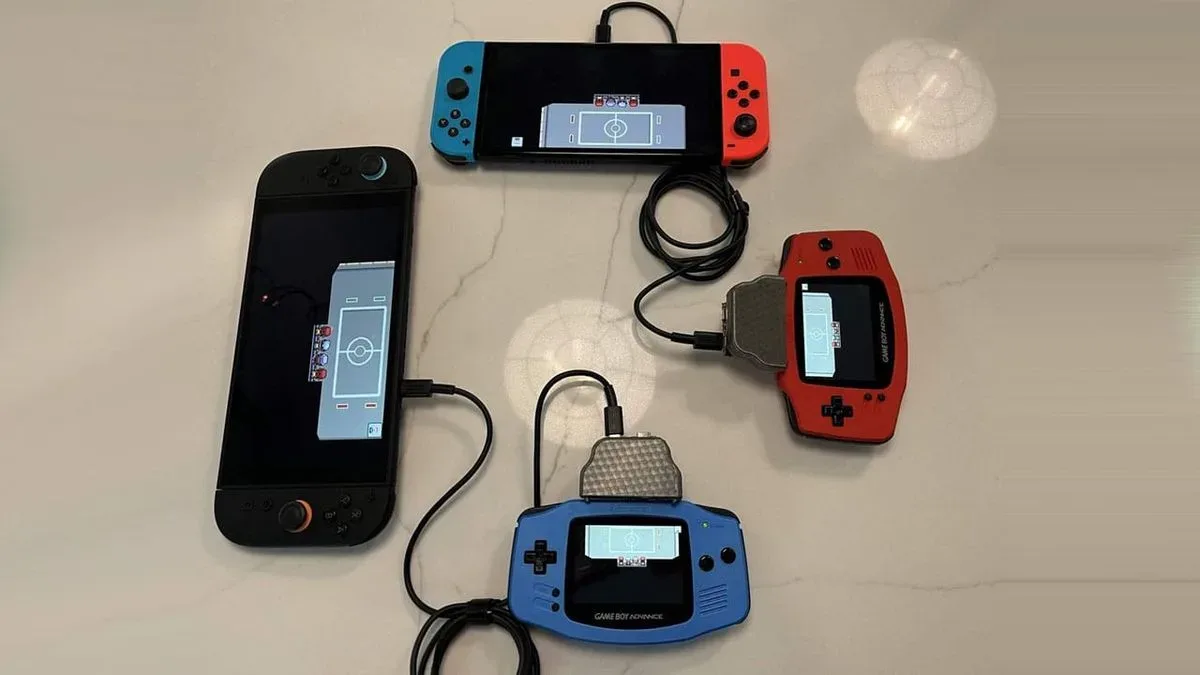
A homebrew-style link-cable idea is rapidly becoming a retail-ready accessory. DrewWorks’ RetroSync adapter, built to connect compatible Game Boy Advance Pokémon games with Nintendo Switch hardware for multiplayer activity, is targeting an early December release at £39.
RetroSync is designed for original Game Boy Advance and Game Boy Advance SP handhelds, and is stated to work with both the original Nintendo Switch and Switch 2. The adapter uses USB-C for its connection to the Switch side, turning what had recently been a visibly experimental board-and-cable setup into a much more compact-looking device.
The stated appeal is wonderfully specific: let a player bring a compatible copy of Pokémon FireRed, Pokémon LeafGreen, or Pokémon Emerald into supported link activities with a Switch-connected RetroSync participant. That includes trading, several battle formats, and a handful of multiplayer minigames. It is a niche product, absolutely—but a niche that has spent decades hauling hardware, cartridges, and link accessories around like a tiny electronic expedition.
What RetroSync is meant to do
RetroSync is an adapter rather than a new version of the games. A Game Boy Advance or GBA SP connects to the adapter, while a USB-C cable links the accessory to a Nintendo Switch or Switch 2. The maker describes the process as plug-and-play, with no setup required.
“Plug-and-play” is an important phrase here. It means the intended experience is to connect the relevant hardware and use it, rather than configure software before every session. It does not, on its own, establish every technical detail around game versions, console software, cables, regional cartridges, or wider multiplayer arrangements. Players with a particular setup should therefore watch for fuller compatibility guidance closer to sale.
The device is currently compatible with Pokémon FireRed, Pokémon LeafGreen, and Pokémon Emerald, provided the copies are compatible versions. No broader Game Boy Advance Pokémon lineup has been confirmed at this point. That matters because a product designed around link communication can be compelling precisely because it is narrow and purposeful, yet that same specificity makes its supported-game list essential reading before purchase.
RetroSync supports firmware updates for future improvements and expanded compatibility. Firmware is the low-level software that runs on the accessory itself; an update can change how the device communicates or add support without requiring an entirely new piece of hardware. That is promising for a product based on an unusual bridge between generations of Nintendo equipment, but it should be viewed as room for future development—not as a confirmation that any unlisted game or mode will definitely arrive.
Supported activities at launch
The current feature list covers the multiplayer functions that are most closely associated with the Game Boy Advance Pokémon era:
Related coverage includes RetroSync GBA-to-Switch Adapter Targets December Release for Pokémon Trading and Battles.
- Trading
- Single Battles
- Double Battles
- Multi Battles
- Berry Crush
- Pokémon Jump
- Dodrio Berry Picking
There is one significant qualifier: RetroSync is described as supporting joining only for these modes. The wording establishes a limitation in the current implementation, but does not spell out the full host-side requirements or every possible multiplayer topology. In practical terms, shoppers should not assume the accessory replaces every other piece of hardware in a group session. Its confirmed role is participation in the listed modes, subject to that joining-only restriction.
That is still a meaningful list. Trading is the obvious headline function: the Game Boy Advance Pokémon games were built around exchanging Pokémon between players, and a physical link was central to that experience. The battle options also matter because they include more than a simple one-on-one match. Double Battles use two Pokémon on each side, while Multi Battles are a separate listed format for a larger multiplayer configuration. RetroSync’s scope therefore reaches beyond a novelty trade cable into several social modes from these games.
The three named minigames are equally worth noting. Berry Crush, Pokémon Jump, and Dodrio Berry Picking are not merely alternate labels for battling or trading; they are distinct multiplayer activities. Their inclusion suggests the adapter is intended to carry the relevant link-play interactions across, rather than only handling the most famous Pokémon exchange function.
A small adapter with a very specific audience
RetroSync’s value is likely clearest for people who still play on original cartridges and hardware but want a new way to take part in the supported multiplayer activities. The Game Boy Advance remains physically separate from the Switch family, so the point is not that RetroSync turns old cartridges into Switch software. Instead, it is meant to create a communication path between a real GBA setup and a modern Nintendo console.
That distinction is useful for setting expectations. Owners will still need the appropriate Game Boy Advance system and a compatible copy of one of the confirmed games. RetroSync is an accessory in that chain, not a substitute for the handheld or cartridge. It is also not presented as a general-purpose adapter for the full GBA library.
The device’s use of USB-C is practical in another way: it gives the Switch-facing connection a familiar modern cable standard. However, the supplied information identifies the adapter and its USB-C connection rather than promising a particular cable specification or bundle contents. Prospective buyers should check the final product listing for exactly what is included.
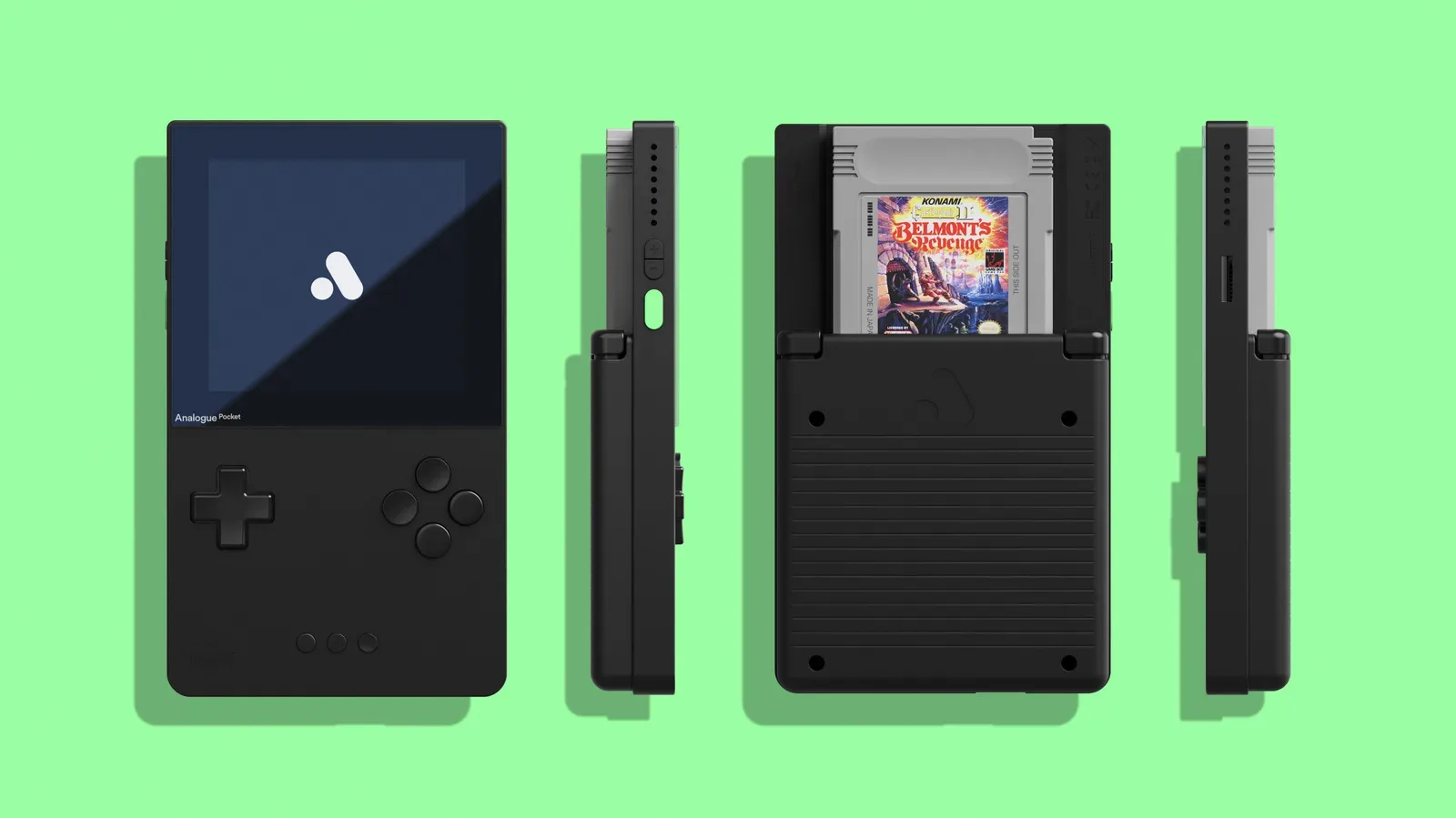
For enthusiasts building a broader retro setup, RetroSync arrives amid continued interest in playing older games on dedicated hardware. For example, the return of Analogue Pocket pre-orders is another sign that portable retro hardware remains an active space. RetroSync approaches that interest from a different angle: not by recreating a handheld, but by focusing on the unusual social connections that older Pokémon games were designed to make.
Fast progress, but compatibility remains the key question
The project’s progress has been notably quick. Earlier work appeared much more prototype-like, with exposed components and multiple cables. The newer design is presented as a polished GBA adapter that accepts a USB-C connection. That shift matters because accessories that bridge old and new hardware need to be practical enough to use repeatedly, not merely capable of producing an impressive demonstration.
Still, RetroSync’s purchase case rests on clear boundaries. The confirmed games are FireRed, LeafGreen, and Emerald. The confirmed modes are the seven activities listed above. The stated multiplayer condition is joining only. Firmware updating leaves open the possibility of expansion, but does not settle which additions may come or when.
At £39, the planned price puts the adapter in accessory territory rather than at the cost of acquiring another console. Whether that represents good value will depend on an individual player’s existing collection and intended use. Someone who already has a GBA or GBA SP, compatible cartridges, and friends or a household setup that can use the joining function has a much clearer reason to consider it than someone hoping for a universal way to connect every Game Boy Advance Pokémon title.
What to check before December
- Confirm that the cartridge is a compatible version of Pokémon FireRed, Pokémon LeafGreen, or Pokémon Emerald.
- Make sure the handheld is an original GBA or GBA SP, the two confirmed Game Boy Advance models.
- Confirm which Switch system will be used; both the original Switch and Switch 2 are stated to work.
- Check the intended activity is on the current supported list.
- Keep the joining-only limitation in mind when planning trades, battles, or minigame sessions.
- Look for final sales details and any compatibility clarification when the early-December release window approaches.
RetroSync is a concise answer to a highly particular technical problem: preserving some Game Boy Advance Pokémon link experiences while connecting them to contemporary Switch hardware. Its initial scope is deliberately limited, but its combination of trading, battle formats, minigames, plug-and-play operation, and planned firmware updates gives it a more substantial starting point than a single-purpose novelty cable.