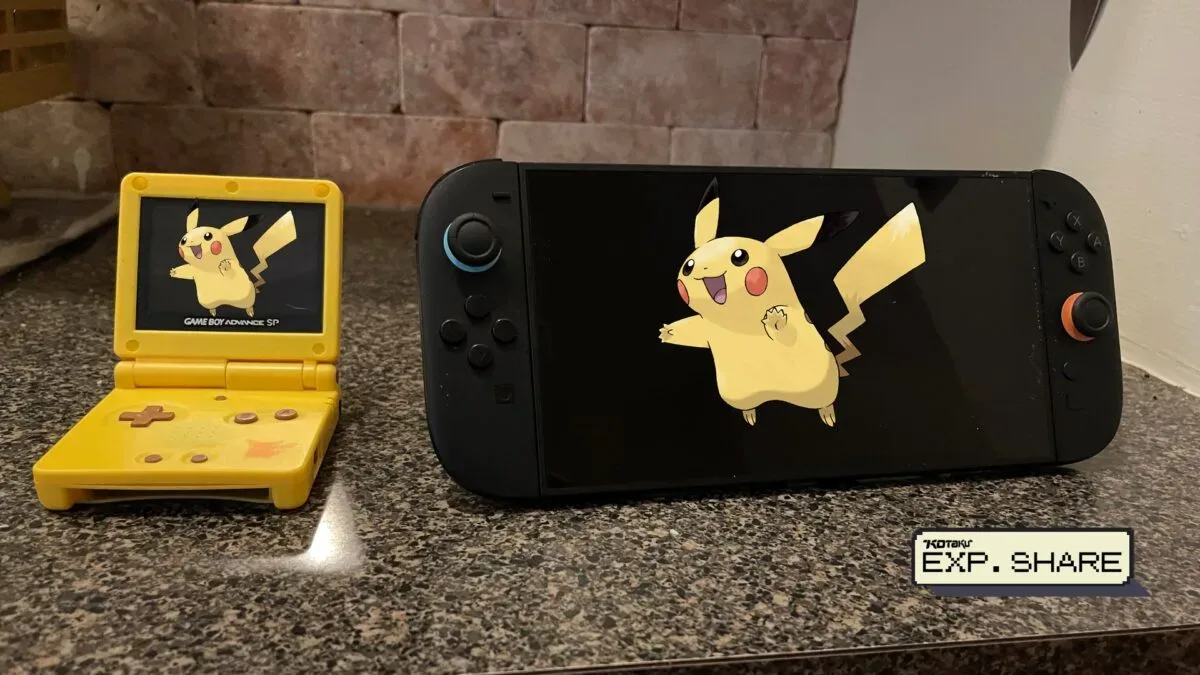
Pokémon players have spent decades treating a favorite creature as more than a save-file entry. A Pokémon caught on an old cartridge can carry a personal history: the starter chosen on a childhood trip, a team member raised through every Elite Four battle, or a competitively trained partner preserved long after its originating hardware was retired. That long-running tradition faces another major cutoff when Pokémon Bank is scheduled to shut down on February 25, 2027.
Bank, the Nintendo 3DS-era storage application, has been an important part of moving Pokémon between older generations and the modern Pokémon Home ecosystem. Its closure does not erase every avenue for players using newer games, but it places a firm end date on a particularly significant bridge for monsters originating in the Game Boy Advance era and beyond. The remaining migration path is already complex, and the deadline makes it more urgent for trainers who want to preserve eligible Pokémon on current systems.
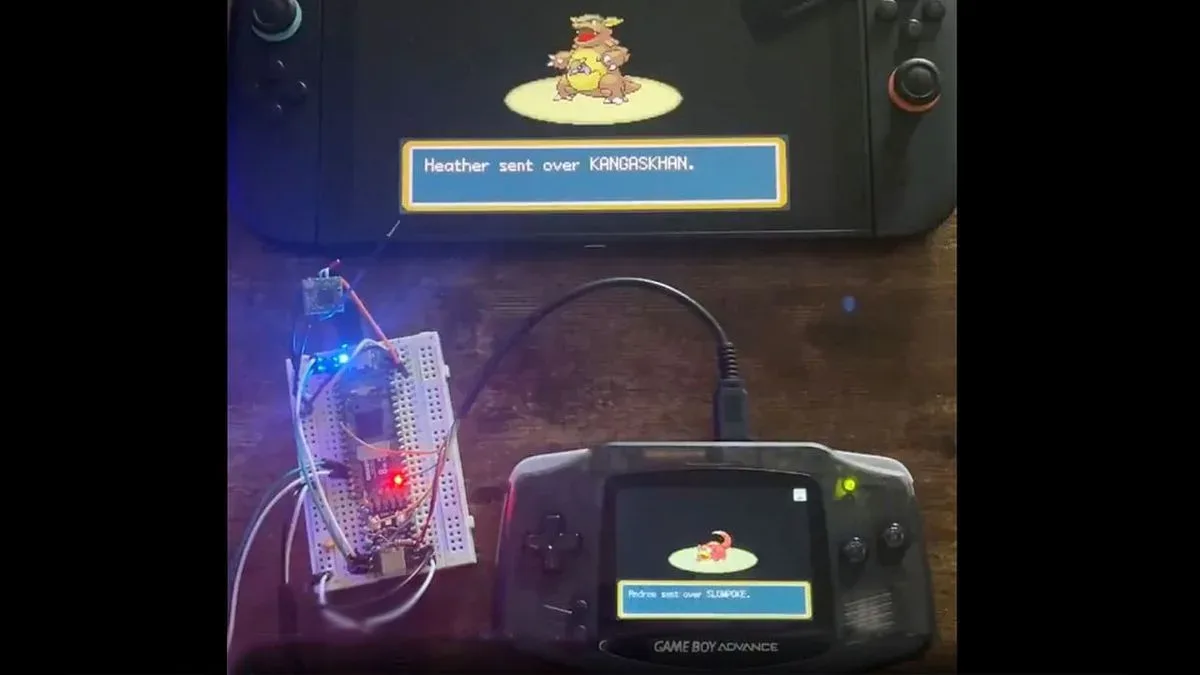
Against that backdrop, software developer Andrew Henley has shared a prototype for an ambitious independent hardware-and-software project: an adapter designed to allow communication between a Game Boy Advance and a Nintendo Switch. A video posted by Henley depicts a successful trade involving the Game Boy Advance versions of Pokémon FireRed and LeafGreen and their Switch release from earlier this year.
The prototype is not an official Nintendo product, nor is it a finished consumer peripheral. Still, the demonstration matters because it suggests a radically different preservation route: one where a Pokémon remaining on its original GBA cartridge could interact with a contemporary console without requiring the game itself to be altered.
A translator between hardware generations
The basic concept is easy to state and extremely difficult to execute. The Game Boy Advance and Switch were separated by multiple console generations, built around entirely different technical expectations, and were never meant to recognize one another. Henley describes his adapter as a real-time translator positioned between the two machines.
In that model, each console communicates in the language it expects. The GBA behaves as though it is talking to compatible-era equipment, while the Switch communicates through its own modern systems. The bridge handles the conversion and synchronization required to carry those messages across the divide. Crucially, Henley says it generally does not need to interpret the actual game information being exchanged. Instead, much of that data can remain opaque while the project focuses on reliably moving communication in the format each side expects.
The aim is not to remake old games for modern hardware, but to let original software continue functioning normally while a bridge handles the incompatible connection methods around it.
That distinction is central to the project’s preservation appeal. Rather than requiring modifications to a treasured cartridge or an original game program, the adapter is meant to leave the games operating as they always have. For collectors and longtime players, retaining the original hardware experience is part of the point. The value is not merely arriving at a modern destination; it is maintaining a meaningful line back to where that Pokémon began.
Henley’s effort began as a personal challenge. He wanted a way to trade Pokémon between his original cartridge collection and Switch versions. Solving it has involved extensive debugging, testing, and trial and error, because robust communications systems on both ends must remain synchronized in real time. It is an unusual kind of compatibility project: not a simple cable, not an emulator feature, and not conventional backward compatibility, but an effort to make two isolated technological eras cooperate.
Why Pokémon Bank’s end date changes the conversation
Pokémon Home is now the franchise’s central, platform-agnostic storage service, but Bank remains historically important. It represents an established route through which older Pokémon can enter the present-day ecosystem. When that service closes in 2027, the community loses more than a utility: it loses a formal link in a chain that has allowed certain Pokémon to outlive the platforms on which they were caught.
Players hoping to use Bank before it goes offline should not assume that a future third-party solution will arrive in time, or that it will necessarily support every desired game and transfer scenario. Henley has been clear that substantial development work remains before he would consider releasing a production-ready device. His eventual goal is a plug-and-play product that connects a GBA and Switch with as little hassle as possible, but the current version remains a prototype.
That means the practical advice for anyone with Pokémon they wish to move through official channels is straightforward: investigate the existing migration process well before February 25, 2027. The chain can involve several systems, games, services, and eligibility restrictions, so it is not something to leave for the final weekend. Owners should also be careful with cartridges and saves, verify their own game compatibility, and avoid treating an experimental adapter as a replacement for a service that has a published shutdown date.
Interoperability is bigger than one trade
While Pokémon is the immediate focus, Henley says the project has been built around interoperability. That leaves open the possibility that its underlying approach could eventually have applications beyond moving creatures from old Pokémon games. There is no promise of specific additional functions, but the principle is compelling: older devices can retain practical connections to newer technology without losing the qualities that make original hardware worth preserving.
It is also a reminder that preservation is not limited to archiving software files. The experience of using original systems—the cartridge, the handheld, the native behavior of the game and the odd limitations that shaped it—has value of its own. A bridge that respects those boundaries could offer something different from simply extracting data and importing it elsewhere.
Henley brings software experience from private-sector and government work, and he now owns and develops a hospital compliance platform aimed at helping smaller and rural providers access affordable systems. That background has been turned toward a niche but technically demanding video-game problem. He has also credited open-source work and research from Pokémon homebrew and console communications specialists Yannik and Tornadus11.
The project has no official affiliation with or endorsement from Nintendo. Henley has acknowledged that Nintendo would be better placed to manufacture a dedicated solution, while also recognizing why a specialized peripheral for a discontinued, roughly 20-year-old handheld might not rank highly among the company’s priorities. Major platform holders must make choices about what they support and for how long—a reality visible across the industry, including debates around corporate ownership and long-term stewardship such as the renewed attention on Valve’s independence.
What the prototype represents for retro Pokémon fans
A working proof of concept is not the same thing as a broadly available product. There is no confirmed release date, price, manufacturing plan, compatibility list, or assurance that this adapter will become commercially available. Any future version would need to be dependable, approachable, and robust enough for ordinary owners to trust it with Pokémon carrying years of sentimental value. Those are high standards, particularly for hardware intended to mediate real-time communication across two such different platforms.
But the prototype has already done something valuable: it has made an idea that sounds impossible look technically plausible. The GBA-to-Switch connection is a striking example of fan-led engineering meeting a community need that official infrastructure may no longer address. It does not solve the looming Pokémon Bank shutdown today, and it should not encourage players to delay official transfers they can still complete. What it does offer is a hopeful view of the future for game preservation.
For now, Henley is continuing the work independently and says increased interest from people hoping to keep cross-generation trading alive has encouraged him to pursue a more polished and accessible design. Fans can follow his progress through his social channels, while keeping expectations measured until a production-level device is ready.
Pokémon Bank’s closure will still mark the end of a long chapter in the series’ history. Yet this adapter prototype points toward another possibility: the oldest partners on original cartridges may not have to become silent relics simply because the official bridge between generations is going away.