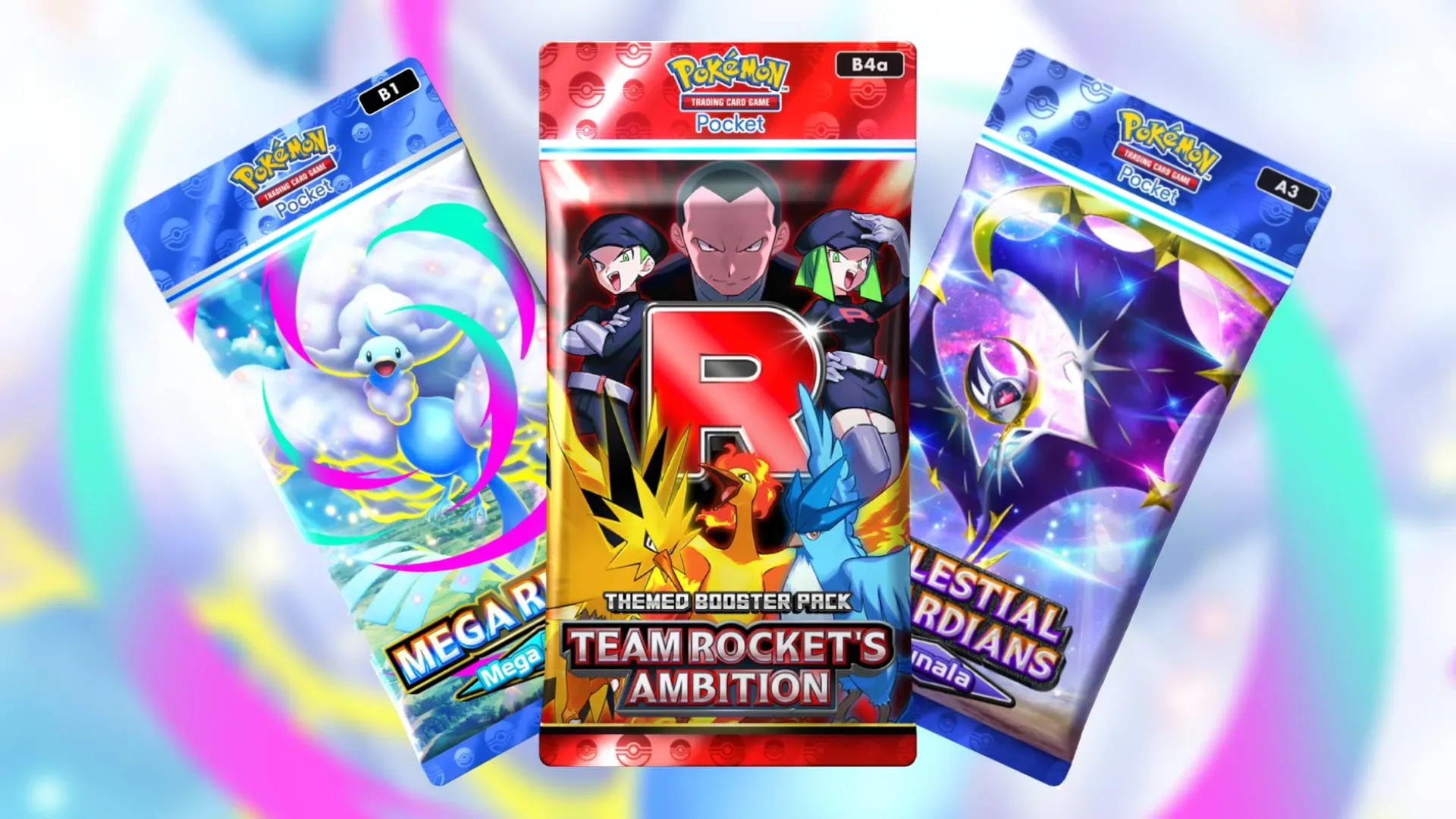
Pokémon TCG Pocket is easing off the accelerator. As the mobile card game approaches its second anniversary, DeNA’s planned changes promise a more forgiving rhythm for collectors and a few overdue quality-of-life fixes for battlers and traders. The headline change is simple: new booster releases are set to move from roughly every four weeks to roughly every six.
That is not merely a calendar adjustment. In a game where opening packs, assembling decks and chasing rare artwork all compete for the same limited attention, two extra weeks can make a meaningful difference. It gives players longer to work through a set before the next batch of cards arrives, and it may reduce the feeling that a newly completed deck is already staring down a fresh metagame.
Other planned additions include missions intended to provide a route to animated Immersive Cards, a weekly-recovering Special Pack system beginning with a collection called First Partners, Community Decks for finding popular builds in-game, unlimited use of rental decks, and trade screens that better show what friends actually need.
For a game built around the pleasurable little ritual of revealing digital cards, it is a notably player-friendly list. There are important omissions, particularly around reported app sluggishness, but the collection and deck-building changes address genuine friction instead of simply adding another digital mountain to climb.
A slower release cycle is the biggest change
Pokémon TCG Pocket has previously moved through sets on an approximately four-week cadence. Each new release brings cards to collect, different rarities and artwork to pursue, and abilities capable of shifting which decks are strongest. That steady stream keeps the game lively, but it also creates a problem familiar to anyone who has tried to maintain both a collection and a competitive deck: there is always another finish line appearing while the current one is still in view.
The upcoming C series is intended to use a roughly six-week booster cycle. The stated goal is to make it easier for players to build collections at their own pace after feedback that the volume of cards released through the B series made collecting difficult.
That matters for more than completionists. A metagame, often shortened to “meta,” is the mix of strategies and decks that players consider most effective at a given time. When new cards arrive frequently, that environment can change quickly. Players who enjoy experimentation may welcome that churn, but others can struggle to settle on a deck, learn matchups, or acquire the cards that make a current strategy work before the next release shifts the conversation.
Six weeks will not freeze the metagame, nor should it. New cards are a central part of a collectible card game’s appeal. But it should give individual sets more room to breathe. There is additional time to open earned packs, fill gaps with trades, try deck variations and decide whether a card is genuinely useful rather than immediately being eclipsed by the next release.
It also reduces the pressure created by FOMO, short for “fear of missing out.” FOMO in a live-service card game does not require an item to be permanently unavailable. It can arise whenever the practical window for enjoying a set feels too brief. If players believe they must keep pace with every release to remain competitive or to complete an art collection, the hobby-like pleasure of opening packs can start to resemble a timetable.
Immersive Cards are getting a collection-based route
The planned changes are especially significant for players pursuing Immersive Cards. These are special cards that trigger animated scenes within the card frame, making them among the game’s most distinctive digital-only rewards. Their appeal is not just their rarity; the animation gives the card an extra sense of occasion that a static pull cannot replicate.
Until now, obtaining them has relied heavily on chance. Their pull rate has been described as around 1%, while the game provides two packs to open per day. With sets arriving on a roughly monthly schedule, that left a narrow-feeling window for players hoping to pull every Immersive Card naturally before attention moved to the next set.
The new plan is to let players unlock Immersive Cards through missions tied to completing collections. The specific mission requirements have not been detailed, so it would be premature to call this an easy alternative to pack openings. Still, the principle is a welcome one: progress toward one of the game’s flashiest cards should not be determined solely by a lucky reveal.
This creates a clearer distinction between random acquisition and goal-driven acquisition. Opening packs remains the surprise mechanic. Collection missions, by contrast, can turn a broad objective into visible progress. That is particularly valuable in a card game, where a player may be one or two cards away from a meaningful milestone but have no satisfying way to convert that near-completion into the reward they want.
Pack Points already provide one route to selected cards, but they are tied to individual sets. An Immersive Card costs 1,500 points from its relevant set, which requires opening 300 packs from that set to reach the total. The announced changes do not indicate that Pack Points will become shared across sets, a feature players have sought. Collection-based Immersive missions therefore look less like a replacement for that request and more like a separate safety valve for collectors.
Special Packs put starters in the spotlight
The C series will also introduce Special Packs, which use their own “special pack stamina” that recovers once per week. The first Special Pack collection is called First Partners and is set to include all 27 starter Pokémon.
Separate stamina is an important detail. Rather than simply becoming another use for the normal pack-opening routine, Special Packs appear designed as a parallel weekly activity. The full rules, card distribution and exact relationship to normal booster sets have not been outlined, so expectations should remain measured. Still, a weekly reset gives the feature a predictable pace that fits neatly alongside the move to slower standard set releases.
Missions are also set to award 1-star promotional cards. Promotional cards have previously been standard cards, so 1-star promos should add full-art rewards to that mission track. For players who value illustrations and collection identity as much as raw battle strength, that is a worthwhile expansion. It means missions may offer prizes that feel like additions to a display-worthy digital collection rather than just functional extras.
There is a useful broader lesson here for digital card games: not every reward needs to be a tournament staple. Animated cards, full-art promos and themed starter collections offer motivations beyond winning matches. A healthier release cadence may make that variety easier to appreciate, because players are less likely to treat every new card as another urgent item on an impossible checklist.
Community Decks should make the meta less mysterious
Deck building is also getting a more practical on-ramp. Players can currently create decks from scratch or use rental decks supplied by the game. The upcoming Community Decks feature is intended to let players build popular meta decks without having to leave the app to search elsewhere.
That may sound like a convenience feature, but it has real implications for accessibility. Card games naturally produce a knowledge gap between players who closely follow strategy discussion and players who simply want to make the most of the cards they have. If a strong list exists only in external guides, social posts or videos, the game itself provides an incomplete path from collecting cards to using them effectively.
Bringing popular deck information in-game should make it easier to identify established archetypes and understand what cards a given strategy is trying to combine. It also lowers the barrier for returning players who may have missed a release or two and do not want to research an entirely changed meta before playing again.
Rental decks will become unlimited rather than capped at 10 uses, and they are intended to be easier to access at the start of a new set launch. Unlimited rentals give players more space to learn a list before investing resources into recreating it. That can be particularly helpful when a new set reshapes the meta: instead of crafting or chasing cards blindly, players can get a sense of how a deck operates.
Community Decks will not erase the appeal of inventing an original build. They should, however, make the first step less intimidating. A good digital card game should support both the player who wants to tinker for hours and the player who wants a competent deck before their commute ends.
Trading is finally becoming less of a guessing game
The trade improvements may be the least glamorous announcement, but they could be among the most useful. Trading with someone on a friend list currently does not adequately show which cards that person is missing or their complete wishlist. The result is avoidable misfires: offers can be made for cards the recipient already owns in quantity, while the card they actually need stays hidden.
The planned update is set to surface those needs more clearly. In practical terms, that should make trades more targeted and reduce wasted attempts. It also changes the social tone of the feature. A trade system works best when both sides can quickly understand what the other is seeking; otherwise, it becomes an exercise in accidental duplication.
For collectors, wishlist visibility is not just a convenience. It lets duplicate cards become a useful resource. When there is better information about a friend’s missing card, a spare can move toward someone’s collection progress instead of lingering as an indistinguishable extra.
The unresolved issue: performance
The announced changes are focused on collection pace, card acquisition, deck discovery and trade usability. They do not mention performance improvements for Android or iOS. Reports have criticized the app for sluggish behaviour during basic navigation, including switching tabs, and indicated that a large 3GB update in July did not resolve those complaints.
That silence matters because a thoughtful reward system is only as pleasant as the interface used to reach it. Opening packs, browsing binders, checking wishlists and changing decks are all frequent actions. If those actions drag, the friction is felt repeatedly rather than in one isolated mode.
Even so, the upcoming package shows a more encouraging understanding of what players need from Pokémon TCG Pocket after two years. Less relentless set turnover, a progress-based route toward Immersive Cards, better deck discovery, unlimited rental experimentation and more informative trades all serve the same purpose: letting players spend more time enjoying the cards and less time feeling chased by them.
For those playing on iOS, the game remains part of the wider mobile ecosystem that is continually shifting around new hardware and services; see the latest iPhone Duo pre-order details for related mobile-platform news. Pokémon TCG Pocket’s next job is to ensure its own app feels as smooth as its new collection plans sound.