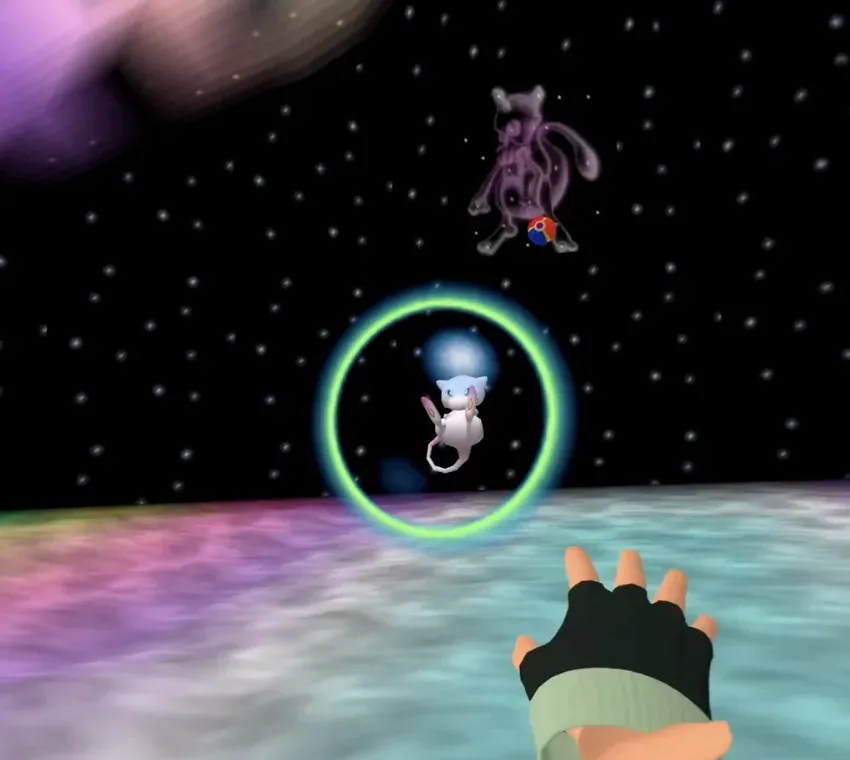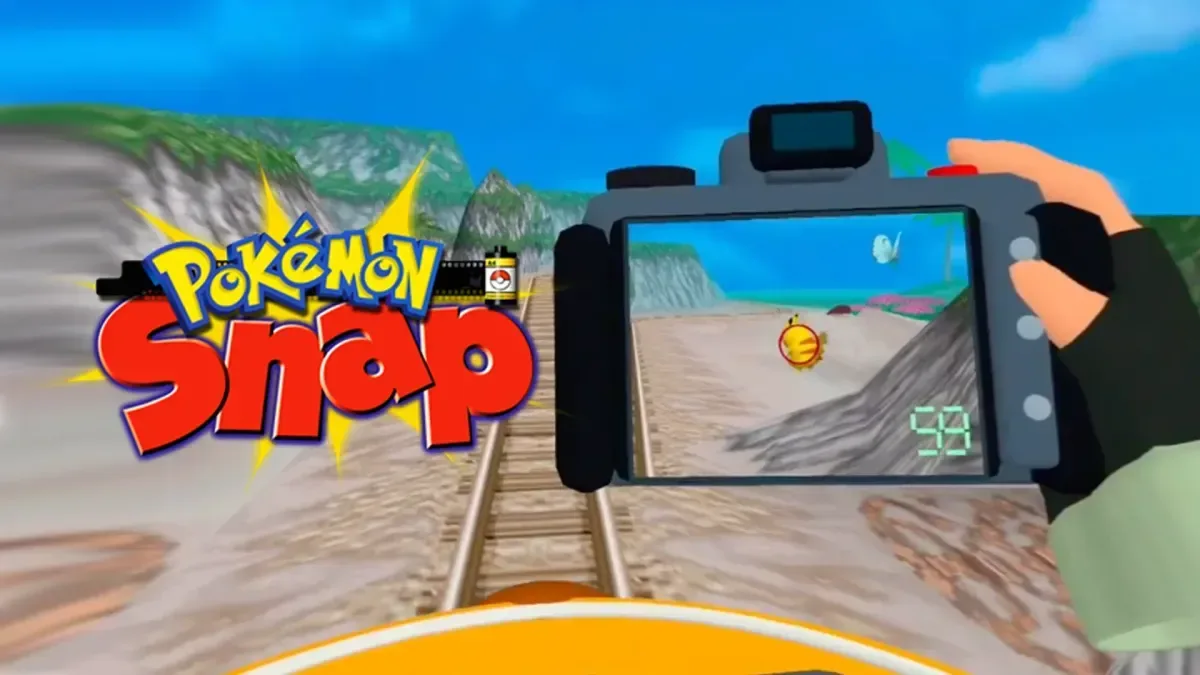
Pokémon Snap’s guided photography adventure has been adapted for Meta Quest 3 through a community-built VR fork, aiming to make the player’s viewpoint and camera feel less like a television-screen abstraction and more like a seat inside the ZERO-ONE. The project is described as a fork of Snap64Recomp, with a standalone ARM64 Quest APK built around OpenXR headset tracking and Vulkan stereo rendering.
The core pitch is straightforward, but unusually well suited to the original game’s design. Players use the Quest headset to look around environments while traveling through a course in the ZERO-ONE. Controllers handle the virtual camera and familiar course interactions, including throwing items and using the Poké Flute. Pokémon Snap was already structured around looking for brief behavioral opportunities while being carried along a fixed route; VR shifts the act of framing those moments from stick-driven camera movement toward physical head movement and controller input.
That does not automatically make this a finished, fully performance-qualified Quest release. The project’s own notes are candid: 90 Hz is a target rather than a guarantee, whole-course and extended heat-related testing remain incomplete, and some scenes may fall beneath that target. Prospective users should treat it as an early community port with explicit technical limitations, not as an official release or a promise of identical performance in every stage.
What the Quest version changes
In the original structure, the player observes Pokémon from the ZERO-ONE and builds a photo report through shots taken during each route. A VR implementation preserves that basic loop but changes the perspective mechanics. Headset tracking means that turning one’s head determines where the player looks in the world, while controller interaction is used for camera handling and course tools.
That distinction matters because Pokémon Snap’s challenge is not simply recognizing which Pokémon appear in a level. It is anticipating movement, noticing reactions and deciding when a photograph is worth taking. A small look toward an emerging Pokémon or an event at the edge of the scene can be more immediate when the player has direct control of their view.
The port also supports controller-based menu use beyond the moments spent traveling through courses. Either analog stick can navigate menus, including post-course photo selection and the VR settings panel. The active stick takes priority over menu pointing, and the controls are intended to work regardless of handedness. That is a practical accessibility detail: it reduces the need to depend entirely on a pointing interface when reviewing pictures or changing settings.
What the technical notes actually mean
The release notes contain several terms that are useful to unpack before anyone assumes the project will deliver a locked high-refresh experience.
OpenXR, ARM64 and Vulkan
OpenXR is a cross-platform standard for VR and mixed-reality software interfaces. Here, it is used for headset tracking, allowing the program to receive the headset’s positional and rotational information. The Windows package also uses OpenXR, where it requires a compatible PC VR runtime, while Quest uses its own APK.
Related coverage includes Pokémon Snap VR Port Brings the N64 Photo Safari to Meta Quest 3.
ARM64 refers to the processor architecture used by the standalone Quest build. In practical terms, the project has a Quest-targeted application rather than relying on the Windows package for headset use.
Vulkan is the graphics API named for the project’s stereo rendering. Stereo rendering means producing separate views for the headset’s two eyes, creating the depth effect associated with VR. That work can be demanding, particularly when maintaining rapid and consistent display updates.
90 Hz is a refresh target, not a frame-rate guarantee
The stated goal is 90 Hz at the headset’s 100% OpenXR-recommended eye resolution. Hz, or hertz, refers to how frequently the display refreshes each second. A 90 Hz headset target is often discussed alongside 90 frames per second, but the project specifically warns that this is not a sustained 90 FPS guarantee.
That warning is important. The build still needs complete-course testing and thermal-soak qualification. Thermal soak refers to checking how a device behaves after it has been running long enough for heat to build up. A performance result from a short introductory sequence does not necessarily tell players how the headset will behave over a longer session. The project includes an isolated automated Beach/intro benchmark with frame timing, animation diagnostics and separate capture runs, but the notes do not present that benchmark as a substitute for validating every course.
Anti-aliasing is disabled by default, although an optional FXAA setting is available. Anti-aliasing is a technique used to soften jagged-looking edges in rendered graphics. FXAA, or Fast Approximate Anti-Aliasing, is one such approach. Leaving it off by default may help reserve performance headroom, while providing it as an option lets users decide whether the image treatment is worthwhile for their setup.
Why the viewfinder gets special attention
The port’s notes describe a split approach to responsiveness: the docked camera viewfinder refreshes at the game’s source cadence, while a held camera remains responsive to headset frames. In plain language, the project is trying to respect the timing behavior of the underlying game while avoiding a virtual camera that feels unresponsive as the user moves their head in VR.
It also batches rendering and reuses frame resources to reduce GPU waits. A GPU, or graphics processing unit, draws the images the player sees. Reducing unnecessary waits is a standard performance goal, especially in VR, where delayed updates can make movement feel less convincing or less comfortable.
Another technique mentioned is sampling gameplay and the introduction animation from timestamped render snapshots at predicted display times, with a bounded interpolation history. Interpolation is the process of estimating intermediate motion between known frames to make movement appear smoother. However, the project properly notes that diagnostics showing interpolation behavior do not by themselves prove that final images look smooth. Further visual checking of animation smoothness, including a brief transition after the Nintendo 64 logo, remains outstanding.
Visual fixes and the realities of an early fork
The current build includes corrections for sky occlusion, tutorial rendering and alternating retained images during view-transition fades. Those may sound like narrow issues, but they are the kinds of defects that can stand out in a headset. A sky rendering incorrectly over foreground elements, a tutorial layer that displays improperly, or an old image persisting during a transition can disrupt depth and visual continuity more sharply in VR than on a flat screen.
The project’s status as a fork matters as well. A fork is a separate development branch derived from an existing software project. That can give a developer a foundation to build upon, but it does not imply the resulting version has passed the same testing as a long-established commercial product. Bugs are possible, and the stated outstanding validation work reinforces that expectation.
There is also no stated basis for judging whether, or to what degree, AI tools were used during development. That uncertainty should remain just that: an unknown. The more useful criteria for users are visible in the release notes—supported hardware, the ROM requirement, control behavior, known bugs and incomplete performance checks.
ROM requirement and download precautions
The Quest application does not include a game ROM. On first launch, it presents a ROM import experience with controller or gaze selection, Android file selection, progress feedback and validation. Once a valid ROM has been imported, it is reused for future launches.
The listed supported file is Pokémon Snap USA Rev 1 in .z64 format. A .z64 file is one format associated with Nintendo 64 ROM images. The validation requirement means users should not expect arbitrary versions or formats to work simply because they are similarly named.
Anyone considering community-distributed software should use care. Verify what is being downloaded, read the project’s documentation closely, and understand that an APK from outside a headset’s usual storefront carries different trust and security considerations. The project’s build notes establish the technical requirement for a user-supplied, supported ROM; they do not remove the need for each user to make responsible decisions about software, files and rights.
A natural match between a classic game and VR, but not a finished promise
Pokémon Snap’s premise has always been unusually tactile for a Nintendo 64 game: observe, compose, react and capture the right moment before the track carries you onward. Head tracking and motion-oriented camera handling make it easy to understand why a Quest adaptation is appealing. The port is not adding a fundamentally different game loop; it is translating the original one into an interface where looking around is the central action.
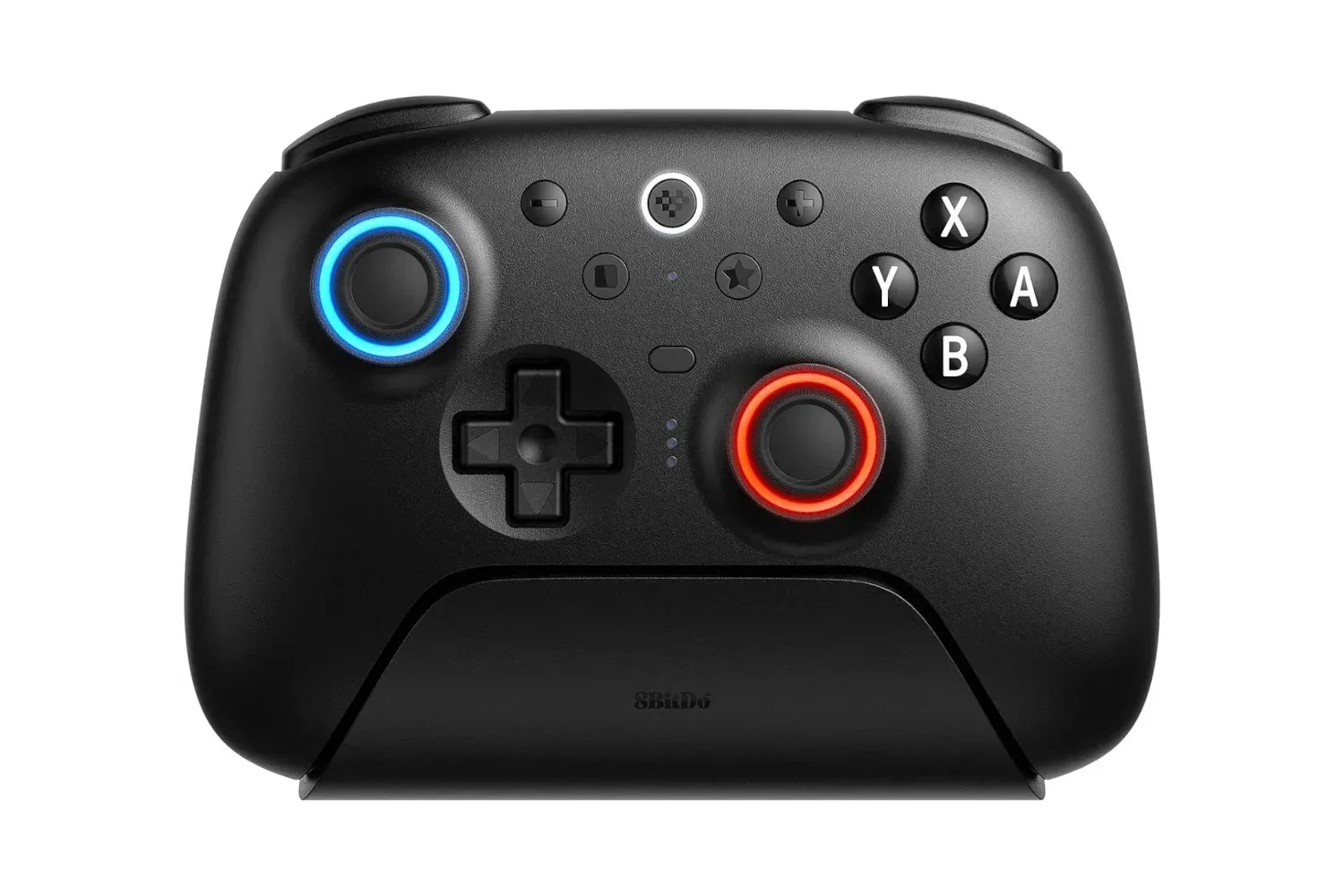
For retro players, the appeal also sits at the intersection of old software and modern display hardware. The project targets a standalone Quest 3 build while retaining the original game’s course-based photography framework. That is a different proposition from simply replaying an N64 title on a modern television, much as controller choices can reshape how players revisit older games; our look at the 8BitDo Ultimate 2 and its pro-style control features explores that broader hardware question from another angle.
Still, the most responsible reading of this release is measured. The available notes point to thoughtful work on tracking, stereo rendering, controls, VR-specific camera responsiveness and several visual defects. They also clearly identify what has not yet been established: sustained frame-rate behavior through full courses, heat-related performance, and final visual verification of some animations and transitions. The underlying idea is compelling; the early-release caveats are just as real.