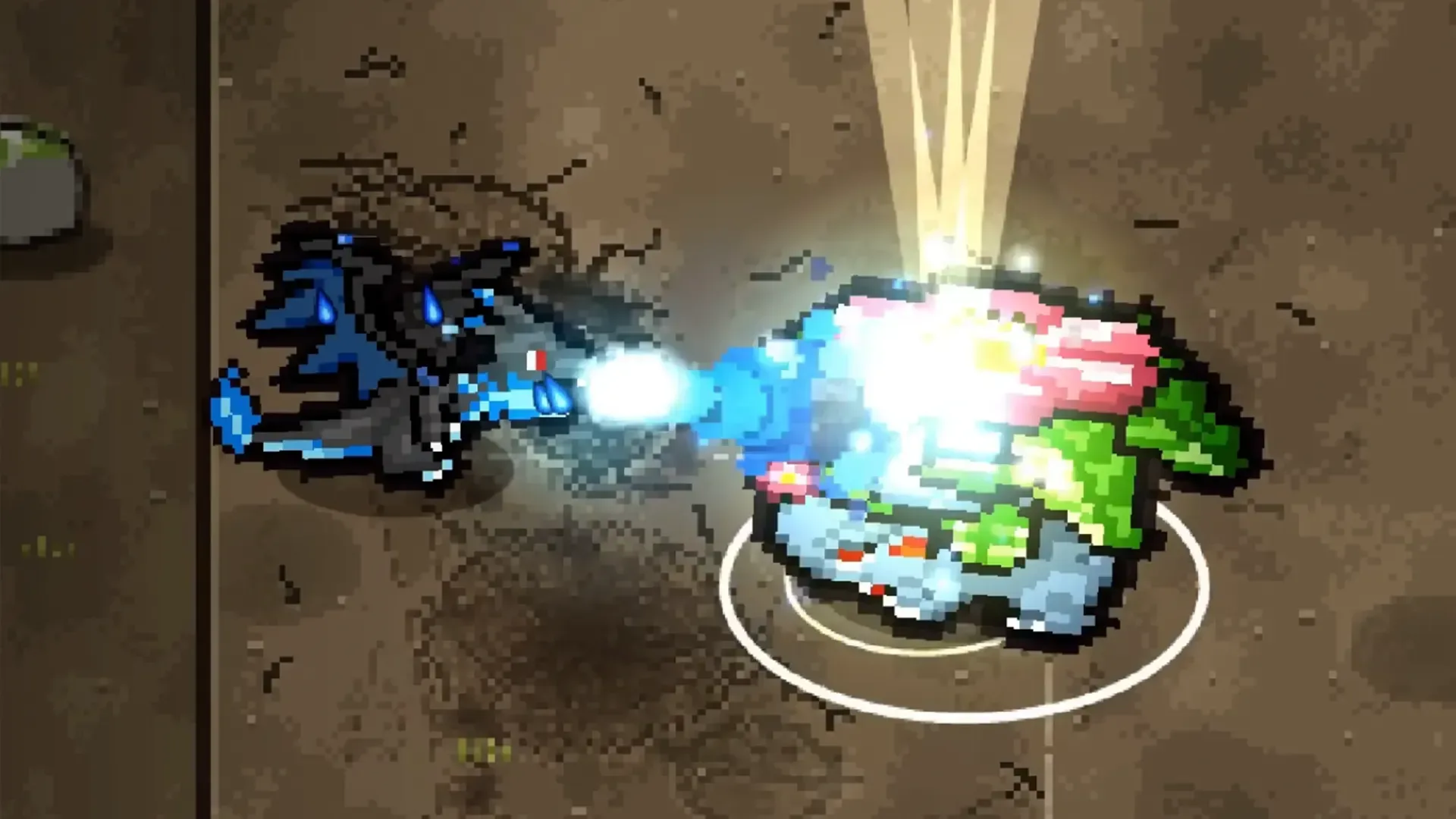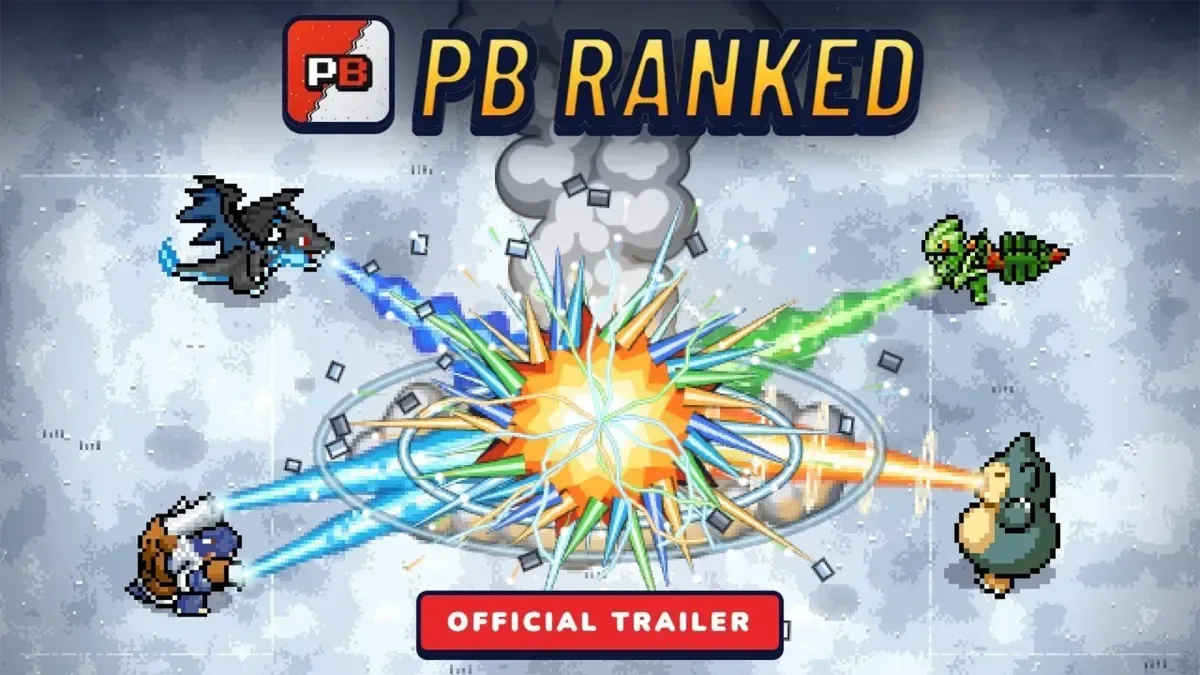
Pokémon Battlegrounds Ranked has entered beta with a notably different spin on the familiar trainer-versus-trainer formula: its battles play out in real time in a browser rather than through conventional turn selection. Players assemble a team of three Pokémon drawn from nine generations, then take those teams into online matches built around movement, ability timing and quick decisions.
The game is free to access, but it requires players to sign in with either a Discord or Google account. That makes the project easy to try from a compatible browser, while also being a sensible point for prospective players to consider before connecting an account to a fan-made game.
A Pokémon battle format driven by movement and hotkeys
Its central idea is straightforward but potentially demanding. Rather than waiting for each trainer to choose an action in a turn-based menu, Pokémon Battlegrounds Ranked assigns movement to the WASD keys and maps four abilities to the number keys 1 through 4. Players can therefore reposition a Pokémon while deciding when to use attacks or other skills.
That control setup helps explain why the game may feel closer to an action-RPG than a traditional Pokémon battle. In this context, real-time means the fight continues as players move and activate abilities; the tactical question is not only which move to select, but also when and where to use it. A well-built team still matters, but execution becomes part of the result.
The beta offers two approaches to movement. Auto mode handles positioning, leaving the player to focus on activating abilities. Manual mode puts movement directly in the player's hands through directional controls. Controller support is also available for players who prefer it. The distinction is important for newcomers: auto movement should lower the immediate burden of learning the game, while manual movement appears to offer greater control for players willing to manage spacing and positioning themselves.
Three Pokémon, ranked opposition and several ways to play
Players begin by selecting a three-Pokémon lineup. The reported pool spans nine generations, making team construction a key early decision rather than a matter of relying on a single favorite. The game also includes deeper customization and skill distributions, giving players room to shape a team around their preferred approach.
Skill distribution refers here to how a team’s available skills and roles are arranged. In practice, that can mean choosing a lineup whose individual Pokémon and abilities complement one another, instead of treating every slot as interchangeable. Because each team contains only three Pokémon, a choice that adds damage, control or survivability could also mean giving up another option. The format encourages trade-offs before a match even starts.
For online competition, the game is said to place players against opponents at similar skill levels. Matchmaking of that kind is especially useful in a fast-paced format, where a player still learning movement and hotkey timing could otherwise be overwhelmed by someone with much more experience. How consistently those matchups hold up over time remains something the beta will need to establish, but the intent is to give new players a reasonable path into ranked battles.
Related coverage includes Pokémon Battlegrounds Ranked Beta Brings Real-Time Online Battles to the Browser.
Outside ranked-style encounters, Pokémon Battlegrounds Ranked has a training mode against bots. That offers a lower-pressure place to understand the interface, test abilities and decide whether manual movement is comfortable. There is also a tournament battle option for players looking for a more classic competitive structure.
Another listed activity is Battle Tower, a once-per-day mode focused on seeing how many trainers a player can defeat. A daily limitation makes it distinct from repeatable training or standard matches: it is framed as a bounded challenge rather than something to endlessly grind in one sitting. Players who only have a few minutes may find that kind of contained run useful, while those who want unlimited experimentation will likely lean on bot training and online battles.
Mega Evolution adds a one-use decision
A match can include one Mega Evolution opportunity. Mega Evolution is presented as a limited-use tactical tool rather than a permanent team state, so choosing the right moment matters. Using it early might help secure momentum; saving it may preserve an answer for a difficult situation later in the battle. Either way, the one-per-game restriction prevents it from being treated as a routine button press.
That mechanic also reinforces the value of selecting a coherent three-Pokémon team. If only one major power spike is available in a game, players have to decide which team member is most worth building around and what the other two should contribute. It is a concise rule, but one with implications for team planning as well as moment-to-moment play.
There may also be a doubles-style option, though details on how that mode functions have not been firmly established. Until its structure is clarified, players should regard doubles as a possible part of the beta’s offering rather than a fully detailed feature set.
Fast-paced does not automatically mean immediately readable
The game’s speed is part of its appeal, but it is also a likely hurdle. Four skill hotkeys, movement controls, three-member teams and real-time combat can create a lot of information to process during an early match. Players familiar with slower, command-driven Pokémon battles may need time to adjust to tracking cooldowns, movement and opposing actions at once.
That is where the split between auto and manual movement becomes more than a convenience setting. Auto mode can let a player learn what each skill does and recognize the rhythm of a fight without also worrying about navigation. Manual mode can then become the next step for players who want to take responsibility for positioning. Training against bots is the clearest place to make that transition before carrying the extra pressure of online opposition.
For the time being, the practical learning order seems clear:
- Build a three-Pokémon team and familiarize yourself with each member’s four mapped skills.
- Use bot training to understand ability timing and the screen’s flow.
- Try auto movement first if manual inputs feel too busy.
- Move to manual control when you are ready to make positioning part of your decisions.
- Use the daily Battle Tower as a separate challenge, rather than assuming it is an unlimited practice mode.
Those are not guarantees of competitive success, but they follow directly from the beta’s stated systems. A new player does not need to master every layer at the same time, and the available modes suggest a route from basic familiarization to more serious matches.
A beta with AI-assisted development and room to mature
The project has been made with substantial AI assistance. That disclosure matters because the beta reportedly still has areas that need refinement. AI-assisted development is not itself a description of how the battles function or a promise of quality; it simply identifies part of the game’s production approach. For players, the more immediate issue is that this remains an in-progress build with rough edges that may affect its longevity and polish.
AI’s growing role in game creation is also part of a wider conversation across the industry, including questions about quality control as the volume of submissions and projects rises. Recent changes to pre-release review processes amid AI clone concerns show why transparency and final execution remain relevant even when a project is freely available.
In Pokémon Battlegrounds Ranked’s case, the important caveat is simple: its beta status should set expectations. The fast real-time concept, matchmaking aim and flexible control options give the game a defined identity, but fine-tuning will determine whether those pieces remain engaging after the initial novelty. Players interested in experimenting with a browser-based Pokémon fan game may find its unusual battle structure reason enough to explore it, while those seeking a fully settled competitive experience may prefer to watch how updates develop.
More Pokémon, modes and Gigantamax are planned
Further updates are expected to add additional Pokémon and modes, along with Gigantamax Pokémon. Gigantamax is planned as another way to vary matches, though the precise implementation has not been detailed. It would be premature to assume exactly how it will interact with the existing Mega Evolution limit, team customization or match formats until the beta provides those specifics.
For now, Pokémon Battlegrounds Ranked is defined by what is already playable: three-Pokémon teams, real-time browser fights, online competition, bot training, a daily Battle Tower challenge, tournament battles, optional manual movement and a single Mega Evolution opportunity per game. It is a focused attempt to translate Pokémon-inspired team building into a considerably more immediate combat format—and its next updates will be important in showing how broad and sustainable that format becomes.