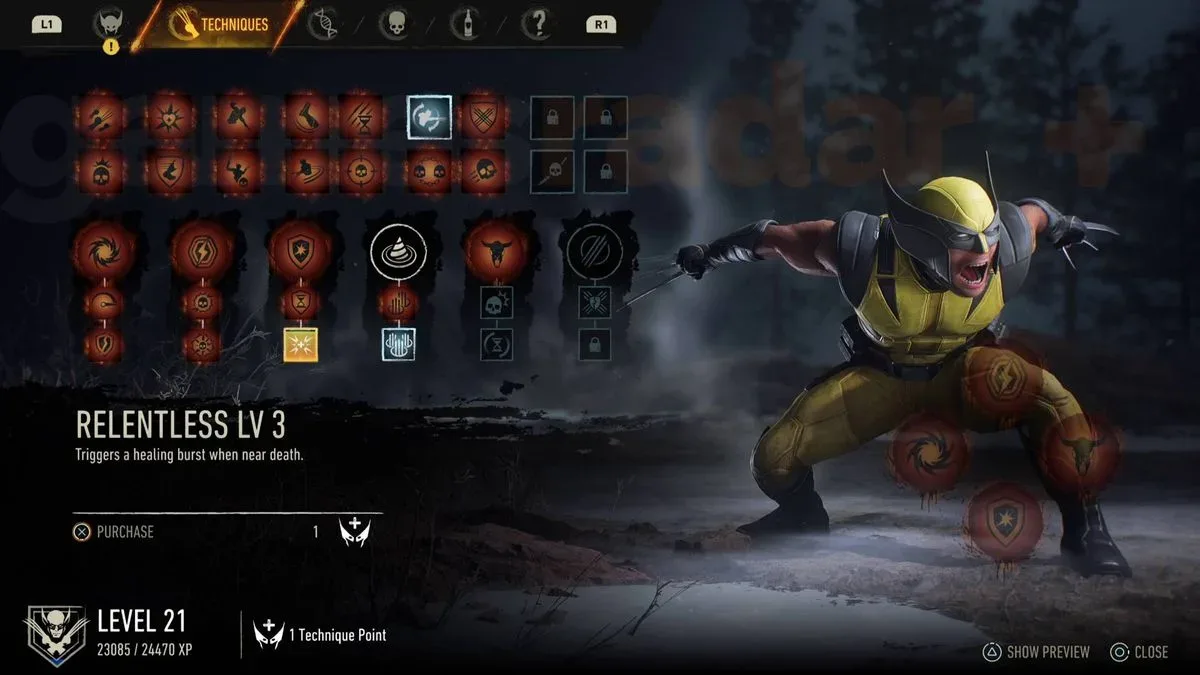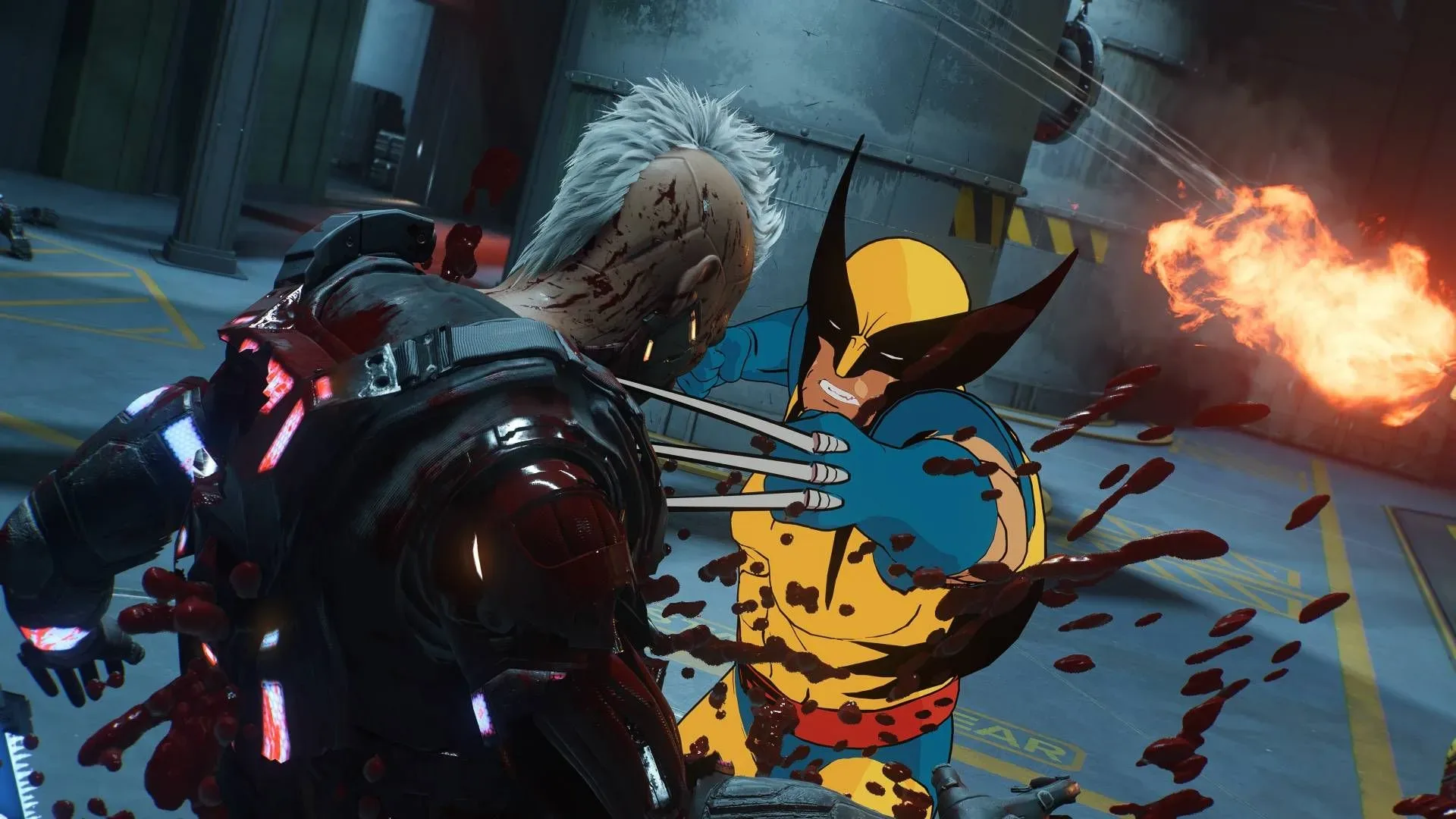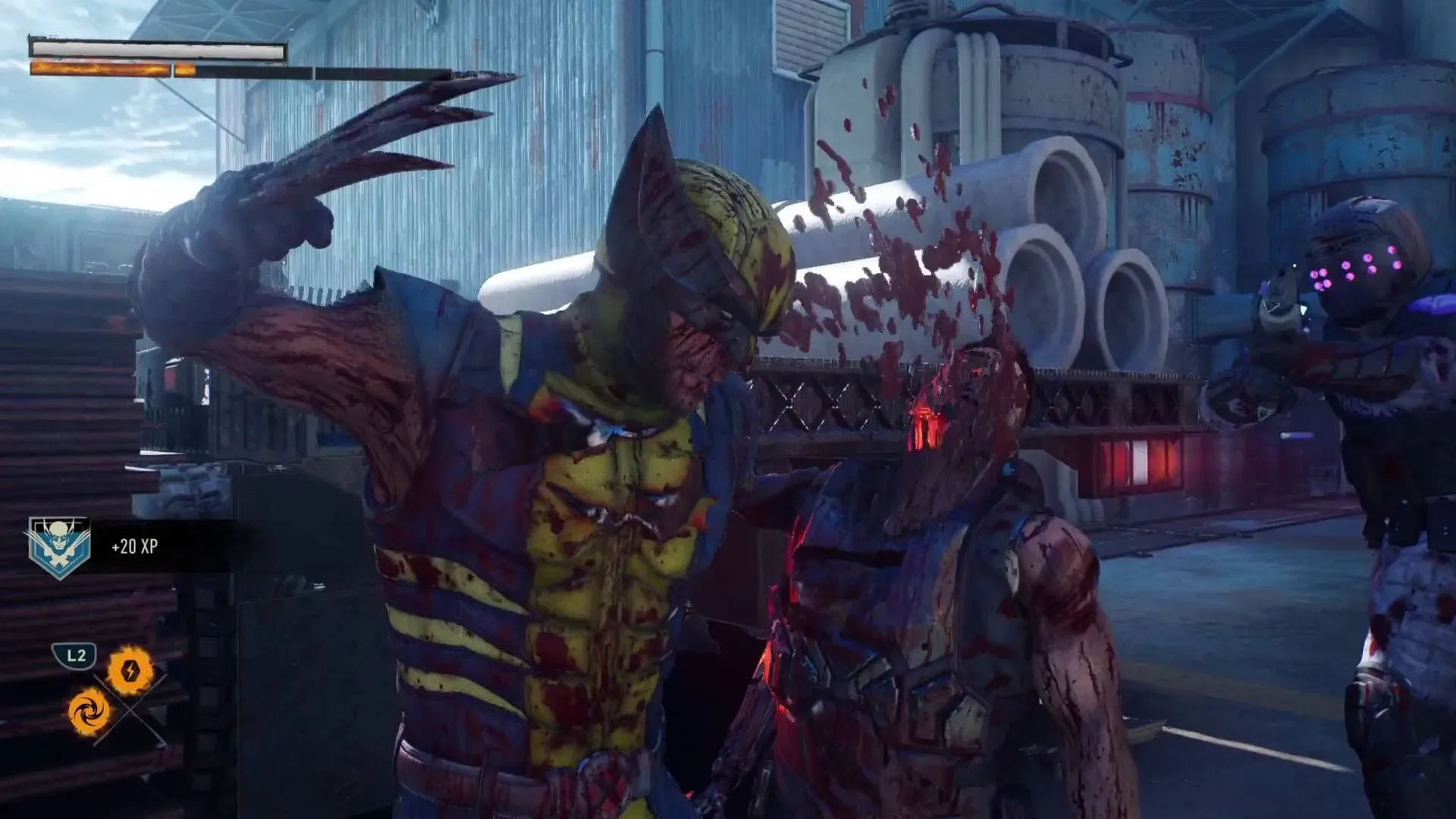
Marvel’s Wolverine gives Logan plenty of ways to turn a rough fight around, but its Technique menu is large enough that early Technique Points can feel more precious than adamantium. There are 36 standard Technique nodes available in a regular playthrough, with four more Unstoppable Force Techniques added in New Game Plus. Every standard node can ultimately be unlocked, but getting there requires reaching Level 36, while the full selection becomes visible by Level 29.
That structure makes the immediate question less about a permanent build and more about momentum. Techniques unlock behind level requirements, so holding points for a distant option generally means leaving useful combat tools on the table now. A better approach is to buy the strongest available upgrade, fill in other broadly helpful choices, then reassess whenever the next level-gated group opens.
Techniques are separate from Adaptations, another layer of Wolverine’s progression. The distinction matters because several of the most effective moves become even more valuable when paired with Adaptations that support combo finishers or expand parry utility. The priority list below focuses on abilities that serve common combat situations: being surrounded, facing a defended target, recovering after damage, breaking an enemy’s rhythm, and dealing with late-game ranged pressure.
Start with the moves that make ordinary combat safer
The earliest levels offer a compact set of upgrades that improve actions players are likely to use constantly. These are not flashy investments made for one rare setup; they reinforce running attacks, leap attacks, blocking, and the crucial stagger-and-recover loop.
Savage Sprinter — Level 2
Savage Sprinter is an excellent first pickup because it adds bite to the simple act of charging into combat. Functionally, it is a smaller-scale version of Tornado Spin that works as Logan sprints at opponents. It can help establish momentum at the opening of an encounter and contributes to Rage building. Early in the game, when a Technique Point has to justify itself quickly, an upgrade tied to an easy and frequent action makes practical sense.
Stagger Leap — Level 2
Wolverine’s Triangle leap is already a useful fundamental attack. Stagger Leap improves it by allowing a charged version with added staggering force. Staggers are a major part of the combat economy because they create an opening for follow-ups, notably Healing Strike. This makes the upgrade more than a damage increase: it is a tool for creating a favorable state in a fight.
Healing Strike — Level 3
Healing Strike should be near the top of almost any early unlock plan. It lets Logan inflict potentially decisive damage on a staggered enemy while immediately restoring a substantial piece of health. It is particularly valuable as a way to finish a Barrage, converting a successful offensive sequence into a survivability boost. When a battle goes badly, this Technique can help reset the situation without requiring Logan to disengage.
Sprint Block — Level 3
Sprint Block is a straightforward defensive improvement that reduces incoming damage. It may not have the spectacle of a heavy claw assault, but defensive consistency has value in a game built around closing distance and staying active. For players still learning encounter timing, it is a strong early safety net.
Related coverage includes Marvel's Wolverine: The Best Techniques to Unlock First.
Special Techniques that earn a regular place on the wheel
Special Techniques are where Wolverine’s kit gains several high-impact answers to dangerous scenarios. Not every option needs to be equipped at all times, but four stand out for their coverage across different stages of progression.
Tornado Spin — available automatically
Tornado Spin arrives automatically, so it costs no Technique Point, but its upgrades deserve attention. It hits several enemies and becomes considerably stronger as it is improved. In crowded encounters, it functions as a pressure-release button: the sort of move that helps when enemies have boxed Logan in and orderly one-on-one combat has ceased to exist. Since groups are a recurring problem rather than a specialized challenge, Tornado Spin remains useful throughout the game.
Knee Breaker — Level 4
Knee Breaker gives Logan a flying knee aimed at an enemy’s head. Its central strength is interruption. The move stops attacks and leaves its victim exposed, creating a window for damage options such as Healing Strike. Timing is important, but the reward is substantial: one well-chosen Knee Breaker can deny an opponent’s offense and hand the initiative back to Wolverine.
Relentless — Level 7
Relentless provides accelerated, continuous health regeneration for a limited period. It is most appealing in severe engagements where Logan has taken significant damage and needs help surviving the next stretch of combat. Using it as health drops can be especially sensible before Rage Tier 2 is available and Last Stand is not ready to provide its own protection.
Its value depends on how punishing an individual player’s fights have become. If health rarely reaches an alarming level, Overwhelm can be a reasonable alternative Special Technique choice. But for difficult exchanges or less forgiving encounters, reliable healing over time is hard to dismiss.
Midgame upgrades: finish combos and punish groups
Once the level requirements climb, the best investments increasingly reward clean execution. These Techniques turn defensive reads and established combos into more meaningful results.
Unblockable Ender — Level 11
Unblockable Ender makes a powerful case for upgrading the end of Wolverine’s combo chain. As its name suggests, the finishing blow cannot be blocked and supplies high damage. It is an especially natural fit alongside Adaptations that add effects to Combo Enders. Against defensive foes, having a dependable way to close a sequence without watching it get shut down is a major quality-of-life improvement.
Advanced Parry — Level 17
Advanced Parry allows Wolverine to deflect several incoming melee attacks at once. That broadens parrying from a precise answer to one attacker into a much more practical response when several enemies are pressing forward. It also combines well with the Extended Parry Adaptation, making this a worthwhile pickup for players who want their defense to be proactive rather than merely reactive.
Staggered Throw — Level 17
Staggered Throw builds on an enemy’s vulnerable state by making the opponent into a weapon. Logan can hurl staggered enemies into others, potentially interrupting attacks in the process. Environmental use is another appeal: walls and hazards can become part of the punishment. It is a flexible crowd-control Technique, useful both for buying space and for capitalizing on a stagger that has already been earned.
Level 23 brings answers for range, areas and heavier targets
The Level 23 tier is particularly important because it introduces three Helix-oriented choices that address enemy density, distance, and the need to interrupt tougher adversaries.
Charged Helix Blast — Level 23
Charged Helix Blast is a potent ranged option that covers a broad area directly ahead of Wolverine. Because its blast can connect with multiple targets, it supplies a useful alternative to purely close-quarters offense. It is a strong answer when a group lines up in front of Logan or when the safest way to influence a fight is to strike from a little farther away.
Helix Combo — Level 23
Helix Combo permits a second, heavy-damage attack after using Helix Claws. There is a caveat: the initial Helix Claw strike can sometimes launch an enemy far enough that the follow-up fails to connect. Even with that occasional awkward spacing, the potential damage and the ability to interrupt larger opponents make it an appealing mid-to-late-game upgrade.
Helix Counter-Shot — Level 23
Ranged enemies become more common later in the game, giving Helix Counter-Shot a clear role. It lets Wolverine evade incoming ranged attacks and automatically answer with his own ranged blast. The Technique rewards defensive awareness while ensuring the dodge is not simply a retreat; it becomes an immediate retaliation.
The major late-game Special Technique
Brutal Assault — Level 25
Brutal Assault is the high-level single-target choice to prioritize once it becomes available. Logan dashes to a target and tears into them with a vicious slashing sequence. Crucially, the attack breaks through defenses. That makes it valuable against protected foes, capable of quickly eliminating weaker enemies or taking a meaningful chunk from larger ones, particularly after upgrades. Where Tornado Spin manages a crowd, Brutal Assault gives Wolverine a direct way to make one priority target regret being noticeable.
What can wait
A recommended-first list is not a declaration that every omitted Technique is weak. Most offer at least some useful benefit. The distinction is that the choices above tend to matter across a wide range of encounters rather than only in a narrow playstyle.
Stealth-related Techniques are the clearest category to postpone for players who prefer direct combat. They can be effective, but stealth is optional, so a player with no interest in sneaking can safely spend points elsewhere. Likewise, some abilities may lose priority simply because an existing move already handles their job more efficiently.
For a broader look at another action game’s evolving loadout decisions, see our coverage of Doom: The Dark Ages and the Doom Anthology.
The most dependable Wolverine progression path is therefore uncomplicated: take the early upgrades that improve familiar fundamentals, secure Healing Strike and a few dependable Specials, add combo and parry upgrades as their level gates clear, then use the Helix tools and Brutal Assault to round out the endgame arsenal. Spend points as new options become available rather than hoarding them, and Logan will have an answer for crowds, stagger windows, guarded enemies, and gunfire alike.